
Written by: Dr. Akash Chandawarkar, Board Certified Plastic Surgeon, Mirror Plastic Surgery | Last updated: September 9, 2026
Key Takeaways
Before diving into the details, here are the essential points about masseter Botox jaw slimming.
- Masseter Botox slims the jaw by shrinking overactive muscles, and visible changes appear gradually over several weeks.1
- The clench test quickly shows whether your jaw width comes from muscle that can shrink or from bone and fat that will not change.
- Most patients need a customized dose within a broad range of units per side, based on muscle size, strength, and goals.
- Temporary chewing fatigue, bulging, and smile asymmetry are possible but less likely with precise, surgeon-performed injections.
- Patients who want a tailored plan for their anatomy can schedule a consultation at Mirror Plastic Surgery.
Before You Book: The 10-Second Clench Test for Candidacy
The most common reason for disappointing masseter Botox results is treating the wrong cause of jaw width. Masseter Botox only shrinks muscle, so it will not help if lower-face width comes from jaw bone, facial fat, or salivary gland fullness. Identifying the true cause before treatment protects you from wasted time and money.
The clench test takes ten seconds. Place your fingertips along the angle of your jaw, just in front of your earlobes, and bite down firmly. If the widest point of your lower face bulges outward noticeably when you clench, the width is muscular and can respond to neurotoxin. If the outline barely changes, the width comes from bone or soft tissue, and toxin will not change it.
A board-certified plastic surgeon will go further than this self-test. A thorough pre-treatment assessment includes palpation at rest and during clenching, comparison of resting versus clenching width in frontal view, evaluation of skin elasticity, and review of clenching and grinding habits. The surgeon also assesses facial volume, because patients with low facial volume, skeletal jaw structure, older age, or low BMI face a higher risk of hollowing or an aged look if the masseter is overtreated.
Patients with bruxism or TMJ pain often notice functional relief first. Reduced clenching force, jaw tension, and morning soreness typically appear within one to two weeks, well before any cosmetic slimming shows. Bruxism generates masseter forces up to 10 times higher than normal chewing, which leads to tooth wear, jaw pain, morning headaches, and TMJ dysfunction. Masseter Botox lowers the maximum force the muscle can generate, which protects teeth and eases symptoms while preserving normal chewing. For patients who want both relief and slimming, understanding that these benefits arrive on different schedules sets realistic expectations.
Botox Jaw Slimming Results Timeline: What to Expect Week by Week
Masseter Botox creates functional relief and cosmetic slimming on separate timelines. Reduced clenching force and jaw tension relief typically appear within two to four weeks, while visible jaw slimming takes two to three months because the muscle must lose bulk from reduced use, not just relax.1 That timeline is worth examining phase by phase, because the two outcomes unfold on very different schedules.
| Timeline Phase | What You Notice | What’s Happening |
|---|---|---|
| Days 1–3 | No visible change; possible mild redness, swelling, or bruising at injection sites | Toxin is binding to nerve endings; no muscle effect yet |
| Week 1 | Subtle reduction in jaw tension or clenching urge; no visible slimming | Neuromodulator begins blocking nerve signals |
| Weeks 2–4 | Clenching feels weaker; early softening of the jaw angle may appear around weeks 3–4 | Muscle activity significantly reduced; atrophy begins |
| Weeks 4–8 | Visible slimming becomes apparent; jawline looks softer and more tapered | Muscle shrinkage progresses; before/after photos typically taken now |
| Weeks 8–12 | Peak slimming effect; jawline appears most defined and narrow | Maximum muscle atrophy achieved; muscle bulk significantly reduced from baseline |
| Months 3–6 | Results gradually fade as muscle activity returns | Toxin wears off; maintenance treatment needed to preserve slimming |
Days 1–3: Immediate Post-Treatment
No visible changes occur in the first three days. Minor bruising at injection sites occurs in 5–10% of masseter Botox patients. Some patients notice subtle tightness or mild weakness when chewing, which signals that the toxin has started to bind. Standard post-care applies. Avoid touching or massaging the area, stay upright for four hours, and skip strenuous exercise for 24 hours.
Week 1: Early Functional Effects
The neuromodulator begins blocking nerve signals to the masseter during the first week. Patients with bruxism or chronic clenching often notice less jaw tension or morning soreness around day five, with full functional effect at about two weeks. Visible slimming has not started yet because the muscle needs more time to shrink.
Weeks 2–4: Initial Slimming Appears
The masseter starts to soften and atrophy. A randomized triple-blind trial of 22 women using 75 units of botulinum toxin per masseter found that a single injection reduced muscle thickness at one month. First visible changes, such as a slightly softer jaw contour, usually appear around weeks 3–4. Chewing fatigue may begin during this window, and tough foods like steak or dense bread can feel more tiring. This effect reflects the drug’s action and typically fades as the muscle adapts.
Weeks 4–8: Noticeable Slimming
The jawline becomes visibly slimmer as muscle atrophy progresses. Visible jaw slimming typically begins around weeks 4–6 and becomes clearest between weeks 6 and 12 as the masseter gradually loses bulk.1 This window is when most patients first recognize a meaningful before-and-after difference. Some patients see changes earlier, while others need the full eight weeks.
Weeks 8–12: Peak Results
Maximum slimming effect usually appears around two to three months after injection.1 Visible slimming from masseter Botox reaches maximum effect at three to four months, with muscle bulk reduced 20–50% from baseline at months 4–6. This period offers the most honest comparison point for before-and-after photographs. Many galleries do not list timing, but week 12 gives the clearest view of full results.
Months 3–6: Maintenance Phase
Results gradually fade as the neuromodulator wears off and muscle activity returns. With repeat masseter Botox treatments every four to six months, many patients can extend the interval to every six to nine months as the muscle remains chronically atrophied, and the maintenance dose is usually 60–75% of the initial dose. Treatment spacing deserves careful planning. After a second injection, chewing performance stayed impaired across a six-month follow-up and muscle electrical activity did not return to baseline, so the authors concluded that a single dose can be adequate for aesthetics and that frequent injections may risk lasting functional compromise. Conservative spacing between sessions protects both form and function.
How Many Units of Botox Do You Need for Jaw Slimming?
Dosing for masseter Botox is highly individualized. The standard dosing range for aesthetic masseter reduction is 25–50 units of Botox per side, with most adult patients receiving 30–40 units at the first treatment, and higher doses up to 75 units per side are reserved for severe hypertrophy or refractory bruxism. The table below offers a general reference rather than a prescription.
| Patient Profile | Typical Dose Per Side |
|---|---|
| Female, mild hypertrophy | 20–25 units |
| Female, moderate hypertrophy | 25–35 units |
| Female, severe hypertrophy or bruxism | 35–50 units |
| Male, moderate-to-severe hypertrophy | 40–75 units |
Several factors guide dose selection beyond gender alone. A typical female masseter is 10–13 mm thick, while a hypertrophic male masseter can exceed 17–20 mm, and needle depth must reach the deep belly for uniform atrophy. Treatment goals also matter. Relief from clenching can often be achieved at a lower dose than visible slimming because it only requires reducing peak force rather than shrinking the muscle. Prior treatment history can reduce future unit needs as the muscle partially atrophies over successive sessions.
Masseter Botox is an off-label use in the United States. No neuromodulator is FDA-approved specifically for masseter injection for aesthetic jawline slimming, so providers must obtain informed consent that clearly explains off-label status, expected results, and potential complications. This off-label status makes provider expertise and anatomical knowledge behind each dosing decision especially critical.
Schedule a consultation to have Dr. Chandawarkar assess your masseter size, clenching pattern, and facial anatomy before any dosing decision.
The Real Downsides of Botox Jaw Slimming: Risks to Weigh
Clear discussion of downsides defines a surgeon-led consultation. The following risks are the most clinically relevant, listed in order of frequency.
- Chewing fatigue: Mild difficulty chewing tough foods is the most common complaint after masseter Botox, reported by 5–15% of patients during weeks 2–6, and clinicians view it as an expected drug effect rather than a true complication. It resolves as the muscle adapts. Severe or persistent difficulty beyond eight weeks suggests an excessive dose.
- Paradoxical bulging: A retrospective review of 46,250 patients identified 223 diagnosed with an adverse event, of which 197 (88.3%) were paradoxical bulging, a visible bulge when clenching that can make the jaw look worse. This occurs because the deep inferior tendon blocks toxin spread, leaving an untreated section that bulges when you clench. This tendon was present in all 44 cadaver specimens examined and covered roughly 22% of the superficial muscle’s surface area. Layer-by-layer injection into both superficial and deep bellies reduces this risk significantly and makes it largely a technique issue.
- Smile asymmetry: Smile asymmetry from masseter Botox occurs when toxin diffuses into the risorius or zygomaticus major muscles, typically appearing 3–7 days after injection, and almost always results from injection too far anteriorly, outside the safe zone. It has no antidote and resolves as the toxin wears off, typically within 6–12 weeks.
- Sunken cheeks or jowling: Aggressive masseter slimming can create a hollow look below the cheekbone or make jowls more visible in older patients because the muscle previously supported soft tissue. Conservative dosing works best for patients with low BMI or midface volume loss.
- Temporary adverse events: All reported adverse events from masseter Botox in the 46,250-patient review were temporary, with resolution taking an average of about 160 days (roughly five months) and the longest lasting up to 22 months, and clinician intervention made no significant difference to resolution speed compared to watchful waiting.
Am I a Good Candidate? Matching Muscle, Bone, and Skin
The clench test offers a useful starting point, and a clinical evaluation refines the picture. Good candidates share a specific profile. Masseter Botox is most effective for patients under 40 with firm skin along the jawline and enlarged masseter muscles due to genetics or clenching habits.1 Patients with this pattern usually see the most satisfying slimming.
Poor candidates include people whose jaw width is primarily skeletal or soft-tissue in origin. Botulinum toxin cannot change bone, so a wide skeletal jaw will stay wide. Patients with significant skin laxity may also see worsening jowls if the muscle is reduced without addressing volume loss elsewhere.
For patients with bruxism or TMJ pain, the functional benefits are real but nuanced. Masseter botulinum toxin reduces muscular force but does not treat the underlying bruxism mechanism. It leaves the frequency of bruxism episodes, sleep architecture, and airway obstruction largely unchanged. The goal is controlled symptom reduction rather than a cure. For bruxism patients, a custom occlusal splint complements Botox and can prolong results by reducing the parafunctional load that drives muscle hypertrophy.
Why a Board-Certified Plastic Surgeon Should Perform Your Masseter Botox
Masseter injection ranks among the most technically demanding sites in facial aesthetics. The muscle has multiple heads, sits next to the parotid gland and facial nerve branches, and requires precise depth and placement to avoid the complications described above. Provider selection strongly influences both safety and outcome quality.
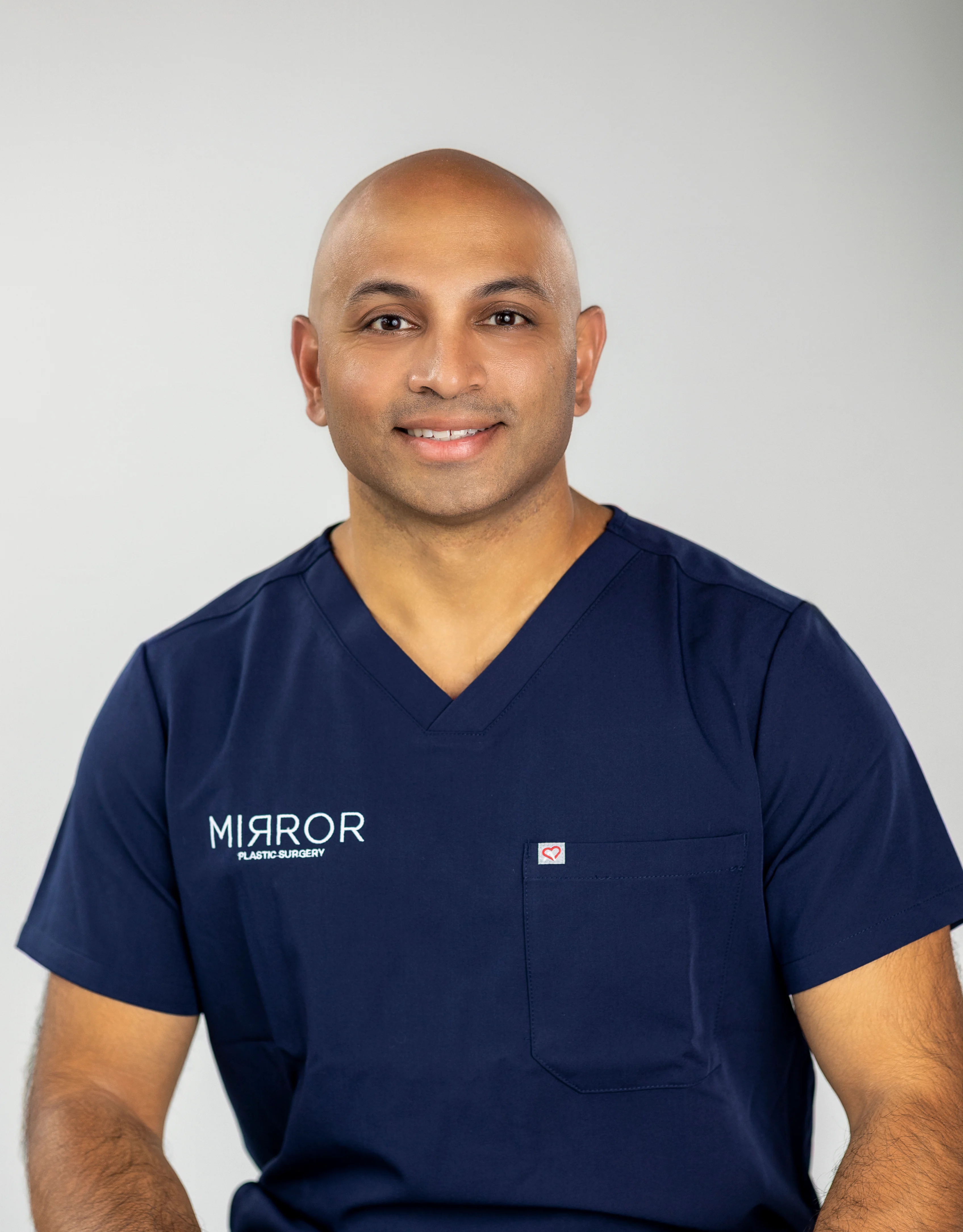
Dr. Akash Chandawarkar brings a surgeon’s anatomical training to every injectable treatment at Mirror Plastic Surgery. Harvard-educated and Johns Hopkins-trained, with fellowship training in aesthetic surgery at Manhattan Eye Ear & Throat Hospital (MEETH)/Lenox Hill Hospital, he personally performs all neuromodulator and dermal filler treatments at the practice. He serves on advisory boards for Merz Aesthetics and Tiger Aesthetics, and because Mirror Plastic Surgery is supplier-neutral, his recommendations are never driven by product quotas. Consultations can run up to an hour, which allows a thorough assessment of facial anatomy, clenching patterns, skin elasticity, and treatment goals before any injection.
Mirror Plastic Surgery is located at 780 4th Ave S, St. Petersburg, FL 33701. Call or text 727-361-6515 to reach the team directly.
Have Dr. Chandawarkar evaluate your candidacy in person during a dedicated consultation.
Frequently Asked Questions
How Long Does It Take to See Botox Jaw Slimming Results?
Functional relief, such as reduced clenching, jaw tension, and morning soreness, often appears within one to two weeks. Visible jaw slimming follows a slower path because the masseter must atrophy from reduced use, not simply relax. Most patients notice a softer jaw contour around weeks 3–4, with meaningful slimming between weeks 4–8 and peak results at weeks 8–12. Patients who judge results at week two often decide too early.
How Long Do Botox Jaw Slimming Results Last?
Most patients maintain results for three to six months.1 With repeated treatments, the muscle remains smaller for longer periods, and many patients can extend intervals to six to nine months after two to three sessions. The maintenance dose is typically 60–75% of the initial dose. If treatment is stopped entirely, the muscle gradually returns to its original size over several months, so the slimming effect reverses without causing permanent harm.
Am I a Good Candidate for Masseter Botox?
The best candidates have a jaw width that is primarily driven by an enlarged masseter muscle, confirmed by the clench test where the muscle bulges firmly and visibly at the jaw angle. Patients under 40–45 with good skin elasticity along the jawline typically see the most satisfying results. Poor candidates include those whose jaw width comes from bone structure or facial fat, and those with significant skin laxity who may experience worsening jowls if the muscle is reduced. A clinical evaluation by a board-certified plastic surgeon remains the most reliable way to determine candidacy.
How Many Units of Botox Do I Need for Jaw Slimming?
Typical doses range from 20–50 units per side, depending on muscle size, strength, gender, and treatment goals. Most women need 25–35 units per side; men with significant hypertrophy may need 40–75 units. Relief from clenching can sometimes be achieved at lower doses than visible slimming, because reducing peak force requires less muscle weakening than inducing meaningful atrophy. Your provider should tailor the dose to your anatomy and adjust it at a follow-up assessment four to six weeks after the initial treatment.
What Is the Downside of Jawtox?
The most common downside is the temporary chewing fatigue mentioned earlier. Other risks include paradoxical bulging from uneven toxin distribution across the muscle’s deep tendon, smile asymmetry from toxin diffusion into nearby expression muscles, and in older patients or those with low facial volume, a hollowed or jowled appearance from aggressive muscle reduction. All of these effects are temporary and largely technique-dependent. Serious complications are rare when the procedure is performed by an experienced, board-certified provider. The treatment is also reversible over time because the muscle returns to its prior size if maintenance sessions stop.
The Bottom Line on Botox Jaw Slimming Results
Masseter Botox offers a safe, effective, non-surgical path to a slimmer jawline, and results appear over 4–12 weeks and then gradually fade. Outcomes depend heavily on two factors: whether the patient is a true muscular candidate and whether the provider has the anatomical expertise to inject precisely. The clench test helps, and a full clinical evaluation completes the picture. Choosing an experienced, board-certified plastic surgeon matters more than toxin brand, unit count, or price per session.
For patients in the St. Petersburg and Tampa Bay area, Mirror Plastic Surgery offers surgeon-performed masseter Botox with extended consultations, anatomy-first dosing, and a philosophy that protects function while enhancing aesthetics. Begin your evaluation with Dr. Akash Chandawarkar, or call or text the practice directly at 727-361-6515.
Disclaimer: Results may vary from person to person. Editorial content, before and after images, and patient testimonials do not constitute a guarantee of specific results.
1 Results may vary from person to person. Editorial content, before and after images, and patient testimonials do not constitute a guarantee of specific results.