
Written by: Dr. Akash Chandawarkar, Board Certified Plastic Surgeon, Mirror Plastic Surgery | Last updated: September 9, 2026
Key Takeaways
- Decades of Florida sunshine create treatable sun damage such as brown spots, redness, rough texture, and uneven tone that respond well to physician-selected laser treatments.
- IPL/BBL, Fraxel, CO2, and PicoWay lasers each address different damage patterns and skin types, so physician oversight is essential to match the right device to your Fitzpatrick type and goals.
- Skin tone is the most critical safety factor, and darker Fitzpatrick types (IV–VI) need longer wavelengths, conservative settings, and pre-treatment priming to reduce post-inflammatory hyperpigmentation risk.
- Realistic expectations include multiple sessions, gradual collagen remodeling over months, and ongoing maintenance treatments plus daily SPF 30+ to preserve results in Florida’s intense UV environment.
- Board-certified, physician-led practices like Mirror Plastic Surgery provide safe, personalized laser care, so you can schedule your personalized laser consultation with confidence.
Sun Damage In Florida: What You Are Actually Treating
Florida residents face some of the most intense year-round UV exposure in the United States, and that exposure shows up in predictable ways on the skin. The visible consequences fall into several distinct categories, and each category responds best to specific treatments.
- Solar Lentigines (Sun Spots): Flat brown spots caused by cumulative UV exposure. The American Academy of Dermatology attributes up to 90% of visible skin aging, including lentigines, to ultraviolet exposure.
- Actinic Keratosis: Rough, scaly patches that are precancerous and require medical evaluation before any cosmetic treatment.
- Redness And Visible Capillaries: Chronic sun exposure damages superficial blood vessels, which produces persistent redness and telangiectasias.
- Textural Changes And Elasticity Loss: UV-induced collagen breakdown produces roughness, enlarged pores, and skin laxity over time.
Accurate diagnosis before treatment protects both your safety and your results. Sun spots and melasma can look similar, yet melasma can worsen with aggressive heat-based devices such as certain laser and IPL settings. Any spot that is changing, irregular, or new needs evaluation by a physician to rule out skin cancer before cosmetic treatment proceeds.
Once your sun damage is clearly identified, your physician can match each concern to the most appropriate laser or light device.
Laser Treatments For Sun Damage: Types, Pros, Cons, And Ideal Candidates
IPL And BBL For Brown Spots And Redness
Intense Pulsed Light (IPL) and BroadBand Light (BBL) are broadband light-based treatments, not true lasers, and they work well for diffuse facial redness, solar lentigines, and early photoaging in the right skin types. Many clinics overpromise IPL results and misuse it in darker skin, which increases the risk of hypo- and hyperpigmentation.
After a typical series of three to five IPL sessions spaced about three to four weeks apart, most patients see clearer, brighter skin with fewer brown spots and less redness, and results usually last six to twelve months1. IPL and BBL are best suited for Fitzpatrick skin types I–III. Standard IPL/BBL settings are not safe for Fitzpatrick V–VI skin due to significant risks of post-inflammatory hyperpigmentation, hypopigmentation, and scarring, so darker skin needs different technology.
Fraxel And Fractional Lasers For Texture And Tone
Non-ablative fractional lasers such as Fraxel Dual (1550/1927 nm) preserve the skin surface and place thermal columns in the dermis, which offers less downtime but requires more sessions. The 1927 nm wavelength specifically targets superficial sun damage and actinic damage, so it suits patients with widespread photodamage.
Most patients achieve effective results from three to five Fraxel Re:store treatment sessions spaced two to four weeks apart, and many can return to work within 24 hours after each session1. After treatment, patients may feel like their skin is sunburned for up to 24 hours, with pinkness or redness that makeup can cover, followed by bronzing and flaking over the next one to two weeks as old skin exfoliates.
Long-term benefits extend beyond appearance. A study tracking patients over 36 months found that a single Fraxel laser treatment resulted in significantly fewer skin cancers, with the laser-treated group developing only two skin cancers compared to 24 in the non-laser-treated group, along with a large reduction in actinic keratoses1.
CO2 Laser Resurfacing For Severe Sun Damage
Ablative fractionated CO2 laser skin resurfacing uses intense heat to treat deep lines, wrinkles, severe sun damage, and other advanced signs of aging. Ablative CO2 laser resurfacing results typically last three to five or more years, which makes it one of the longer-lasting aesthetic procedures1.
After ablative laser treatment, a new layer of skin forms within seven to ten days, and patients typically experience significant redness, itching, swelling, burning, and peeling, so most people plan to spend at least seven days at home before returning to work. CO2 resurfacing is not ideal for darker skin tones (Fitzpatrick IV–VI) due to hyperpigmentation risk, and aesthetician-only or spa settings are inappropriate for ablative CO2 or fractional ablative lasers.
PicoWay And Picosecond Lasers For Precision Pigment Clearing
A 2025 systematic review in the Journal of Cosmetic Dermatology found that picosecond lasers are the most effective single device category for solar lentigines, with reported clearance ranges of 67.9%–93.0%1. These devices deliver pigment clearance through ultra-short pulses that shatter melanin with less surrounding heat and lower post-inflammatory hyperpigmentation risk.
PicoWay’s 1064 nm wavelength penetrates deeper with less absorption by epidermal melanin, which makes it the safer choice for Fitzpatrick IV–VI skin types. Candela’s clinical data report 50% pigment clearance after two treatments in 96% of treated discolorations for Fitzpatrick types II–V1. PicoWay also carries a specific FDA clearance for melasma treatment, which matters because melasma is notoriously difficult to treat with lasers and carries high rebound risk.
Comparison Table: Laser Treatments For Sun Damage At A Glance
The table below summarizes how the main laser and light options compare, so you can quickly match your concerns to likely treatments and downtime.
| Treatment | Best For | Typical Sessions | Downtime | Ideal Skin Types |
|---|---|---|---|---|
| Ipl/Bbl | Brown spots, redness, overall tone | 3–5 sessions, 3–4 weeks apart | Minimal; mild redness hours | Fitzpatrick I–III |
| Fraxel (Non-Ablative Fractional) | Texture, fine lines, diffuse photodamage | 3–5 sessions, 2–4 weeks apart | 1–3 days | Fitzpatrick I–IV |
| Co2 (Ablative) | Severe damage, deep wrinkles | 1–2 sessions | 7–14 days | Fitzpatrick I–III |
| Picoway (Picosecond) | Sun spots, pigmented lesions, melasma | 1–3 sessions for sun spots | Minimal | Fitzpatrick I–VI |
Skin Tone And Safety: Why Your Fitzpatrick Type Matters
Skin tone shapes both your laser options and your risk profile more than any other factor. A modified Delphi consensus study by the Pigmentary Disorders Society, conducted between August 2025 and January 2026, reached 100% agreement that post-inflammatory hyperpigmentation is typically more prominent and prolonged in individuals with skin of color (Fitzpatrick types III–VI).
A 2026 expert review in the Journal of Cosmetic Dermatology emphasizes that the Fitzpatrick scale is a subjective tool that inadequately captures biological heterogeneity, because patients within the same Fitzpatrick Skin Type can have markedly different healing trajectories and risks of post-inflammatory hyperpigmentation. Ethnic background does not reliably predict skin type, and Florida’s diverse population makes individualized assessment essential.
A 2026 narrative review in Plastic and Reconstructive Surgery recommends, for laser use in darker skin, longer wavelength, minimal threshold fluence to avoid burns, shorter pulse width, lower energy, lower density, fewer passes, increased time between treatments, and appropriate post-treatment cooling. The Pigmentary Disorders Society expert panel reached 100% consensus that preprocedural skin priming is strongly recommended to minimize post-inflammatory hyperpigmentation development in high-risk groups (Fitzpatrick types III–VI).
For darker skin (Fitzpatrick IV–VI), the 1064 nm Nd:YAG laser described earlier serves as the safest workhorse for vascular, pigment, and skin tightening concerns because of its long wavelength and poor melanin absorption. A physician with deep anatomical knowledge can adjust settings, select safer wavelengths, and perform test spots to assess individual response before treating a larger area.
What To Expect From Laser Treatment: Downtime, Results, And Sessions
Laser results build gradually, and collagen remodeling continues long after the visible redness fades. A 2022 split-face study on fractional CO2 laser treatment found that clinical outcomes were significantly better at six months post-treatment than at one month, which shows that collagen remodeling continues to improve for at least half a year after the procedure1.
- Ipl/Bbl: Spots darken and flake over one to two weeks, and results last six to twelve months with maintenance.
- Fraxel: Redness for one to three days, bronzing and flaking for one to two weeks, and three to five sessions are typical.
- Co2: Seven to fourteen days of social downtime, with results that last on average around five years.
- Picoway: Minimal downtime, with spots fading over one to two weeks and one to three sessions for sun spots.
Consistent sun protection keeps your investment working longer. In Florida’s year-round UV environment, regular laser maintenance helps counteract ongoing sun exposure even when you use sunscreen diligently. Many patients settle into two to four maintenance laser sessions per year after their initial correction.
How To Choose A Safe Med Spa Or Laser Clinic In Florida
Almost every aesthetic laser used in medical spas is a Class IIIb or Class IV prescription medical device, and operating one is legally the practice of medicine, which must be performed by a physician or delegated to an NP, PA, or RN within scope under state-required supervision after a good-faith examination. A device-manufacturer certification or a weekend laser certification course does not authorize anyone to perform laser procedures, because license scope, not certification, governs.
Use this checklist when evaluating any Florida laser provider:
- Are treatments performed or supervised by a board-certified physician (plastic surgeon or dermatologist)?
- Does the provider have documented experience with your skin type and specific condition?
- Is there a thorough consultation with a top-to-bottom assessment, rather than a rushed visit?
- Are before-and-after photos of real patients with similar concerns available?
- Does the practice prioritize safety and function over aesthetics?
- Is communication honest and unbiased, without upselling pressure?
- Is the facility ANSI Z136.3 compliant with a designated Laser Safety Officer?
- Who actually performs the treatment, and what are their verified credentials?
These questions matter because the stakes are high. As AestheticMedGuide founder Ran Chen states: “The right device, in the right hands, for the right patient, is one of the most powerful tools in modern dermatology. The wrong device—or the right device in the wrong hands—is a permanent injury waiting to happen.”
Get Your Custom Laser Treatment Plan
Common Misconceptions About Laser Treatment For Sun Damage
“One session will fix all my sun damage.” Most treatments require three to five sessions for optimal results. Traditional ablative CO2 laser typically achieves significant improvement in one session, while fractional ablative options require one to three sessions and non-ablative Fraxel typically needs three to five sessions for comparable outcomes.
“Lasers are unsafe for darker skin.” Experienced physicians can safely treat darker skin using the safer long-wavelength options mentioned earlier and conservative protocols. PicoWay’s 1064 nm wavelength plays a key role in that safety profile for Fitzpatrick IV–VI skin types.
“All med spas are the same.” Physician oversight, operator credentials, and safety protocols vary dramatically across Florida providers. 2026 is described as the tightest enforcement year the aesthetics industry has seen, with out-of-scope laser work now treated as the unlicensed practice of medicine.
“Laser treatment is a substitute for sun protection.” Treatment improves existing damage but does not stop future damage. Patients should avoid direct sun exposure for at least three months after Fraxel treatment and apply sunscreen of at least SPF 30 because the new skin is highly sensitive. Daily SPF 30+ remains essential in Florida’s climate year-round.
Why Mirror Plastic Surgery Stands Out For Laser Treatments In Florida
Mirror Plastic Surgery in St. Petersburg delivers a physician-led standard of care that differs sharply from high-volume med spa mills. Dr. Akash Chandawarkar, a Harvard-educated, Johns Hopkins-trained, board-certified plastic surgeon with fellowship training at the Manhattan Eye Ear & Throat Hospital/Lenox Hill Hospital, personally performs the practice’s injectable and non-surgical treatments, including energy-based skin tightening and resurfacing.
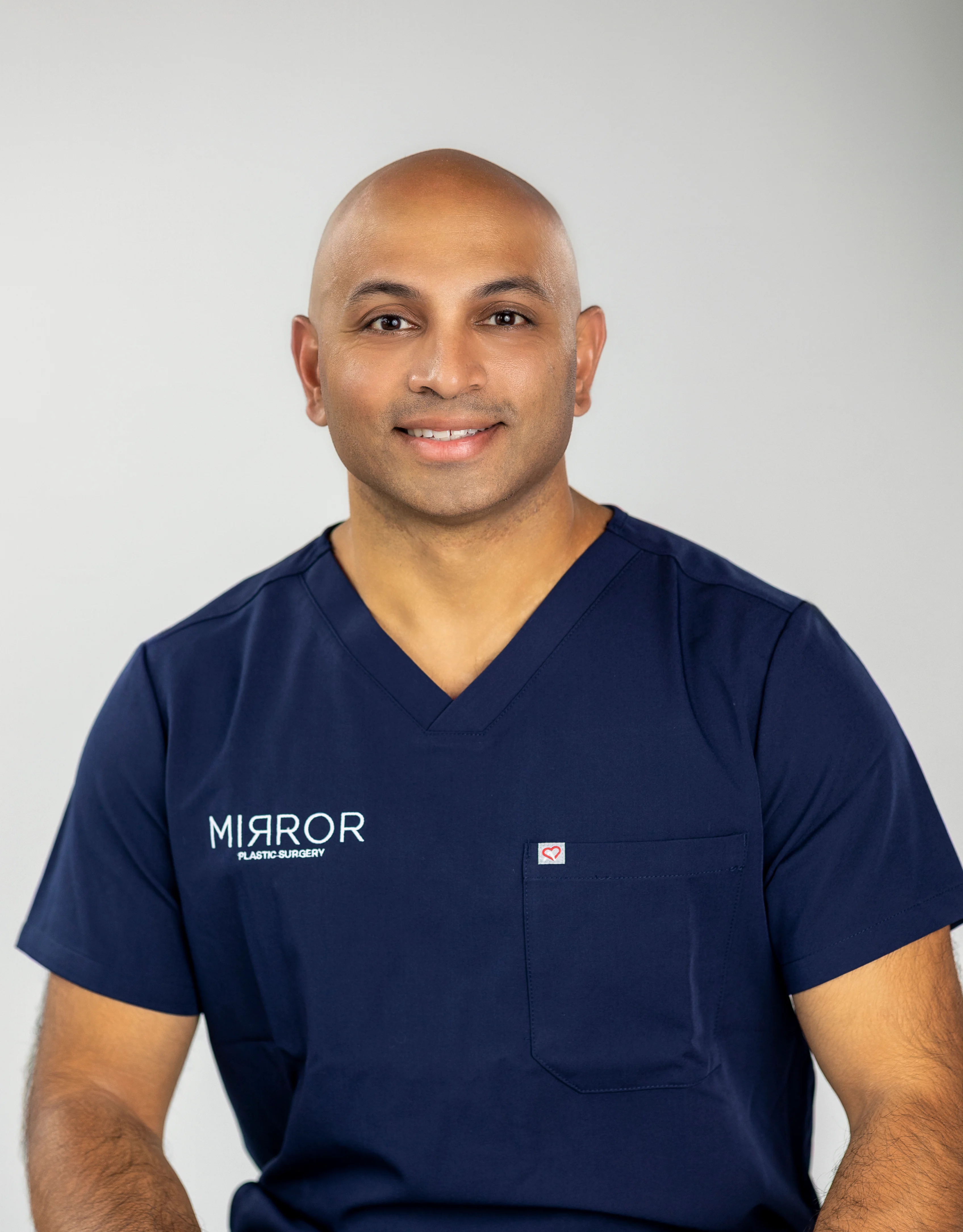
Every patient receives a concierge-level consultation of up to an hour, with a top-to-bottom assessment that explores anatomy, concerns, and long-term goals. The practice’s guiding philosophy of safety first, function second, and aesthetics third keeps laser treatment recommendations grounded in each patient’s actual needs rather than revenue potential. Dr. Chandawarkar advises leading aesthetic companies such as Merz Aesthetics and Tiger Aesthetics. These roles keep the practice at the forefront of evidence-based innovation.
A surgeon’s command of facial and subdermal anatomy supports precise, conservative laser treatments that many aestheticians and non-physician providers cannot match. Honest, unbiased communication is the standard at every appointment, and sometimes that means advising a patient that an expensive service is not necessary yet. That transparency builds the kind of long-term trust that defines the Mirror Plastic Surgery patient experience.
Mirror Plastic Surgery is located at 780 4th Ave S, St. Petersburg, FL 33701, and serves the greater Tampa Bay area. Reach the practice by phone or text at 727-361-6515, or by email at hello@mirrorplasticsurgery.com.
Get Your Custom Laser Treatment Plan
Frequently Asked Questions
Which Laser Treatment Is Best For Sun Damage?
The best laser depends on your skin type and the specific nature of your sun damage. IPL and BBL are effective for scattered brown spots and redness in lighter skin tones (Fitzpatrick I–III) with minimal downtime. Fraxel and other non-ablative fractional lasers address texture, fine lines, and diffuse photodamage across a broader range of skin types. CO2 resurfacing delivers the most dramatic results for severe damage and deep wrinkles but requires significant downtime and suits lighter skin best. PicoWay picosecond laser is highly versatile for isolated sun spots and is the safest choice for darker skin tones. A board-certified physician evaluates your skin type, damage pattern, and medical history to determine the right protocol.
What Is The Best Laser For A 60-Year-Old Woman?
For a 60-year-old woman with typical Florida sun damage, a combination approach often produces the best outcomes. BBL or IPL can clear brown spots and redness, while fractional resurfacing such as Fraxel, MOXI, or Halo improves texture and fine lines. For deeper wrinkles and more severe photodamage, fractional CO2 offers dramatic, long-lasting results. The safest and most effective protocol depends on skin type, medical history, and the specific concerns being addressed. A physician consultation is the essential first step to building a personalized treatment plan rather than applying a one-size-fits-all approach.
What Permanently Removes Sun Spots?
New sun spots can still form over time, even after successful treatment, because ongoing UV exposure continues to stimulate melanin production. Laser and light-based treatments can clear existing spots very effectively. As noted earlier, picosecond lasers achieve the highest clearance rates for solar lentigines. IPL and BBL achieve 74.6%–90% clearance for diffuse sun damage1. Results typically last six to twelve months or longer with consistent sun protection and maintenance treatments. Daily broad-spectrum SPF 30+ sunscreen remains the single most important factor in preserving results, especially in Florida’s year-round UV environment.
What Are The Risks Of Laser Treatment For Darker Skin?
Darker skin tones (Fitzpatrick IV–VI) carry a higher risk of post-inflammatory hyperpigmentation, burns, and scarring from laser treatments. These risks decrease significantly when treatment is performed by a physician experienced with skin of color, using the safer long-wavelength options mentioned above, conservative energy settings, and test spots assessed over four to six weeks before treating a larger area. Pre-treatment skin priming with depigmenting agents such as hydroquinone or retinoids for two to four weeks before the procedure further reduces risk. IPL and BBL are generally inappropriate for Fitzpatrick V–VI skin. Ethnic background alone does not reliably define skin type, so individualized physician assessment is essential.
How Do I Choose A Safe Laser Provider In Florida?
Verify that a board-certified physician, such as a plastic surgeon or dermatologist, performs or directly supervises all laser treatments. Confirm the provider has documented experience treating your specific skin type and concern. Expect a thorough consultation that includes a full assessment of your medical history, skin type, and treatment goals, rather than a rushed sales appointment. Ask to see before-and-after photos of patients with similar skin tones and concerns. Confirm the facility has a designated Laser Safety Officer and complies with ANSI Z136.3 standards. Be cautious of bargain pricing on ablative treatments, which often signals older equipment or undertrained operators. In Florida, the Board of Medicine treats most aesthetic laser procedures as medical procedures requiring physician oversight.
Disclaimer: Results may vary from person to person. Editorial content, before and after images, and patient testimonials do not constitute a guarantee of specific results.
1 Results may vary from person to person. Editorial content, before and after images, and patient testimonials do not constitute a guarantee of specific results.