
Written by: Dr. Akash Chandawarkar, Board Certified Plastic Surgeon, Mirror Plastic Surgery | Last updated: July 11, 2026
Key Takeaways for Tampa Women Considering Hair Restoration
- The most appropriate hair treatment for female alopecia depends on a personalized evaluation of loss pattern, donor health, hormones, and medical history.
- Most women do best with regenerative or medical stabilization first. Surgery is reserved for confirmed patterned loss with a strong donor zone.
- Non-surgical regenerative options such as PRP and Acorn Biolabs Secretome often make the most sense for early-to-moderate thinning.
- A thorough medical workup that rules out reversible causes like thyroid issues or hormonal imbalance should always come before treatment.
- Explore the safest, most effective options for your specific pattern of loss by scheduling a personalized consultation at Mirror Plastic Surgery.
Why Female Hair Loss Is Increasing in Tampa Bay
About 33% of women experience some form of hair loss during their lifetime, and by age 50, roughly 40% notice thinning. For women in Tampa Bay dealing with perimenopause, hormone shifts, or chronic styling stress, these numbers translate into a growing need for clear, evidence-based guidance instead of one-size-fits-all clinic pitches.
Female hair loss does not behave like a single disease. Androgens, estrogen decline, thyroid function, PCOS, postpartum telogen effluvium, and nutrition all interact in ways that differ from male androgenetic alopecia. Frontal fibrosing alopecia has also become more common in postmenopausal women and is often mistaken for simple hairline recession, which reinforces the need for careful diagnosis before any procedure.
Mirror Plastic Surgery structures hour-long consultations to sort through this complexity and rule out reversible medical causes before discussing procedures. Once candidacy is established through proper evaluation, understanding the investment required becomes the next practical step.
Hair Transplant and Regenerative Treatment Costs in Tampa
Cost matters in any treatment decision, yet it should come after confirming that you are a safe and appropriate candidate. Once you know surgery or regenerative care fits your anatomy, several variables shape the total investment.
The main cost drivers for surgical procedures include:
- Number of grafts required, with hairline restoration often needing 800–1,500 grafts, crown coverage 1,000–2,500, and extensive loss 3,000 or more
- Technique selected, since FUE usually carries a higher per-graft fee than FUT because each follicular unit is extracted individually
- Surgeon credentials and oversight, as physician-led procedures typically cost more than technician-led ones but provide greater safety, consistency, and natural-looking results
- Local market and facility quality
Non-surgical regenerative options follow a different pricing pattern. PRP hair restoration sessions often range from $500 to $2,000 per visit, with three to four initial treatments and periodic maintenance. Because anatomy, loss pattern, and goals vary widely, Mirror Plastic Surgery provides individualized pricing during consultation instead of quoting a single number online.
When Non-Surgical Treatment Beats Hair Transplant for Women
Many women benefit more from a non-surgical regenerative plan than from immediate transplant. The 2026 gold standard protocol for pattern hair loss starts with medical stabilization using medications such as minoxidil or finasteride, reserves transplant for more advanced cases, and supports regrowth with PRP before and after surgery.
PRP therapy remains the most clinically supported non-surgical regenerative option for early-to-moderate hair loss, with many patients noticing improvement after three to six monthly sessions and maintenance every six to twelve months.1 Women often see fuller volume, less shedding, and more even scalp coverage than men.1
Mirror Plastic Surgery also offers hair restoration with Acorn Biolabs Secretome, an advanced regenerative treatment delivered by injection or topical application. This approach reflects the practice’s safety-function-aesthetics hierarchy: improve the biological environment first, then consider surgery only when anatomy and candidacy clearly support it.
A 2025 network meta-analysis found that microneedling combined with minoxidil produced the strongest results for women, as microneedling improves topical penetration and stimulates growth factors. This aligns with the stabilization period discussed earlier, giving medical therapy time to work before any surgical decision.
That said, surgery still has a role when anatomy supports it. Surgical FUE remains appropriate for confirmed patterned loss with a stable, healthy donor zone. According to the ISHRS 2025 Practice Census, FUE accounted for 85.4% of male hair restoration surgical procedures, with seven to fourteen days of recovery and small dot scars compared with FUT’s ten to twenty-one day recovery and linear scar. Surgery performed without prior stabilization can allow continued loss of native hairs, so the order of treatments matters as much as the treatments themselves.
No-Shave FUE for Women in Tampa: What to Expect
No-shave FUE frequently comes up in conversations with women exploring hair restoration, and several myths surround this technique. Understanding how it works helps set realistic expectations.
Standard FUE requires shaving the donor area so the surgeon can see and extract follicles accurately. No-shave or unshaven FUE trims only the follicles being removed and leaves surrounding hair longer, which makes recovery less noticeable. This method can work well for select candidates, yet it adds complexity and does not fit every case.
Candidacy for any FUE method, whether shaved or unshaved, depends on the same anatomical criteria. Donor miniaturization above certain thresholds makes surgery unsafe, and the specific cutoffs appear in the candidacy table below. Understanding what no-shave FUE can and cannot do requires clearing up several persistent misconceptions:
- No-shave FUE does not replace the need for a strong, healthy donor zone.
- Diffuse thinning does not automatically qualify someone for FUE, and significant donor miniaturization can rule out surgery regardless of technique.
- Surgery is not always necessary, since many women with early-to-moderate loss gain meaningful density from regenerative options without any incision.
Women whose loss pattern, donor health, or medical history make surgery unsafe or unwise can still pursue improvement. Acorn Biolabs Secretome and PRP-based protocols at Mirror Plastic Surgery provide a path to better density without recovery time, surgical risk, or shaving.
Female Hair Loss Candidacy: How Surgeons Decide
| Criterion | Favorable for Surgery | Favor Regenerative First | Contraindication / Rule-Out Required |
|---|---|---|---|
| Loss pattern | Patterned (Ludwig I–II confined to crown/top) | Early diffuse thinning across scalp | DUPA (miniaturization extending to temporal, parietal, and occipital scalp) |
| Donor miniaturization | Well below 15%, stable | 15–35% — warning zone | Above 35% — absolute contraindication |
| Medical stabilization | Loss stable on minoxidil and/or finasteride for 6–12 months | Active shedding; not yet on medical therapy | Unresolved thyroid dysfunction, iron deficiency, or hormonal imbalance requiring workup |
| Menopausal/hormonal status | Post-menopausal with stable hormonal profile | Perimenopausal with fluctuating hormones | Active hormonal imbalance — blood tests required before any procedure |
Why Provider Expertise and Safety Standards Matter
Hair restoration outcomes depend heavily on the expertise of the person evaluating and treating you. At Mirror Plastic Surgery, every hair restoration consultation takes place with Dr. Akash, who has appeared on Newsweek’s America’s Best Plastic Surgeons list for two consecutive years.
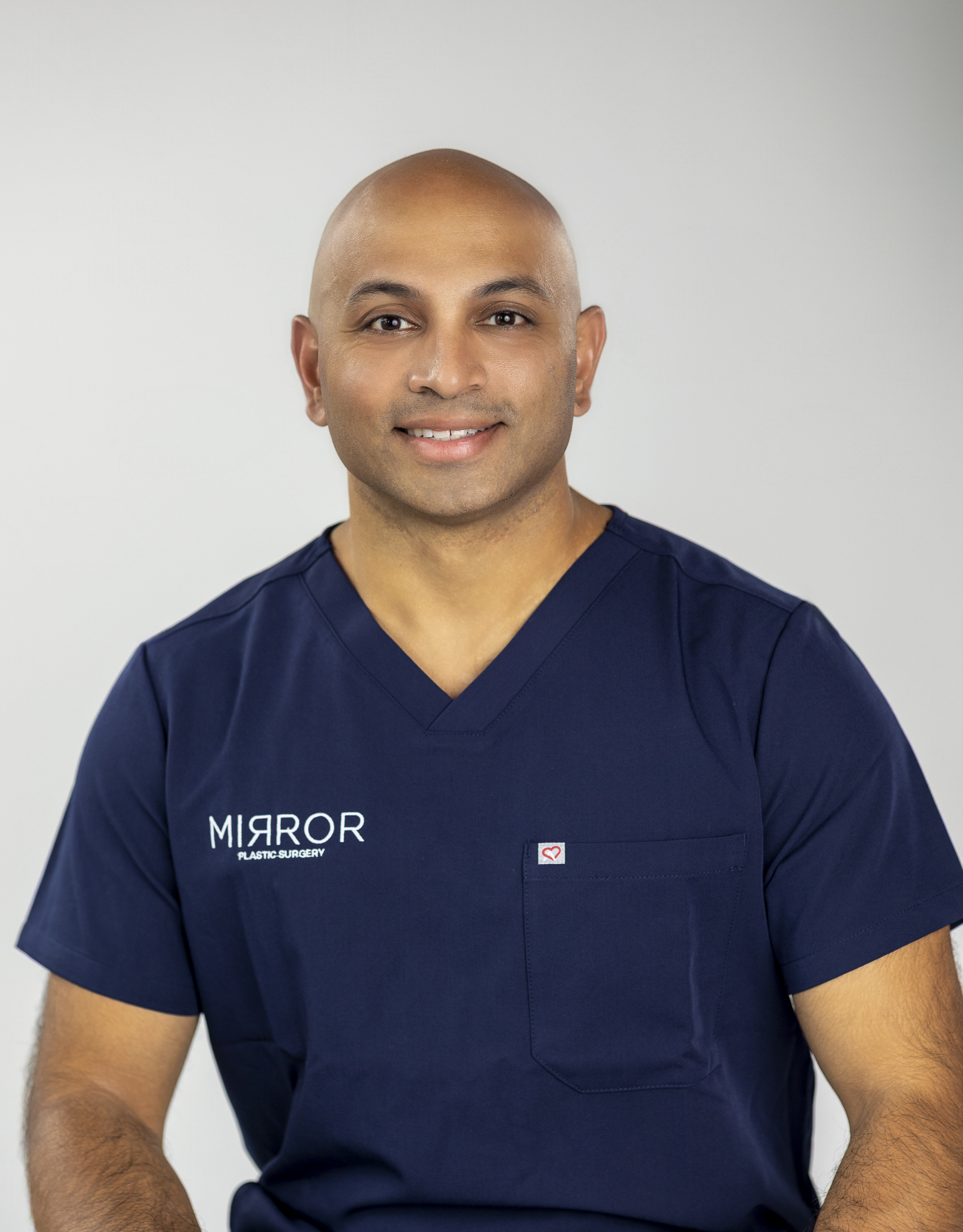
Dr. Akash trained at MIT in neuroscience and nuclear engineering, then at the Harvard-MIT Division of Health Sciences and Technology. He completed a seven-year integrated plastic and reconstructive surgery residency at Johns Hopkins University and an aesthetic surgery fellowship at Manhattan Eye, Ear and Throat Hospital (MEETH), one of the most competitive programs in the country. His Stanford University Biodesign Innovation Fellowship shapes his approach to new technologies, including regenerative hair restoration.
Mirror Plastic Surgery’s concierge model limits the schedule to one or two procedures per day. High-volume clinics may perform five to ten procedures daily, which makes individualized attention to donor assessment, graft placement angle, and post-procedure planning difficult. The hour-long consultation model described earlier allows Dr. Akash to personally complete a full anatomical assessment, review medical history, and discuss whether surgery, regenerative treatment, or medical stabilization fits your situation.
The practice’s safety-function-aesthetics hierarchy means no procedure moves forward unless it is safe for your specific anatomy. October 2025 analyses criticized the FDA for not issuing stronger safety warnings on finasteride’s links to depression, mood changes, and suicidal ideation despite long-standing evidence. A physician-led practice tracks and integrates this evolving data into treatment planning, while a technician-led or high-volume clinic may not.
Frequently Asked Questions
Am I a good candidate for a hair transplant as a woman?
Female candidacy for hair transplant surgery depends on anatomical and medical factors that differ from male candidacy. Strong candidates usually have loss confined to the top of the scalp, a stable donor area with low miniaturization, adequate donor density, and hair loss stabilized with medical therapy for at least six to twelve months. Women with diffuse thinning across the scalp, active hormonal imbalance, or significant donor miniaturization often benefit more from regenerative or medical options first. A thorough evaluation with blood work to rule out thyroid dysfunction, iron deficiency, and hormonal imbalance should always come before any final decision.
Do I have to shave my head for a hair transplant?
Standard FUE procedures require shaving the donor area so the surgeon can extract follicular units precisely. Unshaven or no-shave FUE techniques exist for select candidates and preserve the appearance of surrounding hair during recovery, but they add complexity and do not suit everyone. The more fundamental question is whether surgery makes sense at all, since many women reach meaningful density gains through regenerative treatments without shaving, incisions, or surgical recovery.
What is the difference between PRP and Acorn Biolabs Secretome for hair restoration?
PRP, or platelet-rich plasma, comes from the patient’s own blood and delivers concentrated growth factors to the scalp to stimulate follicular activity. It has strong clinical support for early-to-moderate hair loss and carries a low risk profile because it uses the patient’s own cells. Acorn Biolabs Secretome is an advanced regenerative option that delivers bioactive signaling molecules to the scalp, either by injection or topical application. Both treatments are non-surgical and work best when follicles remain active, and neither can restore hair in fully bald areas. Dr. Akash evaluates each patient’s pattern of loss and scalp health to select the most appropriate regenerative protocol.
How long does it take to see results from non-surgical hair restoration?
Non-surgical regenerative treatments require time and consistency. Visible changes usually begin between three and six months after starting treatment, with peak results for most women between nine and twelve months.1 Realistic outcomes include thicker strands, less shedding, and better coverage, not complete regrowth in fully bald zones.1 Maintenance sessions every six to twelve months often help preserve gains because hair loss tends to be progressive and the scalp environment continues to change.1
How do I evaluate a hair restoration provider’s credentials and safety standards?
Key questions for any provider include whether the evaluating and treating physician is board-certified in plastic surgery or dermatology and whether the surgeon personally performs or directly supervises all stages of the procedure. Daily caseload also matters, as does the depth of the consultation, including medical history review and blood work to rule out reversible causes of hair loss. A physician-led practice that limits daily volume, conducts detailed pre-procedure evaluations, and operates in an accredited facility offers a different safety profile than a high-volume, technician-led clinic. Dr. Akash’s certification by the American Board of Plastic Surgery and Mirror Plastic Surgery’s concierge model reflect this higher standard of care.
1 Results may vary from person to person. Editorial content, before and after images, and patient testimonials do not constitute a guarantee of specific results.