
Written by: Dr. Akash Chandawarkar, Board Certified Plastic Surgeon, Mirror Plastic Surgery | Last updated: July 6, 2026
Key Takeaways
- Top plastic surgeons reduce breast augmentation risks through five pillars: rigorous patient selection, accredited facilities, no-touch techniques with antimicrobial irrigation, anatomy-matched sizing, and structured long-term monitoring.1
- Dr. Akash’s training at Harvard-MIT, Johns Hopkins, MEETH, and Stanford, plus his FDA testimony on implant safety, shapes every protocol at Mirror Plastic Surgery.
- Pre-operative screening, nicotine cessation, accredited surgical centers, and board-certified anesthesiologists form the base for lowering infection, capsular contracture, and other complications.
- Intraoperative choices such as inframammary incisions, submuscular placement, no-touch insertion, and precise pocket creation lower revision rates and improve long-term outcomes.1
- Patients who want concierge-level care with a five-year FDA-aligned monitoring plan can schedule a consultation at Mirror Plastic Surgery to review a personalized risk-reduction strategy.
The Core Problem: Skipped Steps Create Predictable Complications
Breast augmentation ranks among the most common aesthetic procedures in the United States, yet complications remain measurable when protocols are abbreviated. Capsular contracture occurs more often with subglandular implant placement, and revision surgery carries financial, physical, and psychological costs. Infection, implant malposition, rippling, and bottoming out rarely occur at random. They usually reflect skipped steps or fragmented systems. For Tampa Bay women, the real decision centers on whether the surgeon and facility follow systematic protocols that reduce each specific risk.
Expert Context: Dr. Akash’s Training and Safety Leadership
Dr. Akash earned his medical degree from Harvard Medical School through the Harvard-MIT Division of Health Sciences and Technology, graduating with Honors. His seven-year plastic and reconstructive surgery residency at Johns Hopkins University included rotations at the R Adams Cowley Shock Trauma Center and the Curtis National Hand Center. He then completed an aesthetic surgery fellowship at the Manhattan Eye, Ear and Throat Hospital (MEETH), one of the most competitive cosmetic surgery programs in the country.
A Stanford University Biodesign Innovation Fellowship further anchors his approach in evidence-based technology and device safety. He has testified before the U.S. Food and Drug Administration on breast implant safety, and Newsweek has recognized him in America’s Best Plastic Surgeons for two consecutive years, including 2025. This depth of training shapes every safety protocol described in this article.
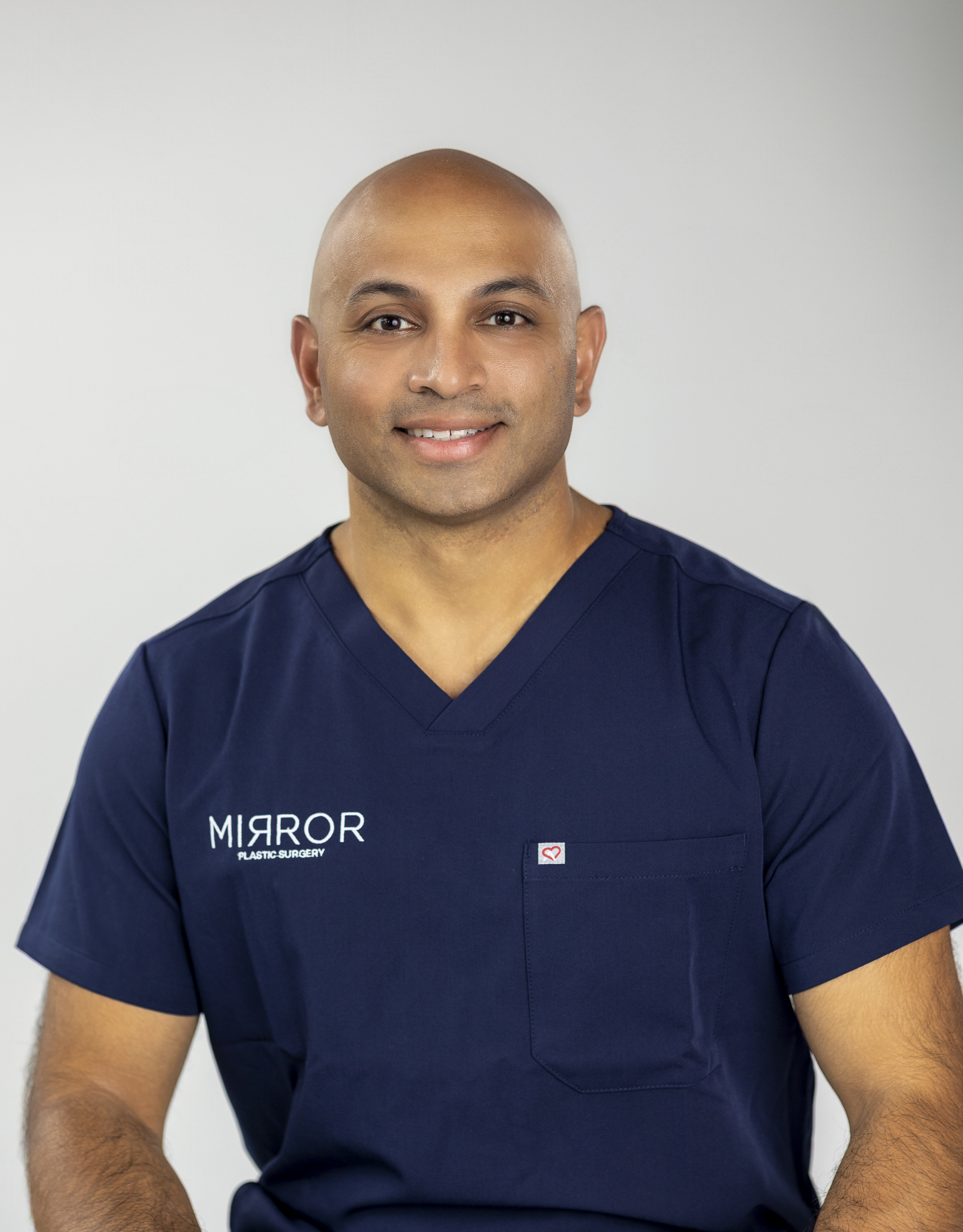
Schedule a consultation to discuss your candidacy with a surgeon whose training spans Harvard, Johns Hopkins, MEETH, and Stanford.
Stage 1: Pre-Operative Screening and Red-Flag Identification
Safe breast augmentation starts with careful patient selection. Ideal candidates are physically healthy, emotionally prepared, non-smokers or willing to quit, and hold realistic expectations about outcomes. Pre-operative screening at Mirror Plastic Surgery includes blood panels, mammogram review when indicated, and EKG to confirm cardiovascular readiness. Blood-thinning medications such as aspirin and ibuprofen are stopped several weeks before surgery to reduce bleeding risk.
Nicotine cessation is non-negotiable. Nicotine impairs microvascular perfusion, raises infection risk, and delays wound healing, which together increase capsular contracture susceptibility. Patients also undergo screening for autoimmune conditions, prior radiation history, and unrealistic size expectations. Mismatched expectations or unsuitable implant choices raise the risk of bottoming out, tissue damage, rippling, and capsular contracture. Dr. Akash’s hour-long consultations create space to uncover these red flags before any surgical plan is finalized.
Stage 2: Accredited Facility and Anesthesia Safety Standards
Accredited outpatient surgical centers certified by AAAASF, AAAHC, or The Joint Commission maintain regular inspections, outcome monitoring, and quality systems that result in serious complication rates below 0.5% and mortality rates as low as 1 in 57,000 procedures.1 Mirror Plastic Surgery operates only in accredited facilities that follow CDC-aligned infection prevention protocols, including strict sterilization standards, hand hygiene mandates, and full personal protective equipment use.
These accredited facilities also require anesthesia to be administered by licensed anesthesiologists and mandate Advanced Cardiac Life Support (ACLS) certification for all staff. Dr. Akash’s board certification by the American Board of Plastic Surgery grants him hospital privileges if a rare complication requires escalation beyond the outpatient setting, which creates a safety net many non-board-certified providers cannot offer.
Stage 3: Intraoperative Techniques That Lower Complication Rates
Intraoperative decisions carry the greatest individual weight in capsular contracture prevention.1 At Mirror Plastic Surgery, five evidence-based techniques work together to create a sterile field, limit tissue trauma, and reduce bacterial load, which are the three factors that most directly influence capsular contracture rates.
- Inframammary incision: The inframammary crease incision is the most commonly used in the United States because it is well concealed, heals reliably, and allows versatile reuse for future procedures. The periareolar incision carries a higher risk of capsular contracture and potential nipple-areola deformation.
- No-touch insertion technique: The no-touch implant insertion technique using an insertion funnel reduces bacterial contamination risk. A sterile sleeve shields the nipple-areolar complex, and the implant never contacts gloves or instruments that have touched skin.
- Antimicrobial pocket irrigation: Antimicrobial pocket irrigation with solutions such as chlorhexidine or hypochlorous acid lowers the incidence of capsular contracture by reducing bacterial biofilm formation.1
- Submuscular placement: Submuscular implant placement reduces capsular contracture risk compared to subglandular placement and improves soft tissue coverage.1
- Precise pocket creation: Meticulous dissection limits dead space, reduces hematoma risk, and prevents implant malposition, which together decrease long-term revision rates.1
Stage 4: Post-Operative Care Protocols That Protect Your Results
Structured post-operative care helps minimize scarring, shorten healing time, and reduce complications such as infection, swelling, and capsular contracture.1 Mirror Plastic Surgery’s protocol includes compression garment use, clear activity limits, and incision care instructions tailored to each patient’s anatomy and implant placement. This framework supports predictable healing.1
Patients avoid high-intensity exercise such as weight lifting and swimming for three months after breast augmentation so the implant pocket can stabilize. Light activity resumes in the first week, with gradual reintroduction of preferred activities over the following weeks. Scar management with silicone sheeting begins once incisions fully close. In select patients, postoperative montelukast (10 mg daily) for up to three months may help reduce capsular inflammation and contracture risk, and Dr. Akash discusses this option when clinically appropriate.1
Stage 5: Structured 5-Year Monitoring per FDA Guidelines
The FDA recommends screening silicone gel implants with MRI or ultrasound at five to six years after surgery and every two to three years thereafter to detect silent rupture. Mirror Plastic Surgery builds this monitoring schedule into every patient’s long-term care plan from the start. Scheduled follow-up appointments allow clinical assessment of implant position, capsule formation, and tissue changes over time.
A follow-up examination at six months after breast augmentation includes clinical evaluation, possible laboratory or imaging studies, and routine health checks to assess implant status and overall well-being. When revision becomes appropriate, planning occurs proactively rather than in crisis mode.
High-Volume Mills vs. Low-Volume Concierge Practices
Long-term monitoring requires a practice structure that can sustain it. The operational model of a surgical practice, especially whether it prioritizes volume or depth, directly determines whether five-year protocols are followed or quietly dropped. The following comparison highlights documented differences between high-volume and low-volume approaches.
- Daily surgical volume: High-volume practices often perform five to ten surgeries per day. Mirror Plastic Surgery limits the schedule to one to two cases, which keeps the full team focused on each patient before, during, and after surgery.
- Consultation depth: High-volume practices frequently conduct brief consultations. Mirror Plastic Surgery dedicates up to one hour per patient for a detailed anatomical assessment and expectation review.
- Intraoperative attention: Surgeon fatigue and time pressure in high-volume settings raise the chance of abbreviated pocket dissection, skipped irrigation steps, and rushed implant placement. Each shortcut increases complication risk.
- Follow-up rigor: High-volume practices often lack structured long-term monitoring programs. Mirror Plastic Surgery integrates FDA-aligned imaging schedules into every patient’s plan and tracks adherence.
- Complication management: Accredited facilities with board-certified anesthesiologists and ACLS-certified staff maintain the sub-0.5% complication benchmark established earlier, a standard that non-accredited, high-volume settings cannot reliably match.
Key Questions to Ask Your Breast Augmentation Surgeon
Targeted questions help you evaluate whether a surgeon’s systems match their promises. Ask about daily volume, facility standards, technique, and long-term follow-up so you can compare practices on more than price alone.
- How many surgeries do you perform per day, and how does that schedule affect the time dedicated to my procedure?
- Is your surgical facility AAAASF, AAAHC, or Joint Commission accredited, and will a board-certified anesthesiologist be present?
- Which incision approach do you recommend for my anatomy, and what are the trade-offs?
- What antimicrobial irrigation protocol do you use, and what capsular contracture rates have you observed in your practice?
- What does your five-year implant monitoring plan include, and how do you handle revision planning if issues arise?
Common Misconceptions About Surgeon Qualifications and Technique
“All board-certified surgeons are equal.” Board certification by the American Board of Plastic Surgery requires at least six years of training and rigorous examinations, but it sets a floor rather than a ceiling. Fellowship training in aesthetic surgery, subspecialty experience, breast-specific case volume, and ongoing research participation all distinguish surgeons above that baseline. Dr. Akash’s Harvard-MIT, Johns Hopkins, MEETH, and Stanford credentials, combined with his FDA testimony on breast implant safety, represent preparation that extends well beyond certification requirements.
“Technique alone determines safety.” Technique matters, but it functions within a broader system. An elite intraoperative technique performed in a non-accredited facility with a non-board-certified anesthesiologist and no structured monitoring produces weaker outcomes than the same technique embedded in a full safety protocol. Risk reduction remains systemic rather than isolated.
Step-by-Step Checklist for a Safer Breast Augmentation
Effective preparation follows a clear sequence. Start by confirming surgeon and facility credentials, then address your health status, surgical plan, and long-term follow-up.
First, confirm that your surgeon holds American Board of Plastic Surgery certification and has completed an aesthetic surgery fellowship. Next, verify that the surgical facility carries AAAASF, AAAHC, or Joint Commission accreditation and that a board-certified anesthesiologist, not a CRNA alone, will manage your anesthesia. Once your team is confirmed, complete all pre-operative labs, mammogram, and EKG as directed, and disclose all supplements and medications so your plan can be adjusted safely.
During consultation, ask specifically about incision choice, implant placement plane, and irrigation protocol so you understand how each decision affects risk. Request a written long-term monitoring schedule that includes imaging milestones. Finally, plan for three months of activity restriction and arrange appropriate post-operative support at home so you can follow the recovery plan without avoidable strain.
How Breast Augmentation Choices Shape Long-Term Well-Being
Breast augmentation begins a long-term relationship with both an implant device and the surgeon who placed it. Implants are not lifetime devices, and revision surgery for size change, capsular contracture, rupture, or aesthetic refinement becomes increasingly likely over a twenty-year horizon. Choosing a surgeon whose practice is built for longitudinal care, who performs breast revision surgery with the same rigor as primary augmentation, and who maintains hospital privileges for rare escalations creates value that compounds over time. Mirror Plastic Surgery’s philosophy of safety first, function second, and aesthetics third is designed for this long arc.
Frequently Asked Questions
Who is a good candidate for breast augmentation, and what disqualifies someone?
Good candidates are adults in stable physical health, non-smokers or committed to cessation before surgery, free of active infection or uncontrolled systemic disease, and holding realistic expectations about outcomes. Disqualifying factors include active nicotine use close to the surgical date, uncontrolled autoimmune conditions, prior chest radiation without adequate tissue assessment, active breast infection, and psychological conditions that may distort body image or outcome satisfaction. A thorough pre-operative evaluation, including blood work, imaging review, and an in-depth consultation, remains the only reliable way to determine candidacy for a specific individual.
What does recovery from breast augmentation look like week by week?
During the first 48 hours, cold compresses help reduce swelling and discomfort. Light activity resumes within the first week, but any impact to the chest area is avoided. Most patients return to desk work within one to two weeks. Strenuous upper-body exercise, swimming, and heavy lifting remain restricted for three months so the implant pocket can stabilize and capsule formation can proceed normally.
Scar management with silicone sheeting begins once incisions fully close, typically around two to three weeks. A clinical follow-up at six months assesses implant position, tissue response, and overall healing. Full softening and settling of the implants may take three to six months.
How should I plan for potential revision surgery in the future?
Revision planning starts at the primary consultation rather than when a problem appears. Choosing an inframammary incision preserves that access point for future procedures. Submuscular placement maintains soft tissue coverage options for revision. Selecting a surgeon who performs complex revision surgery, including capsulectomy with acellular dermal matrix reconstruction and implant exchange, means you are not starting over with a new provider if intervention becomes necessary years later. At Mirror Plastic Surgery, revision surgery follows the same systematic protocol as primary augmentation, and long-term monitoring is built into every patient’s care plan from the outset.
What imaging does the FDA recommend for monitoring silicone implants, and how often?
The FDA recommends MRI as the preferred modality for detecting silent silicone gel implant rupture. The current guidance calls for an initial MRI at five to six years after implant placement, followed by repeat imaging every two to three years. Ultrasound serves as an alternative when MRI is not accessible, although it has lower sensitivity for intracapsular rupture. Routine clinical examination at each follow-up visit assesses changes in implant feel, contour irregularities, and early signs of capsular contracture. Patients should maintain their monitoring schedule even without symptoms, because silent rupture by definition produces no immediate clinical signs.
Conclusion
Minimizing breast augmentation risks results from five systematic pillars executed without shortcuts: evidence-based patient selection, accredited facility standards, proven intraoperative technique, structured post-operative care, and long-term FDA-aligned monitoring. Mirror Plastic Surgery’s concierge model and Dr. Akash’s elite training, detailed earlier, together create a standard of care that high-volume practices structurally cannot replicate.
Schedule your consultation with Dr. Akash and take the first step toward a breast augmentation plan built on the highest standard of safety available in Tampa Bay.
1 Results may vary from person to person. Editorial content, before and after images, and patient testimonials do not constitute a guarantee of specific results.