
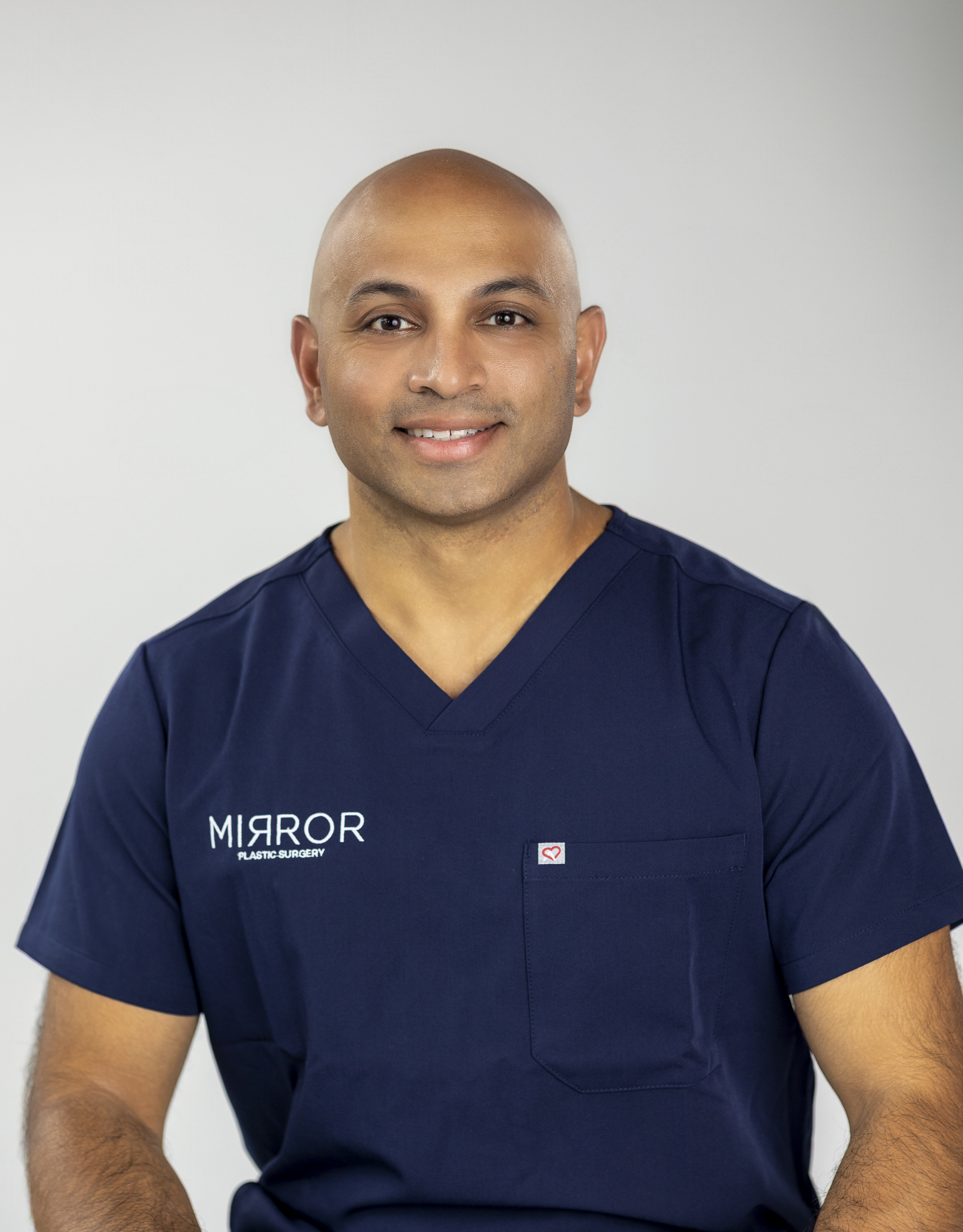
Written by: Dr. Akash Chandawarkar, Board Certified Plastic Surgeon, Mirror Plastic Surgery
Key Takeaways
- Combining a mommy makeover with buttock augmentation in one session often exceeds safe operative time limits and raises major complication risk.
- Staging procedures is usually safer when surgery time would pass the six-hour threshold or when patients have higher BMI, medical conditions, or limited recovery support.
- Abdominoplasty and BBL require opposite recovery positions, which can increase pain, slow healing, and compromise results when performed together.
- Autologous fat transfer remains the preferred method for buttock augmentation when performed subcutaneously with ultrasound guidance in appropriate candidates.
- Schedule your personalized consultation at Mirror Plastic Surgery for a safety-first evaluation and staging plan tailored to your anatomy and goals.
Mommy Makeover Buttock Augmentation Explained
A mommy makeover usually combines abdominoplasty (tummy tuck), breast surgery (augmentation, lift, or reduction), and liposuction to address changes from pregnancy and breastfeeding. Some patients also add buttock augmentation, either with autologous fat transfer (Brazilian Butt Lift, or BBL) or silicone implants, to restore or enhance volume and contour in the buttocks.
This combined approach does not fit every patient. Many people who first ask about a single-session transformation achieve safer, more predictable results when procedures are staged across two operations. Patients and surgeons need to look closely at operative time limits, complication data, and the mechanical conflicts that appear when abdominoplasty and buttock augmentation occur together.
Why Many Patients Benefit From Staging Procedures
Total operative time is the main safety concern when combining buttock augmentation with a mommy makeover. Most safety guidelines place the threshold for combined elective procedures at about six hours, after which complication rates rise because of higher risks of deep vein thrombosis (DVT), pulmonary embolism, anesthesia events, hypothermia, surgical site infection, and surgeon fatigue. Some healthy patients with experienced teams may safely tolerate up to eight hours, but surgeons generally avoid plans that exceed six hours.
Published complication data supports this cautious approach. Large database studies show that major complication rates for abdominoplasty stay lower when the procedure is performed alone and increase when combined with body contouring and liposuction. This pattern holds across procedure types, as multicenter retrospective studies of body-contouring patients show that overall complication rates climb as more procedures are added.
These elevated complication rates relate in part to cumulative blood loss. Each major procedure can involve meaningful blood loss, and combining several operations increases total blood loss, which makes recovery more complex and demanding.
Board-certified plastic surgeons typically use clear criteria when deciding to stage procedures. Common staging triggers include:
- Total estimated operative time above six hours
- BMI above 30, which correlates with higher rates of wound problems, skin necrosis, seroma, and anesthetic events
- Diabetes, hypertension, or cardiovascular disease
- History of clotting disorders or a high Caprini score for VTE risk
- Recent nicotine use, including vaping, which impairs tissue healing
- Prior surgeries that changed blood flow to key tissue planes
- Posterior or circumferential contouring that creates conflicting recovery positions
- Limited home support for managing overlapping restrictions
Book a consultation with Dr. Akash to receive a personalized staging plan based on your anatomy, health history, and goals.
Recovery Realities After Combined Body Procedures
Recovery becomes significantly more demanding when buttock augmentation is added to a mommy makeover, whether in a single operation or staged. Combined recoveries from procedures such as breast augmentation, abdominoplasty, and liposuction multiply mobility limits rather than simply adding them, which makes daily life more challenging than after any single procedure.
Many patients do better with a staged plan in which abdominoplasty and breast procedures occur first and buttock augmentation follows later. A general recovery timeline for this staged approach includes these milestones:
- Days 1–3: Highest discomfort, drain care, compression garments, and strict positioning protocols begin.
- Days 4–14: Gradual mobility gains, no direct sitting on the buttocks if BBL was performed, and semi-upright positioning for tummy tuck recovery.
- Weeks 2–6: Return to light activity, BBL pillow required for all sitting, and continued use of an abdominal binder.
- Weeks 6–8: Most patients return to desk work, and driving restrictions usually lift with surgeon clearance.
- Months 3–6: Swelling improves, fat graft vascularization stabilizes, and the final abdominal contour becomes visible.
- Month 6 onward: Surviving fat graft volume is considered permanent, and final results can be assessed.1
Sitting Restrictions and Daily Life After BBL
The no-sit protocol after BBL is one of the toughest parts of buttock augmentation recovery. BBL patients must avoid sitting or lying directly on their buttocks for the first two weeks after surgery, including on chairs, couches, and the toilet, and instead lie on the stomach or side. Direct pressure on the buttocks can reduce blood flow to transferred fat cells, which may cause cell death and reabsorption.
After those first two weeks, patients slowly reintroduce sitting with a BBL pillow or cushion for about six to eight weeks to protect fat graft survival. Daily limitations during this period often include:
- Sleeping on the stomach or side for several weeks, often with a body pillow for support
- Using a BBL pillow under the thighs, not the buttocks, when seated
- Shifting weight onto the thighs rather than the buttocks when using the toilet
- Using a BBL pillow while driving and limiting trips to essential outings during the first several weeks
- Delaying air travel for at least six weeks because of prolonged sitting and clot risk
Recovery becomes mechanically conflicted when BBL and abdominoplasty occur in a single session. After a tummy tuck, patients cannot lie flat on the abdomen because of incision tension. After a BBL, patients must avoid lying on the back to protect the transferred fat. This combination forces a semi-flexed position with the buttocks suspended and no pressure on the abdomen, which is awkward, uncomfortable, and hard to maintain. That position can increase pain, slow healing, compromise results, and raise complication risk.
Risk Percentages and Safety Data for Combined Surgery
Registry and multicenter studies give the clearest view of complication risk when procedures are combined. Key findings from the published literature include:
- Abdominoplasty alone generally carries lower major complication rates than abdominoplasty combined with other procedures.
- Abdominoplasty with body contouring and liposuction shows higher major complication rates than abdominoplasty alone.
- BBL (fat transfer) complication rates vary by study and technique.
- Buttock implant augmentation complication rates also vary by study and technique.
- Combining three body-contouring procedures is associated with higher overall complication rates.
- VTE rates for abdominoplasty change depending on added procedures and the specific abdominoplasty technique.
- Certain awake stem cell-enriched BBL series report mostly minor complications, low serious adverse event rates, and variable revision rates.
Given these documented risks across procedure combinations, surgical volume per day becomes a meaningful safety factor. These considerations underscore why Mirror Plastic Surgery limits itself to one to two surgeries per day. This practice-level choice keeps the full clinical team focused on a single patient throughout the perioperative period, which differs from high-volume centers that perform five to ten surgeries daily.
Fat Transfer Versus Implants for Buttock Augmentation
The decision between autologous fat transfer and silicone implants depends on anatomy, available fat, desired shape, and individual risk profile. The table below summarizes key differences based on published clinical data.
| Factor | Fat Transfer (BBL) | Silicone Implants | Hybrid (Implant + Fat) |
|---|---|---|---|
| Long-term volume retention | 50–70% at one year, considered permanent after six months of vascularization | Long-lasting device, with revision rates that vary compared to BBL | Improved shape retention and lower revision rates than fat-only augmentation in select patients |
| Overall complication rate | Varies by study, with variable seroma rates | Varies by study, and seroma is commonly reported | Higher complication risk than fat transfer alone because of added complexity |
| Candidacy requirements | Sufficient donor fat, stable weight, and subcutaneous-only injection technique | Useful when fat availability is low, with implants under 300 cc showing lower complication rates | Considered when fat quality is poor, embolic risk is elevated, or anatomy limits safe subcutaneous-only fat placement |
| Revision considerations | Some patients seek touch-up procedures over time, and revision rates vary across series | Staged revision is recommended, as immediate pocket conversion during explantation raises complication rates above 30% | Lower revision rates than fat-only augmentation in carefully selected candidates |
Autologous fat grafting is widely regarded as the preferred method for buttock augmentation, with high patient satisfaction and serious complications in fewer than 1% of cases when fat is injected only in the subcutaneous plane.1 Surgeons must perform gluteal fat transfer above the muscle under real-time ultrasound guidance to avoid intramuscular placement, which carries a high risk of thromboembolic events related to the gluteal venous system.
Ten-Year Outlook After Buttock Augmentation
Long-term outcome data for buttock augmentation continues to grow. For fat transfer, most peer-reviewed studies place typical BBL longevity in the 5–10+ year range, with the retention rates noted earlier holding stable beyond the first year.1 Follow-up studies with at least five years of data show sustained outcomes in 60–75% of BBL patients.1
Fat grafts pass through three phases before they behave like native fat: an ischemic phase from days 0 to 4, a revascularization phase from days 4 to 90, and a remodeling phase from months 3 to 12. Once fat survives beyond six months, it is considered permanent and responds to weight changes like the rest of the body’s fat.1
Postpartum patients face additional considerations. Pregnancy after a BBL can change results because pregnancy-related weight shifts affect grafted fat, and abdominal wall changes alter body proportions. Many surgeons therefore advise patients to complete their families before pursuing a BBL when possible.
Implant-based augmentation behaves differently over time. Buttock implants have higher long-term revision rates than BBL fat grafting, even though they are designed as long-term devices. Technique plays a major role, as implants smaller than 300 cc show lower complication rates, and surgeons usually recommend a staged revision plan for any complications. Attempting immediate pocket conversion during explantation raises the complication rate above 30%.
Book a consultation with Dr. Akash, named to Newsweek’s America’s Best Plastic Surgeons list for two consecutive years, to discuss which buttock augmentation approach fits your anatomy and long-term goals.
The Shift Toward Personalized, Safety-First Evaluation
Modern plastic surgery increasingly favors individualized, safety-first evaluation instead of standardized procedure bundles. Studies of combined lipoabdominoplasty with gluteal fat transfer report low major complication rates when patient selection, technique, and operative time are tightly controlled. These results show what is possible when each of those factors receives careful attention.
Mirror Plastic Surgery has built its structure around this philosophy. This limited daily volume, discussed earlier in the context of complication risk, allows Dr. Akash and the clinical team to maintain full focus on each patient before, during, and after surgery. Every surgical plan follows a comprehensive consultation of up to one hour that reviews anatomy, health history, recovery logistics, and realistic goals. All procedures take place in accredited facilities with board-certified physician anesthesiologists.
Dr. Akash’s background includes Harvard Medical School, a seven-year integrated plastic surgery residency at Johns Hopkins, and an aesthetic surgery fellowship at the Manhattan Eye, Ear and Throat Hospital. This training provides the depth needed to manage complex combined or staged body contouring safely. Board certification by the American Board of Plastic Surgery also ensures hospital access in the rare event of a surgical complication.
Frequently Asked Questions
Who qualifies for combined versus staged mommy makeover with buttock augmentation?
Combined surgery in a single session suits patients who are medically optimized, have a BMI at or below 30, are nicotine-free, maintain a stable weight, and have completed childbearing. The full surgical plan also needs to fit within the six-hour threshold discussed earlier. Staging usually makes more sense when operative time would exceed that limit, when conditions such as diabetes, hypertension, or clotting disorders are present, when BMI is elevated, when home recovery support is limited, or when abdominoplasty and BBL together create conflicting positioning demands. Surgeons individualize this decision because no two patients share the same anatomy, health history, or recovery circumstances, so a thorough preoperative evaluation remains essential.
How should patients prepare for surgery and recovery?
Preparation starts weeks before the surgical date. Patients should reach a stable weight near their goal range and stay nicotine-free for several weeks before and after surgery, since nicotine significantly impairs healing and raises complication risk. Blood work and medical clearance are standard. Patients planning BBL need dedicated recovery support at home, because the two-week no-sit protocol makes independent daily tasks, including childcare, very difficult.
Helpful steps include arranging help with young children, setting up a recovery space with pillows and positioning aids, and planning for limited mobility for four to six weeks. Patients considering buttock augmentation as part of a mommy makeover should also confirm that their family is complete, since future pregnancy can change both abdominal and buttock results.
What pain management strategies are used after these procedures?
Modern pain management for combined body contouring relies on a multimodal plan that reduces opioid use while keeping patients comfortable. Surgeons often use long-acting local anesthetics during surgery, scheduled non-opioid anti-inflammatory medications, and targeted prescription pain relief for breakthrough discomfort in the first few days. Compression garments help with both contour and comfort by reducing swelling and providing support.
For BBL patients, pain control and positioning go hand in hand. Maintaining the correct sleep and sitting positions is essential for fat graft survival, and adequate pain management helps patients follow these protocols. The exact regimen is tailored to each person’s health history, procedure mix, and pain tolerance during preoperative planning.
How can patients evaluate surgeon credentials and facility standards?
Board certification by the American Board of Plastic Surgery is the first credential to confirm. This certification shows that a surgeon completed an accredited residency, passed written and oral exams, and maintains ongoing education. Fellowship training in aesthetic surgery adds another layer of specialization beyond residency.
Facility standards matter just as much. Complex combined procedures should take place in an accredited outpatient surgical center or hospital, not an office procedure room, with a board-certified physician anesthesiologist managing anesthesia. Patients should also ask how many surgeries the practice performs per day, since daily surgical volume reflects how much attention and how many resources each patient receives. A surgeon who limits daily volume, uses accredited facilities, and holds hospital privileges for rare complications offers a different level of care than a high-volume practice focused on throughput.
Conclusion: Choosing a Safer Path to Your Goals
Mommy makeover buttock augmentation involves a series of decisions about operative time, procedure compatibility, recovery logistics, augmentation method, and long-term maintenance. Evidence shows that complication rates rise with procedural complexity, that abdominoplasty and BBL create conflicting recovery demands when combined, and that fat graft survival depends heavily on technique, positioning, and patient selection. When indicated, staging represents a safer route to better, more durable outcomes.
For postpartum women in the Tampa Bay area, the most valuable first step is a detailed, individualized evaluation with a surgeon whose training, credentials, and practice structure support safety-first care.
Book a consultation with Dr. Akash at Mirror Plastic Surgery in St. Petersburg, Florida, to receive a comprehensive review of your anatomy, health history, and goals, along with a clear, evidence-based recommendation on whether combined or staged procedures fit you best.
1 Results may vary from person to person. Editorial content, before and after images, and patient testimonials do not constitute a guarantee of specific results.