
Written by: Dr. Akash Chandawarkar, Board Certified Plastic Surgeon, Mirror Plastic Surgery | Last updated: July 2, 2026
Key Takeaways
- Minimally invasive hair restoration uses FUE variants that remove and implant individual follicular units without a long incision, which reduces visible scarring and shortens recovery.
- Recovery timelines are similar across FUE, DHI, Sapphire FUE, and ARTAS. Most patients return to desk work within a week and see final results at twelve months.1
- DHI creates slightly less surface trauma in the recipient area but limits graft numbers per session and requires higher technical skill, so it often suits smaller cases better than extensive hair loss.
- Newer 2026 approaches focus on growth-factor biologics such as Acorn secretome treatments, which can support graft survival and offer non-surgical options for early-stage hair loss.
- Schedule a personalized consultation at Mirror Plastic Surgery to choose a safe, effective plan for your specific pattern of hair loss.
FUE vs DHI Recovery
Standard FUE and Direct Hair Implantation (DHI) share the same extraction phase. A micro-punch tool removes follicular units one by one from the donor zone. The difference appears during implantation. With FUE, the surgeon first creates recipient channels with a blade or needle, then places grafts into those sites. With DHI, a Choi implanter pen creates the channel and deposits the graft in a single motion.
Recovery timelines for FUE and DHI stay broadly similar. Donor-site scabbing usually resolves within seven to ten days for both methods. Because DHI skips the pre-made channel step, some surgeons see slightly less surface trauma in the recipient area, which can mean redness fades a bit faster.1 DHI sessions often take longer, since the pen must be reloaded for each graft, so total graft counts per session are lower. Patients who need large coverage areas may require more than one sitting. The difference in recovery between the two methods remains modest. Surgeon skill and careful graft handling influence results far more than the specific implanter tool.
Sapphire FUE vs Robotic Hair Transplant Tools
After comparing implantation methods, the next distinction involves the tools used to create channels and extract grafts. Sapphire FUE replaces the standard steel blade with a blade tipped in synthetic sapphire crystal to create recipient channels. The harder, smoother edge creates a finer incision. Supporters associate this with less tissue inflammation and more precise control of hair angle. The technique stays fully surgeon-directed from start to finish.
Robotic systems such as ARTAS use image-guided robotics to assist with follicle identification and extraction. The robot scores and extracts grafts based on algorithmic pattern recognition, while a physician supervises and manages implantation. Robotic assistance can improve extraction consistency for straight, dark hair. It performs less reliably on curly, fine, or gray hair because contrast detection becomes more difficult. Sapphire FUE keeps every decision in the surgeon’s hands, which matters most for hairline design and density planning. These aesthetic and anatomical choices still rely on human judgment rather than software.
ARTAS Robotic FUE Recovery Timeline
ARTAS robotic FUE follows the same biological healing curve as manual FUE. During days one through three, donor and recipient sites show pinpoint scabbing and mild swelling, sometimes extending to the forehead. Between days four and seven, swelling subsides and scabs begin to loosen. By days eight through fourteen, most scabs shed and transplanted hairs start to fall as follicles enter a resting phase.1
Between weeks two and four, the scalp usually looks close to normal. Most patients return to desk work by day five to seven and resume light exercise around week two. New hair shafts typically emerge between months three and four. From months six through twelve, density continues to build, and final results appear around the twelve-month mark.1 These milestones apply across FUE variants, since the device used for extraction does not change the follicular growth cycle.
DHI Disadvantages for Larger Cases
DHI presents several practical limitations that matter for planning. Session graft counts tend to be lower than standard FUE because the implanter pen must be reloaded after each placement, which slows the pace. This reduced throughput makes DHI less efficient for patients with Norwood IV or higher hair loss who need large graft numbers. The Choi pen also requires the surgeon to control pen angle and depth at the same time, which raises the technical skill threshold.
In lower-volume or less experienced settings, inconsistent depth can reduce graft survival. DHI often does not suit patients with very fine or fragile hair, since the loading mechanism can increase the risk of graft damage. For these reasons, DHI usually works best for smaller, focused areas rather than broad coverage cases.
What Shock Loss Means After a Hair Transplant
Shock loss, or effluvium, describes temporary shedding of existing native hairs near the transplant zone. Procedural trauma, local inflammation, or short-term changes in blood supply can trigger this response. Shedding usually begins two to eight weeks after the procedure and often resolves within three to four months as follicles return to the growth phase. Patients with already-miniaturized native hairs experience shock loss more often, so careful pre-operative trichoscopic assessment matters.
Most shock loss does not cause permanent baldness. However, in areas with advanced miniaturization, some shed hairs may not fully recover. Thoughtful diagnosis and counseling before surgery help set expectations and prevent rushed decisions that ignore this risk.
Newest Hair Transplant Adjuncts in 2026
The most meaningful advancement entering wider use in 2026 involves growth factor and secretome-based biologics alongside surgery. Acorn Biolabs’ secretome technology, offered at Mirror Plastic Surgery as an in-office treatment, uses cell-conditioned media rich in growth factors. These treatments support follicle health, calm post-procedural inflammation, and may improve graft survival when used with transplantation. For early-stage patients who do not yet need surgery, secretome injections or topical use provide a non-surgical first-line option grounded in regenerative biology rather than medication alone.
Recovery Timelines Across FUE Methods
Recovery patterns for standard FUE, Sapphire FUE, DHI, and ARTAS remain closely aligned. All methods involve pinpoint scabbing and mild swelling in the first week, shedding of transplanted hairs in weeks two to four, and visible new growth starting around months three to four. Desk work usually becomes comfortable by days five to seven, and light exercise often resumes around week two. Full cosmetic results appear at about twelve months.1
Methods Ranked by Invasiveness, Scarring, and Surgeon Control
| Method | Relative Invasiveness | Scarring Profile | Surgeon Control |
|---|---|---|---|
| DHI (Choi pen) | Lowest recipient trauma per graft | Minimal, no pre-made channels | High, fully manual |
| Sapphire FUE | Low, finer channel incision than steel | Minimal, smooth-edge incision | Highest, fully surgeon-directed |
| Standard FUE | Low | Minimal, small punch scars | High, fully manual |
| ARTAS Robotic FUE | Low extraction trauma, algorithm-dependent | Minimal, comparable to manual FUE | Moderate, robot-assisted extraction with manual implantation |
Non-Surgical Options for Early-Stage Hair Loss
Patients at Norwood I to III with active miniaturization often benefit from non-surgical stabilization before surgery. Platelet-rich plasma (PRP) therapy delivers concentrated growth factors from the patient’s own blood to extend the growth phase of existing follicles. Secretome treatments, such as Acorn Biolabs technology available at Mirror Plastic Surgery, create a growth factor-rich environment without a blood draw. Topical and oral medications remain standard adjuncts.
These non-surgical tools do not replace lost follicles. They can slow progression and improve the density of miniaturized hairs, which makes them a logical first step before committing to a transplant.1
Myths About Transplants and Tampa Recovery Tips
One common myth claims that transplanted hair can never thin. Transplanted follicles from the permanent donor zone usually resist dihydrotestosterone (DHT). Native hairs around the transplant zone still respond to DHT and can continue to thin. Without ongoing management, future loss in untreated areas can create patchy or unnatural patterns over time.
Tampa’s climate adds specific recovery considerations. High humidity and heat increase scalp sweating, which can soften scabs too early and raise infection risk during the first ten days. Patients should avoid outdoor activity during peak heat hours between 10 a.m. and 4 p.m. for the first two weeks. Direct sun on the scalp should be avoided for at least four weeks. A loose hat usually becomes acceptable after day five. Saltwater and chlorinated pools should wait until scabs fully resolve, typically between days ten and fourteen.
How to Choose a Surgeon: Safety, Function, and Aesthetics
The Safety-Function-Aesthetics framework gives a clear way to evaluate surgeons. Safety comes first. Confirm that the surgeon holds board certification from the American Board of Plastic Surgery, operates in an accredited facility, and performs a detailed pre-operative trichoscopic and scalp assessment instead of a brief intake. Function comes next. The surgeon should assess donor density, blood supply to the recipient zone, and long-term hair loss patterns before creating a plan, rather than simply filling visible gaps.
Aesthetics completes the framework. Hairline design, density, and angulation should match the patient’s facial anatomy and age, not a one-size template. Red flags include clinics performing five or more hair procedures daily, consultations under fifteen minutes, and no discussion of shock loss risk or non-surgical alternatives. These warning signs all point to the same core problem, which is limited time and attention per patient. A surgeon who performs one to two procedures per day can focus on graft handling, angulation, and real-time decisions that shape natural-looking results.
Dr. Akash’s Credentials and Treatment Philosophy
Dr. Akash is a board-certified plastic surgeon recognized by Newsweek as one of America’s Best Plastic Surgeons in 2024 and 2025. His academic background includes MIT training in neuroscience and nuclear engineering, an M.D. with Honors from Harvard Medical School through the Harvard-MIT HST program, a seven-year integrated plastic and reconstructive surgery residency at Johns Hopkins University, and an aesthetic surgery fellowship at Manhattan Eye, Ear and Throat Hospital (MEETH). He also completed the Stanford University Biodesign Innovation Fellowship, which trained him to evaluate new technologies using clinical evidence rather than marketing claims.
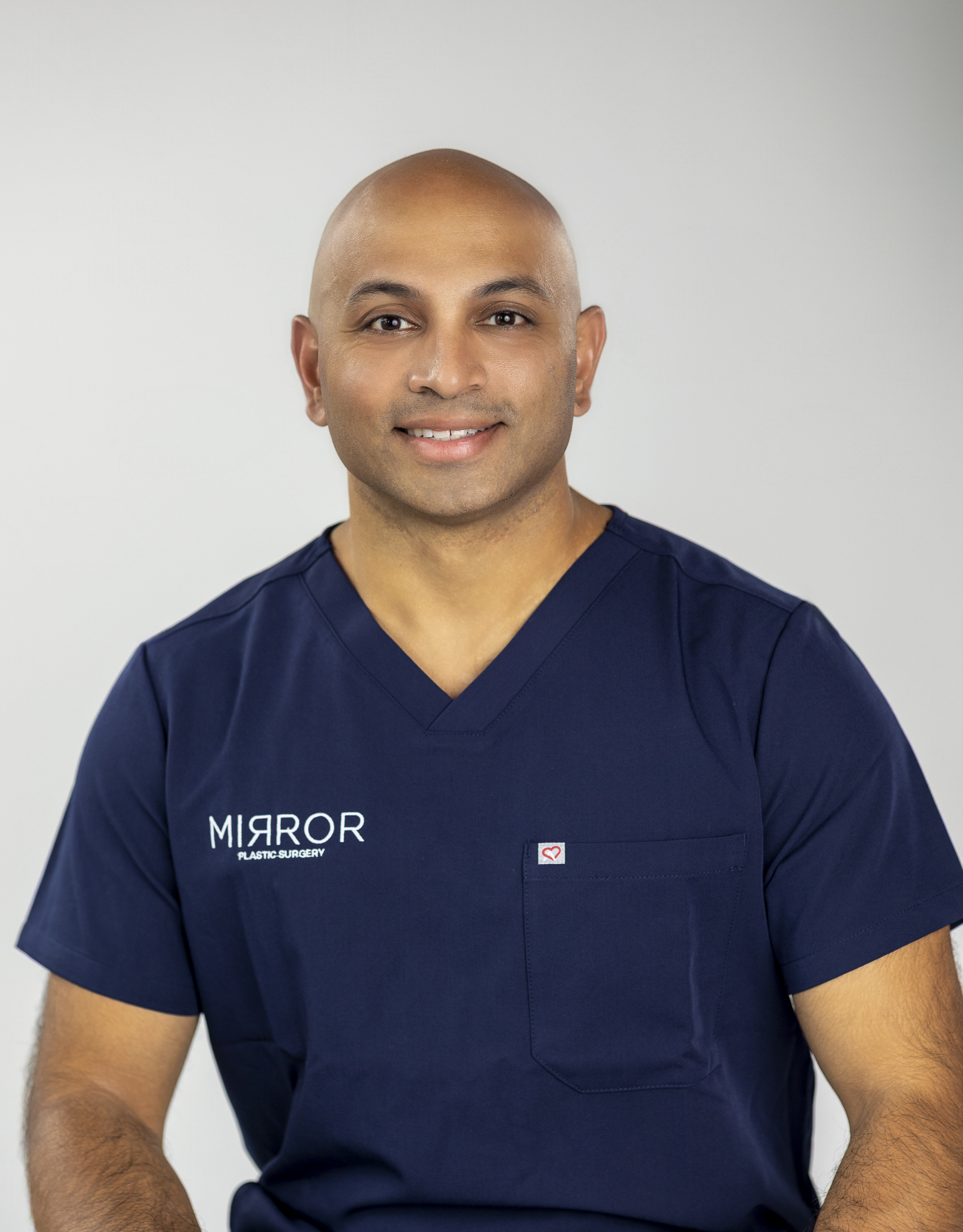
At Mirror Plastic Surgery, Dr. Akash limits his schedule to one to two procedures per day. Hair restoration consultations include a detailed scalp assessment and discussion of non-surgical options before any surgical plan. This slower, individualized approach contrasts with high-volume clinic models that prioritize throughput over tailored care.
Frequently Asked Questions
Am I a candidate for a minimally invasive hair transplant?
Candidacy depends on the degree and pattern of hair loss, donor zone density and quality, scalp laxity, age, and whether hair loss has stabilized. Surgeons often use the Norwood scale for men and the Ludwig scale for women to describe patterns. Patients with rapidly progressing loss may benefit from non-surgical stabilization first. A thorough trichoscopic evaluation and scalp assessment during consultation should guide any surgical recommendation.
How long does it take to see final results after a hair transplant?
Transplanted hairs usually shed within two to eight weeks as follicles enter a resting phase. New growth often begins around months three to four. Noticeable density appears by month six, and final results are typically judged at twelve months.1 Evaluating the outcome earlier than this often underestimates the final improvement.
What are the warning signs that a hair transplant clinic may not be right for me?
Key red flags include consultations shorter than fifteen minutes, no discussion of shock loss or non-surgical alternatives, surgeons performing five or more procedures daily, lack of American Board of Plastic Surgery certification, no pre-operative trichoscopic assessment, and pressure to proceed without a written plan. A qualified surgeon will review your long-term hair loss trajectory, not just the current visible thinning.
Is shock loss permanent?
Most shock loss remains temporary. Follicles that shed due to procedural trauma usually return to the growth phase within three to four months. In areas with significant miniaturization, some shed hairs may not fully recover.1 This possibility reinforces the need for careful assessment of miniaturization patterns before surgery.
What non-surgical options are available if I am not ready for surgery?
Early-stage patients can choose from several evidence-based non-surgical options. PRP therapy uses concentrated growth factors from the patient’s blood to support follicle health and slow miniaturization. Secretome treatments, such as Acorn Biolabs technology offered at Mirror Plastic Surgery, deliver a growth factor-rich environment to the scalp without surgery. Medications that address DHT-mediated loss remain standard adjuncts. These approaches do not replace lost follicles but can preserve existing density and delay or reduce the need for future surgery.
1 Results may vary from person to person. Editorial content, before and after images, and patient testimonials do not constitute a guarantee of specific results.