
Written by: Dr. Akash Chandawarkar, Board Certified Plastic Surgeon, Mirror Plastic Surgery | Last updated: July 13, 2026
Key Takeaways for Men Considering Tummy Tuck Surgery
- Male tummy tuck (abdominoplasty) is now a common body-contouring procedure for men near goal weight after major weight loss from GLP-1 medications or lifestyle changes.
- Four primary techniques, mini, full, extended, and Fleur-de-Lis, address different levels of skin and muscle laxity. A mismatched choice often causes incomplete results and revision surgery.
- Full abdominoplasty is the most common option for men because it repairs the entire abdominal wall, repositions the navel, and removes both upper and lower excess skin, unlike the limited mini procedure.
- Recovery follows a predictable week-by-week pattern. Most men return to desk work in two to three weeks and resume full exercise by six to eight weeks after a full tummy tuck.
- Mirror Plastic Surgery provides concierge-level care with hour-long consultations and a strict limit of one to two surgeries per day. Schedule a consultation with Dr. Akash for a personalized abdominal-wall assessment.
How a Male Tummy Tuck Reshapes the Abdomen
Abdominoplasty removes excess abdominal skin and fat, repairs separated or weakened abdominal muscles (diastasis recti), and repositions the navel to create a flatter, firmer midsection.1 For men, the goals extend beyond aesthetics. Abdominoplasty can improve bladder control, reduce lower back discomfort, repair ventral hernias, and strengthen the abdominal wall.1 These functional outcomes align directly with Mirror Plastic Surgery’s safety-first, function-second philosophy.
Many men pursue abdominal contouring because weight loss and strength training reduce fat but cannot remove stretched skin or correct a rounded lower abdomen that persists even in fit patients. Surgery addresses changes that exercise alone cannot reverse.
Schedule your abdominal-wall assessment with Dr. Akash to match your anatomy and goals with the most appropriate surgical plan.
Male Tummy Tuck Surgery Options and When They Apply
Achieving both functional and aesthetic goals requires choosing the right surgical approach for your specific anatomy. Four primary techniques exist, each suited to a different degree of skin and muscle laxity. Selecting the wrong procedure, most often a mini tummy tuck when full-wall laxity is present, leaves upper abdominal looseness untreated and often leads to a second surgery.
- Mini Abdominoplasty: Uses a shorter incision limited to the lower abdomen below the navel, with minimal or no muscle repair. Appropriate only when skin laxity is confined to the lower abdomen and no significant diastasis recti affects the full abdominal wall.
- Full (Standard) Abdominoplasty: Uses a hip-to-hip incision, includes complete muscle repair from chest to pubic area, repositions the navel, and removes both upper and lower excess skin. This is the standard of care for men with post-weight-loss laxity that extends above the navel.
- Extended Abdominoplasty: Uses a longer horizontal incision to treat the abdomen, hips, and lower back. Surgeons select this option when laxity along the lateral trunk accompanies abdominal excess.
- Fleur-de-Lis Abdominoplasty: Adds a vertical midline incision to the standard horizontal incision, removing skin in both vertical and horizontal directions for men with severe laxity after massive weight loss.
Full vs Mini Tummy Tuck for Men: Practical Differences
A mini tummy tuck focuses on the lower abdomen only, removes limited skin, and usually does not involve major muscle repair. It suits a narrow subset of men with mild loose skin confined below the navel and no meaningful diastasis recti. A full abdominoplasty becomes necessary when loose skin extends above the navel or when significant diastasis recti affects the entire abdominal wall.
A full abdominoplasty reshapes the entire abdomen, repairs muscle separation from chest to pubis, and repositions the navel. At Mirror Plastic Surgery, tummy tuck planning centers on restoring the entire abdominal musculature for true functional improvement. Mini procedures that treat only the lower abdomen are avoided when they would leave upper laxity unresolved and create a characteristic “pooching” above the repair zone.
The key distinctions for male patients include:
- Incision length: Mini uses a short, low incision. Full uses a hip-to-hip incision.
- Muscle repair: Mini involves none or minimal repair. Full provides complete diastasis repair.
- Skin removed: Mini removes lower skin only. Full removes both upper and lower skin.
- Navel repositioning: Mini usually does not require repositioning. Full routinely includes navel repositioning.
- Recovery: Mini patients often return to desk work in 1–2 weeks and full exercise at 4–6 weeks. Full abdominoplasty patients typically return to desk work at 2–3 weeks and full exercise at 6–8 weeks.1
Extended and Fleur-de-Lis Tummy Tucks After Major Weight Loss
Men who have lost 80 or more pounds through bariatric surgery, GLP-1 medications, or sustained lifestyle change often develop laxity that extends onto the flanks and vertically up the midline. Standard full abdominoplasty cannot fully correct both directions of excess skin at once.
Fleur-de-Lis abdominoplasty uses both horizontal and vertical incisions in a T-shaped pattern to remove excess skin from the upper and lower abdomen, providing more comprehensive contouring than a traditional tummy tuck for patients with significant laxity after major weight loss.1 The tradeoff is a visible vertical midline scar. Functional benefits include easier movement, relief from chafing, and improved comfort finding clothes that fit.1
Extended abdominoplasty treats the lateral trunk without adding a vertical scar and works best when hip and lower-back laxity are the main concerns beyond the front of the abdomen. The choice between extended and Fleur-de-Lis depends on how your excess skin distributes across the torso, which surgeons determine through direct anatomical examination rather than photographs alone.
Combining Tummy Tuck With Liposuction or Gynecomastia Surgery
Lipoabdominoplasty combines tummy tuck surgery with liposuction to treat both loose skin and surrounding fat deposits for patients seeking improvement of the abdomen, waistline, and overall body contour. For men, liposuction of the flanks and lateral trunk during the same session sharpens the masculine V-taper that abdominal repair alone cannot fully create.
Gynecomastia correction often pairs with abdominoplasty in men who have experienced significant weight loss, since chest and abdominal excess frequently appear together. Treating both in a single surgical episode, when medically appropriate, avoids a second general anesthetic and produces balanced results across the torso.
Mirror Plastic Surgery avoids stacking too many procedures in one setting because each added operation increases complication risk. The team evaluates every proposed combination against the patient’s health status and surgical risk profile before approving it.
Male Tummy Tuck Recovery Time: Week-by-Week Guide
Recovery from full abdominoplasty follows a predictable pattern. The timeline below reflects a standard full abdominoplasty. Mini tummy tuck recovery is shorter at each stage.
- Days 1–3: Patients leave surgery in a compression garment and begin short walks around the home immediately to promote circulation and reduce blood clot risk, although they walk slightly hunched forward. Assistance at home is necessary.
- Week 1: Swelling, bruising, tightness, and fatigue peak during this period. Surgical drains are emptied several times daily and output is recorded. Patients wear the compression garment continuously and sponge bathe only until drains are removed.
- Weeks 1–2: Drains are usually removed at a follow-up appointment within 1–2 weeks. Remote or work-from-home roles often resume in about one week, while desk jobs outside the home usually resume in about two weeks.
- Weeks 2–4: Patients take at least three short walks daily, continue wearing the compression garment, and taper narcotic pain medication. Lifting remains limited to no more than 5 pounds.
- Week 6: Light exercise such as walking, gentle yoga, and stationary cycling may begin, and most cardiovascular exercise is cleared. Patients typically wear the compression garment for the full six weeks, removing it only for showering.
- Weeks 8–12: Core exercises and heavy lifting remain restricted until 8–12 weeks, pending surgeon clearance. Men with physically demanding jobs that require lifting usually need this full window before returning to work.
- Months 3–12: Final abdominal contour becomes visible around 6–12 months, with scar maturation and significant fading by that time.1 Scar care with silicone sheets or topical creams remains recommended throughout this period.
Sleep position plays a major role in protecting the repair. Patients must sleep in a 45-degree upright beach-chair position for up to 6–8 weeks to minimize tension on the abdominal incision and protect the muscle repair.
Who Is Not a Candidate for Male Tummy Tuck Surgery
Several additional factors either disqualify patients or require medical optimization before surgery proceeds.
- Active smoking: Smoking impairs circulation and oxygen delivery to tissues, which increases the risk of delayed healing. Patients must stop smoking for at least four weeks before surgery.
- BMI above 40: A BMI of 40 or greater carries substantially higher risks, more complications, and limited aesthetic outcomes, so surgeons usually recommend significant weight loss before surgery.
- Unstable weight: Patients should maintain a stable weight for several months before surgery and should not be actively pursuing major additional weight loss.
- Uncontrolled chronic conditions: Diabetes, hypertension, and coagulopathies require careful medical management and optimization before surgeons grant clearance.
- Future significant weight change planned: Pregnancy in partners or planned major weight loss after surgery can compromise results and may lead to revision.
What Men Commonly Wish They Knew Before Surgery
Scars remain permanent, although they mature and fade significantly over 12 months. The hip-to-hip incision from a full abdominoplasty sits low enough to stay beneath most waistbands and athletic shorts. Fleur-de-Lis patients carry an additional vertical scar, which becomes an acceptable tradeoff when the alternative is incomplete correction of severe laxity.
Long-term results depend heavily on weight stability and core conditioning. Abdominoplasty repairs the abdominal wall but cannot prevent new laxity if significant weight fluctuation occurs later. Men who maintain their weight and resume core training after the 8–12 week restriction period consistently report the most durable outcomes.
Pre-operative evaluation largely determines the final result. A thorough assessment of skin quality, fat distribution, muscle integrity, and overall health, rather than a brief consultation, separates predictable outcomes from revision surgery.
How Mirror Plastic Surgery Reduces Tummy Tuck Risks
Seroma affects approximately 10–20% of abdominoplasty patients and is the most common complication, while serious events occur less often but increase when procedures are combined without careful patient selection. Reducing these risks requires more than surgical skill alone. It depends on structured protocols that guide every phase of care, from pre-operative assessment through post-operative monitoring.
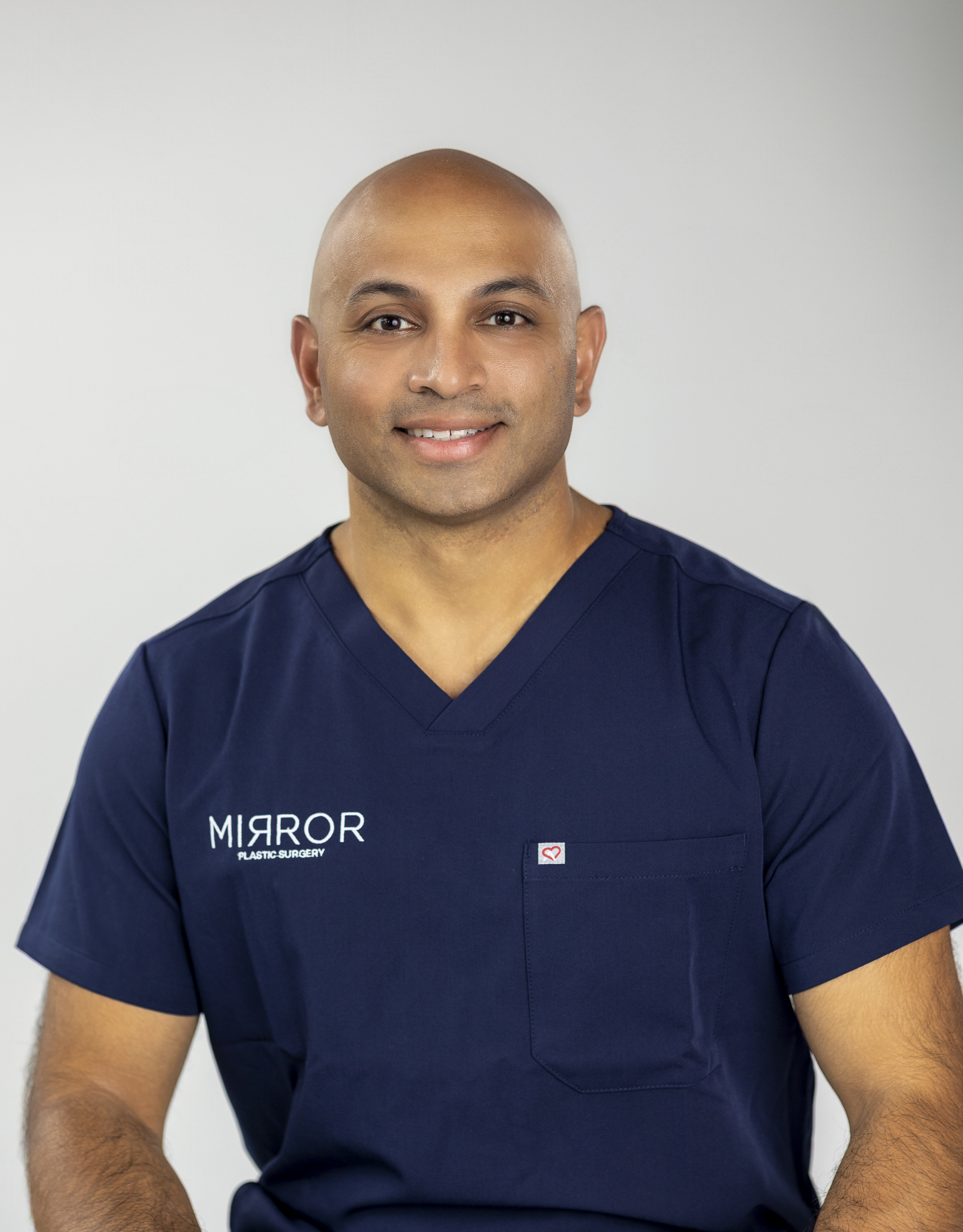
At Mirror Plastic Surgery, Dr. Akash, named to Newsweek’s America’s Best Plastic Surgeons list two years in a row including 2025, brings a training background that is unique in the Tampa Bay region. His medical degree from Harvard Medical School (Harvard-MIT HST program), seven-year integrated plastic and reconstructive surgery residency at Johns Hopkins University, and aesthetic surgery fellowship at the Manhattan Eye, Ear and Throat Hospital (MEETH) shape every surgical decision. His Stanford Biodesign Innovation Fellowship adds a technology-evaluation lens that keeps technique selection evidence-based rather than trend-driven.
Mirror Plastic Surgery uses several structural risk-reduction protocols:
- Pre-operative ultrasound assessment for precise anatomical evaluation
- All procedures performed in accredited surgical facilities
- Board-certified physician anesthesiologists present for every case
- A strict limit of one to two surgeries per day, compared with the five to ten often performed at high-volume practices, so the entire team can focus on each patient before, during, and after surgery
- Up to one-hour consultations to evaluate anatomy, motivations, and health status in depth
- Board certification by the American Board of Plastic Surgery, with privileged hospital access for rare complications
Arrange a consultation with Dr. Akash to receive a full abdominal-wall evaluation from a Harvard-MIT and Johns Hopkins-trained surgeon who performs a maximum of two surgeries per day.
Frequently Asked Questions
How painful is a male tummy tuck, and how is pain managed?
Most men describe the first week as dominated by tightness and pressure rather than sharp pain, especially when muscle repair is involved. Prescription pain medication controls discomfort during the first several days, and most patients transition to over-the-counter options by the end of week one or early week two. Tightness when standing upright is normal and gradually improves as the repaired muscle wall adapts, usually over six to eight weeks.
How long do I need to stay in bed after a tummy tuck?
Surgeons do not aim for complete bed rest. Short walks beginning on the first day after surgery help promote circulation and reduce blood clot risk. During the first two weeks, movement stays limited to short distances around the home while walking slightly bent forward to protect the incision. Most patients move more freely by weeks three to four, and full upright posture usually feels comfortable by six to eight weeks. Sleeping in a reclined, 45-degree position remains necessary for up to six to eight weeks.
Can I combine a tummy tuck with liposuction or gynecomastia surgery?
Many men safely combine these procedures. Liposuction of the flanks and lateral trunk during the same session refines the masculine torso contour that abdominal repair alone cannot fully achieve. Gynecomastia correction often makes sense when chest and abdominal excess coexist after significant weight loss. However, stacking too many procedures in one operation meaningfully increases complication risk. Dr. Akash evaluates each proposed combination against the patient’s health status, anatomy, and risk profile rather than offering a default package.
What is the difference between a full and mini tummy tuck for men, and which is more common?
As discussed earlier, mini procedures suit only isolated lower-abdominal laxity without diastasis recti, which applies to a narrow subset of male patients. Most men require the full-wall repair and skin removal that only a complete abdominoplasty provides.
How do I evaluate whether a surgeon is qualified to perform my tummy tuck?
Board certification by the American Board of Plastic Surgery forms the baseline requirement because it confirms completion of an accredited residency and passage of written and oral examinations. Beyond certification, review the surgeon’s specific training in body contouring, the facility’s accreditation status, whether a board-certified physician anesthesiologist will be present, and how many surgeries the practice performs daily. A surgeon who limits daily surgical volume shows a structural commitment to focused, individualized care. Ask to see before-and-after results specifically for male patients with a body composition and degree of laxity similar to yours, and evaluate whether the consultation allows enough time to address your anatomy, goals, and concerns in depth.
Choosing Mirror Plastic Surgery for Male Abdominoplasty
Male tummy tuck surgery, when matched to the correct technique and guided by full abdominal-wall assessment, restores both core function and athletic contour in ways that diet, exercise, and non-surgical treatments cannot match. Procedure selection, whether full, extended, or Fleur-de-Lis, must follow the anatomy rather than a preference for shorter scars or faster recovery. Mini procedures that treat only the lower abdomen often leave most wall laxity unresolved and represent a common source of dissatisfaction and revision in male abdominoplasty.
Mirror Plastic Surgery’s concierge model, with one to two surgeries per day, hour-long consultations, ultrasound-guided assessment, and accredited-facility protocols, exists to deliver the focused, individualized care that complex abdominal-wall restoration requires. Dr. Akash’s Harvard-MIT, Johns Hopkins, and MEETH training, combined with two consecutive years of recognition on Newsweek’s America’s Best Plastic Surgeons list, provides the credential foundation that sophisticated male patients in the Tampa Bay area can rely on.
Request your anatomy-first consultation with Dr. Akash to begin a thorough evaluation and receive a surgical plan built around your goals, your health, and your long-term results.
1 Results may vary from person to person. Editorial content, before and after images, and patient testimonials do not constitute a guarantee of specific results.