
Written by: Dr. Akash Chandawarkar, Board Certified Plastic Surgeon, Mirror Plastic Surgery | Last updated: July 22, 2026
Key Takeaways
- Laser-assisted liposuction uses a fiber-optic laser to liquefy fat and stimulate collagen, which creates modest skin tightening that traditional liposuction does not provide.1
- Compared with traditional suction-assisted liposuction, laser-assisted techniques generally allow faster recovery, lower pain scores, and measurable skin-surface reduction when performed correctly.1
- Proper wavelength selection and careful temperature control reduce the risk of burns, contour irregularities, and seromas while supporting collagen remodeling.
- Results last long term when patients maintain a stable body weight, because destroyed fat cells do not regenerate, although remaining cells can still enlarge with weight gain.1
- Schedule a personalized consultation at Mirror Plastic Surgery to see whether laser-assisted liposuction matches your anatomy and goals.
How Laser-Assisted Liposuction Reshapes Fat and Tightens Skin
The procedure starts with tumescent anesthesia, a large volume of dilute lidocaine and epinephrine solution injected into the target area. Epinephrine constricts blood vessels and reduces bleeding, while lidocaine provides local anesthesia. After the tissue is fully infiltrated, the surgeon inserts a thin cannula with a fiber-optic laser through a small incision.
The laser wavelength determines which tissue absorbs the energy. A 2026 pilot study by Dziabas et al. found that a 1210-nm diode laser targets lipids with high selectivity, producing a nondestructive photoacoustic effect that compacts adipose tissue while preserving adipocyte viability and stimulating collagen production. By contrast, 980-nm and 1470-nm lasers are primarily absorbed by water and hemoglobin and carry higher risks of burns, necrosis, hematoma, and seroma.
A 2026 prospective randomized controlled trial by Wahdan et al. used a 1470-nm diode laser at 8–10 W continuous mode with total energy of 800–1500 J per patient, keeping skin temperature below 42°C with external cooling. The thermal energy delivered to the dermis triggers neocollagenesis, the formation of new collagen fibers. This process gradually tightens the overlying skin over three to six months. Liquefied fat is then aspirated through the same or a separate cannula.
Cynosure’s SmartLipo TriPlex system received FDA clearance in 2009 and uses wavelengths of 1064 nm, 1320 nm, and 1440 nm delivered through a 1 mm cannula. The device heats subdermal tissue to approximately 48–55°C to trigger collagen remodeling and skin contraction.
Laser-Assisted Liposuction vs Traditional Liposuction Outcomes
The table below compares laser-assisted liposuction and traditional suction-assisted liposuction across four clinically relevant dimensions.
| Dimension | Laser-Assisted Liposuction | Traditional Suction-Assisted Liposuction | Source |
|---|---|---|---|
| Technique | Fiber-optic laser liquefies fat before aspiration, with thermal energy delivered to the dermis | Mechanical cannula disrupts and aspirates fat directly, with no energy delivered to the dermis | Lumen Laser Center clinical framework |
| Skin Tightening | Average of 9.1% skin surface area reduction1 | Minimal to no dermal collagen stimulation, so skin tightening depends on pre-existing elasticity | 2010 Aesthetic Surgery Journal study |
| Recovery | Return to light activity in 2–3 days, often sooner than traditional liposuction, with reduced postoperative pain1 | Return to normal activities in 2–3 weeks, compression garments for 4–6 weeks, exercise at 4–6 weeks | Systematic review and meta-analysis, Plastic and Reconstructive Surgery |
| Complication Profile | Thermal injury risk if fiber is too superficial, with burns reported in MAUDE analyses of liposuction devices, and possible contour deformity | No thermal burn risk, but contour deformity and seroma remain possible, with contour deformity found in 2.35% of patients in a 2024 meta-analysis of 29,368 liposuction patients | MAUDE database analyses and meta-analyses of liposuction outcomes |
Evidence on skin-tightening outcomes from laser-assisted liposuction remains mixed: two small studies found significantly more abdominal skin tightening at three months compared with standard liposuction, while a larger 25-patient Chilean study found no significant additional benefit. Larger, longer-term studies with standardized evaluation criteria are still needed.
Book a consultation with Dr. Akash to determine which liposuction technique aligns with your anatomy, skin quality, and contouring goals.
Risks and Limits of Laser Liposuction
Laser-assisted liposuction is a surgical procedure performed under anesthesia and does not qualify as non-invasive. Patients need a clear understanding of its specific risk profile before deciding.
Key risks and limitations include:
- Thermal injury: Burns occur when the fiber is passed too superficially, paused in place, or used too aggressively, with epidermal and dermal injury beginning at skin-surface temperatures above 47°C and blistering above 58°C. Safe practice limits surface temperature to 42°C.
- Contour deformity: Contour irregularities occur in approximately 2.35% of cases, as noted in the comparison above, which highlights the importance of anatomical expertise.
- Paradoxical rebound: This complication appears as a notable complaint in MAUDE database analyses of liposuction devices.
- Hematoma and seroma: A 2026 systematic review of 2,373 lipedema patients treated with liposuction found postoperative hematomas to be uncommon.
- Peripheral neuropathies: Water-absorbing wavelengths discussed earlier have been associated with nerve damage in addition to the thermal injuries already noted.
Laser liposuction is not indicated for the following:
- Obesity or weight loss goals
- Cellulite or stretch mark treatment
- Cases with significant skin excess requiring surgical excision, such as abdominoplasty, brachioplasty, or thigh lift
- Patients with BMI ≥40 kg/m² or BMI ≥35 kg/m² with major comorbidities such as heart disease or diabetes, who should be referred for bariatric evaluation
What to Expect After Laser Liposuction
Most laser lipolysis patients resume light daily activities within 2 to 3 days and return to full activity within 1 to 2 weeks, often sooner than traditional liposuction patients. The following milestones reflect current evidence-based expectations.
- Days 1–3: Swelling, bruising, and mild discomfort are expected. The 2026 Dziabas pilot study reported swelling peaking on days 3–7 and occasional bruising on days 5–7. Patients wear compression garments continuously.
- Days 3–7: Most patients resume sedentary work and light walking. Pain levels are typically low, and the same Wahdan 2026 RCT that demonstrated eliminated drain requirements also recorded a median postoperative VAS pain score of 2 out of 10 for 1470-nm LAL versus 7 for conventional liposuction.
- Weeks 1–2: Most patients return to normal daily activities while continuing compression garments.
- Weeks 2–4: Compression garments are typically worn for 2–3 weeks after energy-assisted liposuction, with return to exercise at 3–4 weeks.
- Months 3–6: Final cosmetic results, including skin tightening driven by neocollagenesis, become apparent over 3 to 6 months as swelling resolves and new collagen fibers mature.1
How Long Laser Lipo Results Typically Last
Ultrasonography in the 2026 Wahdan RCT showed statistically significant reduction in glandular tissue thickness after 1470-nm LAL at 4 weeks, with continued measurable decrease through 6-month follow-up. These findings confirm that tissue changes progress well beyond the immediate postoperative period.
Remaining fat cells in untreated areas retain the capacity to enlarge with subsequent weight gain. Both laser lipolysis and cryolipolysis produce long-lasting fat reduction when patients maintain a healthy lifestyle. Weight stability remains the primary determinant of result longevity.
Laser Lipo vs CoolSculpting for Different Patient Goals
CoolSculpting, or cryolipolysis, and laser-assisted liposuction address localized fat through different mechanisms, patient profiles, and recovery expectations.
Laser lipolysis can reduce fat by approximately 24% per treated area, while CoolSculpting cryolipolysis reduces treated fat by up to 20–25% per treatment (clinical study of 10 subjects).1
- Invasiveness: Laser lipolysis is a surgical procedure performed under anesthesia with recovery that includes swelling, bruising, and discomfort lasting several days to one week. Cryolipolysis is non-invasive with minimal to no downtime, allowing immediate return to normal activities.
- Skin tightening: Laser lipolysis stimulates collagen production for measurable skin tightening. Cryolipolysis does not provide collagen stimulation.
- Result timeline: Visible results from laser lipolysis typically appear within the first week, while cryolipolysis results emerge after 3–4 months as the body clears damaged fat cells.
- Fat deposit size: Laser lipo can address larger fat deposits than CoolSculpting, which is limited to pinchable fat in patients near their ideal weight.
- Sessions required: Both modalities may require more than one session depending on goals, with cryolipolysis typically requiring 1–3 sessions spaced weeks apart.
Patients with moderate skin laxity, larger localized deposits, or a preference for faster visible results are generally better served by laser-assisted liposuction. Patients near their ideal weight with small, pinchable deposits and no skin laxity concerns may be appropriate candidates for non-invasive cryolipolysis. An individualized anatomical assessment remains the only reliable basis for this decision.
Choosing a Surgeon for Laser-Assisted Liposuction
Surgeon selection shapes both safety and aesthetic outcome in laser-assisted liposuction. The following criteria reflect current standards for safe, effective care.
- American Board of Plastic Surgery (ABPS) certification: ABPS certification requires completion of an accredited plastic surgery residency, passage of written and oral examinations, and demonstrated commitment to ongoing education. This credential is the recognized standard for plastic surgeons in the United States.
- Hospital privileges: A board-certified plastic surgeon with active hospital privileges can manage rare but serious complications that cannot be addressed in an office-based setting.
- Anatomical expertise: A comprehensive understanding of the anatomical structure of the treatment region is fundamental to safe laser liposuction technique. Surgeons should be able to explain fat pad locations, muscle boundaries, and skin laxity vectors specific to your anatomy.
- Low-volume practice: High-volume practices performing five to ten surgeries daily have less capacity for the individualized pre- and postoperative attention that complex body contouring requires.
- Evidence-based technology selection: The surgeon should choose laser wavelength and energy parameters based on your anatomy and goals, not on device availability alone.
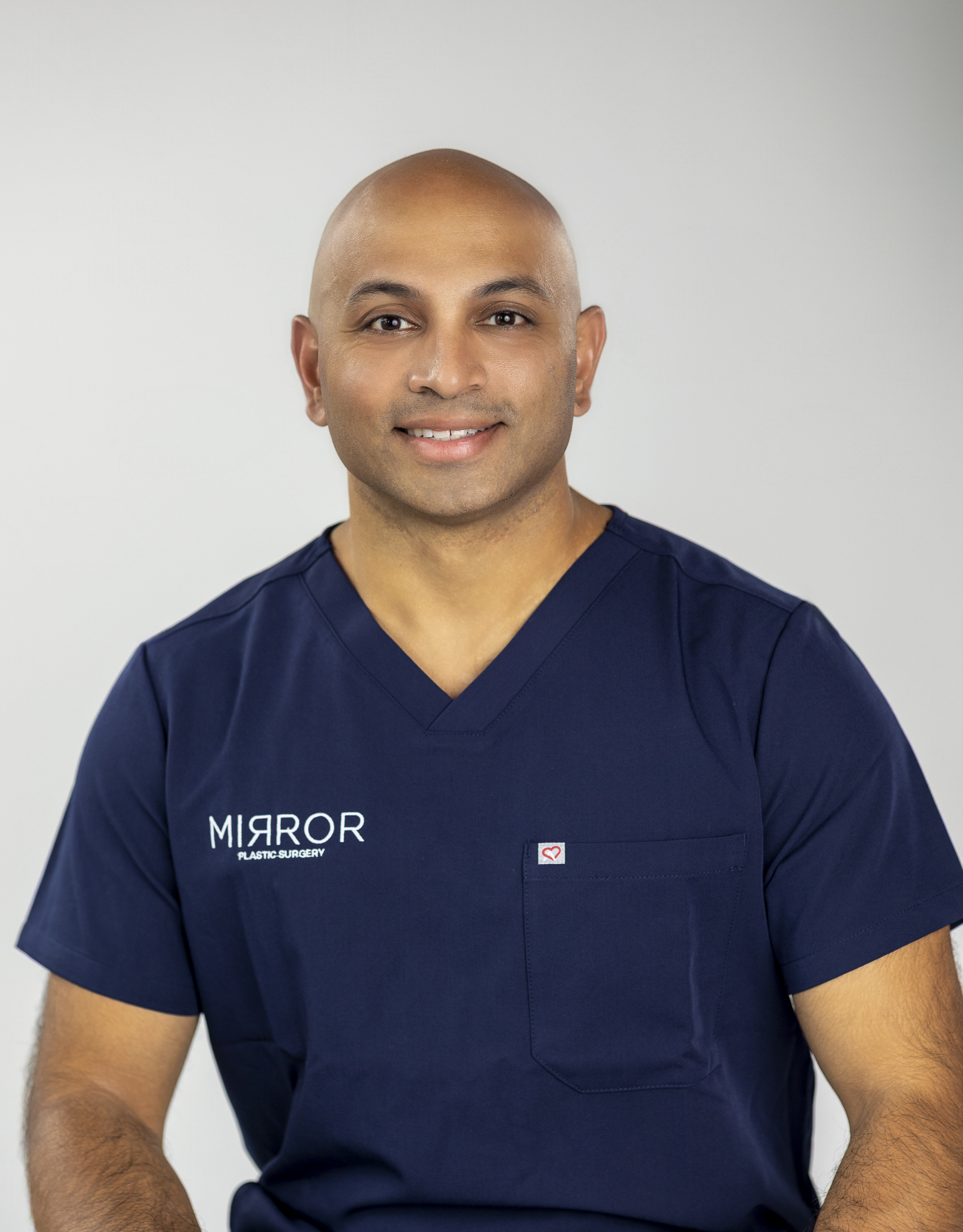
At Mirror Plastic Surgery in St. Petersburg, Florida, Dr. Akash holds board certification from the American Board of Plastic Surgery and earned his medical degree from Harvard Medical School with Honors through the Harvard-MIT Health Sciences and Technology program. His plastic and reconstructive surgery residency at Johns Hopkins University included rotations at the Johns Hopkins Hospital, the R Adams Cowley Shock Trauma Center, and the Curtis National Hand Center. He subsequently completed an aesthetic surgery fellowship at the Manhattan Eye, Ear and Throat Hospital (MEETH) and a Biodesign Innovation Fellowship at Stanford University. Dr. Akash has been named to Newsweek’s America’s Best Plastic Surgeons list two years in a row, including 2025. The practice limits itself to one to two surgeries per day so each patient receives the full attention of the entire clinical team before, during, and after their procedure.
Book a consultation with Dr. Akash to receive a thorough anatomical assessment and an evidence-based recommendation on whether laser-assisted liposuction, traditional liposuction, or an alternative approach fits your goals.
Frequently Asked Questions
Am I a good candidate for laser-assisted liposuction?
Favorable candidates are adults in good general health with localized fat deposits that have not responded to diet and exercise, good to excellent skin elasticity, stable body weight for at least six months, and realistic expectations about the degree of contouring achievable. Laser-assisted liposuction functions as a body-contouring tool, not a weight-loss procedure. Patients with significant skin excess may require an excisional procedure such as an abdominoplasty or brachioplasty instead of, or in addition to, liposuction. Patients with BMI above 35 with major comorbidities are generally not appropriate candidates for cosmetic liposuction and should be evaluated for bariatric options first. An in-depth anatomical assessment with a board-certified plastic surgeon remains the only reliable way to determine candidacy.
How should I prepare for laser-assisted liposuction?
Preparation typically includes stopping blood thinners and NSAIDs such as aspirin in the weeks before surgery to reduce bleeding risk. Surgeons advise smokers to quit well in advance of the procedure because nicotine impairs circulation and wound healing. Your surgeon will order pre-operative laboratory work and may use in-office ultrasound to assess subcutaneous fat depth and tissue architecture. You should arrange for a responsible adult to drive you home and assist you for the first 24 to 48 hours. Specific preparation instructions will be individualized based on your health history, the treatment areas, and the anesthesia plan.
What does recovery from laser liposuction actually feel like?
Most patients describe the first two to three days as the most uncomfortable, with swelling, bruising, and a sensation of tightness or soreness in the treated area. Pain levels are generally lower than with traditional liposuction. Patients wear compression garments continuously for the first two to three weeks to support tissue healing and minimize swelling. Light walking is encouraged early to promote circulation. Sedentary work is typically possible within a few days, while physical exercise is usually cleared at three to four weeks. Visible swelling continues to resolve over three to six months, and final contour results, including any skin tightening from collagen remodeling, do not fully appear until that point.
Will laser liposuction tighten loose skin?
Laser-assisted liposuction produces modest skin tightening through thermal stimulation of collagen remodeling, a process called neocollagenesis. This effect is most clinically meaningful in areas with mild to moderate skin laxity, such as the inner arms, inner thighs, lower abdomen, and submental region. The skin-tightening benefit does not match surgical skin excision. Patients with significant skin redundancy, for example after major weight loss or pregnancy, usually achieve better functional and aesthetic outcomes with an excisional procedure. The degree of skin tightening achievable depends on your age, skin quality, and the specific treatment area, all of which are evaluated during a pre-operative consultation.
How is Mirror Plastic Surgery’s approach to liposuction different from a high-volume clinic?
Mirror Plastic Surgery operates on a safety-first, function-second, aesthetics-third philosophy that shapes every aspect of the patient experience. Dr. Akash spends up to an hour in the initial consultation conducting a comprehensive, top-to-bottom anatomical assessment rather than a brief intake. The practice performs one to two surgeries per day, so the entire clinical team can focus on each individual patient before, during, and after the procedure. All technology and technique recommendations are evidence-based and anatomy-driven, not quota-driven. This approach contrasts with high-volume practices that may perform five to ten surgeries daily, where individualized attention and meticulous planning are more difficult to sustain.
Next Steps with Mirror Plastic Surgery
Laser-assisted liposuction is a precise contouring tool with a well-characterized safety profile when performed by a board-certified plastic surgeon with deep anatomical expertise. Determining whether it is the right procedure for your anatomy, skin quality, and goals requires an individualized evaluation rather than a generic checklist.
Mirror Plastic Surgery serves patients throughout the Tampa Bay and St. Petersburg area from its location at 780 4th Ave S, St. Petersburg, FL 33701. Dr. Akash and his team are available to answer questions by phone at 727-361-6515 or by email at hello@mirrorplasticsurgery.com.
Book a consultation with Dr. Akash to begin a thorough, evidence-based conversation about your body-contouring options.
1 Results may vary from person to person. Editorial content, before and after images, and patient testimonials do not constitute a guarantee of specific results.