
Written by: Dr. Akash Chandawarkar, Board Certified Plastic Surgeon, Mirror Plastic Surgery | Last updated: July 16, 2026
Key Takeaways
- Lip augmentation options include temporary fillers, fat transfer, implants, and lip lifts, each with distinct costs and longevity.
- Provider credentials, facility accreditation, and product quality strongly affect both pricing and safety in Tampa Bay’s 2026 market.
- Fillers cost less upfront, yet long-term maintenance often exceeds the one-time cost of surgical options over six years.
- Board-certified plastic surgeons with extensive training provide more precise anatomical assessment and safer complication management.
- Book a consultation with Mirror Plastic Surgery for tailored guidance on the right lip augmentation approach for your anatomy and goals.
How Lip Augmentation Works and Why Prices Differ
Lip augmentation includes any procedure that increases lip volume, refines lip shape, or changes lip position relative to nearby structures. Options span from temporary injectable fillers to permanent surgical procedures. The procedure category a patient chooses and the provider who performs it are the two most influential variables for both outcome and total cost.
These two factors include several specific cost drivers across all lip augmentation options:
- Product type and brand: Premium hyaluronic acid brands such as Juvederm, Restylane, and Teosyal cost more per syringe than lesser-known products because of tighter manufacturing control and strong clinical data.
- Provider credentials: Board-certified plastic surgeons and dermatologists typically charge more per syringe in 2026 than less credentialed med-spa injectors, reflecting deeper anatomical training and stronger complication management skills.
- Facility accreditation: Private ambulatory surgical centers usually cost less than hospital settings, yet accredited physician-led facilities carry higher infrastructure and safety-protocol costs than non-medical locations.
- Geographic location: Florida aesthetic RN and NP salaries sit about 5–6% above national medians, reflecting a large and competitive med-spa market.
- Procedure complexity: Revision work, structural reconstruction, and procedures that require advanced imaging increase costs because they take longer and need more specialized tools.
Book a consultation with Dr. Akash for a personalized review of which lip augmentation option fits your anatomy, goals, and long-term budget.
2026 Cost Snapshot for Fillers, Fat Transfer, Implants, and Lip Lifts
The table below outlines 2026 national cost ranges, key pricing variables, and longevity for the main lip augmentation categories. These figures come from published 2026 sources and represent national ranges before Florida market premiums.
| Treatment Type | 2026 National Range | Key Cost Variables | Longevity |
|---|---|---|---|
| Hyaluronic Acid Injectable Fillers | $500–$1,200 per syringe, national average $775 | Brand (Juvederm, Restylane, RHA), injector credentials, facility type, geographic market | 6–18 months depending on product and patient metabolism |
| Fat Transfer (Autologous Fat Grafting) | $2,495–$6,175, national average $3,231 | Surgeon fee, anesthesia, operating room, donor site, fat volume required | Several years, with some expected reabsorption |
| Surgical Lip Implants | $2,000–$7,000 | Implant material, surgeon experience, facility accreditation, anesthesia | Permanent, reversible only with another surgery |
| Surgical Lip Lift (Subnasal Bullhorn) | $3,500–$7,000 | Surgeon credentials, facility accreditation, anesthesia, geographic market | Permanent, permanently alters lip position by shortening the philtrum |
Within Tampa Bay and St. Petersburg, physician-led practices in accredited facilities charge premiums above the Florida baseline. Reputable cosmetic surgery centers in Tampa often charge more per syringe for hyaluronic acid filler in 2026, while standalone med spas may advertise lower prices but may rely on less-experienced injectors or discounted products. For surgical procedures, board-certified plastic surgeon oversight, accredited operating rooms, and board-certified physician anesthesiologists raise costs in ways that reflect real safety infrastructure, not inflated margins.
Comparing Lifetime Costs: Fillers Versus One-Time Surgery
Injectable fillers have the lowest upfront cost, yet the financial picture changes over time. Maintaining lip volume with hyaluronic acid fillers at regular intervals creates a large cumulative spend over six years, which often makes fillers the most expensive option on a lifetime basis despite the lowest entry price.
Annual maintenance costs for consistent filler patients vary with metabolism and product choice:
- One full syringe per year: about $699
- One full syringe plus a half-syringe touch-up: about $1,098
- Two full syringes every six months (faster metabolizers): about $2,600–$3,800 annually
Fat transfer lip augmentation usually provides long-lasting volume once early fat absorption stabilizes, unlike temporary dermal fillers that require repeat visits. A surgical lip lift carries a higher upfront cost yet permanently changes lip position in a single procedure, which can deliver better cumulative value than repeated filler cycles for patients with philtrum-length concerns that fillers cannot correct.
The choice between temporary and permanent options extends beyond finances. Reversibility, recovery tolerance, anatomical fit, and realistic expectations about longevity all matter. A detailed consultation with a board-certified plastic surgeon offers the most reliable way to weigh these factors.
Surgeon Training That Shapes Pricing and Safety
Provider credentials are frequently the largest pricing variable in lip augmentation because they reflect technical judgment in depth, shape, balance, and complication management rather than time alone. This judgment grows directly from training depth. The pathway to American Board of Plastic Surgery (ABPS) certification ranks among the most rigorous in medicine and includes medical school, a multi-year integrated residency, and often additional aesthetic surgery fellowship training.
At Mirror Plastic Surgery, Dr. Akash, named to Newsweek’s America’s Best Plastic Surgeons list for two consecutive years, brings an unusually broad training background to every lip augmentation consultation:
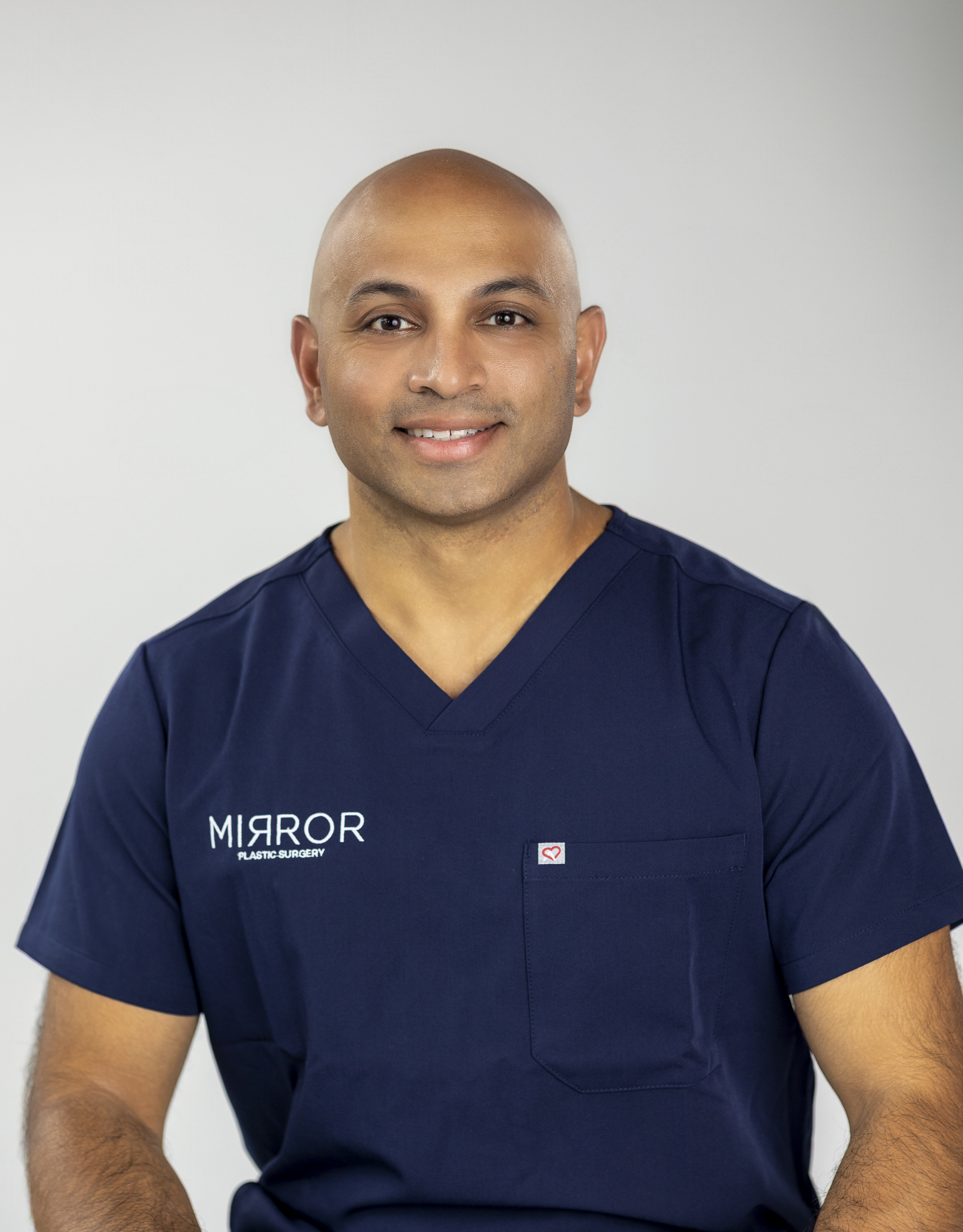
- Undergraduate studies in Neuroscience and Nuclear Engineering at MIT
- Medical degree from Harvard Medical School through the Harvard-MIT Health Sciences and Technology program, graduated with Honors
- Seven-year integrated plastic and reconstructive surgery residency at Johns Hopkins University, including rotations at the R Adams Cowley Shock Trauma Center and the Curtis National Hand Center
- Aesthetic surgery fellowship at Manhattan Eye, Ear and Throat Hospital (MEETH), one of the most competitive programs for advanced facial rejuvenation and body contouring
- Stanford University Biodesign Innovation Fellowship, focused on identifying unmet clinical needs and developing technological solutions
- Board certification by the American Board of Plastic Surgery, with active hospital privileges for rare surgical complications
- Advisory board roles with Motiva, Tiger Aesthetics, Cypris Medical, and Merz Aesthetics, keeping him at the forefront of emerging aesthetic technologies
- Next Generation Editor for the Aesthetic Surgery Journal and member of several international committees of The Aesthetic Society
This depth of training shapes how Dr. Akash evaluates lip anatomy, selects the right modality, and manages the vascular complexity that makes lip augmentation one of the most technically demanding injectable procedures.
Book a consultation with Dr. Akash to experience how Harvard, Johns Hopkins, and MEETH training can influence your lip augmentation outcome.
How Long Lip Augmentation Results Typically Last
Result longevity varies by procedure type and by individual factors. The summary below reflects current evidence for each option.
- Hyaluronic acid fillers: Most patients see results for 6 to 12 months, with some maintaining results for 12 to 18 months depending on product, anatomy, lifestyle, and aftercare.1 Newer products such as Juvederm Volbella XC last 12–18 months and RHA 2 lasts 12–15 months, while Restylane Kysse and Juvederm Ultra XC usually last 6–12 months.
- Fat transfer: Fat grafting often lasts several years, with some early reabsorption.1 However, research following long-term outcomes of lip fat grafting found that some patients lost significant volume within 5 to 8 months because the lips move so frequently.
- Lip implants: Surgical lip implants provide permanent results1 and can be reversed only with another surgery.
- Surgical lip lift: A lip lift permanently changes lip position by shortening the philtrum in a single procedure and does not require ongoing maintenance.1
A key nuance for filler patients comes from a 2024 meta-analysis. Researchers used 3D volumetric imaging in 1,410 patients and found that 50–86% of injected HA volume remained at 24 months in lip tissue, even after the visible effect faded. Retreating too early, before full absorption, can cause cumulative overfilling. This risk highlights the value of working with a provider who tracks your treatment history and uses anatomical judgment instead of a fixed injection schedule.
Pain Expectations for Fillers and Surgical Lip Procedures
Pain levels differ between injectable and surgical options. For hyaluronic acid fillers, topical numbing cream is applied before treatment, and most modern HA products contain lidocaine within the gel, which keeps the procedure tolerable for most patients. Systematic reviews of HA lip augmentation show that adverse events are usually mild and short-lived and include swelling, bruising, tenderness, and small nodules.
Surgical lip lifts and implant procedures take place under local anesthesia with sedation or under general anesthesia, depending on the patient and facility. Prescribed pain medication manages postoperative discomfort, which usually improves within the first week. At Mirror Plastic Surgery, board-certified physician anesthesiologists manage all surgical cases, which meaningfully lowers perioperative risk compared with facilities that rely on non-physician anesthesia providers.
Typical Downtime After Each Lip Procedure
Recovery time depends on the procedure type.
- Hyaluronic acid fillers: Minimally invasive with about 1–7 days of social downtime1 for swelling and bruising. Most patients return to work the same day or the next day.
- Fat transfer: Moderately invasive with about 1–2 weeks of recovery1 because both the donor liposuction site and the lips need to heal.
- Lip implants: More invasive with about 2–4 weeks of recovery1, including swelling control and activity limits.
- Surgical lip lift: About 1–2 weeks of downtime1, with incision care and strict sun protection during healing.
Revision Risk and How Experience Reduces Complications
Revision risk closely tracks provider experience and the chosen modality. For hyaluronic acid fillers, reversibility offers a major safety advantage. Severe complications occur at a very low rate across studies covering more than 290,000 cases, although vascular occlusion, while rare, remains the most serious risk and needs immediate hyaluronidase treatment. Practitioners with more than five years of experience show lower rates of vascular occlusion than less experienced injectors.
For surgical options, a 2026 systematic review of seven studies and 1,754 patients who underwent surgical lip lifts reported no major complications in any study. Revision rates ranged from 0.6% to 6.7%, depending on technique and series size. For lip implants, malposition occurs in a small share of cases, and revision or size adjustment is needed in about 5–15% of patients, while serious complications such as infection or extrusion occur in less than 1%.
Across all modalities, provider experience stands out as the most controllable risk factor. Patients who seek low-cost lip fillers from unlicensed or black-market providers often face extra expenses for hyaluronidase treatments or infection care, which can exceed the initial savings and add avoidable health risks.
Tampa Bay Factors That Shape Lip Augmentation Pricing
The Tampa Bay and St. Petersburg market differs from national averages in several ways. Florida aesthetic provider compensation sits about 5% above national medians, driven by high demand for aesthetic procedures, a strong concentration of board-certified specialists, and patients who increasingly value natural results and long-term value over low-cost, high-volume providers.
Florida law requires that lip filler injections be performed by or under the supervision of a licensed medical professional. Board-certified surgeon oversight at a cosmetic surgery center offers greater accountability for complications such as vascular occlusion compared with standalone med spas that lack on-site physicians.
Mirror Plastic Surgery uses a concierge model that limits the practice to one or two surgical procedures per day and allows up to an hour per consultation. This structure reflects a clear choice to prioritize individualized care over volume and contrasts with high-volume practices that perform five to ten procedures daily and must compress pre-procedure assessment.
How to Choose the Right Lip Augmentation for Your Anatomy
Choosing the right lip augmentation method involves weighing several key criteria.
- Safety hierarchy: Each option has a distinct risk profile. HA fillers offer reversibility, while surgical options offer permanence but require recovery and carry surgical risks. A board-certified plastic surgeon with hospital privileges provides the strongest safety net across modalities.
- Anatomical suitability: Philtrum length, lip-to-tooth ratio, lip border definition, and baseline volume all influence which procedure will look natural. A patient with a long philtrum and thin upper lip may gain more from a lip lift than from fillers alone.
- Longevity expectations: Patients who want to avoid ongoing maintenance visits often prefer surgical options. Patients who value reversibility and gradual change may start with HA fillers.
- Functional considerations: Mirror Plastic Surgery follows a guiding principle of safety first, function second, aesthetics third. Any recommendation considers lip movement, speech, and oral function, not just appearance.
- Lifetime value: Over six years, repeated filler maintenance can cost more than a one-time surgical lip lift for patients with permanent goals. This comparison deserves explicit review during consultation.
Book a consultation with Dr. Akash for a detailed, anatomy-first evaluation that connects your lip structure to the most appropriate and evidence-based augmentation plan.
Paying for Treatment and Smart Questions to Ask
Lip augmentation counts as a cosmetic procedure and is not covered by insurance, regardless of modality or provider. Patients should plan for full out-of-pocket payment and consider the total cost of care, including anesthesia, facility fees, follow-up visits, and possible touch-ups, rather than focusing only on the base procedure fee.
Financing options such as CareCredit and Cherry are available at many aesthetic practices in the Tampa Bay area and allow patients to spread costs over time without delaying treatment.
Ask these questions in any lip augmentation consultation:
- What specific product or technique do you recommend for my anatomy, and why?
- What is the all-in cost, including anesthesia, facility fees, and follow-up?
- What is your protocol if a complication such as vascular occlusion occurs?
- Do you have hyaluronidase on-site for immediate use if needed?
- What is your revision policy, and what would revision cost?
- How does my lip anatomy affect which procedure will look most natural?
- What is the realistic longevity of results for my metabolism and lifestyle?
Your Next Step Toward Lip Augmentation in Tampa Bay
Lip augmentation in 2026 should never feel like a commodity purchase. The provider, the facility, and the anatomical reasoning behind your treatment plan influence your outcome far more than the product alone. Tampa Bay patients who value safety, natural results, and long-term value benefit most from a thorough consultation with a board-certified plastic surgeon who can study their anatomy and offer an honest, evidence-based recommendation.
Dr. Akash, Harvard-educated, Johns Hopkins-trained, and MEETH fellowship-trained, brings that standard of care to every patient at Mirror Plastic Surgery in St. Petersburg, Florida and is recognized nationally for surgical excellence.
Book a consultation with Dr. Akash to begin your personalized lip augmentation evaluation.
Frequently Asked Questions
How much does lip augmentation cost in Tampa Bay in 2026?
Lip augmentation costs in Tampa Bay vary by procedure type and provider. Injectable hyaluronic acid fillers at physician-led practices in the area generally fall within Florida’s market range, which sits slightly above the national average. Surgical options such as lip lifts involve a higher upfront investment that includes surgeon fees, anesthesia, and accredited facility costs. Because anatomy, goals, and treatment plans differ, Mirror Plastic Surgery provides customized pricing during consultation instead of flat published fees. The most meaningful comparison looks at longevity, since a one-time surgical procedure may offer better long-term value than years of filler maintenance for patients with permanent goals.
What is the difference between a lip lift and lip fillers, and which is right for me?
Lip fillers use injectable hyaluronic acid to add temporary volume and definition, with results that usually last 6 to 18 months depending on product and metabolism. Fillers are reversible with hyaluronidase and do not require surgical recovery. A surgical lip lift permanently shortens the philtrum, the distance between the nose and upper lip, to raise lip position and increase visible tooth show. It changes the structural relationship between the lip and surrounding anatomy rather than simply adding volume, and fillers cannot duplicate this effect.
The right choice depends on your anatomy and preferences. Patients with a long philtrum, hidden upper teeth, or a desire for permanent results without ongoing maintenance often match better with a lip lift. Patients who want reversibility, gradual refinement, or minimal downtime may start with fillers. A detailed anatomical assessment with a board-certified plastic surgeon remains the most reliable way to decide which option fits your structure and goals.
Are lip fillers safe, and what safety factors matter most?
Hyaluronic acid lip fillers have a strong safety record when experienced, credentialed providers use FDA-approved products. Mild side effects such as swelling, bruising, and tenderness are common and usually resolve within days. Serious complications such as vascular occlusion are rare but real, especially in the lips because of their complex arterial anatomy.
The most important safety factors include provider experience and immediate access to hyaluronidase for emergency reversal. Practitioners with at least five years of focused injection experience show lower complication rates. Facilities with physician oversight, on-site dissolving agents, and clear emergency protocols provide a higher safety standard than non-medical settings. At Mirror Plastic Surgery, Dr. Akash’s Johns Hopkins and MEETH training, combined with advanced in-office tools such as ultrasound, supports a safety-first approach for every injectable treatment.
Does lip augmentation hurt, and what is recovery like?
Most patients report minimal discomfort with injectable fillers. Topical numbing cream is applied before treatment, and modern hyaluronic acid products contain lidocaine to reduce sensation during injection. Swelling and tenderness after treatment are expected and usually improve within a week.
Surgical procedures, including lip lifts and implants, are performed under anesthesia, so patients stay comfortable during the operation. Lip lift recovery usually involves about one to two weeks of social downtime, with swelling and incision care as the main focus. Lip implants typically require about two to four weeks of recovery. Mirror Plastic Surgery uses board-certified physician anesthesiologists for all surgical procedures, which offers a safety advantage over practices that rely on non-physician anesthesia providers.
Why does provider choice matter so much for lip augmentation outcomes?
The lips are among the most technically demanding areas for both injectable and surgical augmentation. The labial arteries can sit in variable positions relative to the orbicularis oris muscle, so precise anatomical knowledge is essential to avoid vascular complications during filler injections. For surgical procedures, the relationship between the philtrum, nasal base, vermilion border, and surrounding muscles requires three-dimensional anatomical understanding that develops through years of formal surgical training rather than short courses.
Provider choice also determines how complications are handled. A board-certified plastic surgeon with hospital privileges can manage rare but serious issues that a non-physician injector at a standalone med spa cannot. At Mirror Plastic Surgery, Dr. Akash’s training at Harvard, Johns Hopkins, and MEETH, along with his advisory roles in leading aesthetic technology companies, ensures that every lip augmentation plan is grounded in detailed anatomical and clinical evidence rather than product quotas or one-size-fits-all protocols.
1 Results may vary from person to person. Editorial content, before and after images, and patient testimonials do not constitute a guarantee of specific results.