
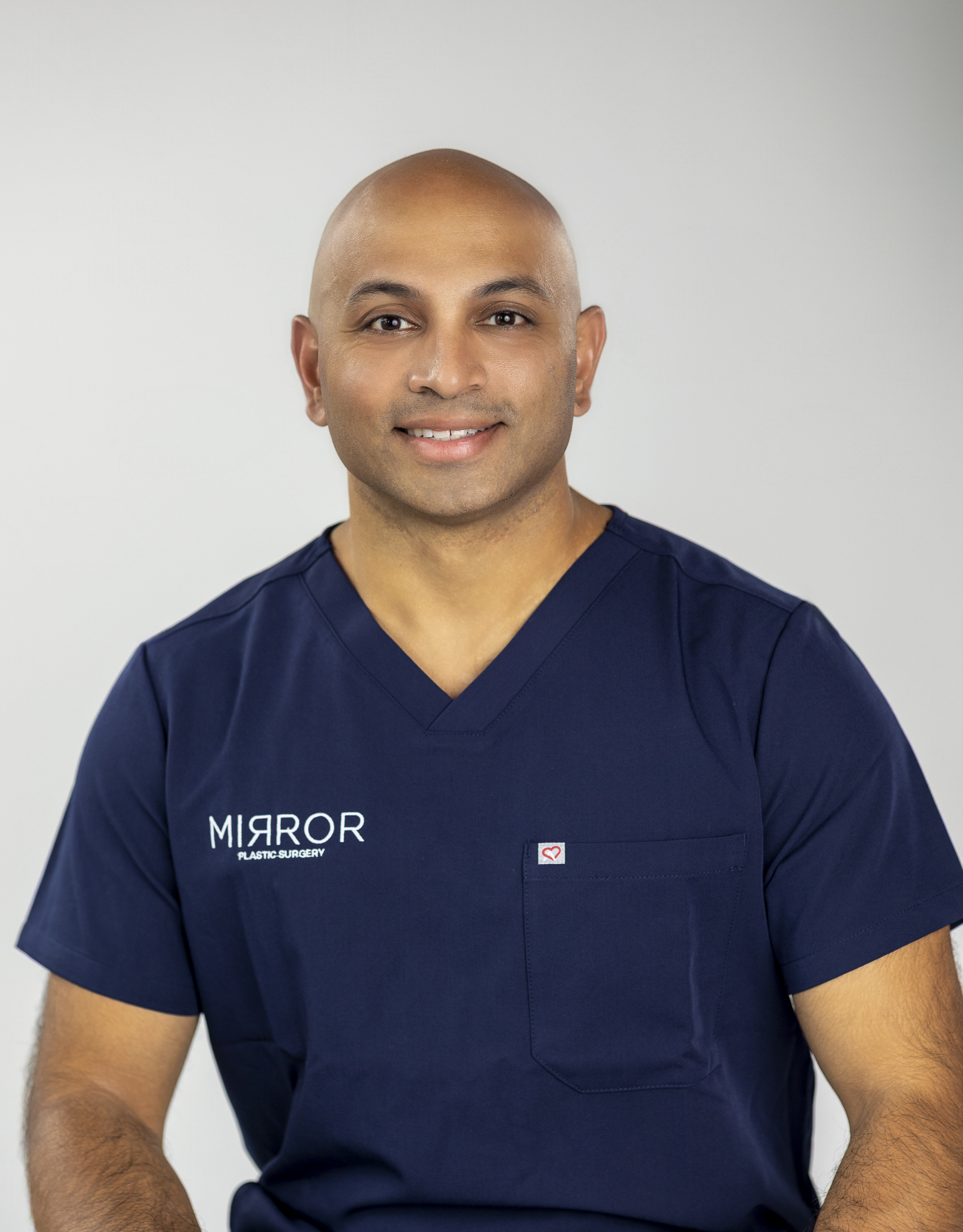
Written by: Dr. Akash Chandawarkar, Board Certified Plastic Surgeon, Mirror Plastic Surgery | Last updated: July 16, 2026
What You Can Expect With Lip Filler Bruising
- Bruising after lip augmentation is a normal response to the lips’ dense blood supply and usually settles within 7–14 days with good aftercare.1
- Bruising ranges from mild (3–5 days) to severe (up to 14 days), with higher risk in patients on blood thinners, smokers, or those with diabetes.1
- Bruise color typically shifts from red-purple to yellow-green, with peak swelling in the first 48 hours and clear improvement by days 5–7.1
- Cold compresses, head elevation, arnica, avoiding blood thinners, and staying hydrated can noticeably shorten recovery time.1
- At Mirror Plastic Surgery, patients receive personalized recovery guidance and 24/7 access to Dr. Akash’s team, so you can book a consultation and review your lip augmentation goals in detail.
Why Significant Bruising After Lip Fillers Is Usually Normal
The lips are among the most vascular soft tissues on the face. The superior and inferior labial arteries run close to the surface, and the overlying mucosa is thinner than skin elsewhere on the face. This combination makes bruising more visible and more common here than in areas with fewer blood vessels. Injection-site bruising is therefore expected in many hyaluronic acid lip filler patients.
Severity falls into three clinical ranges:
- Mild bruising: Small purple or blue marks at injection sites, resolving in 3–5 days as the body clears a small amount of blood from minor vessel disruption.
- Moderate bruising: Broader discoloration lasting 7–10 days due to greater blood accumulation from contact with larger vessels.
- Severe bruising: Extensive discoloration persisting up to 14 days, more common in patients using blood thinners, smokers, or those with diabetes, whose healing is physiologically slower.
Bruising that lasts beyond two weeks warrants follow-up with the treating provider. Knowing the usual day-by-day pattern makes it easier to see what is normal and what needs attention.
Day‑by‑Day Lip Filler Bruising Timeline
Bruise color follows a predictable biochemical sequence as blood cells break down and the body clears them. Bruising begins red-purple and transitions through yellow-green before fading.
- Days 0–2: Swelling and bruising peak within the first 48 hours. Lips look swollen and feel tender. Bruising becomes most visible around the vermilion border, where the labial arteries lie closest to the surface.
- Days 3–4: Bruising may appear at its worst before it starts to fade as the hyaluronic acid integrates with the tissue. Discoloration shifts from purple-blue toward yellow-green, and swelling begins to ease.
- Days 5–7: Bruising and acute swelling typically improve significantly during this window. Lips feel less tight, and the shape looks much closer to the final result.
- Days 7–14: As noted in the severity ranges above, most bruising has settled by this stage.1 Edema has resolved, and the hyaluronic acid has stabilized, revealing the final shape and volume. In elderly patients or those on blood thinners, full resolution can extend to 21 days.1
Get your personalized recovery plan based on your anatomy, medical history, and treatment goals during a consultation with Dr. Akash.
Five Proven Ways To Reduce Lip Filler Bruising Faster
Targeted aftercare can shorten the bruising timeline and make recovery more comfortable.1 These five steps have the strongest clinical rationale.
- Cold compress immediately after treatment. Apply a cloth-wrapped ice pack for 10–15 minutes, then take a 10-minute break, and repeat 4–6 times daily during the first 24 hours. Never place ice directly on the skin. Cold causes vasoconstriction, which limits blood leaking into the tissue.
- Head elevation during sleep. Sleep with your head elevated at about 30 degrees for the first three nights. Gravity helps reduce fluid pooling in the lips and supports faster resolution of swelling.
- Arnica Montana. Oral Arnica Montana 30C (3 pellets twice daily) started three days before treatment is associated with reduced bruising severity, although clinical evidence is mixed. Topical arnica cream can support resolution of mild bruises after the most intense swelling has passed.
- Avoid blood-thinning agents. Discontinue ibuprofen, naproxen, aspirin (unless prescribed by a cardiologist), fish oil, vitamin E, ginkgo, garlic supplements, and turmeric five days before treatment. Aspirin disrupts platelet function and directly increases bleeding and bruising risk.
- Hydration. Drink 2–3 liters of water daily after treatment. Good hydration supports toxin elimination and helps hyaluronic acid integrate properly, which can speed visible recovery.
Activities To Avoid In The First 24–48 Hours
Certain activities in the first days increase blood flow, heat, or pressure on the lips and can worsen bruising and swelling.
- Alcohol: Alcohol consumption can increase bruising and swelling after lip fillers due to vasodilation and blood-thinning effects. Avoid alcohol for at least 48 hours, and ideally for one week.
- Strenuous exercise: Elevated heart rate increases blood flow to the treated area and worsens swelling and bruising. Skip high-intensity workouts for 24–48 hours.
- Heat exposure: Saunas, steam rooms, hot showers, and hot drinks widen blood vessels and worsen swelling and bruising. Avoid these for at least 48 hours.
- Pressure on the lips: Rubbing, massage, pressing with fingers, or sleeping face-down can increase bruising and raise the risk of filler displacement. Avoid these for the first 24 hours.
- Blood-thinning pain relievers: Take paracetamol for pain relief instead of the blood-thinning medications mentioned earlier. This approach controls discomfort without increasing bruising risk.
Bruising Differences: Filler vs Surgical Lip Procedures
| Procedure Type | Typical Bruising Duration | Peak Swelling Window | Return-to-Social Timeline |
|---|---|---|---|
| Hyaluronic acid filler | 3–14 days depending on severity | 24–48 hours | 1–2 days |
| Surgical lip lift | 7–14 days (scar healing involved) | First 1–2 weeks | 2–3 weeks minimum |
| Lip implants | Fades during weeks 2–3 | Week 1 (most swelling and tightness) | 1–2 weeks |
| Fat transfer to lips | Up to 2 weeks; dual-site bruising possible | First 1–2 weeks | 2–4 weeks |
Red-Flag Symptoms: When To Reach Out Immediately
Certain symptoms fall outside the usual bruising and swelling pattern and need prompt evaluation. Mirror Plastic Surgery’s 24/7 concierge model ensures patients always have direct access to Dr. Akash’s team.
| Symptom | Description | Action | Urgency |
|---|---|---|---|
| Skin blanching | Immediate white discoloration during or after treatment | Contact clinic or go to ER immediately | Emergency |
| Mottled or dusky discoloration | Skin turning grey, blue, or showing a net-like pattern | Contact clinic or go to ER immediately | Emergency |
| Severe or worsening pain | Sharp or intense pain that increases rather than improves | Contact clinic immediately | Urgent |
| Vision changes | Any visual disturbance with pain or skin color change | Go to ER immediately | Emergency |
| Fever, pus, or spreading redness | Signs of infection appearing 48+ hours post-injection | Contact clinic promptly | Urgent |
| Bruising beyond 2 weeks | Discoloration that does not resolve within the expected window | Schedule follow-up | Non-emergency |
| Hard, painful lumps after 2 weeks | Growing or painful nodules that do not soften | Schedule provider evaluation | Non-emergency |
Connect with our 24/7 concierge team if you have any concerns about your recovery. Dr. Akash’s team is available around the clock.
How Mirror Plastic Surgery Minimizes Bruising
Dr. Akash completed his medical degree through the Harvard-MIT Division of Health Sciences and Technology, a program that trains physician-scientists by combining rigorous research with clinical medicine. His seven-year integrated plastic and reconstructive surgery residency at Johns Hopkins University was followed by an aesthetic surgery fellowship at the Manhattan Eye, Ear and Throat Hospital (MEETH), which represents the highest level of specialization in cosmetic surgery. He has appeared on Newsweek’s America’s Best Plastic Surgeons list for two consecutive years, including 2025.
This depth of anatomical training shapes how lip augmentation is performed and managed at Mirror Plastic Surgery. The superior and inferior labial arteries, their depth relative to the orbicularis oris muscle, and the five anatomical layers of the lip form the framework for every injection decision. Each injection choice builds on this assessment: the decision between needle and cannula relates to the target depth, which then guides the appropriate volume per pass, all calibrated to minimize vascular disruption and reduce bruising risk from the start.
Mirror Plastic Surgery operates on a concierge model and performs one to two procedures per day. Every patient receives a comprehensive assessment, a personalized aftercare protocol, and direct 24/7 access to Dr. Akash’s team throughout recovery. This level of access and pacing differs from high-volume practices that perform five to ten procedures daily.
Frequently Asked Questions
Is bruising after lip filler dangerous?
Bruising after lip filler is a normal physiological response to needle or cannula contact with the lips’ dense vascular network. In most cases, it is a cosmetic issue that settles within 7–14 days. Bruising becomes a clinical concern only when it appears with other symptoms such as severe or worsening pain, skin blanching, mottled discoloration, vision changes, or fever, which may signal vascular occlusion or infection and require immediate evaluation.
When can I wear makeup to cover lip filler bruising?
Most patients can apply makeup over bruised areas once the skin has settled and there are no open injection sites, typically after 24–48 hours. Color-correcting concealers with an orange or peach undertone work well to neutralize purple-blue bruising. Avoid pressing firmly on the lips or using lip products that require significant pressure during the first 24 hours.
Does arnica actually work for lip filler bruising?
Arnica Montana is widely used both orally and topically to reduce bruising after injectable treatments. Clinical evidence is mixed, and some patients who follow an arnica protocol report noticeably less bruising, while controlled studies show variable results. The risk profile of arnica at standard doses is very low, which makes it a reasonable addition to a broader aftercare plan that includes cold compresses, head elevation, and avoidance of blood-thinning agents. Topical arnica cream may be applied to bruised areas after the acute swelling phase has passed.
How soon after lip filler can I exercise?
Light activity usually feels comfortable after 24 hours. High-impact exercise such as running, hot yoga, or heavy lifting should be avoided for at least 48 hours because elevated heart rate increases blood flow to the treated area and can worsen swelling and bruising. Patients who bruise easily or who have moderate to severe bruising should wait until after day 5 before returning to strenuous exercise.
How do I schedule a follow-up if my bruising is not improving?
Mirror Plastic Surgery’s concierge model gives patients direct access to Dr. Akash’s team throughout recovery. If bruising is not improving by day 10, appears with pain or skin color changes, or persists beyond two weeks, contact the practice by phone at 727-361-6515 or by email at hello@mirrorplasticsurgery.com. Patients in the Tampa Bay and St. Petersburg area can also visit the practice at 780 4th Ave S, St. Petersburg, FL 33701.
Next Steps For A Smoother Lip Augmentation Recovery
Lip augmentation bruising follows a predictable pattern and becomes manageable when you understand the anatomy and follow evidence-based aftercare. The difference between a frustrating recovery and a smooth one often reflects the quality of pre-procedure planning, injection technique, and the clarity of the aftercare guidance you receive.
At Mirror Plastic Surgery, every lip augmentation, whether filler or surgical, follows the same hierarchy: safety first, function second, aesthetics third. Dr. Akash’s Harvard-MIT, Johns Hopkins, and MEETH training supports a focus on anatomical precision and patient safety rather than speed or volume.
Discuss your lip augmentation goals with Dr. Akash to understand your individual bruising risk factors and receive a personalized recovery plan from one of Tampa Bay’s most credentialed plastic surgeons.
1 Results may vary from person to person. Editorial content, before and after images, and patient testimonials do not constitute a guarantee of specific results.