
Written by: Dr. Akash Chandawarkar, Board Certified Plastic Surgeon, Mirror Plastic Surgery | Last updated: July 11, 2026
Key Takeaways for Men in Their 30s
- Realistic success in your 30s combines 90–95% frontal graft survival with a natural look that still fits you 10–20 years from now.1
- Graft survival and patient satisfaction are distinct. High survival does not guarantee happiness without expectation alignment and stabilization.1
- Lifetime donor supply is limited, so multi-session planning matters, especially for Norwood IV–VII patients who may need 3,500–7,000+ grafts total.
- Medication synergy with finasteride or minoxidil improves graft survival and slows progression, so stabilization usually comes before surgery in younger patients.1
- Choosing an experienced surgeon who plans for the long term protects both your donor supply and your result. Schedule your personalized consultation at Mirror Plastic Surgery to model your 10-year progression and donor strategy.
How Graft Survival Relates to Patient Satisfaction
Graft survival and patient satisfaction are related but separate outcomes. High technical survival does not guarantee satisfaction if expectations ignore how hair loss progresses over time. The table below shows how survival rates vary by recipient zone and why crown work usually carries higher risk than frontal restoration.
| Recipient Zone | Graft Survival Rate | Primary Risk Factor |
|---|---|---|
| Hairline / Frontal | 90–95% | Surgical technique and post-op care1 |
| Crown / Vertex | Typically lower than frontal | Lower blood supply, 15–24 month maturation timeline1 |
While technical survival rates are high, patient satisfaction depends on more than graft take alone. The following metrics highlight the gap between surgical success and how patients feel about their results.
| Metric | Figure | Context |
|---|---|---|
| Overall “Worth It” rating | 97% | RealSelf patient-reported satisfaction1 |
| Repair / revision cases (2024) | 6.9% of all procedures | Up from 5.4% in 2021, crown work most vulnerable |
| Repair procedures from black-market work | 10% of repairs | 2025 ISHRS Practice Census |
| Positive emotional outcome | Majority of patients | Correlates with pre-surgical expectation alignment |
The island effect, where DHT-resistant transplanted follicles persist while surrounding native hair thins, remains the most common driver of crown dissatisfaction and a major contributor to the rising repair rate.
Donor Supply Limits and Lifetime Planning
The permanent safe donor zone offers only a fixed number of extractable grafts across your lifetime. Every graft used in an initial procedure reduces what remains for future sessions that address ongoing loss. The table below maps Norwood stage to estimated graft demand so you can see how quickly supply can be consumed.
| Norwood Stage | Estimated Grafts Needed | Lifetime Donor Impact |
|---|---|---|
| III (including vertex) | 1,500–2,500 | Low, preserves significant reserve |
| IV–V | 3,500–5,000 | Moderate, multi-session planning advisable |
| VI | 5,500–6,000+ | High, may approach lifetime limit in one or two sessions |
| VII | 5,000–7,000+ | Very high, often exhausts scalp donor supply entirely |
An average first-time procedure of 2,347 grafts already uses a substantial portion of total lifetime donor supply before future progression even occurs. Men in their 30s need to weigh this carefully when planning their first surgery.
Medication Synergy and Stabilization Before Surgery
The medication synergy mentioned earlier works through two main mechanisms. 5-alpha reductase inhibitors and minoxidil reduce overall demand on donor hair while also expanding the range of usable grafts by slowing progression. A 2025 prospective study found higher graft survival in patients using finasteride after transplant compared with those who did not, because DHT reduction protects both native and transplanted follicles.1
For men in their 30s, experienced surgeons usually prioritize medical therapy first and then assess stabilization before recommending surgery. The long-term pattern of loss often has not fully declared itself at this age. Stabilization means documented minimal change over at least 12 to 18 months, confirmed through clinical photography, scalp mapping, or trichoscopy.
Surgeon Expertise and Red-Flag Checklist
Once you achieve stabilization through medication, the next critical decision involves choosing a surgeon who respects that preparation and plans conservatively. Surgeon selection is the single most controllable variable in long-term outcomes. Higher revision rates reported by corrective surgeons in hair mill patients, often in the 30–40% range, contrast sharply with the 5–10% revision rate seen in ethical practices that plan for the long term and highlight how much surgeon choice matters.
Warning signs that a clinic may not prioritize long-term donor preservation include the following patterns:
- Performing five or more surgeries per day with no dedicated per-patient focus
- Recommending maximum graft counts without a documented 10-year progression plan
- No requirement for a pre-surgical stabilization period or medication trial
- Absence of board certification by the American Board of Plastic Surgery or equivalent
- No discussion of the island effect or crown-specific maturation timelines
- Pressure to proceed without scalp mapping, trichoscopy, or donor density measurement
- No mention of lifetime donor supply limits or multi-session staging
Credential benchmarks that help you identify a qualified surgeon include:
- Board certification by the American Board of Plastic Surgery
- Residency at a nationally ranked academic medical center
- Fellowship training in aesthetic surgery at a recognized institution
- Published peer-reviewed research in hair restoration or reconstructive surgery
- Practice model limited to one to two surgeries per day for full-team focus
- Recognition by independent third-party rankings such as Newsweek’s America’s Best Plastic Surgeons
Dr. Akash at Mirror Plastic Surgery holds an M.D. from Harvard Medical School, completed a seven-year integrated plastic and reconstructive surgery residency at Johns Hopkins University, and completed an aesthetic surgery fellowship at the Manhattan Eye, Ear and Throat Hospital (MEETH). He also completed the Stanford University Biodesign Innovation Fellowship and has been named to Newsweek’s America’s Best Plastic Surgeons list two years in a row. Mirror Plastic Surgery limits surgical volume to one to two cases per day, which supports a safety-first, function-second, aesthetics-third philosophy for every procedure.
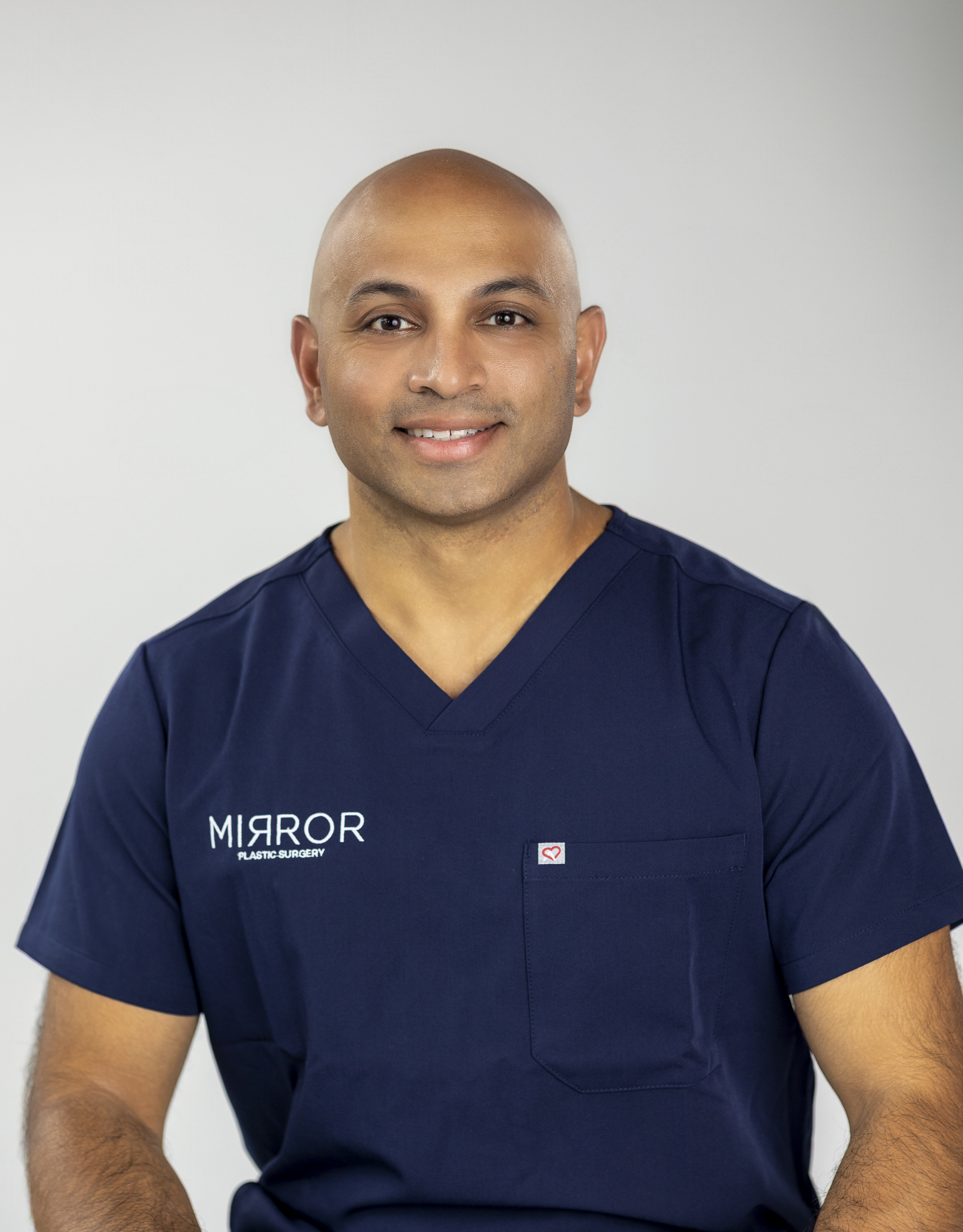
Book a consultation with Dr. Akash to have your donor density, Norwood stage, and 10-year progression modeled before any surgical decision is made.
Is a Hair Transplant at 30 or 32 Worth It?
Hair loss stability often improves in the early-to-mid 30s, so this age range can be a favorable window for surgery when stabilization criteria are met. A 2024 study in the Journal of Plastic and Reconstructive Surgery reported 89% satisfaction in men aged 40–55 compared with 74% for men under 30, which suggests that men in their 30s sit in a more favorable middle ground but still face progression risk.1
The main caveat at 30 or 32 involves future Norwood advancement that can create an unnatural island of transplanted hair surrounded by thinning native hair. Conservative hairline placement, strict medication adherence, and staged planning directly reduce this risk. Men with a strong family history of Norwood 6–7 progression need especially conservative donor allocation at this age.
What Is the Regret Rate for Hair Transplants?
The rising repair rate mentioned earlier reflects several preventable causes. The leading drivers of regret and revision include:
- Overly aggressive or low hairline placement that looks unnatural as the patient ages
- Crown island effect from transplanting before native hair stabilizes
- Donor area depletion from high-volume single-session harvesting
- Unrealistic expectations about density relative to native hair (80–100 FU/cm² vs. achievable 30–40 FU/cm²)
- Procedures performed at unaccredited facilities without long-term planning
As the ISHRS census notes, about 10% of repair work now stems from black-market procedures, which underscores that surgeon and facility selection remain the primary regret-prevention strategies.
10-Year Outlook After Surgery in Your 30s
Long-term retrospective analyses show that transplanted follicles in the frontal and mid-scalp zones can maintain high density over a decade. The surrounding native hair usually follows a different path and continues to thin.
A separate 10-year retrospective analysis documented varying degrees of density reduction in transplanted regions for most patients. These changes came mainly from progressive loss in adjacent non-transplanted zones rather than from graft failure itself.
Approximately one-third of hair transplant patients eventually need additional procedures, usually to address progressive loss in areas that were not transplanted initially. Men who undergo surgery in their 30s should plan for at least one potential additional session and preserve donor supply accordingly. Studies also show a 4–6% density decrease over five years even in patients who consistently use finasteride and minoxidil, which confirms that medication slows but does not fully stop ongoing change.1
Celebrity Hair-Transplant Reality Checks
Public figures who have disclosed or are widely reported to have undergone hair restoration highlight both the strengths and the limits of surgery. Many celebrity results involve multiple sessions spaced over years, concurrent use of finasteride or dutasteride, scalp micropigmentation to boost apparent density, and access to surgeons who perform low daily case volumes with extended operative times.
Direct comparison of a celebrity outcome to your own candidacy rarely holds up clinically without knowing that person’s Norwood stage, donor density, hair caliber, and medication history. The relevant benchmark for your decision is the peer-reviewed data discussed above, not a public figure’s appearance on camera.
Norwood Progression Modeling and When to Proceed
Research published in Hair Transplant Forum International shows that responsible hair transplantation requires at least a 10-year plan that accounts for progressive native hair loss. For men in their 30s, surgical design must anticipate where hair loss is likely to be at age 45 or 50, not only where it is today.
To achieve this forward-looking design, surgeons use conservative principles that prioritize long-term naturalness over short-term density:
- Placing the hairline slightly higher than teenage levels so it ages naturally
- Prioritizing the frontal hairline and temple peaks first, mid-scalp second, and crown last or in a later session
- Capping single-session FUE at 4,500–5,500 grafts to maintain 90–95% survival rates
- Spacing multi-session procedures 9–12 months apart
- Reserving donor grafts for future needs rather than maximizing initial density
- Using the shingling technique to reach 30–40 FU/cm² visual coverage without exhausting supply
Mirror Plastic Surgery’s model of limiting surgical volume to one to two procedures per day directly supports these principles. Full-team focus on a single patient allows the extended operative time needed for conservative, precise harvesting that protects the donor zone for future sessions.
Frequently Asked Questions
How long does it take to see full results from a hair transplant in your 30s?
Full results usually take 12 to 20 months to appear. The frontal zone often reaches its final appearance at 12 to 15 months, while the crown may require 18 to 20 months because of lower blood supply and a longer maturation timeline. Around the three-month mark, some new growth may begin, and by six months about half of the final result is visible.1
Temporary shedding of implanted hairs during weeks two through eight is normal and does not signal failure. A formal review appointment at 12 months is standard, although results can keep improving through 18 months.
Does a hair transplant stop future hair loss?
No. A hair transplant redistributes existing DHT-resistant follicles from the donor zone to thinning areas but does not stop androgenetic alopecia in non-transplanted native hair. Ongoing medical therapy with finasteride or minoxidil is therefore recommended after surgery.
Without medication, surrounding native hair continues to thin, which can make transplanted areas look isolated over time. Men in their 30s face a longer horizon of potential progression than older patients, so medication adherence and multi-session planning carry even greater importance.
How many grafts will I need, and how many do I have available?
The average scalp donor area yields only a limited number of extractable grafts over a lifetime. Required graft counts vary by Norwood stage, hair caliber, donor density, scalp-to-hair color contrast, and hair texture. Norwood III patients may need 1,500 to 2,500 grafts, while Norwood VI patients may require 5,500 to 6,000 or more.
As noted in the donor planning section, even a typical first session can use a significant fraction of your lifetime supply, which makes careful pre-surgical assessment critical. Donor density below 40 follicular units per cm² sharply limits safely harvestable grafts. A thorough assessment that includes trichoscopy and scalp mapping remains the only accurate way to determine your individual supply-and-demand balance.
What is the difference between FUE and FUT for men in their 30s?
Follicular Unit Excision (FUE) harvests individual follicular units directly from the scalp and leaves small circular scars that are less visible with short haircuts. Follicular Unit Transplantation (FUT) removes a strip of scalp tissue, creates a linear scar, and often provides a higher total graft count per session with slightly better survival in some studies.
For men in their 30s who expect multiple sessions, some surgeons recommend starting with FUT to preserve the FUE donor zone for later use, then combining both techniques in subsequent procedures. The best approach depends on your donor characteristics, lifestyle, and the total grafts required across a lifetime plan.
What should I do before scheduling a hair transplant consultation?
Before a consultation, document your hair loss progression with dated photographs taken under consistent lighting over at least 12 months. Note your family history of hair loss on both sides, including pattern and age of onset in male relatives.
If you are not already using finasteride or minoxidil, discuss starting these medications with a physician so you can establish a stabilization baseline. Gather any previous scalp treatments, blood work, or dermatology records. Arrive ready to discuss realistic density goals, your tolerance for multiple sessions, and your long-term maintenance commitment.
A thorough consultation should include scalp mapping, donor density measurement, Norwood staging, and a direct discussion of what is achievable given your individual anatomy.
Conclusion: Setting Yourself Up for Long-Term Success
Realistic hair transplant success for men in their 30s depends on high graft survival at the hairline, typically lower survival in the crown, a limited lifetime donor supply, ongoing androgenetic alopecia, and the quality of long-term surgical planning. The repair rate reported in the 2025 ISHRS Practice Census clusters in patients who had surgery before stabilization, at high-volume clinics without 10-year planning, or without concurrent medical therapy.
Men in their 30s who meet stabilization criteria, use medication to protect native hair, and work with a surgeon who limits daily case volume and allocates donor grafts conservatively achieve the most durable, natural-looking results over 10–20 years. Informed evaluation, realistic expectations, and surgeon selection based on credentials and philosophy, not price or speed, remain the main drivers of long-term satisfaction.
Schedule your personalized assessment with Dr. Akash at Mirror Plastic Surgery in St. Petersburg, Florida, to receive a comprehensive donor assessment, Norwood progression model, and individualized long-term hair restoration plan.
1 Results may vary from person to person. Editorial content, before and after images, and patient testimonials do not constitute a guarantee of specific results.