
Written by: Dr. Akash Chandawarkar, Board Certified Plastic Surgeon, Mirror Plastic Surgery | Last updated: July 11, 2026
Key Takeaways for Long-Term Hair Transplant Results
- Transplanted follicles from the DHT-resistant donor zone are generally permanent, while native hair keeps thinning unless you treat it.1
- Results change over 5, 10, and 20 years. Graft survival often exceeds 90 percent, but native hair thinning usually drives visible change.1
- Age at surgery matters. Men under 30 face higher risk of unnatural outcomes. Men in their 40s benefit from more stable patterns and higher satisfaction.
- Medications like finasteride and minoxidil protect native hair and help maintain density long term. Better compliance usually means higher satisfaction.
- Planning for future hair loss and protecting donor supply are crucial. Schedule a consultation at Mirror Plastic Surgery to build a lifetime hair restoration plan.
Step 1: See What Happens 5, 10, and 20 Years After a Hair Transplant
Long-term results depend on both graft survival and how your native hair continues to thin. The table below summarizes what peer-reviewed research shows at each major milestone.
| Time Point | Transplanted Graft Retention | Native Hair Status | Key Clinical Note |
|---|---|---|---|
| 5 Years | 90–95% survival in expert hands, with a 4–6% density decrease documented even in compliant patients1 | Progressive DHT-driven miniaturization continues in non-transplanted zones | Medication compliance is the primary modifiable variable at this stage |
| 10 Years | Graft survival often exceeds 90%. Some cohorts show 100% retention. 55.35% of patients show moderate density reduction, 27.67% slight reduction, 8.92% no change, 8.03% greatly reduced density1 | Surrounding native hair thinning is the most frequent visible change | Studies show a statistically significant correlation between medication compliance and long-term satisfaction |
| 20+ Years | Transplanted follicles usually remain productive, while natural aging produces graying and finer texture1 | Androgenetic alopecia is often fully expressed, and untreated men may reach Norwood 5–7 | Finite donor supply becomes the main constraint for any additional procedures |
Age at surgery shapes how these milestones play out. A 25-year-old with an evolving loss pattern may enjoy an excellent 5-year result that slowly changes as native hair behind the transplant thins, which can create an isolated frontal island by his mid-30s. A 40-year-old with a more stable pattern can be planned to a realistic endpoint, with grafts placed in zones that stay aesthetically coherent for the next two decades. Studies show that men aged 40–55 often report higher satisfaction with hair transplant outcomes than men under 30.1
Step 2: See Why Transplanted Hair Lasts While Native Hair Keeps Thinning
The principle of donor dominance, first described by Norman Orentreich, MD, explains why transplanted hair lasts. Hair follicles taken from DHT-resistant regions keep their original genetic programming and continue to grow when moved to balding areas. The follicle carries its resistance with it, and the new location does not override that programming. This is why grafts placed into a previously bald crown can keep producing terminal hair decades later.
Native hair in the recipient zone follows different biology. Those follicles were never DHT-resistant, and androgenetic alopecia keeps miniaturizing them regardless of nearby grafts. The most common long-term change after hair transplantation is thinning of surrounding native hair, not loss of transplanted follicles. A man who receives 2,500 grafts into his frontal third at age 35 and skips medication may find that by 45, the native hair framing those grafts has thinned significantly. The overall look changes even though the transplanted follicles survived.
Donor-zone stability also has limits. Only the central, most stable portion of the donor zone shows strong long-term resistance to miniaturization, and even there, not every follicle behaves the same. Grafts taken from the borderline zone just outside the permanent safe band carry a real risk of future thinning. That risk can create visible gaps in the donor area and weaker results in the recipient zone at the same time.
Step 3: Match Your Hair Transplant Plan to Your Age
Pattern stability is the most important factor in deciding if surgery makes sense, and confirming stability is harder before age 30. Men in their early 20s are rarely good candidates because androgenetic alopecia is still evolving and the final pattern is unknown. Surgery in this window risks the stranded-island phenomenon, where transplanted frontal hair stays dense while native hair behind it keeps thinning, which creates an increasingly unnatural result over time.
Planning for a 25-year-old looks very different from planning for a 40-year-old. For a man in his mid-20s who truly meets candidacy criteria, every choice must account for decades of future progression.
- Finasteride use for at least 12 months with documented stabilization is a prerequisite, because it is the only way to confirm that the pattern has temporarily stabilized.
- Only the frontal third should be addressed, and crown transplants are contraindicated because the loss pattern there is almost never established. Grafts placed in an unstable crown risk becoming isolated as surrounding hair thins.
- The Donor Ledger Framework treats each man’s finite graft supply as lifetime capital. A single session averaging 2,347 grafts can consume nearly 40% of a typical lifetime supply of about 6,000 grafts, so allocation must be conservative.
- A conservative, age-appropriate hairline placed higher than the patient might prefer is mandatory to avoid an unnatural look at 45, when contrast between transplanted and native zones becomes more obvious.
For a man in his 40s, planning priorities shift because pattern stability and donor predictability improve.
- The 40s often mark the first decade when pattern stabilization, donor strength, and financial and emotional readiness align for many patients.
- Endpoint-first planning becomes realistic because the loss trajectory has largely declared itself.
- Donor density of 80–90 grafts per cm², which is typical in the mid-40s, can support meaningful coverage across several zones.
- As noted in the 10-year data above, roughly one-third of patients eventually need a second procedure, so conservative donor management remains essential even at this age.
Step 4: Protect Your Transplant With Evidence-Based Medications
Adjunctive medication is essential for men who want their transplant to look natural at the 10- and 20-year marks. Transplanted follicles are DHT-resistant, but the native hair around them is not. Without medical protection, that native hair keeps thinning and gradually isolates the transplanted zones.
Patients who combine minoxidil and finasteride can maintain or even improve hair density, while many men who avoid medication experience significant density loss within four years.1 Evidence for finasteride is strong. A 2006 study by Leavitt et al. in Dermatologic Surgery showed that by week 48 after hair transplant surgery, patients taking 1 mg finasteride daily had visible improvement compared with those on placebo. A more recent prospective study confirmed better graft survival and higher density gains at 12 months in finasteride users.
Minoxidil supports results through a complementary mechanism. A 2020 meta-analysis confirmed that combining finasteride and topical minoxidil yields greater efficacy than either drug alone, and most patients using both after transplant maintain or improve density. The 2023 Vañó-Galván et al. international expert consensus recommends medical therapy for hair transplant patients with androgenetic alopecia to protect non-transplanted hair.
Adherence often becomes the real challenge because long-term compliance varies. A board-certified surgeon who builds a medication protocol into the plan from day one, instead of mentioning it briefly after surgery, greatly improves the odds of sustained use and durable results.
Book a consultation with Dr. Akash to receive a personalized medication plan tailored to your hair loss stage, donor profile, and long-term goals.
Step 5: Plan for Future Hair Loss and Smart Second Procedures
Many men eventually consider a second hair transplant, usually to address new loss in non-transplanted areas rather than failed grafts. As noted in the long-term data above, roughly one-third of patients will need another procedure if their donor supply allows it. A second procedure reflects ongoing androgenetic alopecia, not failure of the first surgery.
The decision to pursue a second procedure should be framed during the original consultation. A board-certified surgeon can map out likely future needs and donor limits early.
- Most patients have a lifetime maximum of about 4,000 to 8,000 harvestable grafts from the permanent donor zone, with safe extraction usually capped at 40 to 50% of total donor capacity.
- Repeated FUE extraction disrupts the microvascular network that feeds the donor zone, and these changes often become visible only 3–7 years later.
- Combining FUT and FUE across several sessions can yield an additional 2,000–3,000 grafts compared with using either technique alone, which preserves flexibility for future needs.
- Crown transplants should usually wait until the loss pattern is fully established, which for most men means the mid-40s or later.
High-volume clinics that perform five to ten procedures per day rarely have enough consultation time to map a patient’s lifetime donor budget across multiple sessions. A concierge-level practice that limits itself to one or two surgeries per day can perform detailed trichoscopic assessment and multi-decade planning that protect a patient’s finite graft supply over 30 or 40 years.
What Patients Actually Ask: Common Myths Debunked
Does a hair transplant give truly permanent results?
Transplanted follicles from the permanent safe donor zone are permanent in the sense that they retain DHT resistance and keep producing hair for life. The overall appearance still changes as surrounding native hair thins. Permanent grafts do not guarantee a permanent aesthetic result unless you actively manage ongoing androgenetic alopecia.
Will I look the same at 60 as I did at 40 after my transplant?
You will not look exactly the same at 60 as you did at 40. Transplanted follicles age like all hair, with graying and finer texture over time. Native hair in untreated zones keeps thinning. A well-planned procedure anticipates where the loss pattern is heading so the result ages naturally instead of looking frozen against a backdrop of progressive thinning.
Can I get a hair transplant in my early 20s?
Surgical candidacy in the early 20s is extremely rare. The loss pattern is almost never established, so no one can design a result that stays natural as the pattern progresses. For most men in this age group, the right first step is medical stabilization with finasteride and minoxidil, monitored over at least 12 months, before any surgical discussion.
Do celebrity hair transplant results reflect what I can expect?
Celebrity results usually appear without context about the number of sessions, medications, or years of follow-up involved. A single before-and-after photo captures one moment in a multi-decade process. Realistic expectations require understanding the full timeline, the role of medications, and the person’s donor characteristics, none of which show up in a promotional image.
Is the crown safe to transplant at any age?
The crown is the last area most surgeons address and the first to show progressive loss. Responsible surgeons usually advise against crown transplants for men under 45 because the pattern there is rarely established earlier. Early crown work risks an isolated circle of transplanted hair surrounded by expanding bald skin as androgenetic alopecia advances.
Final Checklist: Questions to Ask During Your Consultation
A thorough consultation with a board-certified plastic surgeon should cover every item on this list before you finalize a surgical plan.
- Surgeon credentials: Is the surgeon board-certified by the American Board of Plastic Surgery, and what specific training do they have in hair restoration?
- Donor zone assessment: Has trichoscopy been used to measure miniaturization percentage and follicular unit density, and is the proposed harvest area within the central permanent safe zone?
- Lifetime graft budget: How many total harvestable grafts does your donor zone support, how many will this procedure use, and what remains for future sessions?
- Loss pattern trajectory: Has your hair loss been stable for at least 12 months, and what does your family history suggest about your ultimate Norwood pattern?
- Medication protocol: Will finasteride and minoxidil be prescribed before and after surgery, and what is the evidence-based rationale for your specific protocol?
- Hairline design philosophy: Is the proposed hairline age-appropriate and planned to look natural into your 50s and 60s, not just right after surgery?
- Second-procedure planning: Under what circumstances would a second procedure make sense, and how is donor supply being preserved to keep that option open?
- Volume and focus: How many procedures does the surgeon perform per day, and is the practice structured to give your case focused attention before, during, and after surgery?
Dr. Akash brings Harvard-MIT and Johns Hopkins training, a specialized aesthetic surgery fellowship at the Manhattan Eye, Ear and Throat Hospital (MEETH), and recognition as one of America’s Best Plastic Surgeons by Newsweek for two consecutive years to every hair restoration consultation. Mirror Plastic Surgery’s concierge model limits the practice to one or two surgeries per day and dedicates up to an hour to each initial consultation, which supports the depth of assessment that lifetime donor planning requires.
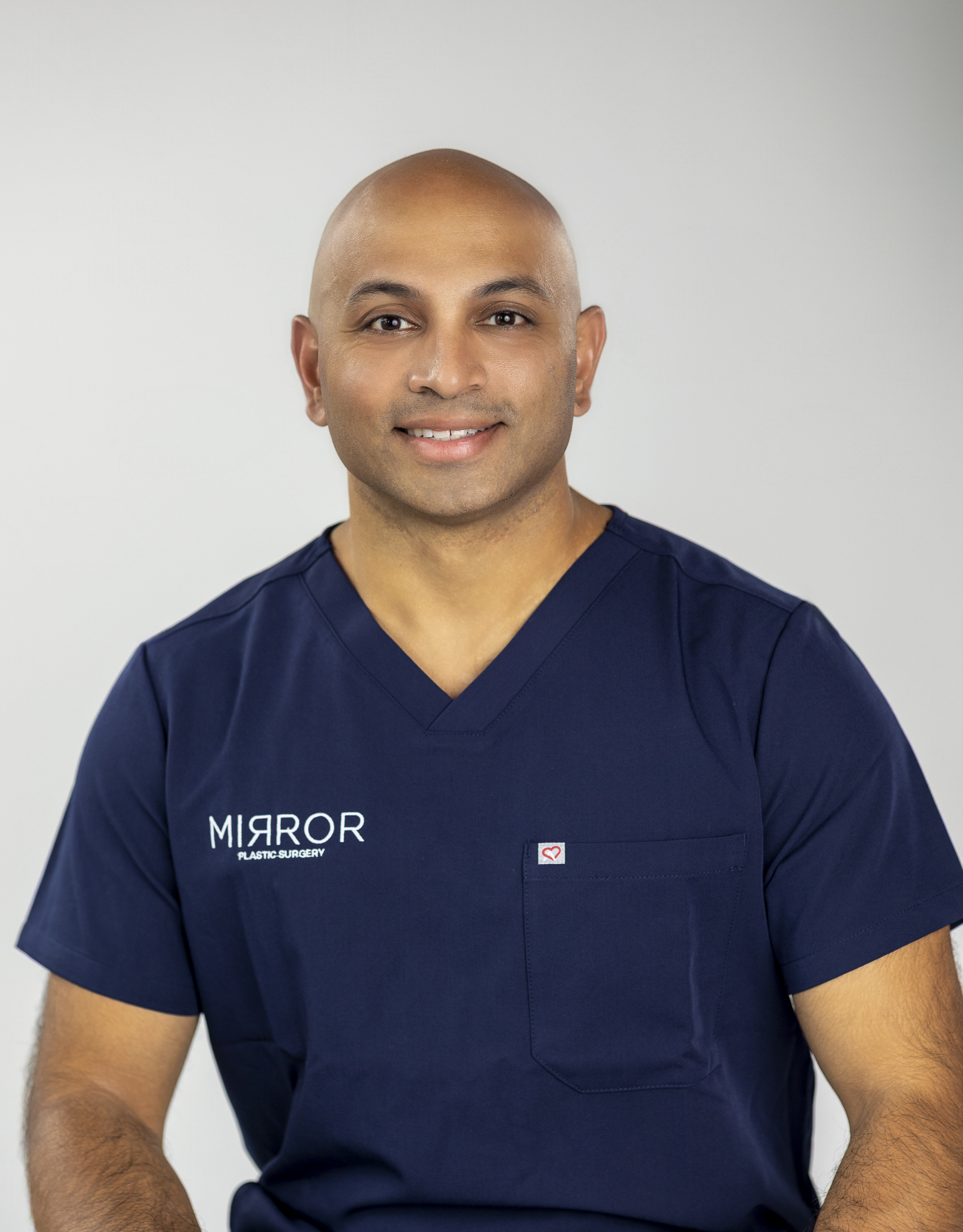
Book a consultation with Dr. Akash at Mirror Plastic Surgery in St. Petersburg, Florida, and receive a comprehensive, evidence-based hair restoration plan built around your anatomy, your age, and your goals for the next 20 years.
Frequently Asked Questions
How long do hair transplant results typically last for men?
Transplanted follicles harvested from the permanent safe donor zone at the back and sides of the scalp are genetically programmed to resist DHT, the hormone responsible for male pattern baldness. Those follicles usually keep producing hair for life, which is why the procedure is described as permanent. The overall appearance is not static, because native hair in non-transplanted areas continues to thin as androgenetic alopecia progresses, and transplanted zones may show a modest density reduction over a decade due to natural variability in donor resistance. Men who use finasteride and minoxidil consistently after surgery maintain better density at the 5- and 10-year marks than those who do not. Realistic longevity planning means accounting for both permanent grafts and ongoing native hair loss, so a detailed consultation with a board-certified surgeon remains essential.
What is the difference between a 25-year-old and a 40-year-old getting a hair transplant?
Age at surgery is one of the most consequential variables in hair transplant planning. A 25-year-old’s loss pattern is almost never fully established, which makes it impossible to design a result that stays natural as the pattern progresses over the next decades. Surgery at this age risks the stranded-island effect described in Step 3, where contrast between stable transplanted zones and progressive native thinning becomes more pronounced over time. A 40-year-old’s pattern has usually declared itself, which allows a surgeon to plan to a realistic endpoint, allocate grafts to zones that will remain coherent, and design a hairline that looks natural at 55 and 65 as well as at the time of surgery. Satisfaction rates are substantially higher in men over 40 than in men under 30 because pattern stability, donor predictability, and design clarity improve with age.
Do I need to take medication after a hair transplant?
For men with androgenetic alopecia, adjunctive medication after a hair transplant is strongly supported by clinical evidence and recommended by international expert consensus. Transplanted follicles are DHT-resistant and do not need medication to survive, but the native hair around them remains vulnerable to miniaturization. Without finasteride and minoxidil, more than half of patients notice significant native hair thinning within four years, which progressively isolates transplanted zones and changes the overall look. Combining both medications achieves over 92% maintenance or improvement in hair density at multi-year follow-up.1 A board-certified surgeon should build a personalized medication protocol into the treatment plan from the first consultation.
How do I know if a surgeon is qualified to perform a hair transplant?
Board certification by the American Board of Plastic Surgery confirms that a surgeon has completed an accredited residency, passed rigorous written and oral examinations, and maintains ongoing education. Beyond board certification, look for specialized fellowship training in aesthetic surgery, experience with trichoscopic donor-zone assessment, and a philosophy that includes lifetime donor budgeting and multi-session planning. Red flags include clinics that agree to operate without reviewing medication history, family history, or donor measurements, practices that propose juvenile low dense hairlines without discussing long-term aging, and high-volume settings where the surgeon performs five to ten procedures per day. Dr. Akash’s credentials and Mirror Plastic Surgery’s concierge model, detailed in the consultation checklist above, are designed to address each of these concerns.
When does a second hair transplant procedure make sense?
A second procedure makes sense when native hair loss has progressed in non-transplanted zones enough to create an aesthetic imbalance and when sufficient donor supply remains to correct that imbalance without exhausting the lifetime graft budget. As discussed in Step 5, approximately 30.8% of patients undergo a second procedure across their lifetime, mainly to address progressive loss rather than failed grafts. The decision should follow a lifetime donor plan created at the original consultation, not a reactive response after the donor zone has already been overused. A surgeon who harvests conservatively in the first session, protects the central permanent safe zone, and documents remaining donor capacity at each visit gives patients the most options for future work. Crown transplants are usually deferred until the loss pattern is fully established, which for most men means the mid-40s or later.
1 Results may vary from person to person. Editorial content, before and after images, and patient testimonials do not constitute a guarantee of specific results.