
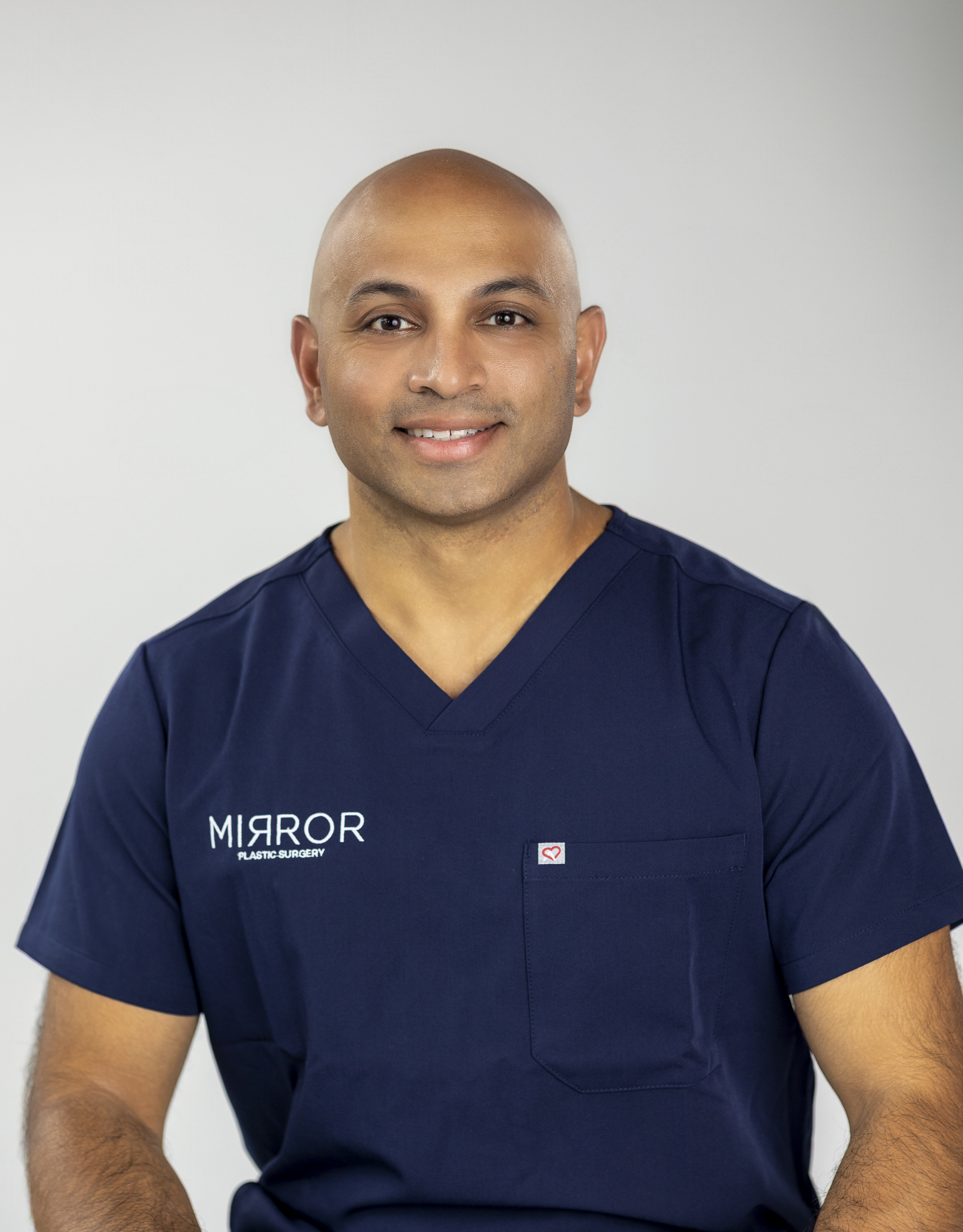
Written by: Dr. Akash Chandawarkar, Board Certified Plastic Surgeon, Mirror Plastic Surgery | Last updated: July 24, 2026
Key Takeaways
- Hair restoration works best as a long-term plan that combines FDA-approved medications, regenerative therapies, and surgical transplantation while accounting for donor supply and future hair loss.
- No single method fits everyone. The right treatment depends on your hair-loss stage, donor density, age, and how well your native hair is medically stabilized.
- Finasteride and minoxidil remain the first-line treatment for active androgenetic alopecia, with PRP and Secretome serving as effective regenerative add-ons.
- Manual Sapphire FUE offers high graft survival with no linear scar, while FUT can provide high graft yield but always leaves a permanent donor scar.
- Schedule your personalized assessment with Dr. Akash to choose the method or combination that fits your anatomy and long-term goals.
Choosing the Right Hair Restoration Method for You
No single method is universally superior. The best approach depends on your hair-loss stage, donor density, age, and whether your native hair is medically stabilized. The ranked framework below reflects current evidence and real-world clinical practice.
- Medical therapy (finasteride + minoxidil combination): This is the first-line treatment for active androgenetic alopecia. A combination of oral finasteride and minoxidil can maintain or improve density at 12 months.1 Treatment must continue long term, because results reverse after stopping the medications.
- PRP (Platelet-Rich Plasma): These are autologous regenerative injections. Randomized trials show increased hair density with PRP.1 PRP works best as an add-on to medication or surgery rather than a full replacement.
- Secretome (exosome/conditioned media therapy): This emerging regenerative option uses cell-derived signaling molecules. A 2024 meta-analysis found stem cell–derived conditioned media increased hair density and thickness.1 Mirror Plastic Surgery offers Secretome treatment using Acorn Biolabs technology.
- Follicular Unit Extraction (FUE): This is the gold-standard surgical option for most candidates. Expert manual Sapphire FUE supports sessions of up to 5,000 grafts and avoids a linear scar.
- Follicular Unit Transplantation (FUT): This strip-harvest surgery can provide high graft yield. Under optimal conditions, FUT graft survival rates remain high at 12 months.1 Every FUT procedure creates a permanent linear donor scar.
Discuss your candidacy with Dr. Akash to decide which method or combination fits your anatomy, hair-loss stage, and long-term goals.
Hair Restoration Costs and Long-Term Value
Hair restoration costs vary by method, graft count, surgeon credentials, and geography. Every patient’s needs differ, so Mirror Plastic Surgery provides personalized quotes during consultation.
Key pricing variables include surgeon experience, Norwood stage, donor hair quality, and local market. Additional fees such as consultation, anesthesia, PRP add-ons, and post-operative care add to the base procedure cost. Over a decade, many high-end non-surgical routines cost more than a typical transplant, while surgical relocation of DHT-resistant follicles can provide permanent coverage in treated areas.
Hair Restoration Medication: Building a Stable Foundation
FDA-approved medications form the backbone of an evidence-based hair restoration plan, whether used alone or alongside surgery.
Finasteride (1 mg oral, FDA-approved): This 5-alpha reductase inhibitor lowers scalp DHT levels by about 60%. A 5-year randomized controlled trial showed finasteride increased hair count compared with placebo.1 A 2005 study in the Indian Journal of Dermatology found finasteride outperformed placebo on all efficacy measures in androgenetic alopecia, with a mean hair-count increase of 20.56 hairs versus a decrease of 9.56 hairs.
Minoxidil (topical 5%, FDA-approved): Patients using minoxidil alone usually see peak response at 12–18 months, followed by a maintenance plateau.1 Stopping treatment causes loss of gained density within 3–6 months. In a 2015 study of 45 men with AGA, 84.44% maintained good hair density after switching from oral finasteride to 5% topical minoxidil fortified with 0.1% finasteride.
Dutasteride: This dual 5-alpha reductase inhibitor suppresses DHT more broadly than finasteride. Generic dutasteride is used off-label for androgenetic alopecia in patients who do not respond adequately to finasteride.
A 2025 review in the International Journal of Dermatology recommends starting 5-alpha reductase inhibitors and low-dose oral minoxidil early, before hair transplant, to limit further thinning and continuing medical therapy after surgery.
PRP and Secretome: Non-Surgical Innovations That Support Growth
Regenerative therapies now play a growing role in hair restoration, both as standalone treatments and as surgical adjuncts.
PRP (Platelet-Rich Plasma): Autologous plasma concentrated with growth factors is injected into the scalp. A 2026 Frontiers in Medicine review confirms PRP represents the most evidence-supported adjunctive regenerative therapy in hair transplantation. PRP combined with minoxidil yields a weighted mean difference of 9.14 hairs/cm² in hair density and 4.72 in hair diameter versus minoxidil alone.1 Intra-operative PRP during FUE led to over 75% regrowth at 6 months in all patients in a randomized study of 40 patients.1 PRP is generally safe, with side effects typically limited to brief injection-site discomfort, redness, or swelling.
Secretome (Exosome/Conditioned Media): Mirror Plastic Surgery offers Secretome treatment using Acorn Biolabs technology, an advanced regenerative approach that delivers cell-derived signaling molecules to the scalp. A 2026 narrative review reports that mesenchymal stromal cell–conditioned media and exosome therapies activate dermal papilla cells via the Wnt/β-catenin pathway, stimulate hair follicle stem cells, and promote angiogenesis, resulting in increased hair density and shaft diameter. The same review notes that variation in manufacturing, dosing, and delivery methods limits generalizability at this stage, so provider expertise and protocol consistency matter. Secretome is available at Mirror Plastic Surgery as both an injected and topical treatment.
Surgical Hair Restoration Options and How They Compare
Surgical transplantation remains the only method that permanently relocates DHT-resistant follicles to thinning areas and can provide lasting density when paired with ongoing medical management. The comparison below highlights how the main techniques differ in graft survival, scarring, and session size so you can better understand your options.
| Technique | Graft Survival (12 months) | Donor Scar | Max Grafts/Session |
|---|---|---|---|
| Manual Sapphire FUE | High | Minimal punctate | Up to 5,000 |
| FUT (strip harvest) | High | Linear, 1–5 mm (single session) | 2,000–4,000+ |
| Robotic FUE (ARTAS) | 90–95% when best practices are followed | Minimal punctate | Max 2,500 |
FUE has a high patient satisfaction rate that compares favorably to FUT. The difference largely reflects donor scar dissatisfaction rather than density outcomes. Revision rates remain low for both FUT and FUE. A 2026 analysis reports overall hair transplant success rates of 85–98% (or 90–97% by technique),1 along with meaningful quality of life improvement.
Ten-Year Hair Transplant Outcomes and Maintenance
At the 10-year mark, the main factor shaping appearance is the condition of surrounding native hair rather than the transplanted follicles. Transplanted follicles usually keep producing hair because of donor dominance. Long-term follow-up shows that overall density can decline, often because native hair continues to thin, not because grafts fail.
Without ongoing medication, some patients need minor touch-up procedures in years 5–10 as native hair recedes. The formula for long-term outcomes has been described as Surgical technique (40%) + Patient physiology (10%) + Post-op management (50%) = Final outcome. Patients who stay on finasteride and minoxidil and add supportive treatments like PRP and regular follow-ups tend to preserve better overall aesthetic results. Combining hair transplant surgery with ongoing medical therapy usually produces higher long-term density than surgery alone.
Hair Restoration Near Me in Tampa: Your Concierge Experience
Mirror Plastic Surgery serves the Tampa Bay and St. Petersburg area from its location at 780 4th Ave S, St. Petersburg, FL 33701. The concierge model means Dr. Akash, named to Newsweek’s America’s Best Plastic Surgeons list for 2024 and 2025, personally leads every consultation and procedure.
The Tampa patient journey at Mirror Plastic Surgery follows a structured, unhurried process.
- Comprehensive consultation (up to one hour): You receive a full scalp assessment, including donor density evaluation, Norwood staging, trichoscopy, and medical history review. Candidacy, method selection, and long-term planning are discussed in detail.
- Medical stabilization: When appropriate, finasteride and/or minoxidil are started before surgery to stabilize native hair and create a stronger surgical environment.
- Procedure day: Mirror Plastic Surgery limits the schedule to one or two surgeries per day. This low-volume approach keeps the entire team focused on a single patient throughout extraction, graft handling, and implantation.
- Post-operative management: The first 14 days form the neovascularization “golden window,” when disruption can affect follicle survival. Structured follow-ups at 3, 6, and 12 months are standard. Regular visits lower revision rates by allowing early detection of issues and timely medication adjustments.
- Long-term maintenance: Annual photography, medication monitoring, and PRP or Secretome maintenance sessions are recommended as needed.
Begin your Tampa hair restoration journey with Dr. Akash at Mirror Plastic Surgery’s St. Petersburg location.
Red Flags When Choosing a Hair Restoration Provider
Provider selection is the most important controllable factor for long-term graft survival and a natural look, because it directly affects extraction angles, implantation depth, and graft handling. Top practices report graft survival rates of 90–95% or higher, while lower-quality practices may reach only 60–70%.
Warning signs of a high-volume “mill” practice include:
- Five or more surgeries scheduled per day, which limits attention per patient
- Consultations under 20 minutes with no Norwood staging or trichoscopy
- Technician-led extraction and implantation without direct physician oversight
- No discussion of native hair progression or long-term medication planning
- Pressure to proceed without a documented medical stabilization period
- Lack of board certification by the American Board of Plastic Surgery or an equivalent body
Preoperative red flags that a qualified provider will screen for include unrealistic expectations, unstable or rapidly progressive alopecia, significant donor-recipient imbalance, very young age with unpredictable long-term progression, and psychological vulnerability. Patients under age 25 are usually not suitable for hair transplantation in androgenetic alopecia because early surgery can deplete donor hair and create an unnatural hairline as loss progresses.
Dr. Akash’s credentials, including Harvard Medical School (cum laude), a seven-year Johns Hopkins plastic surgery residency, an aesthetic surgery fellowship at the Manhattan Eye, Ear and Throat Hospital (MEETH), and the Stanford Biodesign Innovation Fellowship, support Mirror Plastic Surgery’s safety-first, physician-led approach. This recognition reflects a commitment to outcomes that extends well beyond the operating room.
Frequently Asked Questions
Am I a good candidate for hair restoration surgery?
Ideal surgical candidates have stable androgenetic alopecia, adequate donor density in the occipital zone, realistic expectations, and no active medical contraindications such as uncontrolled diabetes, bleeding disorders, or active autoimmune hair conditions. Patients under 25 are generally advised to wait until their hair-loss pattern becomes more predictable. Women are less often surgical candidates because female hair loss tends to be diffuse and can involve the donor zone. A thorough consultation with Dr. Akash, including trichoscopy and donor assessment, is the only reliable way to determine candidacy.
How long does it take to see results after a hair transplant?
Transplanted follicles usually shed within the first 2–6 weeks after the procedure, a normal phase called shock loss. Visible regrowth typically starts around months 3–4, with meaningful density by months 6–9. Full results, including final texture and thickness, are usually assessed at 12–18 months.1 Native hair around the transplant continues to change beyond this point, which is why ongoing medical therapy and annual monitoring remain essential.
Do I need to take medication after a hair transplant?
Transplanted follicles are permanently DHT-resistant and do not need medication to survive. Native non-transplanted hair, however, continues to thin without medical support. This can create an unnatural contrast between dense transplanted zones and receding surrounding hair, sometimes called the “transplanted island in a receding sea” effect. Finasteride and minoxidil are the main tools for preventing this pattern. Stopping finasteride allows native hair to resume its genetic thinning pattern over 6–12 months, while transplanted follicles remain stable.
What is Secretome therapy and how does it differ from PRP?
PRP uses growth factors concentrated from a patient’s own blood to stimulate follicle activity. Secretome therapy, offered at Mirror Plastic Surgery using Acorn Biolabs technology, delivers cell-derived exosomes and conditioned media from mesenchymal stromal or adipose-derived stem cells. These molecules activate the Wnt/β-catenin signaling pathway, promote angiogenesis, and stimulate hair follicle stem cells at a more targeted biological level than PRP alone. Both treatments are available as injected or topical options and work best as part of a comprehensive maintenance plan rather than as standalone cures.
What makes Mirror Plastic Surgery different from a high-volume hair restoration clinic?
Mirror Plastic Surgery’s one-to-two-procedure daily limit, detailed in the Tampa patient journey above, keeps Dr. Akash and the clinical team focused on each patient throughout consultation, surgery, and recovery. The concierge model includes up to an hour-long initial consultation, personalized long-term planning that accounts for future hair-loss progression, and ongoing follow-up care instead of a single transactional procedure. Dr. Akash’s training at Harvard, Johns Hopkins, MEETH, and Stanford, along with his Newsweek recognition, provides the clinical foundation for this approach.
Conclusion: A Long-Term Plan for Lasting Hair
Hair restoration succeeds when donor dominance is respected, native hair is medically stabilized before and after surgery, and the provider prioritizes long-term planning over procedural volume. Evidence consistently shows that graft survival, patient satisfaction, and 10-year outcomes depend most on surgeon skill, careful candidacy selection, and post-operative medication compliance, not on marketing claims or per-graft pricing alone.
For Tampa Bay and St. Petersburg professionals seeking natural, lasting results through a physician-led concierge experience, Mirror Plastic Surgery offers the full spectrum of evidence-based hair restoration. FDA-approved medications, PRP, Secretome therapy, and surgical FUE are integrated into a personalized plan built around your anatomy and long-term goals.
Take the first step with Dr. Akash at Mirror Plastic Surgery toward a hair restoration plan designed to last.
1 Results may vary from person to person. Editorial content, before and after images, and patient testimonials do not constitute a guarantee of specific results.