
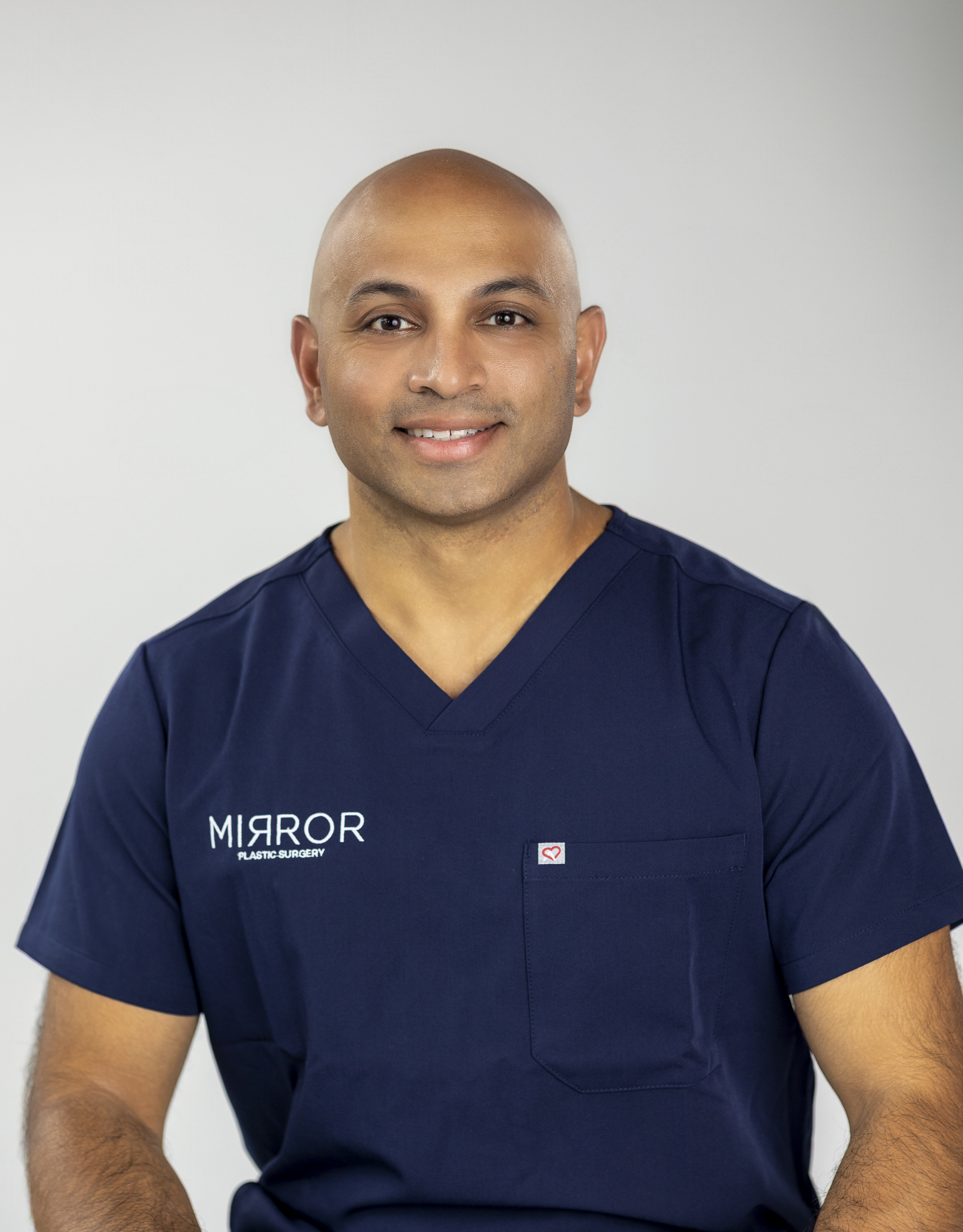
Written by: Dr. Akash Chandawarkar, Board Certified Plastic Surgeon, Mirror Plastic Surgery
Key Takeaways
- Recovery support is often the most underplanned phase of cosmetic surgery, yet the first 72 hours strongly influence both safety and final results.1
- Concierge recovery services in Florida deliver private, licensed nursing care, medication management, and mobility assistance that standard home health typically does not include.
- Patients should verify AHCA licensure, individual nurse credentials, and Level 2 background screening before booking any provider to avoid unlicensed or unsafe care.
- Recovery houses and agencies that skip proper licensing expose patients to legal and medical risk, and several Florida operators have faced prosecution for operating without required permits.
- Plan your recovery with the same diligence as your surgery. Book a consultation with Mirror Plastic Surgery to coordinate a safe, personalized recovery plan.
How Concierge Plastic Surgery Recovery Support Works
Concierge recovery support delivers private, personalized care in a patient’s home, hotel, or dedicated recovery residence. Standard home health care is usually organized around clinical categories like skilled nursing or therapy. Concierge recovery packages instead bundle surgery-specific logistics and support into a single, coordinated service.
Family caregivers offer comfort and logistical help, yet they usually lack the training to assess a surgical wound, recognize early infection, or distinguish expected swelling from a dangerous sign. General home health aides provide non-clinical support with daily activities, not skilled nursing assessment. A concierge post-operative nurse is a licensed RN, often with specialty training, who provides hands-on clinical monitoring, direct surgeon communication, and judgment calls drawn from real surgical nursing experience.
Services commonly included in concierge recovery packages:
- Skilled nursing care: vital signs monitoring, surgical drain care, incision assessment, and dressing changes
- Medication management: prescription pickup, schedule enforcement, and pain control coordination
- Daily living assistance: mobility support, bathing, meal preparation, and hydration monitoring
- Transportation and logistics: surgical facility pickup and follow-up appointment escorts
- Specialized treatments: lymphatic massage coordination and mobile IV hydration therapy
- Recovery environment setup: room preparation, compression garment guidance, and recovery supply organization
Schedule a consultation with Dr. Akash to discuss your procedure and begin planning a recovery approach tailored to your specific needs.
Types of Recovery Support Providers in Florida
Three main categories of recovery support providers operate in Florida. Knowing the differences helps patients evaluate options without relying solely on marketing claims.
Private Duty Nurses (RN/LPN): These licensed nurses provide skilled clinical care in a patient’s home, hotel, or recovery residence. Services include wound assessment, medication management, drain care, and direct communication with the surgeon’s office. Most concierge nursing starts the day of discharge or the following morning. Care typically lasts three to seven days during the highest-risk window. Patients usually arrange private nurses through agencies or nurse registries.
Recovery Houses (Residential Facilities): These staffed facilities host patients for the first 24 to 72 hours after procedures like tummy tucks, mommy makeovers, and liposuction. They bundle 24/7 on-site monitoring, meals, transportation, and procedure-specific protocols, such as no-sitting guidance after BBL or drain management after a tummy tuck. Recovery houses work best for multi-procedure patients or those traveling to Florida without local family support.
Home Health Agencies and Nurse Registries: Florida law (Chapter 400, Part III, Florida Statutes) defines three distinct home care provider types. Licensed Home Health Agencies (HHAs) are the only type legally permitted to provide skilled medical services like RN or LPN nursing, although licensed professionals may also deliver such services when referred by a licensed nurse registry. Nurse Registries act as referral agencies for independent-contractor caregivers. Homemaker/Companion Services Providers are registered, not licensed, and are statutorily prohibited from providing any hands-on personal care such as bathing, dressing, or transferring. Full-service agencies typically provide W-2 employees who are bonded, insured, and background-screened, with RN clinical oversight of all caregivers.
How to Vet a Recovery Provider in Florida
Verifying credentials protects your safety. In Florida, the Agency for Health Care Administration (AHCA) licenses home health agencies and nurse registries, and registers homemaker or companion providers, under Chapter 400, Part III of Florida Statutes. Individual nurses must hold active RN, LPN, or CNA licensure through the Florida Board of Nursing. Under Florida Statutes § 408.809, all direct care personnel at AHCA-licensed providers who have direct access to clients or their funds must clear Level 2 fingerprint-based background screening through the Care Provider Background Screening Clearinghouse before serving clients.
Ask every prospective provider these questions before booking:
- Are you licensed by the Florida Agency for Health Care Administration? (Verify at ahca.myflorida.com.)
- What are your staff’s qualifications? Are nurses RN- or LPN-licensed? Are aides certified?
- What is your protocol for emergencies? Who do you call if complications arise?
- Can you provide references from past plastic surgery patients?
- What exactly is included in your care plan? Is it tailored to my specific procedure?
- Do you communicate directly with my surgeon’s office?
- What happens after hours if something feels wrong? Is there a clear escalation plan?
- Is care one-on-one, or are caregivers shared across multiple patients?
Red flags include unlicensed caregivers, refusal to provide written care plans, vague answers about scope of care, inability to verify AHCA licensure, lack of emergency protocols, and caregivers without training to handle surgical complications. Pricing that seems too good to be true often signals underqualified staff or thin overnight coverage. Complications can arise at any time.
Legal and Regulatory Rules for Recovery Care in Florida
Florida law allows only licensed home health agencies to provide skilled medical services such as medication administration or wound care. Homemaker and companion service providers are statutorily prohibited from providing hands-on personal care such as bathing, dressing, or transferring. When a homemaker or companion worker physically assists a client with an activity of daily living, that worker enters personal care. Florida law reserves personal care for a licensed HHA, a nurse registry placing a credentialed CNA or HHA, or ALF or AFCH staff. Unlicensed caregivers cannot perform medical tasks.
The distinction between recovery residences and licensed facilities carries real legal weight. Post-surgical recovery homes that provide housing plus care plus services may trigger assisted living facility licensing requirements under Florida law. Enforcement actions illustrate the consequences. In a recent case, Miami-Dade authorities raided an unlicensed recovery home and found multiple post-operative patients receiving services that required proper licensing. In another case, an operator was arrested twice for running an unlicensed recovery home at the same location, showing that some providers repeatedly ignore regulations.
Understanding these regulations supports patient safety. Operators who sidestep licensing requirements often prioritize profit over the well-being of vulnerable patients in the most critical window of their recovery. Once you confirm that a provider is properly licensed, the next practical consideration is cost.
Get expert recovery-planning guidance from Dr. Akash before your procedure, while you still have time to choose safely.
Cost Factors and What to Expect
Concierge recovery support is a private-pay expense. Several factors influence what patients can expect to pay.
- Level of care: Skilled nursing commands higher rates than non-medical assistance. In-home skilled nursing in Miami typically costs more per hour than personal care services, reflecting the clinical expertise and licensure required.
- Geographic location: Miami-Dade and Palm Beach rates usually run higher than other Florida regions, with Miami Beach rates often above the Miami-Dade average.
- Duration of care: The first 24 to 72 hours are the most intensive and expensive. Concierge recovery services are typically sold as minimum-hour blocks or multi-day packages rather than simple hourly billing. Round-the-clock coverage significantly increases total cost.
- Setting: In-home care, recovery house stays, and hotel-based care each carry different pricing structures.
- Service bundling: Concierge-style packages often bundle multiple recovery-specific services, such as skilled nursing visits, transportation, and logistics, that standard hourly home care does not include. Direct hourly comparisons can be misleading.
Medicare does not cover personal care services, such as bathing, dressing, or using the bathroom, when that is the only care you need. It may cover home health aide services that provide personal care when you are also receiving skilled care. Most concierge recovery operates entirely outside insurance billing. Cosmetic surgery financing typically covers only the surgical procedure itself, not recovery support. Patients should factor recovery costs into their overall surgery budget and request detailed written quotes before booking any provider.
Red Flags and Safety Warnings for Florida Recovery Services
Patients often encounter predictable pitfalls in the Florida recovery services market.
- Unlicensed providers operating outside AHCA oversight
- Caregivers without training to handle surgical complications
- Absence of written emergency protocols or surgeon communication plans
- Refusal to provide references or verify credentials on request
- Pricing that seems unusually low, often a sign of underqualified staff or inadequate overnight coverage
- Facilities that cannot describe procedure-specific protocols for your surgery type
- Nurse registries that imply they directly employ caregivers, despite caregivers functioning as independent contractors of the client under Florida law
Never trade safety for a lower price. The cheapest option may have thin overnight staffing or untrained caregivers, and complications can appear at any hour.
The Mirror Plastic Surgery Perspective on Recovery
At Mirror Plastic Surgery, the commitment to patient safety extends beyond the operating room. Dr. Akash, board-certified by the American Board of Plastic Surgery, and his team treat recovery planning as an integral part of the surgical journey.
The practice limits surgeries to one or two per day so the entire team can focus on each patient before, during, and after the procedure. This philosophy of safety first, function second, and aesthetics third makes recovery planning a standard part of care. A 2026 study published in JAMA Network Open found that surgical patients and their family caregivers frequently felt unprepared for what recovery would involve after discharge, and that stronger postoperative follow-up was linked to better overall recovery experiences.1 Mirror Plastic Surgery’s concierge model is designed to close that gap.
For more on how Mirror’s approach differs from high-volume practices, see the practice’s guides on concierge plastic surgery in St. Petersburg, Florida and the benefits of concierge versus traditional plastic surgery.
Frequently Asked Questions
Can I pay someone to take care of me after surgery?
Yes. Concierge recovery services are private-pay arrangements that provide professional post-operative care in your home, hotel, or a dedicated recovery residence. Services range from non-medical assistance, such as meal preparation, mobility support, and transportation, to skilled nursing care including medication management, wound assessment, and drain care. The key step is verifying that your provider holds appropriate AHCA licensure and that any medical tasks are performed by qualified RNs, LPNs, or CNAs with active Florida licensure.
Are surgery recovery homes legal in Florida?
Legality depends on the services provided. Recovery homes that offer only housing may not require licensing. Facilities that provide care services, such as bathing, medication management, and personal hygiene, alongside housing may trigger assisted living facility licensing requirements under Florida law. In a recent enforcement action, Miami-Dade authorities raided an unlicensed recovery home charging patients premium rates for exactly these services. Always verify that a recovery facility holds appropriate AHCA licensing for every service it advertises, not just for housing.
What does a recovery concierge do?
A recovery concierge coordinates and delivers the non-clinical and clinical aspects of your post-operative care. Typical services include transportation from your surgical facility, prescription pickup and medication scheduling, recovery environment setup, meal preparation, and mobility assistance. When licensed nurses provide care, services can also include vital signs monitoring, wound assessment, and drain care. Many services coordinate lymphatic massage, which surgeons often recommend starting within 24 to 48 hours after surgery for many cosmetic procedures, subject to surgeon approval. They also communicate directly with your surgeon’s office throughout your recovery.
How do I know if a recovery service is legitimate?
Verify three things. First, AHCA licensure: check the provider at ahca.myflorida.com and confirm the license is active and covers the services being offered. Second, individual credentials: confirm nurses hold active Florida RN or LPN licenses and aides hold appropriate CNA certification. Third, background screening: all direct care personnel must clear Level 2 fingerprint-based screening through the AHCA Background Screening Clearinghouse. A legitimate provider will share this information readily and provide references from past plastic surgery patients without hesitation.
What should I look for in a private recovery nurse?
Look for an RN or LPN with active Florida licensure, documented experience with plastic surgery patients, and a clear protocol for communicating with your surgeon’s office. Ask specifically about their experience with your procedure, because drain management, compression garment guidance, and positioning requirements vary significantly between a breast augmentation and a mommy makeover. Confirm they can recognize early signs of complications and have a documented escalation plan for after-hours concerns. Care should be one-on-one rather than shared across multiple patients on a rotating schedule.
Is recovery care covered by insurance?
Typically no. Concierge recovery services operate on a private-pay basis. Medicare covers home health skilled nursing only when the patient is homebound, under a physician’s or allowed practitioner’s plan of care, and needs part-time or intermittent skilled care that is certified as medically necessary. Most elective plastic surgery patients do not meet these criteria. Cosmetic surgery financing usually covers only the surgical procedure itself, not recovery support. Plan for recovery costs as a separate out-of-pocket expense and request detailed written quotes from any provider before committing.
How far in advance should I book recovery support?
Book as soon as your surgery date is confirmed. Quality providers, especially recovery houses and specialized private nurses, fill quickly. Booking early also gives you time to verify credentials, check references, and confirm the provider can accommodate your specific procedure’s requirements. Waiting until the week of surgery limits your options and reduces your ability to vet providers thoroughly.
Plan Your Recovery with the Same Care You Planned Your Surgery
A 2003 study of 1021 patients undergoing intra-abdominal operations found that the highest incidence of major complications occurred 1–3 days postoperatively, accounting for 43 percent of major events in that population, though specific complications such as stroke or sepsis may peak later. As noted earlier, the first 72 hours are the highest-risk window, so having qualified, vetted professionals monitoring your recovery during this period protects both your safety and your results.1 By understanding what concierge recovery services include, how to verify provider legitimacy under Florida law, and what questions to ask before booking, you can make informed decisions that prioritize your well-being over convenience or cost.
Recovery shapes your results and your overall experience.1 The same diligence you applied to choosing your surgeon belongs in your recovery planning.
Next Steps: Discuss Recovery Planning with Your Surgeon
Your plastic surgeon should be your first resource for recovery planning. During your consultation, ask about the level of care your specific procedure will require, what the highest-risk window looks like for your surgery type, and how the practice coordinates with recovery providers. A surgeon who limits their daily caseload and prioritizes personalized attention can give you meaningful, procedure-specific guidance on what your recovery will actually involve.
Talk with Dr. Akash about a personalized recovery plan tailored to your anatomy, your procedure, and your life.
1 Results may vary from person to person. Editorial content, before and after images, and patient testimonials do not constitute a guarantee of specific results.