
Written by: Dr. Akash Chandawarkar, Board Certified Plastic Surgeon, Mirror Plastic Surgery
Key Takeaways
- Concierge plastic surgery practices limit daily surgical volume to one or two cases, which allows extended consultation time and direct surgeon access that traditional high-volume models typically do not offer.
- Cost structures differ significantly between models. Concierge practices may charge membership or access fees, while traditional practices embed costs in procedure pricing and rely on higher daily case volume.
- Surgeon credentials, facility accreditation, and transparent all-in quotes remain the most reliable indicators of value in any care model.
- Patients undergoing complex or combined procedures often benefit most from concierge-level aftercare, including customized recovery plans and priority scheduling.
- Book a consultation with Dr. Akash at Mirror Plastic Surgery to receive a personalized, transparent assessment of which approach fits your anatomy, goals, and budget.
Concierge vs Traditional Plastic Surgery at a Glance
The following table summarizes the core structural differences between concierge and traditional high-volume plastic surgery models so you can see how each approach handles time, access, and cost.
| Factor | Concierge Model | Traditional High-Volume Model |
|---|---|---|
| Consultation length | Up to 60 minutes, anatomy-focused | 15–30 minutes, procedure-focused |
| Daily surgical cases | 1–2 cases per day | 5–10 cases per day |
| Membership / access fee | Annual membership fees vary by tier and practice | None, costs embedded in procedure fees |
| Surgeon continuity | Same surgeon for consultation, procedure, and follow-up | Varies, mid-level providers may handle follow-up |
| Aftercare model | Customized recovery protocols, direct surgeon access | Standardized post-op instructions, scheduled visits |
| All-in facelift range (Tampa 2026) | Higher range reflecting extended access and lower daily volume | Lower range reflecting higher daily volume |
| All-in breast augmentation range (Tampa 2026) | Higher range reflecting extended access and lower daily volume | Lower range reflecting higher daily volume |
| All-in abdominoplasty range (Tampa 2026) | Higher range reflecting extended access and lower daily volume | Lower range reflecting higher daily volume |
How Concierge Membership and Access Fees Work
Concierge medicine retainer structures vary significantly by practice tier. Annual membership fees are commonly categorized as classic entry-level, classic established, luxury, and ultra-premium or executive, with a median across solo-physician practices.
In plastic surgery, these fees may function as a standalone retainer, be folded into an all-inclusive procedure quote, or apply as an upgrade to standard pricing. The key point is what the fee actually covers. Practices that include extended consultation time, direct surgeon access during recovery, customized aftercare protocols, and priority scheduling provide measurable value through that fee. Practices that charge access fees without clear service differences do not.
Plastic surgeons with advanced training advise patients to ask whether a quoted price covers all surgical costs, including any fees if the case runs longer than planned, and what revision policies apply. These transparency questions matter regardless of care model, because both concierge and traditional practices should clearly explain what is and is not included in the quoted price.
How Surgeon Time and Daily Case Limits Affect Care
The number of surgeries a practice performs per day represents one of the most consequential structural differences between care models. A surgeon performing five to ten procedures daily allocates fundamentally different cognitive and physical resources to each case than one performing one or two.
At Mirror Plastic Surgery, Dr. Akash limits the practice to one to two surgeries per day. This structure keeps the entire clinical team focused on a single patient before, during, and after the procedure. It also allows the intraoperative precision and unhurried decision-making that complex facial, breast, and body procedures require.
Dr. Akash’s training supports this approach. He completed a seven-year integrated plastic and reconstructive surgery residency at Johns Hopkins University, followed by an aesthetic surgery fellowship at the Manhattan Eye, Ear and Throat Hospital (MEETH), one of the most competitive programs in the country for facial rejuvenation, breast surgery, and body contouring. He also completed the Stanford University Biodesign Innovation Fellowship, which trains physician-innovators to identify unmet clinical needs. He holds board certification from the American Board of Plastic Surgery and has been named to Newsweek’s America’s Best Plastic Surgeons list for two consecutive years, including 2025.
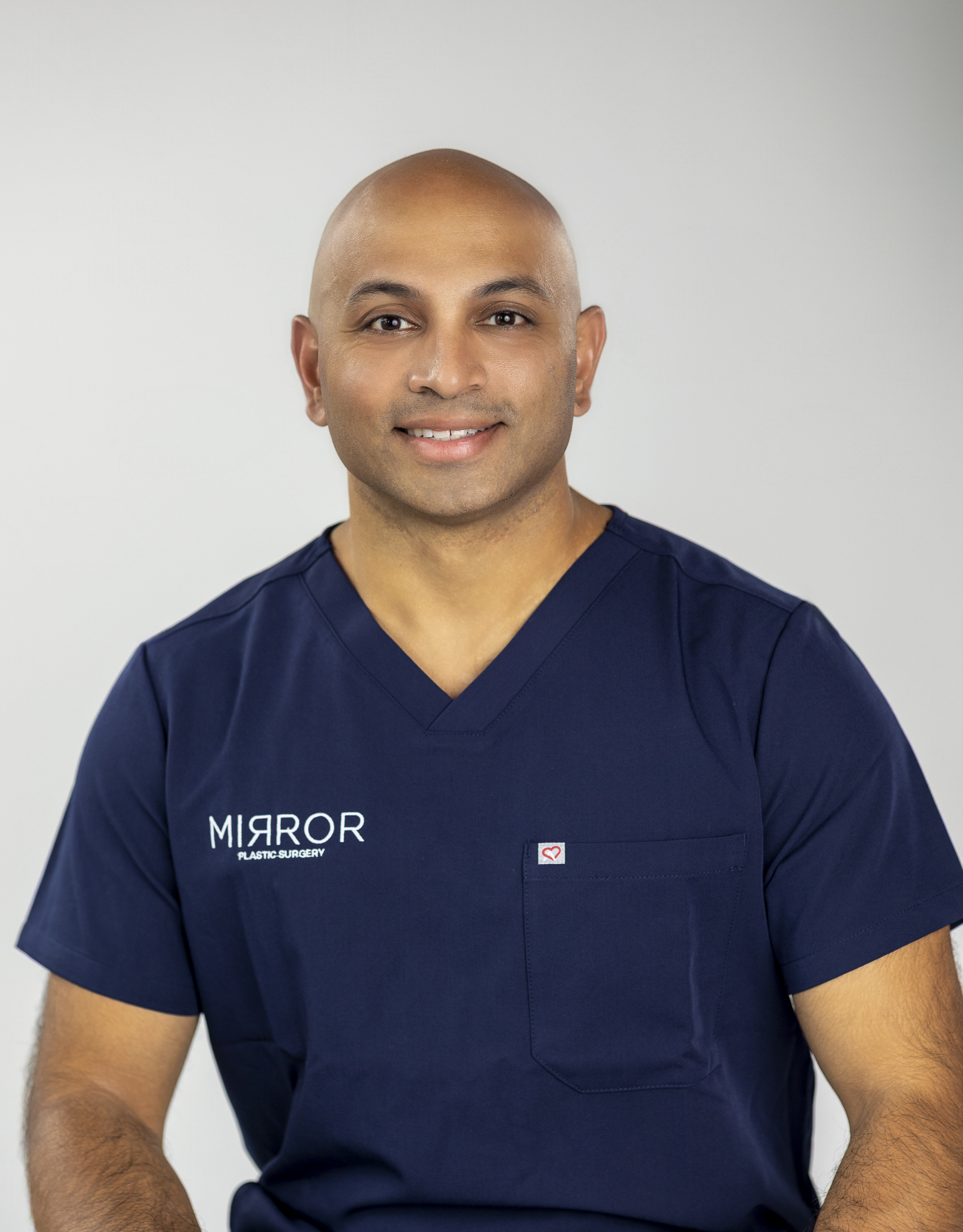
This combination of elite training and deliberate volume limitation forms the structural foundation of the concierge model at Mirror Plastic Surgery.
Recovery Add-Ons, Hidden Costs, and Real Value
Quoted procedure prices rarely reflect the full financial picture of plastic surgery. Hidden costs not included in surgical quotes, including time off work, childcare, meal preparation, pet boarding, and additional compression garments, can create significant financial strain during recovery.
Standard aftercare in traditional practices typically includes scheduled follow-up visits at fixed intervals. Concierge models often add direct surgeon access between appointments, customized recovery timelines, and premium services such as lymphatic massage, compression therapy, or remote monitoring. These services carry real cost but also real value. A 2026 systematic review published in Plastic and Reconstructive Surgery Global Open found that telemedicine follow-up in plastic surgery can demonstrate high diagnostic reliability and patient satisfaction while reducing unnecessary in-person appointments.
Procedures with the most demanding recoveries, including full facelifts, abdominoplasty, and combined mommy makeover cases, benefit most from structured, accessible aftercare. High-quality planning and support the first time can reduce time away from work and lower the chance of wound healing complications that may require out-of-pocket treatment by another provider.1
Complication Risk, Experience, and Surgical Volume
Volume-outcome relationships are well documented across surgical specialties. Multiple studies analyzing liposuction cases demonstrate an inverse volume-outcome relationship, with surgeons performing more procedures per year having significantly lower complication rates than those performing fewer per year. This finding reflects cumulative surgical experience, not daily case load specifically.
The distinction matters. A surgeon performing two highly complex procedures per day, five days per week, accumulates substantial annual volume while maintaining the focused attention that low-daily-volume models are designed to protect. The risk profile depends on both the surgeon’s total experience and the conditions under which each individual case is performed.
Revision rates for facelift surgery vary depending on surgeon and technique, with revisions typically costing a significant portion of the primary procedure fee. Many patients undergo at least one revision procedure after breast augmentation, with associated costs for implant exchange or removal. These downstream costs rarely appear in initial pricing comparisons but directly affect long-term return on investment.
Tampa 2026 Pricing Benchmarks for Common Procedures
Tampa Bay pricing for common procedures reflects both national trends and local market dynamics. Florida breast augmentation pricing varies widely when all fees are included. Tampa facelift pricing that includes surgeon’s fees, anesthesia, and facility costs averages $12,000–$17,000, with local averages around $13,314.
For abdominoplasty, a standalone tummy tuck in Tampa usually includes surgeon, anesthesia, and facility fees in the quoted total.
Bundling procedures offers meaningful savings in both concierge and traditional settings. A bundled mommy makeover combining tummy tuck, breast augmentation, and liposuction in Tampa costs $12,000–$20,000 in 2026 under a lower-volume personalized model. Booking a tummy tuck, breast augmentation, and liposuction separately in high-volume Tampa practices typically totals $22,000–$30,000, a difference driven primarily by consolidated anesthesia and facility charges.
Premium concierge pricing in Tampa for complex facial procedures reaches higher ranges. Deep plane facelifts at top-tier practices nationally range from $18,000–$30,000+ with all fees included, and major-metro and premium-market pricing can reach $40,000+. Tampa’s market sits below major coastal metros but above national averages for highly trained, fellowship-trained surgeons.
Decision Guide: When Concierge Care Makes Financial Sense
The concierge model delivers measurable return on investment under specific conditions. Patients for whom the premium is most justified share several characteristics:
- Undergoing complex or combined procedures, such as deep plane facelift, mommy makeover, or high-definition body contouring, where intraoperative precision and extended recovery support directly affect outcomes
- Prioritizing surgeon continuity across consultation, procedure, and all follow-up care
- Seeking evidence-based, anatomy-first treatment planning rather than a standardized protocol
- Placing high value on direct surgeon access during recovery, particularly for procedures with demanding healing timelines
- Factoring long-term revision risk into their cost calculation, recognizing that a higher upfront investment may reduce the likelihood and cost of future revision surgery
Traditional pricing models may fit better when:
- The procedure is straightforward and low complexity
- The patient’s primary criterion is the lowest possible entry price
- Extended surgeon access and customized aftercare are not priorities
The most reliable signal of value in either model is not the price point. The surgeon’s credentials, the practice’s structural commitment to patient focus, and the transparency of the quote matter more. Patients should arrive at consultation with a ballpark of expected costs and should ask explicitly whether the quote covers all surgical costs and what revision policies apply.
Book a consultation with Dr. Akash to receive a detailed, anatomy-based assessment and a fully transparent cost breakdown for your specific procedure goals.
Frequently Asked Questions
Is concierge plastic surgery meaningfully safer than traditional high-volume surgery?
Safety in plastic surgery depends on several factors, including surgeon credentials and board certification, accreditation of the surgical facility, anesthesia team qualifications, patient selection, and the conditions under which each case is performed. A practice that limits daily surgical volume to one or two cases creates conditions for more focused pre-operative planning, unhurried intraoperative decision-making, and attentive post-operative monitoring.1 At Mirror Plastic Surgery, safety comes first, before function and before aesthetics. Dr. Akash operates only in accredited surgical facilities with board-certified physician anesthesiologists and conducts rigorous pre-operative evaluations for every patient.
What hidden costs should I anticipate beyond the quoted procedure price?
A complete cost picture for plastic surgery includes more than the surgeon’s fee. Patients should account for anesthesia fees, facility or operating room fees, pre-operative laboratory work and clearance, post-operative compression garments, prescription medications, and all follow-up visits. Beyond clinical costs, recovery-related expenses, including time off work, childcare, meal preparation, and transportation, can add meaningfully to the total financial impact. Reputable practices provide comprehensive quotes that itemize each component. At Mirror Plastic Surgery, the consultation process is designed to surface all relevant costs so patients can plan accurately.
How do I evaluate whether a surgeon’s credentials justify a premium price?
Board certification by the American Board of Plastic Surgery represents the baseline credential for any surgeon performing cosmetic procedures. Beyond certification, relevant markers include completion of a formal plastic surgery residency at an accredited program, fellowship training in aesthetic surgery, hospital privileges, which provide access to hospital-level care in the rare event of a complication, and a documented record of peer-reviewed research or professional recognition. Dr. Akash completed his residency at Johns Hopkins University, his aesthetic surgery fellowship at MEETH, and his innovation fellowship at Stanford. He has been named to Newsweek’s America’s Best Plastic Surgeons list for two consecutive years, including 2025, and holds hospital privileges as a plastic surgeon with board certification.
Which procedures carry the most demanding recoveries and benefit most from concierge-level aftercare?
Procedures with the most complex recovery timelines include full facelifts, particularly deep plane techniques, abdominoplasty, combined mommy makeover cases, and high-definition body contouring. These procedures involve significant tissue manipulation, longer healing windows, and a higher likelihood of questions or concerns arising between scheduled appointments. Extended surgeon access, meaning the ability to reach the operating surgeon directly during recovery, is most valuable for these cases. Simpler procedures such as upper blepharoplasty or minor in-office surgeries typically follow more predictable recovery paths and may not require the same level of access.
Can I negotiate plastic surgery pricing, and what should I ask for?
Procedure pricing at reputable practices reflects real costs, including surgeon time, facility fees, anesthesia, and materials. Negotiating the surgeon’s fee downward is rarely appropriate and may signal a practice under financial pressure. More productive conversations focus on understanding exactly what is included in the quoted price, whether bundling multiple procedures in a single session reduces anesthesia and facility costs, and what the revision policy is if a touch-up is needed. At Mirror Plastic Surgery, pricing is personalized to each patient’s anatomy and goals, and the consultation is the appropriate setting to discuss all cost components transparently.
Summary: Choosing the Right Model for Your Goals
Concierge plastic surgery in Tampa Bay carries higher total costs than traditional high-volume models, driven by membership or access fees, extended consultation time, and a structural commitment to limiting daily surgical volume. That premium is most justified for patients undergoing complex procedures, prioritizing surgeon continuity, and weighing long-term revision risk in their decision. Traditional pricing models offer lower entry costs but may embed hidden fees and provide less individualized access during recovery.
The most reliable framework for evaluating either model is not the headline price. The surgeon’s credentials, the practice’s structural approach to patient focus, and the completeness of the quote provide a clearer picture of value. At Mirror Plastic Surgery, Dr. Akash brings the elite training and recognition detailed earlier to every case within a concierge model that limits daily surgeries to one or two and prioritizes safety, function, and aesthetics in that order.
Book a consultation with Dr. Akash at Mirror Plastic Surgery in St. Petersburg, Florida, to receive a personalized, evidence-based assessment and a fully transparent cost breakdown for your procedure goals.
1 Results may vary from person to person. Editorial content, before and after images, and patient testimonials do not constitute a guarantee of specific results.