
Written by: Dr. Akash Chandawarkar, Board Certified Plastic Surgeon, Mirror Plastic Surgery | Last updated: July 1, 2026
Key Takeaways for Upper Eyelid Recovery
- Upper eyelid surgery follows a predictable recovery. Swelling and bruising peak in the first three days, and most patients feel socially presentable by days 10–14.1
- Common side effects include swelling, bruising, dryness, tightness, and light sensitivity. Most of these improve steadily within the first month.
- Patients should plan for restricted activity, head elevation, cold compresses, and strict sun protection during the first few weeks, which is especially important in Tampa’s climate.
- Final aesthetic results and scar maturation continue from three to twelve months, with most patients seeing a settled outcome by six months.1
- Schedule your personalized consultation at Mirror Plastic Surgery for expert guidance and a tailored recovery plan.
Key Anatomical Concepts for Upper Eyelid Surgery
The upper eyelid is a layered structure composed of skin, orbicularis oculi muscle, orbital septum, pre-aponeurotic fat pads, and the levator aponeurosis, the fibrous sheet that transmits the lifting force of the levator palpebrae superioris muscle to the tarsal plate. During upper blepharoplasty, the surgeon removes or repositions excess skin and, when indicated, addresses herniated orbital fat through the orbital septum. Because the levator aponeurosis sits immediately beneath the surgical field, precise tissue handling directly influences both eyelid height and the symmetry of the final result. The Mayo Clinic describes blepharoplasty as a procedure that corrects drooping eyelids by removing excess skin, muscle, and fat, with the specific structures addressed determined by each patient’s anatomy. These anatomical layers also help explain why swelling and bruising follow predictable patterns during recovery, since disruption around the orbital septum and surrounding tissues triggers the inflammatory response described below.
Day 1–3: Peak Swelling and Bruising
The first 72 hours represent the most visually dramatic phase of recovery. Swelling and periorbital bruising (ecchymosis) peak during this window as the body’s inflammatory response mobilizes fluid and blood products to the surgical site. Patients typically experience tightness across the upper lids, mild to moderate discomfort managed with prescribed or over-the-counter analgesics, and sensitivity to light. Keeping the head elevated, including during sleep, and applying cold compresses in 10–15-minute intervals helps reduce fluid accumulation. Vision may appear temporarily blurred because of lubricating ointments applied to protect the corneal surface, which is one reason driving is not permitted during this phase.
Day 4–7: Early Healing and Stitch Care
Bruising begins to transition from deep purple to yellow-green as hemoglobin breaks down, and swelling starts a gradual, sometimes uneven decline. Non-dissolvable sutures, when used, are typically removed between days five and seven at the surgeon’s office. Patients keep incision lines clean and dry, avoid rubbing the eyes, and continue to refrain from contact lens use during this period. Screen time should stay limited because prolonged focus reduces blink rate and can cause dryness in eyes that are already producing fewer tears due to post-operative lid edema.
Week 2: Social Recovery and Return to Light Activity
By the end of the second week, most bruising has resolved, and residual swelling has diminished enough that many patients feel comfortable returning to professional and social settings. Concealer makeup often helps at this stage and is generally permitted once incisions are fully closed and the surgeon has confirmed healing. Light walking is appropriate, while strenuous exercise, heavy lifting, and activities that raise blood pressure remain restricted. Patients in the Tampa Bay area need to be especially attentive to sun exposure during this phase, because Florida’s high UV index accelerates post-inflammatory hyperpigmentation along healing incision lines, and wind from outdoor activities can dry already-sensitive ocular surfaces. Broad-spectrum SPF 30 or higher and UV-blocking sunglasses serve as standard protective measures outdoors.
Week 3–4: Visible Refinement
Residual puffiness continues to resolve, and the incision line, positioned within the natural eyelid crease, begins to flatten and fade. As the scar tissue beneath the incision matures, some patients notice intermittent firmness or mild itching, both of which reflect normal collagen remodeling. This tissue stabilization helps explain why most patients return to full non-contact physical activity by week three or four, subject to surgeon clearance. Dry eye symptoms, if present, also tend to improve during this window as lid edema resolves and normal blink mechanics are restored.
Month 2–3: Scar Maturation and Contour Settling
Incision lines continue to mature, progressing from pink to a skin-toned, fine line that sits within the eyelid crease and becomes increasingly inconspicuous. The upper lid contour settles as deeper tissue planes stabilize. Residual swelling, often subtle and noticed only by the patient, usually resolves during this period. Surgeons may introduce silicone gel sheeting or other scar treatments based on individual healing patterns. Consistent sun protection of the incision line remains important through this phase to reduce the risk of pigment changes.
Month 3–12: Final Aesthetic Results
The upper eyelid result is considered fully mature between three and twelve months after surgery, with most patients achieving their final aesthetic outcome by the six-month mark. Scar tissue completes its remodeling cycle, the lid crease stabilizes, and any asymmetry related to differential swelling typically resolves. Results from upper blepharoplasty can last several years or longer1, with longevity influenced by individual skin quality, sun exposure history, and the natural progression of aging. While the timeline above outlines when changes occur, many patients also want a clear summary of the side effects they may notice along the way.
Common Side Effects After Upper Eyelid Surgery
- Swelling and bruising: Peak severity occurs in the first 72 hours (see Day 1–3 timeline above) and is substantially resolved by day 10–14.
- Dry or watery eyes: Common in the first two to four weeks as lid mechanics normalize, with lubricating drops providing relief.
- Temporary blurred vision: Typically caused by ointments or mild corneal dryness and usually resolves within days.
- Tightness or pulling sensation: Expected as tissues heal and usually diminishes progressively through weeks two to four.
- Itching along the incision: A normal sign of collagen remodeling in weeks two through six.
- Light sensitivity (photophobia): Common in the first one to two weeks, so UV-blocking sunglasses are recommended outdoors.
- Sun and wind sensitivity: Particularly relevant in Tampa’s climate, because unprotected UV exposure increases the risk of hyperpigmentation along healing incision lines, and wind exposure worsens ocular dryness. Protective eyewear and SPF remain standard precautions for outdoor activity throughout the first three months.
- Asymmetric swelling: Normal, since the two lids rarely heal at identical rates, and this usually equalizes by weeks three to six.
How Long After Blepharoplasty Will I Look Normal?
Most patients reach a socially presentable appearance, meaning bruising has resolved and swelling is minimal enough to be concealed with makeup, between days 10 and 14. A more refined, natural appearance with a settled lid crease is usually visible by weeks three to four. The final result, with full scar maturation and stable contour, aligns with the three-to-six-month timeline described above, although subtle improvements can continue through month twelve.1
When Can I Sleep on My Side After Upper Eyelid Surgery?
Patients usually sleep with the head elevated on two pillows in a supine, or back-sleeping, position for the first one to two weeks. This position reduces gravitational fluid accumulation in the periorbital tissues and minimizes pressure on healing incisions. Most surgeons clear patients to return to side-sleeping between weeks two and three, once acute swelling has resolved and incisions are fully closed. Patients with a strong preference for side-sleeping should discuss this during their pre-operative consultation so the surgeon can provide individualized guidance.
Upper Blepharoplasty Recovery Photos Day by Day
Day-by-day recovery photo sequences give patients a realistic visual roadmap of what to expect after upper eyelid surgery. Typical photographic progressions show maximal periorbital bruising and swelling at days two to three, a transition to yellow-green bruising with reduced lid puffiness at days four to six, suture removal and early crease definition at days five to seven, a socially acceptable appearance with residual mild swelling at days 10–14, and a refined, natural upper lid contour with a fading incision line at weeks three to four.1 Individual variation remains significant, because factors such as skin thickness, baseline tissue laxity, and adherence to post-operative instructions all influence the pace of visible improvement. During a consultation at Mirror Plastic Surgery, Dr. Akash reviews before-and-after examples relevant to each patient’s specific anatomy to set realistic, individualized expectations.
Normal Healing Versus Concerning Symptoms
Normal healing includes progressive, not worsening, swelling, bruising that transitions through the standard color spectrum, mild incisional itching, temporary dryness, and asymmetric improvement between the two lids. Concerning symptoms include pain that intensifies rather than diminishes after the first 48 hours, sudden or rapidly increasing swelling on one side, significant vision changes beyond minor blurring from ointments, inability to fully close the eyelid (lagophthalmos) persisting beyond the first few days, and any signs of infection such as increasing redness, warmth, purulent discharge, or fever.
When to Contact Your Surgeon
| Symptom | Urgency | Action |
|---|---|---|
| Sudden, severe eye pain or pressure | Immediate | Contact surgeon or go to emergency care |
| Rapid, unilateral swelling increase after day 3 | Urgent (same day) | Call surgeon’s office |
| Significant or worsening vision loss | Immediate | Contact surgeon or go to emergency care |
| Inability to close eyelid fully beyond day 5 | Urgent (same day) | Call surgeon’s office |
| Fever above 101°F with incision redness | Urgent (same day) | Call surgeon’s office |
| Purulent or foul-smelling discharge | Urgent (same day) | Call surgeon’s office |
| Bleeding that does not stop with gentle pressure | Immediate | Contact surgeon or go to emergency care |
Provider Expertise and Concierge Recovery Support
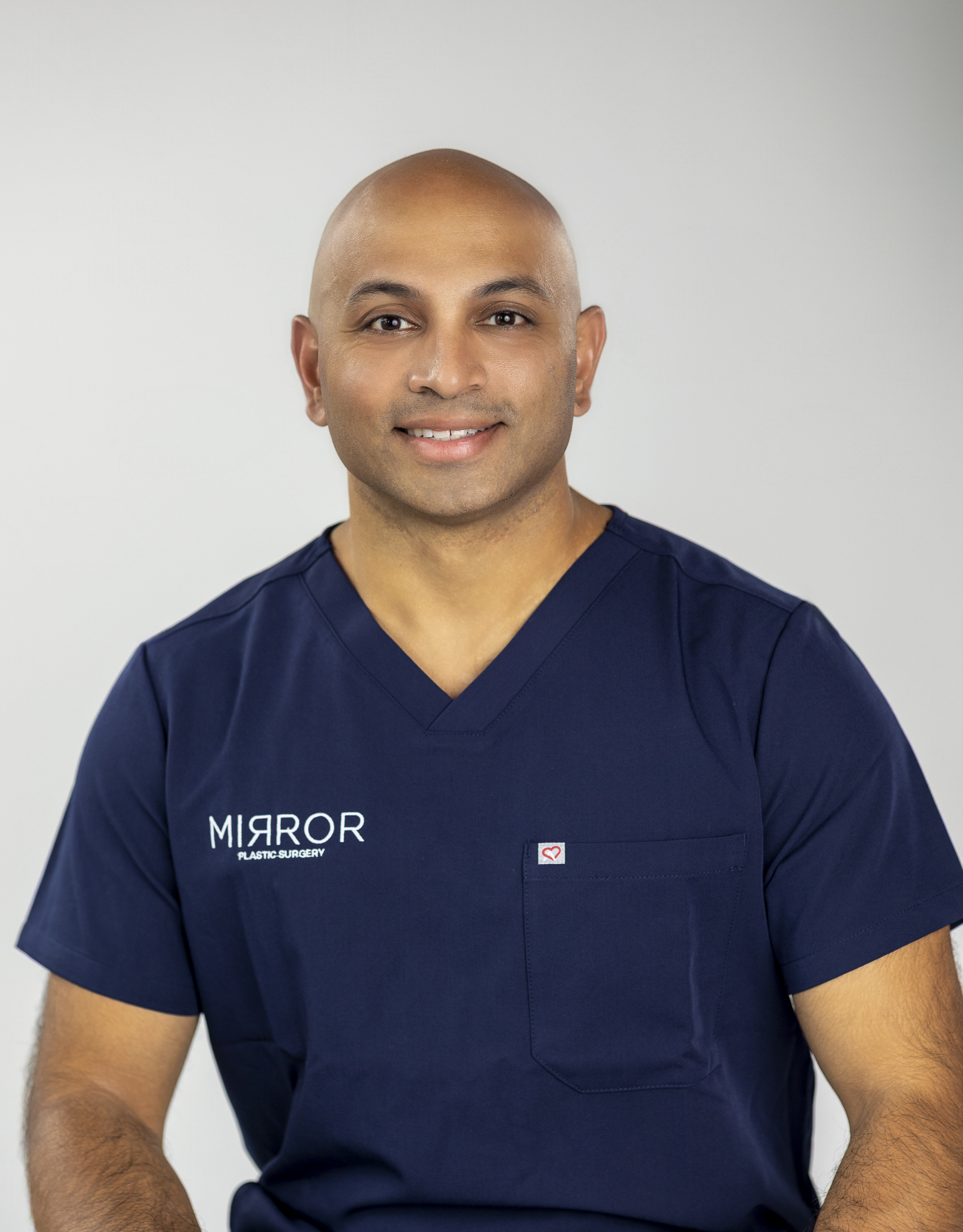
Surgical outcomes and recovery experiences depend heavily on the precision of the initial procedure and the quality of post-operative follow-up. Dr. Akash completed his medical degree through the Harvard-MIT Division of Health Sciences and Technology, a program that integrates rigorous scientific research with clinical training, and his plastic and reconstructive surgery residency at Johns Hopkins University, one of the most comprehensive training programs in the field. He subsequently completed a specialized aesthetic surgery fellowship at the Manhattan Eye, Ear and Throat Hospital (MEETH), with advanced focused training in facial rejuvenation techniques including blepharoplasty. Dr. Akash has been named in America’s Best Plastic Surgeons 2025 by Newsweek for two years in a row.
Mirror Plastic Surgery’s concierge model limits the practice to one to two surgeries per day. This structure means the surgical team’s full attention, from pre-operative preparation through post-operative monitoring, is concentrated on each individual patient rather than distributed across a high-volume schedule. For upper blepharoplasty patients, this translates to unhurried pre-operative anatomical assessment, precise intraoperative technique, and accessible follow-up during the recovery period. The practice’s guiding hierarchy, safety first, function second, aesthetics third, is applied at every stage, including the post-operative phase, where functional outcomes such as complete lid closure and corneal protection are evaluated alongside aesthetic refinement.
Frequently Asked Questions
Can I wear makeup after upper eyelid surgery, and when?
Most surgeons permit the application of concealer and eye makeup once incisions are fully closed and epithelialized, typically around days 10–14, provided the patient has received explicit clearance at their post-operative visit. Eye makeup should be applied and removed gently to avoid mechanical stress on healing tissue. Mascara and eyeliner directly on the lash line are generally the last products reintroduced, often around weeks two to three.
Will upper blepharoplasty affect my ability to wear contact lenses?
Contact lens use is typically suspended for the first one to two weeks following upper blepharoplasty. During this period, lid swelling alters the mechanical relationship between the lid and the lens, and insertion and removal of contacts risks contaminating or stressing the healing incision. Glasses are the recommended alternative during this window. Patients should confirm the specific timeline with their surgeon at their pre-operative appointment.
Is it normal for one eyelid to heal faster than the other?
Asymmetric healing between the two upper lids is a normal and expected part of recovery. Differences in tissue thickness, lymphatic drainage patterns, and minor variations in surgical dissection on each side can cause one lid to appear less swollen or more defined than the other at a given point. This asymmetry typically equalizes by weeks three to six. Persistent asymmetry beyond three months warrants evaluation by the operating surgeon.
How does Tampa’s climate affect upper blepharoplasty recovery?
Tampa’s high UV index, humidity, and frequent outdoor wind exposure create specific considerations for blepharoplasty patients. UV radiation accelerates post-inflammatory hyperpigmentation along healing incision lines, which makes consistent use of broad-spectrum SPF 30 or higher and UV-blocking sunglasses essential outdoors throughout the first three months. Wind and air conditioning both reduce ocular surface moisture and can worsen dry eye symptoms that are already common in the early recovery period. Lubricating eye drops and protective eyewear are standard recommendations for Tampa-area patients during outdoor activity.
Does the number of surgeries a practice performs per day affect blepharoplasty outcomes?
Surgical volume per day influences the degree of individualized attention a patient receives before, during, and after a procedure. Practices that perform one to two surgeries daily can dedicate the full focus of the surgical team to each case, including unhurried pre-operative assessment, precise intraoperative technique, and thorough post-operative monitoring. High-volume environments, where five to ten or more procedures occur daily, distribute team attention and time across a larger patient load, which can affect the granularity of pre-operative planning and the accessibility of post-operative follow-up.
1 Results may vary from person to person. Editorial content, before and after images, and patient testimonials do not constitute a guarantee of specific results.