Written by: Dr. Akash Chandawarkar, Board Certified Plastic Surgeon, Mirror Plastic Surgery | Last updated: July 1, 2026
Key Takeaways for Natural-Looking Eyelid Surgery
-
Eyelid surgery is technically demanding, and choosing a surgeon who respects your anatomy helps prevent hollowed lids and unnatural aging.
-
High-volume practices that rush multiple cases daily increase the risk of one-size-fits-all results and long-term dissatisfaction.
-
Dr. Akash’s elite training at Harvard-MIT, Johns Hopkins, and MEETH, combined with a one-to-two-surgery daily limit, supports consistently natural outcomes.1
-
Key evaluation criteria include board certification, fellowship specialization, fat-preservation technique, careful photo review, and hospital privileges.
-
Scheduling a personalized consultation at Mirror Plastic Surgery gives you an hour-long, anatomy-first assessment with Dr. Akash.
Dr. Akash’s Elite Training and Focus on Eyelid Aesthetics
Dr. Akash completed his medical degree through the Harvard-MIT Division of Health Sciences and Technology, graduating from Harvard Medical School with Honors. His surgical foundation developed during a seven-year integrated plastic and reconstructive surgery residency at Johns Hopkins University, one of the most rigorous programs in the world.
He then completed a dedicated aesthetic surgery fellowship at the Manhattan Eye, Ear and Throat Hospital (MEETH), which provides advanced, focused training in facial rejuvenation techniques beyond standard residency.
Dr. Akash has been named to Newsweek‘s America’s Best Plastic Surgeons list for two consecutive years. At Mirror Plastic Surgery, he limits his schedule to one to two surgeries per day, which allows undivided attention for every patient.
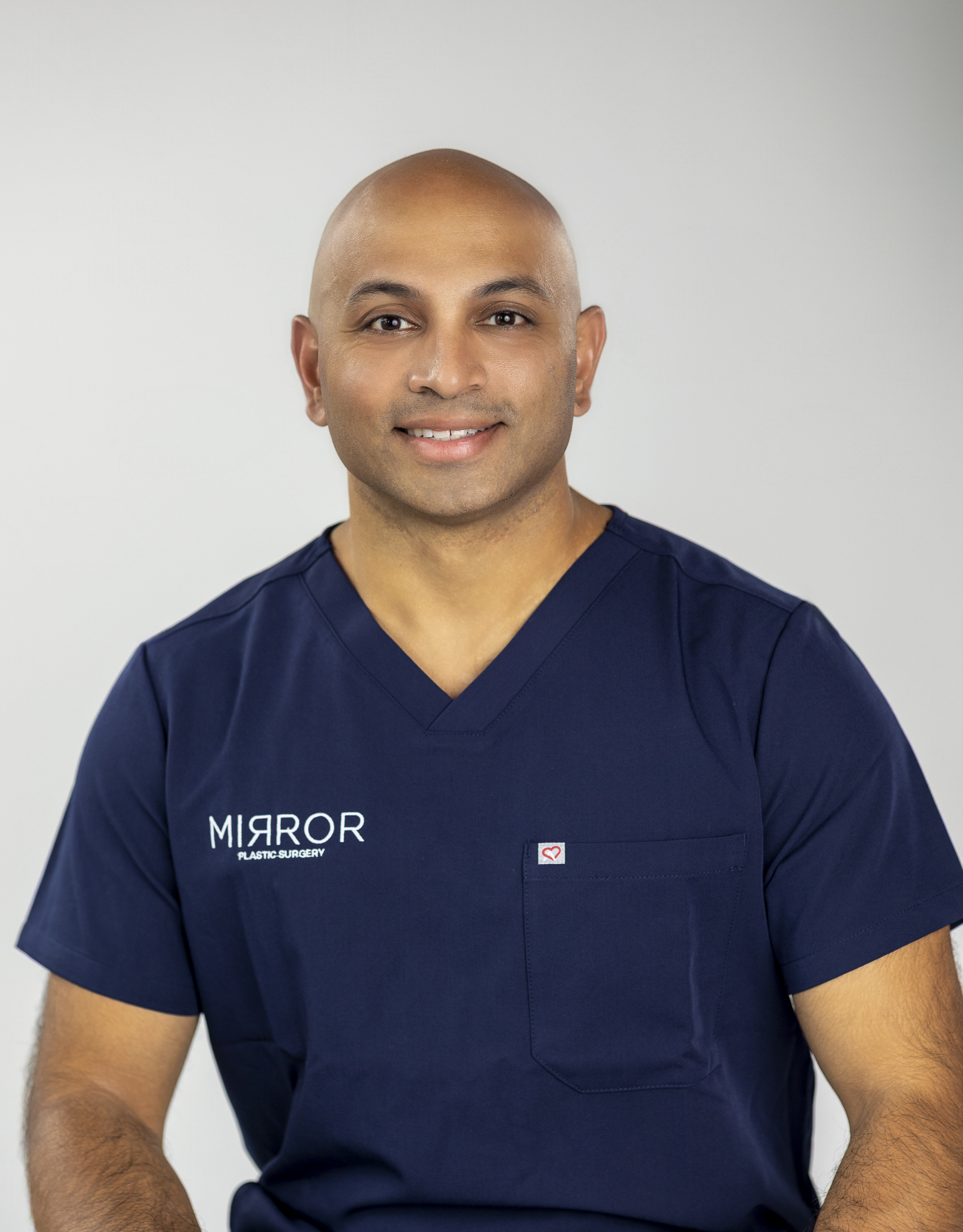
Book a consultation with Dr. Akash to discuss your eyelid anatomy and goals in a dedicated, hour-long assessment.
7-Step Checklist to Evaluate Any Blepharoplasty Surgeon
This checklist translates the type of elite training described above into practical criteria you can use with any surgeon you consider. These seven steps help you compare qualifications, technique, and safety standards in a clear, structured way.
-
Confirm board certification in plastic surgery. Verify certification through the American Board of Plastic Surgery (ABPS). Board certification establishes a baseline of training and examination standards that self-designated titles do not match.
-
Look for fellowship-level specialization. A residency trains surgeons broadly. A dedicated aesthetic surgery fellowship, particularly at a program like MEETH, provides advanced, focused refinement in facial anatomy and technique. Ask whether the surgeon completed a fellowship and where it took place.
-
Distinguish ASOPRS from ASPS membership. The American Society of Ophthalmic Plastic and Reconstructive Surgery (ASOPRS) focuses on oculoplastic surgery. The American Society of Plastic Surgeons (ASPS) represents board-certified plastic surgeons more broadly. Both are credible. Understanding the difference helps you match surgeon background to your specific goals.
-
Ask about fat preservation versus aggressive removal. Conservative techniques that reposition or preserve orbital fat maintain lid volume and help prevent the hollowed look associated with over-resection. Ask the surgeon to explain their specific approach to fat management for both upper and lower lids.
-
Scrutinize before-and-after photos critically. Look for patients with anatomy similar to yours. Check whether lower lids maintain their natural contour, whether upper lids show preserved volume, and whether results appear consistent across many patients rather than limited to a few showcase cases.
-
Ask about annual case volume and daily surgery limits. A surgeon performing five to ten procedures daily has less time for pre-operative planning and intraoperative precision. Practices that limit daily surgeries to one or two usually prioritize focused, individualized care.
-
Confirm hospital privileges and complication-management protocols. A surgeon with active hospital privileges can manage rare but serious complications in an accredited facility. Ask directly how complications are handled and who is responsible for your care if one occurs.
How Blepharoplasty Achieves Natural-Looking Results
Blepharoplasty can look natural when the surgeon uses an anatomy-first technique. The goal is a refreshed appearance rather than an obviously operated look. The key variables are fat management and tissue preservation. In the upper lid, conservative skin removal combined with careful muscle handling helps avoid the hollow, skeletonized appearance that signals over-correction. In the lower lid, fat repositioning, which moves orbital fat forward to fill the tear-trough depression rather than excising it, restores youthful contour without creating a sunken socket.
Two primary surgical approaches exist for the lower lid: skin-only and skin-muscle flap techniques. Skin-only approaches preserve the orbicularis muscle, which maintains the dynamic movement that makes eyelids look alive. Skin-muscle flap approaches provide broader access to deeper structures, so they require precise re-draping to avoid lid retraction. Because each approach involves different tradeoffs, the choice between techniques should depend on individual anatomy rather than a default protocol. Surgeons who assess each patient’s specific fat distribution, skin laxity, and lid position before selecting a technique tend to produce more natural outcomes than those who apply a single method universally.1
Why Some Patients Look Older After Blepharoplasty
Aging after surgery most often comes from aggressive fat removal. The orbital fat compartments create the smooth, rounded contour of a youthful eye. When fat is removed rather than repositioned, the resulting hollow creates shadow, and shadow reads as age. Ongoing facial volume loss then compounds this effect over time, which makes the eyes appear more sunken with each passing year.
Excessive skin removal also contributes to an aged or unnatural look. Taking too much skin from the upper lid can create a tight, wide-eyed appearance that looks unnatural at rest and limits comfortable eye closure. In the lower lid, over-resection of skin or muscle can cause scleral show, which means visible white below the iris. This change is both aesthetically aging and functionally problematic. Conservative, anatomy-driven technique helps avoid both outcomes by treating the eyelid as part of the broader periorbital and midface system rather than as an isolated structure.1
Red Flags to Watch for When Choosing a Surgeon
-
Rushed consultations under 20 minutes. Eyelid anatomy varies significantly between patients. A consultation that skips detailed examination of lid position, fat distribution, skin quality, and tear-trough depth cannot support a reliable surgical plan.
-
Pressure to combine multiple procedures immediately. Combining too many procedures in a single session increases complication rates. A surgeon who pushes a full facial package without first understanding your individual priorities and anatomy is prioritizing volume over safety.
-
Opaque pricing or quota-driven upselling. Ethical practices provide transparent, anatomy-based recommendations. Pressure to add procedures not clearly indicated by your anatomy signals a sales-driven rather than patient-driven practice.
-
No hospital privileges. Surgeons without active hospital privileges cannot transfer care to an accredited facility if a complication requires it. This gap represents a concrete safety concern, not a minor formality.
-
Before-and-after photos that show only ideal cases. A limited or heavily curated gallery that does not reflect a range of ages, skin types, and anatomical starting points does not demonstrate consistent surgical skill.
Book a consultation with Dr. Akash at Mirror Plastic Surgery’s St. Petersburg location and experience a full hour of anatomy-first evaluation.
Key Questions to Ask During Your Consultation
Use this question list at any blepharoplasty consultation to see whether the surgeon’s approach matches your goals:
-
How do you assess my specific fat distribution and lid position before deciding on a technique?
-
Will you reposition fat, remove it, or both, and why, based on my anatomy?
-
What is your approach to the lower lid: skin-only, skin-muscle flap, or transconjunctival, and how do you decide?
-
How many blepharoplasty procedures do you perform per week, and how many surgeries do you schedule per day?
-
What does your complication management protocol include, and do you hold active hospital privileges?
-
Can I see before-and-after photos of patients with anatomy similar to mine?
-
How does eyelid surgery fit into my broader facial aging picture, and which other structures should I address now or plan for later?
At Mirror Plastic Surgery, consultations run up to an hour and include a top-to-bottom anatomical assessment. Dr. Akash reviews the entire periorbital region, midface, and brow position before making any surgical recommendation.
Common Misunderstandings About Blepharoplasty Surgeons
“Any board-certified plastic surgeon can perform eyelid surgery well.” While the ABPS baseline discussed in step one above is essential, it does not guarantee specialization in periorbital anatomy. Residency training covers eyelid surgery as one component of a broad curriculum. Fellowship training in aesthetic surgery provides the additional, focused refinement in technique and judgment that consistently natural results require.
“Lower-eyelid surgery always looks natural if fat is removed.” Fat removal from the lower lid is the technique most associated with hollowed, aged post-operative appearances. The current evidence-based standard for lower-lid rejuvenation favors fat repositioning into the tear-trough depression over excision, which preserves volume while smoothing the lid-cheek junction.
Final Evaluation Checklist and Long-Term Facial Harmony
The seven-step checklist of board certification, fellowship training, technique specificity, photo scrutiny, case volume, complication transparency, and hospital privileges offers a clear framework for comparing surgeons. These criteria focus on factors that predict outcome quality rather than marketing visibility.1
Eyelid surgery affects and reflects the entire face. Brow position, midface volume, and cheek skin quality all influence how blepharoplasty results age over time. A surgeon who evaluates the full facial context before recommending eyelid surgery is more likely to create results that remain harmonious as the face continues to change.1 Long-term well-being, not a single post-operative photo, should guide the definition of a successful outcome.
Book a Consultation with Dr. Akash
Mirror Plastic Surgery serves the St. Petersburg and Tampa Bay area from its location at 780 4th Ave S, St. Petersburg, FL 33701. Dr. Akash brings the elite training and patient-focused practice model described above to every consultation, with a schedule that allows one to two surgeries per day for focused, anatomy-first care.
Book a consultation with Dr. Akash to begin your evaluation with a surgeon whose training, technique, and practice model center on your long-term outcome.
Frequently Asked Questions
How long does a blepharoplasty consultation at Mirror Plastic Surgery typically take?
Consultations at Mirror Plastic Surgery run up to one hour. Dr. Akash conducts a top-to-bottom anatomical assessment that covers lid position, orbital fat distribution, skin quality, brow position, and midface volume. This depth of evaluation supports a surgical plan that addresses your specific anatomy rather than a generic protocol.1 The consultation also includes time for education, and Dr. Akash explains the relevant anatomy, the rationale behind any recommended technique, and realistic outcomes for your individual starting point.1
What is the difference between upper and lower blepharoplasty, and do I need both?
Upper blepharoplasty addresses excess skin and, when appropriate, fat in the upper eyelid. Surgeons commonly perform it to restore a more open, refreshed appearance and to improve peripheral vision when significant skin hooding is present. Lower blepharoplasty targets under-eye puffiness, hollowing, or the lid-cheek junction. Whether you need one or both depends entirely on your anatomy. Some patients have significant upper-lid concerns with minimal lower-lid involvement, while others present with the reverse. Dr. Akash assesses both lids, the brow, and the midface together before making any recommendation, because the relationship between these structures determines which intervention will produce the most harmonious result.
How do I know if a surgeon’s before-and-after photos reflect consistent skill?
Volume and diversity in the photo gallery provide the best clues. A gallery that shows only a handful of cases, or only patients with similar ages and skin types, does not demonstrate consistent results across a range of anatomical challenges. Check whether lower lids maintain natural contour without visible hollowing, whether upper lids show preserved volume rather than a skeletonized appearance, and whether the overall eye shape looks proportionate to the face. Also note whether the photos show patients at multiple time points. Immediate post-operative results can differ significantly from one-year outcomes, and long-term photos give a more reliable indicator of technique quality.
Is blepharoplasty performed in an office or a hospital, and does the setting matter for safety?
Upper blepharoplasty is commonly performed as an in-office minor surgery under local anesthesia. Lower blepharoplasty and combined procedures may require an accredited surgical facility with anesthesia support. The setting matters for safety because accredited facilities undergo regulatory oversight of equipment, staffing, and emergency protocols. At Mirror Plastic Surgery, Dr. Akash holds active hospital privileges, so in the rare event of a complication requiring escalated care, he can manage your treatment in a hospital setting. This represents a concrete safety consideration and is worth confirming with any surgeon you evaluate.
Can blepharoplasty be combined with other facial procedures?
Blepharoplasty is frequently performed alongside brow lifts, facelifts, or facial fat transfer when the anatomy supports it. Combining procedures increases operative time and physiological stress, which can raise complication rates. Mirror Plastic Surgery recommends combinations only when they are clearly indicated by the patient’s anatomy and goals, not as a default upsell. During consultation, Dr. Akash evaluates the full facial picture and provides an honest assessment of which procedures, if any, would benefit from being performed together versus staged separately. The guiding principle remains safety first, function second, and aesthetics third.
1 Results may vary from person to person. Editorial content, before and after images, and patient testimonials do not constitute a guarantee of specific results.