
Written by: Dr. Akash Chandawarkar, Board Certified Plastic Surgeon, Mirror Plastic Surgery | Last updated: July 24, 2026
Key Takeaways
- Buttock augmentation via fat transfer (BBL) is a two-stage procedure that harvests, purifies, and re-injects your own fat to enhance volume and contour.
- Modern ultrasound-guided techniques have reduced mortality risk to approximately 1:15,000, which is similar to abdominoplasty.1
- Most patients need a BMI of 22–25 and adequate donor fat from several areas to harvest 1,000–1,500 cc of pure fat for transfer.
- Strict post-operative protocols, including no sitting for 2–3 weeks and lymphatic drainage, support 60–80% long-term fat survival.1
- Schedule a personalized consultation at Mirror Plastic Surgery to compare fat transfer, implants, and AlloClae based on your anatomy and goals.
Buttock Fat Transfer (BBL) Explained
Buttock augmentation via fat transfer, often called a Brazilian Butt Lift (BBL), is a two-stage surgical procedure. A board-certified plastic surgeon first harvests excess fat from donor sites with liposuction, then processes and purifies that fat. The surgeon then reintroduces the fat into the subcutaneous tissue of the buttocks to add volume, projection, and smoother contour.
Schedule your anatomy assessment to determine whether fat transfer, implants, or AlloClae is the right approach for your goals.
BBL Recovery Timeline and What It Means for You
This recovery timeline shows the phases you will move through and highlights the crucial first 3–6 weeks. Sitting limits and activity changes during this window directly affect long-term fat survival and your ability to return to work, childcare, and daily routines.
| Timeframe | What to Expect |
|---|---|
| Days 1–3 | Pain usually ranges from 6–8 out of 10 because of cannulation trauma and swelling. You wear a compression garment 23–24 hours per day. You do not sit on your buttocks and sleep only on your stomach or side. Short walks of 2–5 minutes every two hours help lower blood clot risk. |
| Days 4–7 | Pain often decreases to 4–6 out of 10. Lymphatic drainage massage typically starts within 24–48 hours after surgery, with 10–15 sessions over four to six weeks. You continue wearing the compression garment continuously. |
| Weeks 1–2 | You still avoid sitting directly on your buttocks. Brief toilet use is the only exception. Many patients return to remote or desk work between days 10 and 14 using a standing setup or a strict BBL pillow protocol. |
| Weeks 3–4 | You can start modified sitting with a BBL pillow under the thighs for 15–30 minutes at a time. Light walking increases. Strenuous exercise remains restricted. |
| Weeks 5–6 | Most patients resume normal sitting without a BBL pillow around week six. Light cardiovascular exercise is usually allowed. High-impact activity and direct gluteal weightlifting wait until weeks 8–10. |
| Weeks 7–8 | Structural recovery is usually complete by week eight. You can sit normally, sleep in any position, and return to most daily activities. |
| Months 3–6 | Fat volume stabilizes between months three and six. Final contour becomes visible as swelling resolves. From this point, surviving grafted fat behaves like your normal body fat. |
How Long Does Fat Transfer Last in Buttocks?
The 60–80% long-term survival rate mentioned earlier is supported by multiple clinical datasets.1 Clinical studies show that fat retention varies at first, then stabilizes after the first several months.
Once the surviving fat establishes a permanent blood supply, usually within 3–6 months, results can be long lasting.1 The critical factor that determines durability is weight stability. A longitudinal review in Aesthetic Surgery Journal followed fat grafting patients for five years and found that patients who stayed within 10–15 pounds of their surgical weight maintained much more stable results than those with larger swings. A 2023 review in Aesthetic Plastic Surgery confirmed that grafted fat cells remain metabolically active and respond to weight changes like native fat, expanding with weight gain and shrinking with weight loss.
BBL Safety and Current Risk Levels
The historical mortality figure often repeated in media from a 2017 ASERF task force survey has been significantly revised. The BAAPS Gluteal Fat Grafting Safety Review (September 2022) now estimates mortality risk at about 1:15,000, which is comparable to abdominoplasty, and notes that the earlier figure was likely inaccurate because of methodological issues.
The main cause of serious complications has been intramuscular fat injection. Cadaver studies have identified anatomic landmarks and techniques that support safe gluteal fat grafting while avoiding major vascular or nervous structures. Even shallow intramuscular placement can migrate along fascial planes toward large vessels such as the inferior gluteal vein. The key safety advantage of ultrasound guidance is continuous visual confirmation that the cannula stays in the subcutaneous layer. The comparison below shows how real-time imaging addresses risks that blind techniques cannot control.
| Risk Factor | Traditional Blind Technique | Modern Ultrasound-Guided Technique |
|---|---|---|
| Cannula placement verification | No real-time visualization, relies only on tactile feedback | Continuous imaging confirms subcutaneous position throughout each pass |
| Injection plane control | Intramuscular placement can occur without detection | Visualization of gluteal fascia allows immediate angle change if the cannula approaches the fascia |
| Cannula type | Sharp or small cannulas can increase vessel puncture risk | Blunt-tip cannulas of 4 mm or larger tend to push veins aside rather than puncture them |
How Much Fat Do You Need for Buttock Fat Transfer?
Most patients need a BMI of at least 22–25 to provide enough donor fat to harvest 1,000–1,500 cc of pure fat for transfer. Common donor sites include the abdomen, flanks, lower back, inner thighs, and knees. The American Society of Plastic Surgeons states that safe liposuction volume depends on patient BMI rather than a fixed absolute limit such as 5 liters.
Very lean patients with a BMI below 23 may still qualify if small pockets of fat exist across several donor sites, often four or five areas, that together can yield 600–1,000 ml per side. When even multi-site harvesting cannot provide enough volume, buttock implants or AlloClae offer evidence-based alternatives that do not depend on donor fat. Liposuction removes only subcutaneous fat that you can pinch, so patients with mainly visceral fat may not achieve their desired contour even if their BMI suggests adequate fat stores.
Pre-Operative Planning at Mirror Plastic Surgery
At Mirror Plastic Surgery, the pre-operative process focuses on clear expectations and a customized plan before any surgery is scheduled.
- One-hour top-to-bottom anatomical assessment: Dr. Akash performs a detailed physical evaluation of donor sites, skin elasticity, gluteal anatomy, and overall proportions. This extended consultation, uncommon in high-volume practices, supports an individualized plan instead of a standard template.
- Health screening: Candidates must be in good general health with no active infections or untreated conditions, at a stable weight, and with well-managed chronic issues such as diabetes or heart disease. Uncontrolled diabetes, active cardiovascular disease, and clotting disorders significantly increase anesthetic and surgical risk.
- Smoking cessation confirmation: Smoking is a strict contraindication. Patients must stop at least four to six weeks before and after surgery to reduce fat necrosis and wound healing problems.
- Realistic-expectation discussion: Dr. Akash reviews before-and-after examples that match the patient’s anatomy, explains the typical 60–80% fat survival range, and outlines how weight changes affect long-term results.
- Supplier-neutral planning: Mirror Plastic Surgery does not use product quotas. The plan, whether fat transfer, AlloClae, implants, or a combination, is chosen based only on what your anatomy and goals support.
The BBL Procedure Step by Step
- Tumescent liposuction: Donor sites receive tumescent solution to limit bleeding and trauma. Fat is then harvested using gentle suction-assisted or ultrasound-assisted liposuction.
- Processing and purification: The harvested fat is processed to remove blood, oil, and tumescent fluid, leaving viable fat cells for transfer. Gentle handling during this stage supports higher graft survival.
- Real-time ultrasound-guided injection: Ultrasound allows the surgeon to see the gluteal fascia and track the cannula tip in real time. The surgeon adjusts the angle immediately if the cannula nears the fascia and deposits fat only in the subcutaneous layer. Perforating arteries of the gluteal region have a mean diameter of 1.1 mm, which makes this plane safer than the intramuscular space.
- Volume distribution and contouring: Fat is placed in several planes within the subcutaneous compartment to create natural projection and smooth transitions instead of a single large deposit.
- Closure and compression: Donor sites are closed and compression garments are applied immediately. The patient recovers in a prone position.
AlloClae as an Advanced Alternative
AlloClae is an acellular adipose tissue matrix that provides a structural scaffold for fat integration. Mirror Plastic Surgery offers AlloClae as an in-office or surgical option for buttock augmentation, especially for patients without enough donor fat for traditional transfer or those who prefer a less invasive approach. Dr. Akash serves on the advisory board for Tiger Aesthetics, the company developing AlloClae, and has direct experience with its integration behavior and ideal candidate profile. AlloClae offers structure and fat integration that differ from traditional fat transfer and biostimulatory fillers, which do not provide the same long-term effectiveness for buttock augmentation in appropriate candidates.
Explore AlloClae and fat transfer options to discuss whether AlloClae, traditional fat transfer, or a combined plan fits your anatomy and aesthetic goals.
Choosing a Surgeon Who Prioritizes Safety
Surgeon selection is the most controllable factor in BBL safety. Board-certified plastic surgeons with focused BBL experience and up-to-date safety training achieve safer outcomes and more natural results than less specialized providers. The ASPS/ASERF joint safety statement recommends subcutaneous-only injection, blunt-tip cannulas of 4 mm or larger, real-time ultrasound guidance, no tangential pressure during injection, limited volume per side, and one gluteal fat grafting procedure per team per day.
Dr. Akash’s background includes MIT training in neuroscience and nuclear engineering, an M.D. with Honors from Harvard Medical School through the Harvard-MIT Health Sciences and Technology program, a seven-year integrated plastic and reconstructive surgery residency at Johns Hopkins University, and an aesthetic surgery fellowship at the Manhattan Eye, Ear and Throat Hospital (MEETH), one of the most competitive aesthetic programs in the country. He also completed the Stanford University Biodesign Innovation Fellowship and has appeared on Newsweek’s America’s Best Plastic Surgeons list for two consecutive years, including 2025.
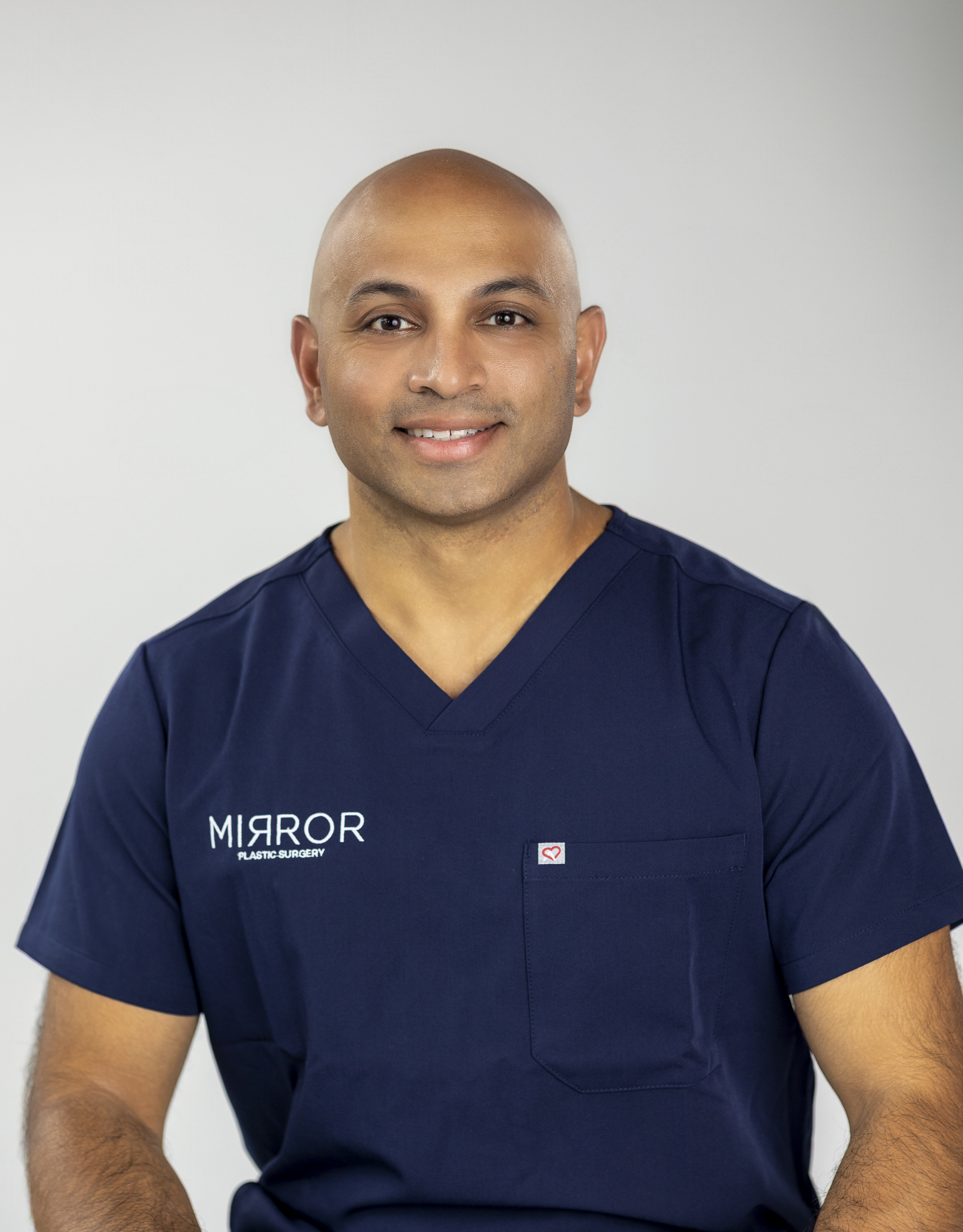
Mirror Plastic Surgery limits its schedule to one or two surgeries per day. This structure allows the full attention of Dr. Akash and the clinical team before, during, and after each procedure, in contrast to high-volume centers that may perform five to ten cases daily. Every BBL at Mirror Plastic Surgery uses real-time ultrasound guidance, blunt-tip cannulas, and subcutaneous-only injection in an accredited facility with a board-certified physician anesthesiologist.
Request your one-hour assessment at Mirror Plastic Surgery in St. Petersburg, FL, and receive a comprehensive anatomical evaluation tailored to your goals.
Frequently Asked Questions
What BMI is required for buttock fat transfer?
Most board-certified plastic surgeons use a BMI at or below 30 as a general upper limit for safe candidacy, although BMI is only one factor. Patients with a BMI between 22 and 30 who have clear donor fat in the abdomen, flanks, lower back, or thighs are usually strong candidates. Very lean patients with a BMI below 23 may still qualify if enough fat exists across several donor sites. Patients with a BMI above 30 may be asked to reach a stable, healthier weight before surgery to reduce anesthetic and healing risks. During your consultation, Dr. Akash evaluates your full anatomy rather than BMI alone.
How long do I need to avoid sitting after a BBL?
Direct sitting on the buttocks is restricted for at least two to three weeks after surgery. Pressure during this period can compress newly transferred fat cells and disrupt early blood supply formation. From weeks three through six, you can use a BBL pillow under the thighs for short 15–30 minute intervals, keeping the buttocks suspended. Most patients resume normal sitting around week six once the fat grafts have a stable blood supply. Following these sitting rules closely is one of the strongest predictors of long-term fat survival.
How much of the transferred fat will survive?
Clinical data consistently places long-term fat survival between 60% and 80% for patients treated by experienced surgeons who follow modern protocols and for patients who follow post-operative instructions carefully.1 Fat volume usually stabilizes between three and six months after surgery. After that, surviving grafts behave like native fat tissue and can last for years if body weight stays stable. Weight changes of more than five to ten pounds in the first six months can reduce long-term graft volume by 10% to 20%.
What makes ultrasound-guided BBL safer than traditional techniques?
Traditional BBL relies on the surgeon’s sense of touch to estimate cannula depth, which leaves room for unintentional intramuscular placement. Fat injected into the gluteal muscle can travel along fascial planes toward large vessels and cause pulmonary fat embolism, the main cause of BBL-related deaths. As explained in the safety section, ultrasound guidance provides continuous visual confirmation of cannula placement and supports subcutaneous-only injection. For you as a patient, this means you should confirm during your consultation that ultrasound guidance is standard practice, not an optional upgrade.
Am I a candidate if I have very little body fat?
Lean patients are evaluated individually. If harvestable fat exists across several donor sites, such as the lower abdomen, flanks, lower back, inner thighs, and knees, a modified approach can still create a meaningful, proportionate result at lower BMI values. The key requirement is enough total harvestable volume, not BMI alone. When donor fat is truly insufficient to meet your goals, Dr. Akash reviews alternatives such as buttock implants and AlloClae, an acellular adipose matrix that provides structural volume without large fat harvests. Intentional pre-operative weight gain is not recommended because later weight loss will shrink transferred fat cells and reduce your results.
1 Results may vary from person to person. Editorial content, before and after images, and patient testimonials do not constitute a guarantee of specific results.