
Written by: Dr. Akash Chandawarkar, Board Certified Plastic Surgeon, Mirror Plastic Surgery
Key Points About Nerve Risk and Recovery
- Buccal fat removal places the buccal branches of the facial nerve at risk because they cross directly over the fat pad being removed.
- Most nerve injuries from this procedure are neuropraxia, which are temporary traction injuries that usually resolve within a few months.1
- Dual innervation from both buccal and zygomatic branches often limits functional loss even when a single branch is affected.
- Pre-operative ultrasound mapping, blunt dissection, and a deliberately low daily case volume are evidence-based steps that reduce nerve injury risk.
- Patients considering buccal fat removal can schedule a personalized anatomical assessment and risk discussion with Dr. Akash at Mirror Plastic Surgery.
How Buccal Fat Removal Interacts With Facial Nerve Anatomy
The buccal branch of the facial nerve supplies the buccinator, orbicularis oris, and nasal muscles. These branches spread across the face and cross the buccal fat pad, which is exactly where a surgeon works to remove the fat.
The facial nerve’s buccal branches sit close to the buccal fat pad, superficial to the buccinator muscle. The parotid (Stensen’s) duct pierces the buccinator near the fat pad, so both the duct and nearby nerve branches face higher risk during aggressive or imprecise excision.
Two anatomical facts work in patients’ favor. First, the orbicularis oris can receive motor fibers from both the buccal and zygomatic branches, so isolated buccal-branch injury often produces only subtle or transient midface weakness rather than permanent paralysis. Second, the intraoral approach, which accesses the fat through an incision in the inner cheek lining, allows the surgeon to work from inside the mouth and avoid an external skin incision where nerve branches are more superficial and vulnerable.
Risk-reduction techniques supported by the literature include:
- Blunt dissection rather than sharp cutting near the outer edge of the fat pad
- Marking the parotid duct path before dissection begins
- Applying external counter-pressure to deliver fat with minimal traction
- Limiting bipolar electrocautery to hemostasis only and avoiding heat spread toward adjacent nerves
- Conservative excision of only the protruding fat on each side
Dr. Akash supplements these techniques with ultrasound pre-operative mapping to visualize fat pad volume and depth before a single incision is made, a step that high-volume practices rarely take the time to perform. These preventive measures significantly reduce risk, and understanding the recovery timeline if nerve involvement occurs helps patients separate normal healing from problems that need intervention.
Healing Timeline for Facial Nerve Changes After Buccal Fat Removal
Facial nerve injuries follow predictable patterns and are classified by the Seddon system into neuropraxia, axonotmesis, and neurotmesis. Most injuries related to buccal fat removal fall into the neuropraxia category rather than full transection.
The table below distinguishes normal post-operative findings from signs of nerve involvement across the recovery arc.
| Timeframe | Normal / Expected Findings | Possible Nerve Involvement (Neuropraxia) | Concerning Signs (Axonotmesis or Worse) |
|---|---|---|---|
| Days 1–7 | Swelling, bruising, mild trismus, soreness at incision site | Mild asymmetric smile, slight difficulty puffing cheeks due to swelling | Complete inability to move one side of the face, immediate post-op flaccid droop |
| Weeks 2–4 | Swelling subsiding, trismus improving, incision healing | Persistent but improving cheek weakness, mild numbness along cheek | No improvement in motor function, worsening asymmetry |
| Weeks 5–12 | Near-full range of facial motion, residual firmness at incision | Gradual return of full strength, with most temporary injuries improving along this timeline | Persistent flaccid weakness beyond 3 months that warrants specialist evaluation |
| Months 4–6 | Final aesthetic result visible, full function restored | Synkinesis (involuntary co-contractions) may emerge if axonal regrowth is aberrant | Flaccid paralysis persisting beyond several months, which is rare and requires nerve specialist referral |
Recognizing Signs of Facial Nerve Damage
Clear criteria help patients separate normal post-operative swelling from true motor or sensory nerve injury after buccal fat removal. Clinical testing of buccal-branch function is performed by asking the patient to puff the cheeks or purse the lips, and asymmetry in these maneuvers indicates buccal-branch involvement.
Red-flag symptoms that warrant an immediate call to your surgeon include:
- Asymmetric smile that does not improve as swelling resolves
- Inability to puff one cheek or purse the lips on one side
- Persistent numbness, burning, or electric-shock sensations along the cheek or lip beyond the first week
- Pain that feels foreign, such as burning, stabbing, or crawling, rather than the expected inflammatory soreness of healing tissue
- Symptoms that begin after the local anesthetic has worn off and do not improve steadily over time
- Drooping of the corner of the mouth on one side
Normal post-operative findings such as bilateral swelling, mild tightness, and temporary difficulty opening the mouth wide improve progressively and symmetrically. Symptoms that stay fixed, worsen, or follow a nerve distribution rather than the incision site indicate potential nerve injury rather than routine recovery.
Schedule an expert evaluation with Dr. Akash if you are experiencing any of these symptoms after a procedure performed elsewhere and want a focused second opinion.
Recovery Potential After Facial Nerve Injury
Most nerve changes that occur during buccal fat removal involve neuropraxia from traction, and this pattern carries a favorable prognosis. Spontaneous recovery often occurs in facial nerve injuries when the nerve and its target muscle remain structurally intact.1
After axonal injury, Wallerian degeneration clears debris so that regeneration can proceed if the neuronal cell body remains healthy. For the short distances involved in buccal-branch injuries, this process usually results in recovery measured in weeks to a few months rather than years.1
Permanent flaccid paralysis from buccal fat removal is rare when surgeons use careful technique.1 Synkinesis, which includes involuntary co-contractions such as oral commissure movement with eye closure, can appear several months after an injury. Patients who develop synkinesis have treatment options that include targeted neurotoxin injections and specialized physical therapy.
Choosing a Surgeon to Reduce Nerve Injury Risk
The following surgeon-selection checklist helps patients minimize nerve risk:
- Board certification in plastic surgery by the American Board of Plastic Surgery, not a general medical board
- Fellowship training specifically in facial aesthetic surgery
- Hospital privileges that show the surgeon can manage rare complications in an accredited facility
- Pre-operative ultrasound mapping to assess fat pad depth and volume before surgery
- A practice model that limits daily case volume so the team can focus fully on each patient
- Intraoral approach with blunt dissection and conservative excision as the stated technique
- Transparent discussion of potential nerve paralysis risk and the recovery timeline before you sign consent
Dr. Akash meets every criterion on this list through a combination of specialized training and deliberate practice design. His foundation in MIT neuroscience and Harvard Medical School created deep anatomical expertise for navigating facial nerve branches. He refined this knowledge during a seven-year Johns Hopkins plastic surgery residency and an aesthetic surgery fellowship at MEETH, one of the most competitive facial surgery programs in the United States.
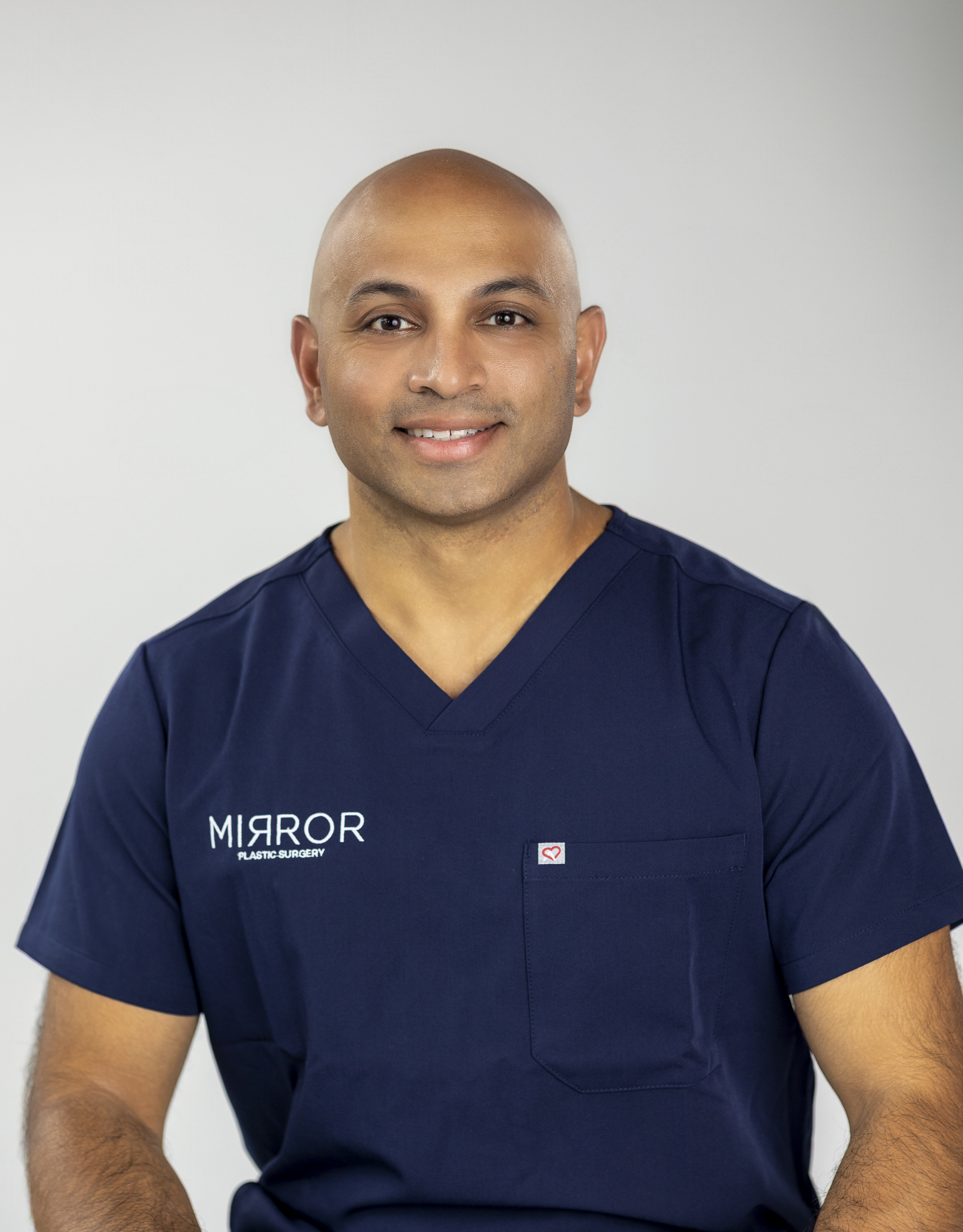
This depth of training, recognized by Newsweek naming him one of America’s Best Plastic Surgeons in 2025 for the second consecutive year, shapes the conservative protocols at Mirror Plastic Surgery. The practice maintains a low daily surgical volume and treats pre-operative ultrasound as a standard part of planning rather than an optional add-on.
Arrange your personalized risk assessment with Dr. Akash at Mirror Plastic Surgery in St. Petersburg, FL, to receive a detailed anatomical review and honest discussion of your risk profile.
Frequently Asked Questions
Is numbness normal after buccal fat removal?
Mild numbness or altered sensation in the cheek during the first one to two weeks is common and usually reflects local anesthetic effects and post-operative swelling rather than nerve injury. True nerve-related numbness, especially when it follows a distinct distribution along the cheek or lip, persists beyond two to three weeks without improvement, or is accompanied by burning or electric sensations, warrants evaluation by your surgeon. At Mirror Plastic Surgery, patients receive direct post-operative access to Dr. Akash so that any concerning symptom is assessed promptly rather than filtered through a call center.
What is the difference between temporary and permanent facial nerve damage after buccal fat removal?
Temporary nerve injury, or neuropraxia, involves a short-term disruption of nerve conduction without structural damage to the axon. The nerve remains anatomically intact and follows the recovery trajectory described in the timeline above. Permanent injury involves physical disruption of the axon or the nerve itself and is far less common when surgeons use meticulous technique.
The key prognostic indicator is trajectory. Temporary injuries improve steadily week over week, while injuries that plateau or worsen after the first month require specialist evaluation. The dual nerve supply to the cheek muscles discussed earlier means that even partial buccal-branch injuries rarely produce complete, permanent functional loss.
How does low surgical volume reduce nerve damage risk in buccal fat removal?
Surgeon fatigue and divided attention contribute to operative complications more often than many patients realize. A surgeon performing five to ten procedures per day has less time for pre-operative review, less mental bandwidth during each case, and a team that is stretched across multiple rooms.
Mirror Plastic Surgery follows a low-volume model so that Dr. Akash and the entire clinical team remain fully focused on a single patient at a time, from pre-operative ultrasound mapping through the final post-operative check. This concierge-style approach reduces the conditions under which technical errors, including inadvertent traction on the buccal branches, are most likely to occur.
Can buccal fat removal be safely combined with other facial procedures?
Combining procedures increases operative time, anesthetic exposure, and the complexity of tissue handling, which can elevate complication risk. Mirror Plastic Surgery evaluates each combination individually and advises against stacking procedures when doing so would compromise safety or extend operating time beyond what is appropriate for the patient’s health status.
When buccal fat removal is combined with a procedure such as a facelift, the anatomical exposure can allow more direct visualization of the buccal branches, which may be protective in experienced hands. That benefit depends on a surgeon with deep facial anatomy expertise. Dr. Akash reviews the risk-benefit balance of any combination during the hour-long consultation that is standard at Mirror Plastic Surgery.
What should I do if I think I have facial nerve damage after buccal fat removal performed elsewhere?
Patients who suspect nerve damage should document symptoms with dated photographs and video of facial movements such as smiling, puffing cheeks, and pursing lips, then contact a board-certified plastic surgeon with facial surgery fellowship training as soon as possible. Early evaluation matters because the window for certain interventions, including nerve monitoring and targeted physical therapy, is time-sensitive.
Dr. Akash sees patients for second-opinion consultations and provides an objective anatomical assessment, a realistic prognosis based on the injury timeline, and a management plan. Mirror Plastic Surgery is located at 780 4th Ave S, St. Petersburg, FL 33701, and can be reached at 727-361-6515.
Conclusion: Balancing Aesthetic Goals With Nerve Safety
Buccal fat removal carries a small but real risk of buccal-branch facial nerve injury, quantified at a low rate in the most current systematic review. The anatomy is unforgiving because the buccal branches cross directly over the surgical target, yet the redundant innervation of the cheek muscles means that most injuries, when they occur, are transient and resolve within a few months.1 Permanent paralysis remains rare with careful technique.1
Surgeon selection and practice model sit squarely within a patient’s control. Fellowship training in facial anatomy, a conservative intraoral blunt-dissection technique, pre-operative ultrasound mapping, and the low-volume practice model described earlier collectively represent the current evidence-based standard for minimizing nerve risk. These elements function as core safeguards that every patient undergoing buccal fat removal deserves.
Book a consultation with Dr. Akash at Mirror Plastic Surgery in St. Petersburg, FL, to receive a thorough anatomical evaluation, a clear risk discussion, and a surgical plan built around your safety first.
Medical Disclaimer: This article is intended for general informational purposes only and does not constitute medical advice, diagnosis, or treatment. Individual anatomy, health status, and surgical outcomes vary. Consult a board-certified plastic surgeon for personalized guidance regarding any procedure or post-operative concern.
1 Results may vary from person to person. Editorial content, before and after images, and patient testimonials do not constitute a guarantee of specific results.