
Written by: Dr. Akash Chandawarkar, Board Certified Plastic Surgeon, Mirror Plastic Surgery | Last updated: July 9, 2026
Key Takeaways for Buccal Fat Removal Risks
- Buccal fat pad removal is permanent and removes a fat pad that does not grow back, which creates lifelong volume loss that can cause premature hollowing and a skeletal look with age.1
- Documented complications include facial nerve injury, salivary duct damage, pseudo-jowling, and altered facial movement, with some problems becoming visible only in the 40s or 50s.
- Short-term effects such as swelling and temporary numbness usually resolve within weeks, but permanent structural changes cannot be reversed and revision options are limited to fat grafting or fillers.1
- Patients with naturally thin faces, low BMI, skin laxity, or age over 45 are generally poor candidates, because the procedure may speed up visible aging instead of improving contour.
- At Mirror Plastic Surgery, Dr. Akash provides individualized anatomical assessments to help patients weigh risks and explore safer contouring alternatives. Schedule a consultation to discuss your options.
Overall Complication Profile for Buccal Fat Removal
Buccal fat pad removal carries complications that range from short-lived swelling to permanent structural change. Because the buccal fat pad does not regenerate after surgical excision, any volume deficit created during surgery lasts for life. The table below organizes documented risk categories by permanence and clinical severity.
| Risk Category | Permanence | Severity | Notes |
|---|---|---|---|
| Premature facial hollowing / skeletalization | Permanent | High | Accelerates with natural age-related fat atrophy |
| Facial nerve injury / motor weakness | Temporary to permanent | High | Proximity of buccal branch during dissection |
| Salivary duct injury / parotid complications | Temporary to permanent | Moderate–High | May require additional treatment for saliva-related issues |
| Infection / asymmetry / prolonged swelling | Temporary (usually) | Low–Moderate | Managed with standard postoperative protocols |
Buccal Fat Removal Complication Rates and Types
Building on the risk categories outlined above, peer-reviewed literature provides more detail on each complication type and its clinical impact. Severity-ranked from most to least consequential:
- Permanent volume loss and skeletalization: Aggressive buccal fat reduction can create a cadaveric or skeletal facial appearance in the 40s and 50s as natural fat atrophy compounds the surgical deficit.1
- Pseudo-jowling: Loss of structural support allows skin to drape loosely over the hollowed midface, which creates pseudo-jowls that make patients look older.
- Facial nerve injury: Temporary facial weakness is a documented risk because the buccal branch of the facial nerve lies close to the dissection field.
- Salivary duct injury: Injury to the salivary duct can cause swelling and functional problems that sometimes need targeted treatment.
- Altered facial dynamics: Buccal fat removal can change how the face moves during expression, because the fat pads assist with everyday movements such as smiling and speaking.
- Accentuated adjacent hollowness: Removal can exaggerate preexisting hollowness in nearby areas such as the temples, which disrupts overall facial balance.
Schedule your anatomical assessment with Dr. Akash before making any decision about buccal fat removal.
Short-Term Versus Permanent Buccal Fat Risks
Short-term complications such as swelling, bruising, temporary numbness, and minor asymmetry usually resolve within four to eight weeks as intraoral incisions heal and postoperative edema subsides.1 Temporary numbness or altered cheek sensation is one of the most commonly reported transient effects.
Permanent risks follow a slower timeline. Buccal fat pads are among the facial fat pads that resist early age-related loss, so surgical removal eliminates a structural reserve that would normally buffer natural volume decline. Because of this permanent volume loss, hollowing, pseudo-jowling, and skeletalization often become clinically apparent only in the patient’s 40s or 50s, which makes the causal link easy to underestimate at the time of surgery.
Facial Nerve and Salivary Duct Injury Details
The buccal branch of the facial nerve and the parotid (Stensen’s) duct both pass through the corridor used for buccal fat pad excision. Risks specific to buccal fat removal include temporary facial weakness and salivary duct injury. In most cases, nerve-related weakness is transient and improves as neuropraxia heals. Permanent motor deficits can occur when the nerve is cut rather than compressed.
Salivary duct injuries range from self-limiting inflammation to fistula formation that needs procedural intervention. Surgeon familiarity with the precise anatomy in this region remains the main factor that influences injury risk.
Premature Aging and Long-Term Facial Hollowing
Removing buccal fat in one’s twenties or thirties can speed up natural facial volume loss and cause premature hollowing, deeper nasolabial folds, increased jowling and sagging, and an overall gaunt appearance with age.1 Because the removed fat cannot return, this change in support often becomes more obvious over time.
Patients with early skin laxity who undergo buccal fat removal may develop a deflated look with loose, hanging skin that accelerates visible aging instead of improving contour. The structural support deficit can also disrupt nearby compartments, and buccal fat removal may highlight preexisting hollowness in areas such as the temples.
Patient Profiles That Should Avoid Buccal Fat Removal
Clinical contraindications span anatomical, medical, and behavioral factors. The following patient profiles represent situations where buccal fat removal is inadvisable or requires exceptional caution:
- Naturally thin or narrow faces: Patients with a naturally thin face or a tendency to lose facial fat with aging should avoid buccal fat removal, because it can create a skeletal or aged appearance, especially after age 40 or 50.
- Low BMI: Patients with low BMI or naturally lean faces face a high risk of a gaunt rather than sculpted appearance as age-related volume loss continues.
- Age over 45 with skin laxity: Patients over 45 who already show significant skin laxity usually benefit more from lifting protocols than from buccal fat removal, which can worsen sagging.
- Apparent cheek fullness from tissue descent: In patients over 50, visible cheek volume may reflect descended facial tissue, so a facelift often suits them better than isolated buccal fat removal.
- Men with expected age-related volume reduction: Indications in men are more selective because male cheek volume often diminishes naturally with testosterone changes and aging, so many men with a round face at 20 will have a leaner face by 35 to 40 without surgery.
- Active oral infections or uncontrolled coagulation disorders: Contraindications include active oral infections, uncontrolled coagulation disorders, and decompensated diabetes.
- Smokers: Patients who cannot stop smoking for two weeks before and after surgery should avoid buccal fat removal.
- Unrealistic expectations: Patients who expect buccal fat removal to fix wrinkles, loose skin, or jowls are not good candidates.
Revision Difficulty and 10-Year Buccal Fat Outcomes
Unlike dermal fillers, excised buccal fat pads cannot be replaced. Revision options include fat grafting or soft-tissue fillers to partially restore volume, but these methods do not match the structural behavior of native buccal fat. Fat grafting has variable resorption, and repeated filler injections in a hollowed midface can create irregular contour.
Over a 10-year horizon, aggressive buccal fat reduction carries a major risk of skeletalization, which can create a cadaveric or skeletal facial appearance in the 40s and 50s as natural fat atrophy progresses. The irreversibility of the procedure and the complexity of revision make careful preoperative patient selection the single most important safety factor.
When Buccal Fat Patients Should Seek Urgent Care
Patients who have undergone buccal fat pad removal should seek prompt medical evaluation if they experience any of the following:
- Rapidly expanding facial swelling or a fluctuant mass that suggests abscess formation
- Persistent or worsening facial asymmetry beyond four weeks after surgery
- Inability to close the eye or marked drooping of the corner of the mouth, which may indicate facial nerve injury
- Purulent intraoral discharge or fever that suggests wound infection
- Swelling in the parotid region that increases with eating, which may indicate salivary duct obstruction or fistula
Practical Patient Considerations in Consultation
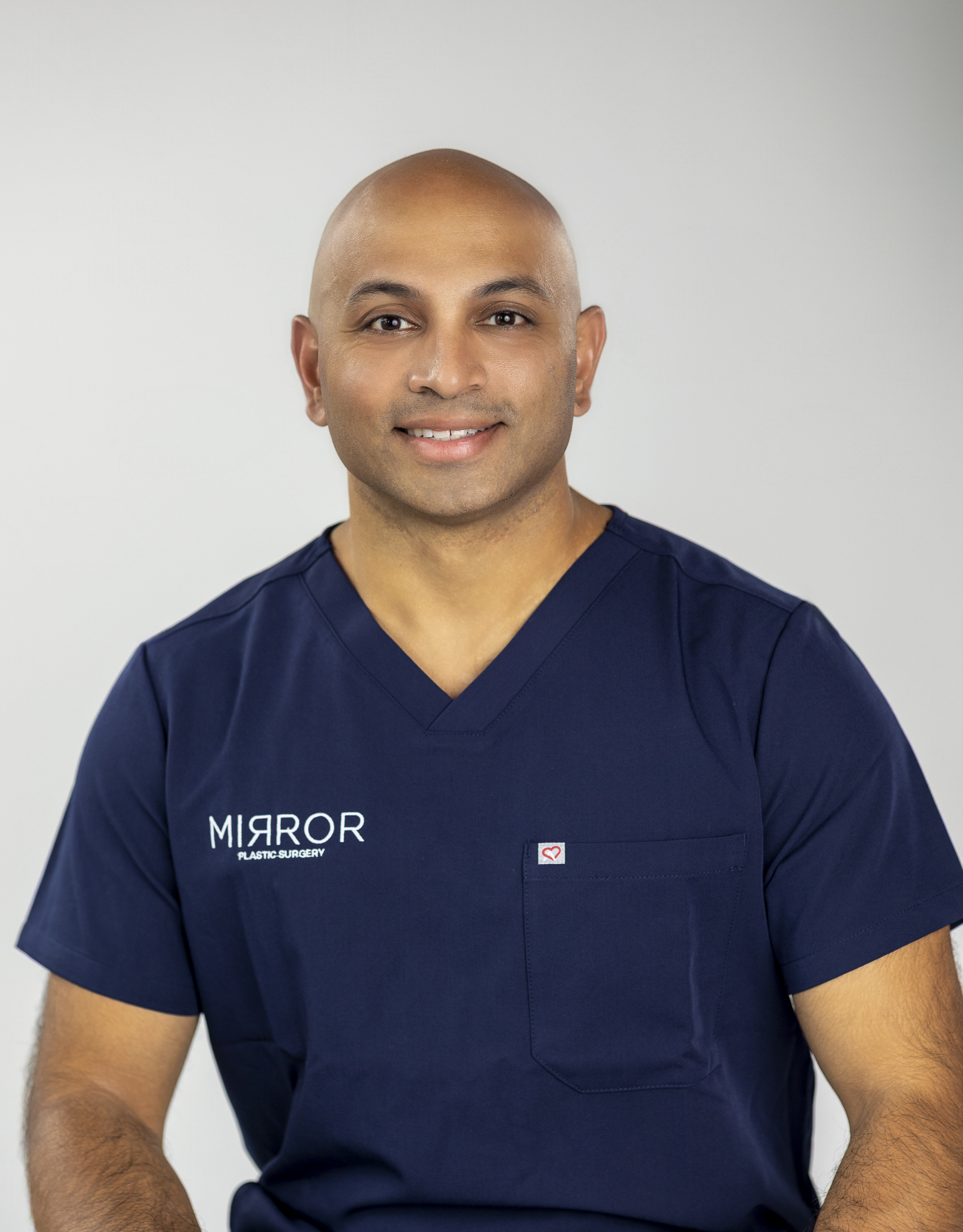
Patients considering buccal fat removal benefit from a consultation built around their individual anatomy, not a generic procedure menu. At Mirror Plastic Surgery, Dr. Akash, named to Newsweek’s America’s Best Plastic Surgeons list two years in a row and trained at Johns Hopkins, Harvard Medical School, and the Manhattan Eye, Ear and Throat Hospital (MEETH), conducts up to an hour-long assessment that reviews facial fat compartment distribution, skin laxity, skeletal structure, BMI trajectory, and long-term aging projections before making any recommendation.
Mirror Plastic Surgery’s guiding principle of safety first, function second, and aesthetics third applies directly to buccal fat decisions. A conservative approach that focuses on balance and proportion is critical when removing any volume. In many cases, alternative contouring strategies such as facial fat transfer, minimally invasive lifting, or structural augmentation provide the desired definition without the permanence risk of buccal excision.
Questions worth raising in a buccal fat removal consultation should address both current anatomy and long-term change. Start with projected aging: What is my facial volume likely to look like at age 50 based on my current structure? This projection clarifies whether present fullness may soften naturally with time. Next, clarify the source of fullness: Is my cheek fullness caused by buccal fat or by descended tissue? That answer guides whether removal or lifting is more appropriate. Finally, explore non-surgical and alternative options: What are the alternatives, and how do their long-term outcomes compare to excision?
Get personalized answers to these questions with the depth and anatomical specificity they require.
Current Evidence Limits and Ongoing Debate
Long-term prospective data on buccal fat pad removal outcomes beyond five years remains limited in the peer-reviewed literature. Most published evidence consists of case series and expert opinion rather than randomized controlled trials, which restricts the precision of complication rate estimates. Individual anatomical variability, including differences in buccal fat pad volume, adjacent compartment distribution, and skin elasticity, means that population-level risk figures may not apply directly to a specific patient.
Surgeons also continue to debate what volume qualifies as conservative versus aggressive removal. Some report approximately 2.6 milliliters per side (range 1.9–3.6 mL) as an average excision volume, while others favor partial removal guided by intraoperative assessment. These gaps highlight the value of individualized anatomical evaluation over protocol-driven approaches.
Frequently Asked Questions About Buccal Fat Removal
Is buccal fat pad removal permanent, and can it be reversed?
Buccal fat pad removal is permanent. The volume deficit does not return with weight gain. Revision options such as fat grafting or soft-tissue fillers can soften hollowing but do not match the structural properties of native buccal fat. Because the procedure cannot be undone, careful patient selection and a conservative surgical plan matter greatly.
What does buccal fat removal look like 10 years later?
Long-term appearance depends heavily on the patient’s starting anatomy and how much fat was removed. Appropriate candidates who had conservative removal may maintain a balanced contour. Patients with thin faces, low BMI, or early skin laxity at the time of surgery often develop progressive hollowing, pseudo-jowling, and a skeletal midface as natural fat atrophy compounds the surgical deficit. As noted earlier, this delayed change typically becomes clear in the 40s or 50s and is a common source of long-term regret.
What are the signs of facial nerve injury after buccal fat removal, and are they permanent?
Signs of facial nerve involvement include an asymmetric smile, inability to fully elevate the corner of the mouth, drooping of the lower eyelid, or generalized weakness on the operated side. In most cases, these symptoms reflect neuropraxia, which is a compression or stretch injury, and they resolve within weeks to months as the nerve recovers. Permanent motor deficits can occur when the buccal branch is cut during dissection, so anatomical precision and surgeon experience are key risk-reduction factors. Any new or worsening facial asymmetry after surgery needs prompt evaluation.
Who is not a good candidate for buccal fat removal?
Poor candidates include patients with naturally thin or narrow faces, low body weight, significant skin laxity, or a family history of lean facial aging. Patients over 45 with visible tissue descent usually benefit more from lifting procedures than from volume reduction. Men represent a particularly selective group because testosterone-related facial leaning often occurs naturally through the 30s, which makes early surgical reduction more likely to over-correct.
Medical contraindications include active oral infections, uncontrolled bleeding disorders, decompensated diabetes, and active smoking. Patients whose main concern is wrinkles, loose skin, or jowls are not appropriate candidates, because buccal fat removal does not improve skin quality or tissue position.
What are the alternatives to buccal fat removal for facial contouring?
Several alternatives create midface definition without permanent volume loss. Facial fat transfer repositions a patient’s own fat to restore structural support and improve contour at the same time. Minimally invasive lifting procedures treat tissue descent that many patients mistake for excess buccal volume. Structural cheek augmentation with implants or biostimulatory fillers can enhance cheek projection and create the look of a more defined lower face without removing tissue.
In some patients, a combination of these approaches produces more harmonious and age-resilient results than buccal excision alone. The right strategy depends on an individualized anatomical assessment that considers current facial volume distribution, skin quality, and projected aging patterns.
Discuss your facial contouring options with Dr. Akash at Mirror Plastic Surgery in St. Petersburg to determine whether buccal fat removal suits your anatomy or whether safer alternatives fit better.
1 Results may vary from person to person. Editorial content, before and after images, and patient testimonials do not constitute a guarantee of specific results.