
Written by: Dr. Akash Chandawarkar, Board Certified Plastic Surgeon, Mirror Plastic Surgery | Last updated: July 9, 2026
Key Safety Takeaways for Tampa Breast Augmentation
- Revision surgery is a significant long-term risk for breast augmentation patients, so careful surgeon selection directly protects your results.1
- An 8-step verification process based on ABPS certification, facility accreditation, case volume, and safety protocols helps you evaluate surgeons objectively.
- High daily surgical volume, rushed consultations, and lack of hospital privileges are red flags that can compromise safety and outcomes.1
- Transparent complication management, bacterial-contamination protocols, and a safety-first surgical philosophy distinguish qualified surgeons from high-volume practices.
- Mirror Plastic Surgery and Dr. Akash meet every safety criterion in this guide; schedule a one-hour consultation to verify each criterion yourself before making your decision.
How to Confirm a Tampa Plastic Surgeon Is Truly Board Certified
The American Board of Plastic Surgery (ABPS) is the only board recognized by the American Board of Medical Specialties (ABMS) for cosmetic and plastic surgery, making it one of just 24 ABMS member boards. Surgeons certified by the American Board of Cosmetic Surgery, the American Board of Facial Plastic and Reconstructive Surgery, or similar non-ABMS bodies cannot legally or accurately call themselves board-certified plastic surgeons.
Earning ABPS certification requires extensive surgical training followed by successful completion of written and oral examinations. This rigorous process confirms that a surgeon has mastered both the technical skills and the knowledge base needed for safe plastic surgery. Cosmetic surgery fellowships that lack accreditation do not satisfy these requirements, so surgeons who complete only those programs cannot claim ABPS certification.
Verification is straightforward. Search the surgeon’s name on the ABMS Certification Matters website and confirm an active ABPS certificate. Then confirm an active Florida state license through the Florida Department of Health’s online lookup tool. Dr. Akash holds active ABPS board certification and is licensed in Florida, New York, and Pennsylvania. He has been named to Newsweek’s America’s Best Plastic Surgeons list two years in a row, including 2025.
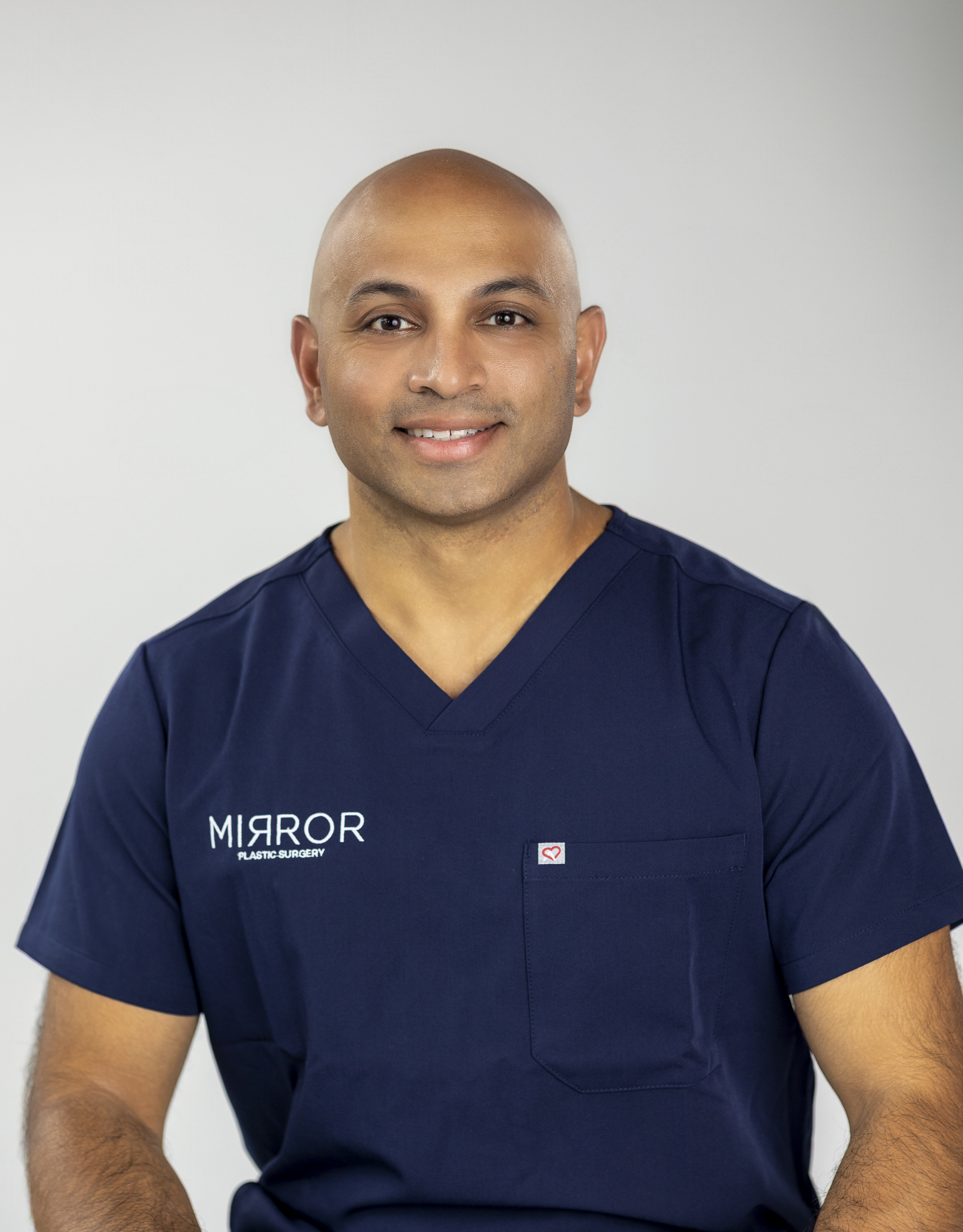
Verify Dr. Akash’s credentials in person during a consultation where you can review his ABPS certification, state licenses, and hospital privileges in detail.
Essential Questions for Your Tampa Breast Augmentation Consultation
Now that you understand the importance of ABPS certification, the next phase is to verify additional safety markers during your consultation. Steps 1 through 4 of the verification checklist focus on credentials, facility safety, case volume, and emergency access. Bring the following questions to every consultation.
Step 1: Confirm ABPS Certification
- “Are you certified by the American Board of Plastic Surgery, and can I verify that on the ABMS website?”
- “How many years of accredited plastic surgery residency did you complete, and where?”
Step 2: Confirm an Accredited Surgical Facility
The American Society of Plastic Surgeons recommends that plastic surgery procedures be performed only in accredited, state-licensed, or Medicare-certified facilities. Ask:
- “Which accrediting body certifies the facility where you perform breast augmentation?”
- “Can you provide the facility’s accreditation number?”
Step 3: Ask About Annual Case Volume and Revision Rates
- “How many breast augmentations do you perform per year?”
- “What is your personal revision rate, and what are the most common reasons for revision in your practice?”
- “How many surgeries do you perform in a single day?”
Step 4: Confirm Hospital Privileges
Hospital privileges serve as an independent safety marker because hospitals credential surgeons based on documented training and competence for specific procedures. Ask:
- “Do you hold active hospital privileges for breast surgery, and at which Tampa Bay hospital?”
- “If a complication arises after my procedure, what is your protocol for hospital transfer and management?”
These first four verification steps establish your surgeon’s core credentials, facility standards, and emergency preparedness. The remaining four steps examine daily practice patterns that separate safety-focused surgeons from high-volume operations.
Practice Red Flags: How High Volume Can Undermine Safety
Steps 5 through 8 address implant protocols, complication management, surgical philosophy, and daily case limits, which are the areas where high-volume practices most often cut corners.
Step 5: Implant Selection and Bacterial-Contamination Protocols
Ask the surgeon to explain their implant selection rationale and the specific steps taken to minimize bacterial contamination during pocket creation. Meticulous technique during implant placement is directly associated with lower rates of capsular contracture, one of the most commonly reported complications in FDA post-approval studies of silicone breast implants.1 A surgeon who cannot clearly describe a contamination-prevention protocol raises a safety concern.
Step 6: Post-Operative Complication Management
Ask how the practice handles complications after discharge. A surgeon without hospital privileges has no direct pathway to manage a serious post-operative event. FDA post-approval data show that implant removal occurs in long-term studies, so long-term management is an expected part of care, not an optional extra.
Step 7: Safety–Function–Aesthetics Philosophy
A surgeon who talks only about implant size and incision placement, without discussing anatomy, tissue quality, or functional outcomes, is prioritizing appearance over safety. Ask, “How do you sequence safety, function, and aesthetics in your surgical planning?” The answer shows whether the practice follows a principled framework or a volume-driven approach.
Step 8: Daily Surgery Limits
Ask directly, “How many surgeries do you perform on a typical operating day?” Practices performing five to ten surgeries daily cannot provide the same level of pre-operative, intra-operative, and post-operative attention as a practice that limits itself to one or two cases per day. High daily volume creates a cascade of safety risks, including cumulative fatigue for the team, compressed scheduling that encourages rushed decisions, and divided attention across multiple patients. These risk factors build on each other, and no marketing claim can cancel out their impact on patient safety.
Specific Red Flags When Choosing a Tampa Breast Augmentation Surgeon
The following patterns indicate elevated risk regardless of a practice’s marketing or branding.
- Rushed consultations under 30 minutes that do not include a thorough anatomical assessment or discussion of your medical history.
- Pressure to combine multiple procedures without a clear, evidence-based rationale, since combining too many procedures at once can sharply increase complication rates.
- No verifiable hospital privileges at a Tampa Bay hospital for breast surgery.
- Opaque communication about revision rates, complication protocols, or implant selection criteria.
- Non-ABPS certification presented as equivalent to ABPS board certification.
- Facility accreditation that cannot be independently verified through a named accrediting body.
Experience a one-hour consultation with Dr. Akash that addresses every red flag on this list before any surgical decision is made.
Printable Safety Checklist: Score Your Surgeon
Use this checklist during or after each consultation. A fully qualified Tampa breast augmentation surgeon should satisfy all eight criteria.
- ABPS Certification Verified – Confirmed on the ABMS Certification Matters website. (Yes / No)
- Accredited Surgical Facility – Facility accreditation confirmed by name and accrediting body. (Yes / No)
- Transparent Case Volume and Revision Rate – Surgeon disclosed annual breast augmentation volume and personal revision rate. (Yes / No)
- Active Hospital Privileges – Surgeon holds privileges at a named Tampa Bay hospital for breast surgery. (Yes / No)
- Documented Bacterial-Contamination Protocol – Surgeon articulated specific steps to minimize capsular contracture risk during implant placement. (Yes / No)
- Clear Post-Operative Complication Protocol – Practice has a defined pathway for managing complications, including hospital transfer if needed. (Yes / No)
- Safety-First Surgical Philosophy – Surgeon explicitly sequences safety and function before aesthetics in their planning framework. (Yes / No)
- Limited Daily Case Volume – Surgeon performs no more than one to two surgeries per day. (Yes / No)
Scoring: Eight out of eight is the only acceptable result for a procedure of this magnitude. Any “No” answer calls for deeper questions or a second opinion.
Frequently Asked Questions
What are the most recent national statistics on breast augmentation complication rates?
FDA-mandated post-approval studies of silicone breast implants provide the most comprehensive long-term data available. In the Core study of Natrelle silicone implants, outcomes such as reoperation, rupture, and removal have been tracked over 10 years. The most commonly reported complications across all cohorts include capsular contracture, breast pain, swelling, asymmetry, wrinkling, and implant malposition. Patient satisfaction is typically high at the 10-year mark, which suggests that outcomes depend heavily on surgical quality and appropriate patient selection rather than implant brand alone.1 These statistics reinforce that surgeon verification, not implant marketing, is the main safety variable you control.
How does ABPS board certification differ from other certifications?
The American Board of Plastic Surgery is the only board recognized by the American Board of Medical Specialties for plastic and cosmetic surgery. The main section of this guide explains that ABPS certification requires extensive accredited training and successful written and oral examinations. The specific requirements include a minimum of six years of accredited surgical training, at least three of which must be in plastic surgery, building on the overview discussed earlier. Surgeons certified by non-ABMS bodies, such as the American Board of Cosmetic Surgery or the American Board of Facial Plastic and Reconstructive Surgery, follow different, often shorter training pathways and are not recognized as board-certified plastic surgeons under ABMS standards. ABPS-certified surgeons must also operate only in accredited facilities and complete ongoing continuing medical education, requirements that do not apply to non-ABMS certifications. For any Tampa surgeon, ABPS certification represents the minimum acceptable standard.
What standards apply to accredited surgical facilities?
Surgical facility accreditation is granted by independent bodies such as the Accreditation Association for Ambulatory Health Care (AAAHC), the American Association for Accreditation of Ambulatory Surgery Facilities (AAAASF), or The Joint Commission. Accreditation requires facilities to meet standards for equipment maintenance, staff credentialing, emergency protocols, infection control, and anesthesia safety. Beyond the American Society of Plastic Surgeons recommendation noted in Step 2, the organization enforces this standard as a membership requirement, so surgeons who ignore it risk losing ASPS affiliation. Patients should ask for the specific accrediting body and confirm the facility’s status independently. An unaccredited facility operating outside these standards has no external oversight, which creates an unnecessary risk for an elective procedure.
What annual case volume is associated with safer outcomes?
No single universally agreed-upon annual case threshold exists in the published literature for breast augmentation specifically. The broader principle of focused, unhurried surgical care is well established across surgical specialties. Practices that limit daily operating volume to one or two cases per day allow the surgeon, anesthesiologist, and nursing staff to maintain full concentration on each patient from preparation through recovery. Practices performing five to ten surgeries daily compress preparation time, increase team fatigue, and reduce the window for individualized intra-operative decisions. When you evaluate a Tampa surgeon, daily case volume is a more actionable and transparent metric than annual totals, and it is a question every prospective patient should ask directly.1
Conclusion: Put Safety First When Choosing a Tampa Surgeon
The 8-step verification process in this guide, which covers ABPS certification, accredited facilities, transparent case volume, hospital privileges, contamination protocols, complication management, a safety-first philosophy, and limited daily surgeries, gives you a clear, scorable framework for a decision with long-term consequences. Marketing claims, before-and-after galleries, and price comparisons cannot replace this type of verification.
Dr. Akash at Mirror Plastic Surgery satisfies every criterion on this checklist. His training spans the Harvard-MIT Division of Health Sciences and Technology, a seven-year integrated plastic and reconstructive surgery residency at Johns Hopkins University, and an aesthetic surgery fellowship at the Manhattan Eye, Ear and Throat Hospital (MEETH), which represents one of the most rigorous training sequences available to any plastic surgeon in the United States. His credentials, including the ABPS certification and multi-state licensure noted earlier, are complemented by hospital privileges for breast surgery, a limited daily case volume of one to two surgeries, and prior selection to testify before the FDA on breast implant safety. His background also includes the Newsweek recognition mentioned earlier. Mirror Plastic Surgery follows a concierge medicine model in which every consultation runs up to one hour and every surgical plan is built on the sequence of safety first, function second, and aesthetics third.
Schedule your consultation at Mirror Plastic Surgery in St. Petersburg and bring your completed 8-step checklist. Every question on it has a clear, verifiable answer you can confirm in person.
1 Results may vary from person to person. Editorial content, before and after images, and patient testimonials do not constitute a guarantee of specific results.