
Written by: Dr. Akash Chandawarkar, Board Certified Plastic Surgeon, Mirror Plastic Surgery | Last updated: July 9, 2026
Key Safety Steps Before Your Breast Augmentation
- Confirm facility accreditation before you evaluate any surgeon or schedule a procedure.
- Use AAAASF, Joint Commission, or AAAHC databases to verify active accreditation, then ask to see the certificate on site.
- Make sure a board-certified physician anesthesiologist provides or directly supervises anesthesia, with ACLS-certified staff on duty.
- Choose an ABPS-certified surgeon with active hospital privileges who limits daily surgical volume to one or two cases.
- Book a consultation with Dr. Akash at Mirror Plastic Surgery to review accreditation documents and anesthesia protocols in person.
Confirm Accreditation Before You Consider Any Surgeon
AAAASF grants accreditation only after a facility meets 100% of its standards, verified through a rigorous onsite survey. Facilities also complete periodic self-surveys, formal onsite re-surveys, and quarterly peer review. Accredited ambulatory surgery centers consistently maintain low complication and mortality rates.1
- Search the AAAASF facility locator by ZIP code or facility name to confirm active accreditation.
- Use the Joint Commission Quality Check database to verify Joint Commission accreditation or Medicare-deemed status.
- Confirm state licensure through the Florida Board of Medicine license search for any Tampa Bay area facility.
- Ask the facility coordinator to show you the physical accreditation certificate displayed in the waiting or consultation area.
- Request the facility’s most recent survey date and confirm there has been no lapse in status.
Red flags that disqualify a facility immediately:
- Operating in an unaccredited surgical facility, which may indicate restricted hospital or surgery center privileges for the surgeon.
- Evasiveness about accreditation status, emergency protocols, or anesthesia staffing during consultation.
- Spa or salon settings offering surgical procedures without posted accreditation documentation.
- Facilities that lack a visible accreditation certificate in waiting or consultation areas.
Confirm Board-Certified Anesthesiologist Oversight
Once you verify accreditation, focus on who will manage your anesthesia. AAAASF accreditation guarantees the presence of registered nurses and trained anesthesia professionals monitoring patient vitals. Natural breast augmentation, whether implant-based or fat-transfer, usually involves general anesthesia or deep sedation, so anesthesia credentials directly affect safety.
- Ask directly whether the anesthesiologist is board-certified by the American Board of Anesthesiology.
- Verify the anesthesiologist’s license through the Florida Board of Medicine or the relevant state medical board.
- Confirm whether a CRNA participates and whether a physician anesthesiologist provides direct supervision throughout the case.
Red flags:
- CRNAs administering anesthesia without physician oversight for procedures that require general anesthesia.
- Failure to use qualified anesthesiologists in settings that otherwise follow accredited standards.
- No clear answer during consultation about who will administer anesthesia and their specific credentials.
Check Written Emergency Transfer and Staffing Protocols
A surgical facility that lacks a formal hospital transfer agreement for serious complications shows gaps in emergency preparedness. Every accredited outpatient facility must keep a documented plan for transferring a patient to a hospital if a life-threatening complication occurs.
Key questions to ask before booking:
- Whether the facility has a signed transfer agreement with a nearby hospital.
- Which hospital receives transfers and how far away it is.
- Whether at least one ACLS-certified staff member remains on duty during every procedure.
- Which emergency equipment, such as a crash cart, defibrillator, and malignant hyperthermia protocol, is maintained on site.
Red flags:
- No written transfer agreement or inability to name the receiving hospital.
- Absence of at least one ACLS-certified staff member on duty during procedures.
- No dedicated recovery area monitored by qualified nursing staff after the procedure.
Verify ABPS Certification and Hospital Privileges for Your Surgeon
Patients protect themselves by choosing a surgeon certified by the American Board of Plastic Surgery (ABPS). This certification requires completion of an accredited plastic surgery residency, rigorous written and oral examinations, and ongoing continuing education.
- Verify ABPS certification directly at abplasticsurgery.org.
- Use the ASPS surgeon finder to confirm active membership, which requires ABPS certification.
- Ask the surgeon’s office whether the surgeon holds active hospital privileges for breast augmentation at a local hospital. Hospital privileges confirm that an independent credentialing committee has reviewed the surgeon’s training and outcomes.
Red flags:
- Surgeons who do not hold hospital privileges or who avoid operating in accredited surgical facilities.
- Certification from a non-ABMS-recognized board presented as equivalent to ABPS certification.
Assess Daily Surgical Volume and Concierge-Level Attention
Boutique practices that deliberately restrict daily surgical volume create safer conditions for patients. When a surgeon limits cases to one or two per day, the surgeon, anesthesiologist, and nursing team maintain full focus on each patient instead of rotating through a packed schedule. This focus supports unhurried planning, detailed consultations, and consistent long-term follow-up with the same team.
Red flags for high-volume mills:
- Five to ten surgeries scheduled per day for a single surgeon.
- Consultations lasting fewer than 20 minutes with no anatomical discussion.
- The 2022 Aesthetic Surgery Journal analysis of BBL-related mortality in South Florida found 25 fat emboli deaths from 2010–2022, with 14 occurring after safety warnings, based on autopsy anatomic findings.
Confirm Fat-Transfer Experience and Specialized Equipment
Natural breast augmentation with autologous fat grafting requires equipment and technique that go beyond standard implant surgery. The Coleman technique, which uses manual low-pressure aspiration with 3 mm cannulas, centrifugation at 3,000 rpm for 3 minutes, and micro-aliquot injection of 0.1–0.5 mL per pass, remains the gold standard for fat graft survival. Surviving fat cells become permanent living tissue once they establish a blood supply.1
Equipment and experience checklist for fat-transfer breast augmentation:
- Centrifuge calibrated for Coleman-protocol processing on site.
- Ultrasound imaging available for pre-operative assessment of breast tissue and donor sites.
- Surgeon with documented fat-grafting case volume and published or verifiable outcomes.
- Facility equipped for liposuction harvesting under the same accredited standards as the augmentation itself.
- Typical volumes of 200–400 mL of purified fat per breast, with adequate donor-site assessment and staged sessions when needed.
Facility Disqualifiers You Should Not Ignore
Several conditions represent absolute disqualifiers regardless of surgeon reputation or price point:
- Non-accredited sites that lack the rigorous oversight described earlier, creating gaps in air quality, sterilization, and emergency protocols.
- No signed hospital transfer agreement.
- High daily surgical volume without a concierge or boutique model.
- Outdated or poorly maintained equipment and a disorganized environment that signal weak safety and infection control standards.
- Anesthesia administered by an unsupervised CRNA in a state that permits but does not require independent practice.
Many patients assume a strong surgeon reputation compensates for a substandard facility, yet facility infrastructure determines how well a team can respond during complications. Accredited facilities have the resources to stabilize patients quickly when problems arise. No individual surgeon can replace that system alone.
Dr. Akash’s Credentials and Mirror Plastic Surgery Safety Standards
Dr. Akash is board-certified by the American Board of Plastic Surgery and completed his plastic and reconstructive surgery residency at Johns Hopkins University. He then completed his aesthetic surgery fellowship at the Manhattan Eye, Ear and Throat Hospital (MEETH) and a Biodesign Innovation Fellowship at Stanford University after earning his M.D. from Harvard Medical School through the Harvard-MIT Health Sciences and Technology program. He has been named to Newsweek’s America’s Best Plastic Surgeons list two years in a row.
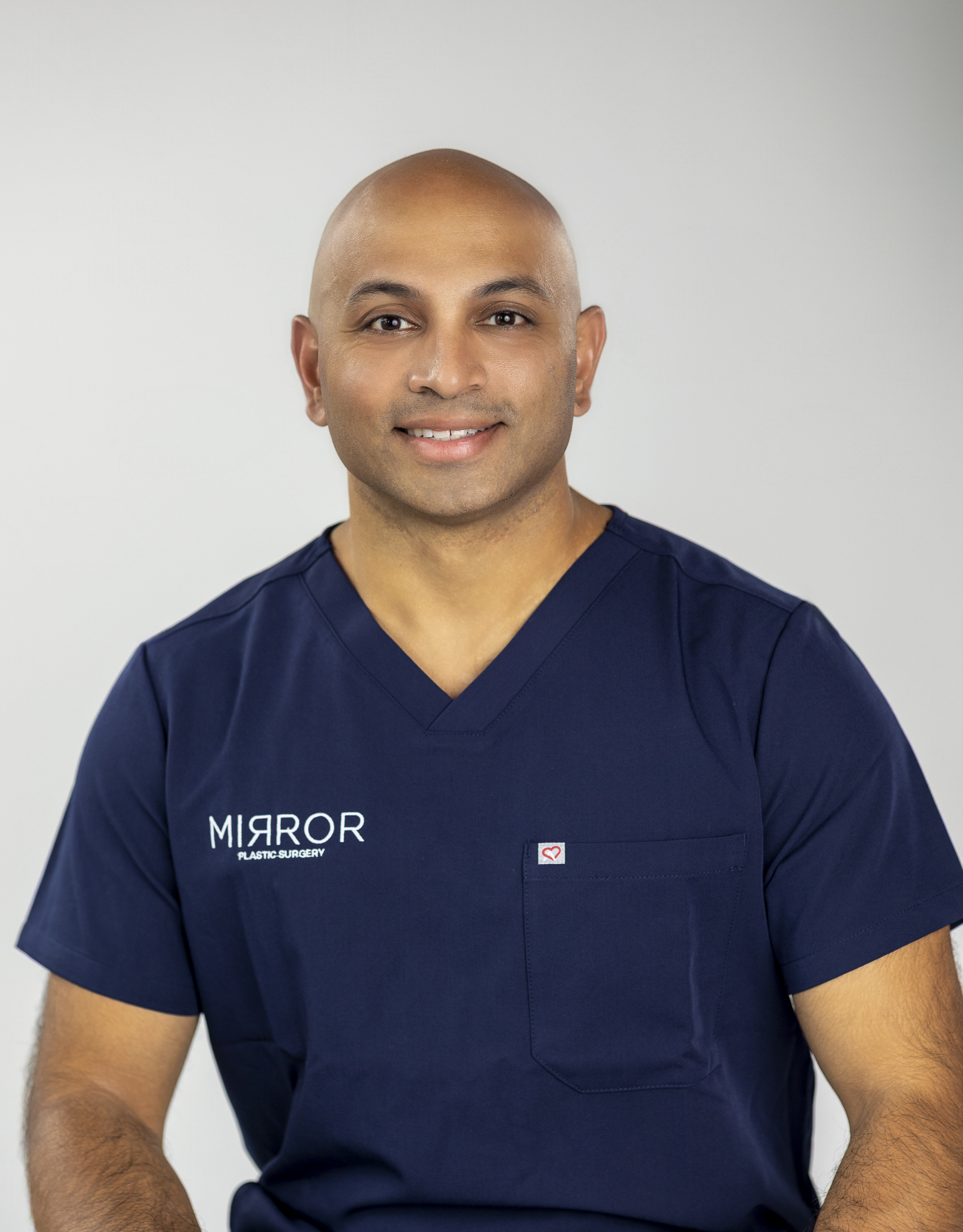
Mirror Plastic Surgery operates exclusively in an accredited surgical facility, employs board-certified physician anesthesiologists for every case, and maintains active hospital privileges for emergency transfer. The practice limits the schedule to one to two surgeries per day so the entire team can focus on each individual patient. Dr. Akash has also testified before the U.S. FDA on breast implant safety and serves on the advisory board for Motiva, a leading breast implant technology company.
Book a consultation with Dr. Akash to review Mirror Plastic Surgery’s full facility accreditation documentation and anesthesia protocols in person.
Printable Safety Checklist
Natural Breast Augmentation Facility Verification Checklist (2026)
- Confirm active AAAASF, Joint Commission, AAAHC, or Medicare-deemed accreditation via public database.
- Verify state licensure through the Florida Board of Medicine or relevant state board.
- Confirm board-certified physician anesthesiologist with direct supervision of any CRNA.
- Request signed hospital transfer agreement and name of receiving hospital.
- Verify ABPS certification at abplasticsurgery.org and active hospital privileges.
- Confirm surgeon performs 1–2 cases per day maximum in a concierge model.
- Confirm Coleman-technique fat processing equipment and ultrasound on site for fat-transfer cases.
- Confirm ACLS-certified staff on duty and emergency equipment, including crash cart and defibrillator, present.
- Confirm dedicated post-operative recovery area with qualified nursing monitoring.
How Facility Choice Shapes Long-Term Results
Accreditation influences outcomes long after surgery day. Strong infection control protocols in accredited facilities reduce the risk of capsular contracture after implant-based augmentation.1 Standardized anesthesia monitoring lowers post-operative complications that can delay healing and compromise fat graft survival.1
Fat grafts need a stable recovery period during the first three to six months while surviving cells establish a blood supply. Any post-operative complication linked to facility deficiencies can disrupt that process and increase fat resorption.1 Patients who choose accredited, low-volume practices also benefit from consistent follow-up with the same surgical team, which reduces revision rates and supports long-term well-being.1
Frequently Asked Questions
What is the difference between AAAASF, Joint Commission, and AAAHC accreditation?
All three organizations require outpatient surgical facilities to meet standards for staff qualifications, emergency preparedness, infection control, and equipment maintenance. AAAASF, founded in 1980 and physician-led, is widely regarded as the gold standard for office-based and ambulatory surgery facilities and requires surgeons to hold hospital privileges for every procedure performed. The Joint Commission accredits a broad range of healthcare organizations, including hospitals and ambulatory care centers, and is recognized for Medicare-deemed status. AAAHC focuses on ambulatory health care settings. Any of the three provides meaningful independent verification, as long as you confirm that accreditation is current and active through the public database before your procedure.
Is a board-certified anesthesiologist required, or can a CRNA handle anesthesia?
Natural breast augmentation, whether implant-based or via fat transfer, typically requires general anesthesia or deep sedation, which carries cardiovascular and respiratory risks. A board-certified physician anesthesiologist completes medical school plus at least four years of anesthesiology residency and trains to manage life-threatening complications. A certified registered nurse anesthetist (CRNA) has advanced nursing training but is not a physician.
In states that permit independent CRNA practice, some facilities use CRNAs without physician oversight to reduce costs. The safest model for elective cosmetic surgery uses a physician anesthesiologist who either performs the anesthesia directly or provides direct supervision of a CRNA throughout the entire case. Ask this question explicitly during your consultation.
What should I ask about emergency transfer protocols?
Ask the facility coordinator for the name of the hospital covered by their transfer agreement and the approximate distance. Confirm that the agreement is signed and current, not just a verbal understanding. Ask whether the facility maintains a crash cart, defibrillator, and malignant hyperthermia protocol on site, and whether at least one ACLS-certified staff member is present during every procedure.
Also confirm that a dedicated, nurse-monitored recovery area is available after surgery. A facility that cannot answer these questions clearly, or that becomes evasive, should be removed from consideration regardless of the surgeon’s credentials.
How does limiting daily surgical volume improve safety?
When a surgeon performs one to two cases per day, the entire team maintains full concentration on each patient from pre-operative preparation through post-operative recovery. High-volume practices that schedule five to ten cases daily compress consultation time and reduce the surgeon’s ability to review each patient’s anatomy thoroughly before entering the operating room. These conditions can contribute to fatigue-related errors later in the day.
For fat-transfer breast augmentation, the harvesting, processing, and injection steps require sustained precision. A fatigued or distracted team is more likely to deviate from Coleman technique parameters that support graft survival. A concierge, low-volume model therefore functions as a structural safety feature rather than a marketing slogan.
Does autologous fat transfer to the breast increase cancer risk or affect mammograms?
Research has shown no elevated cancer risk from autologous fat transfer to the breast.1 Fat grafting for breast reconstruction is also considered safe for most breast cancer patients, with studies indicating it does not increase the risk of breast cancer recurrence.1 Fat grafting can, however, produce fat necrosis, oil cysts, and calcifications that form firm lumps and may complicate mammogram interpretation, sometimes requiring additional imaging.1
Patients should inform their radiologist of any prior fat-transfer procedure before a mammogram. Choosing a surgeon with documented fat-grafting experience and a facility equipped with diagnostic ultrasound supports accurate pre- and post-operative breast assessment.
Conclusion
Choosing a safe facility for natural breast augmentation involves several concrete steps. You verify accreditation through AAAASF, the Joint Commission, or AAAHC, confirm board-certified physician anesthesiologist oversight, review documented emergency transfer protocols, and cross-check ABPS certification and hospital privileges. You then select a low-volume, concierge practice with fat-transfer-specific equipment and experience.
Each step is verifiable through public databases before you book an appointment. Mirror Plastic Surgery meets every criterion on this checklist, with Dr. Akash, a two-time Newsweek honoree, leading a team that performs one to two surgeries per day in a fully accredited facility with board-certified anesthesia and active hospital privileges.
Book a consultation with Dr. Akash at Mirror Plastic Surgery in St. Petersburg, Florida, and bring this checklist to your appointment.
1 Results may vary from person to person. Editorial content, before and after images, and patient testimonials do not constitute a guarantee of specific results.