

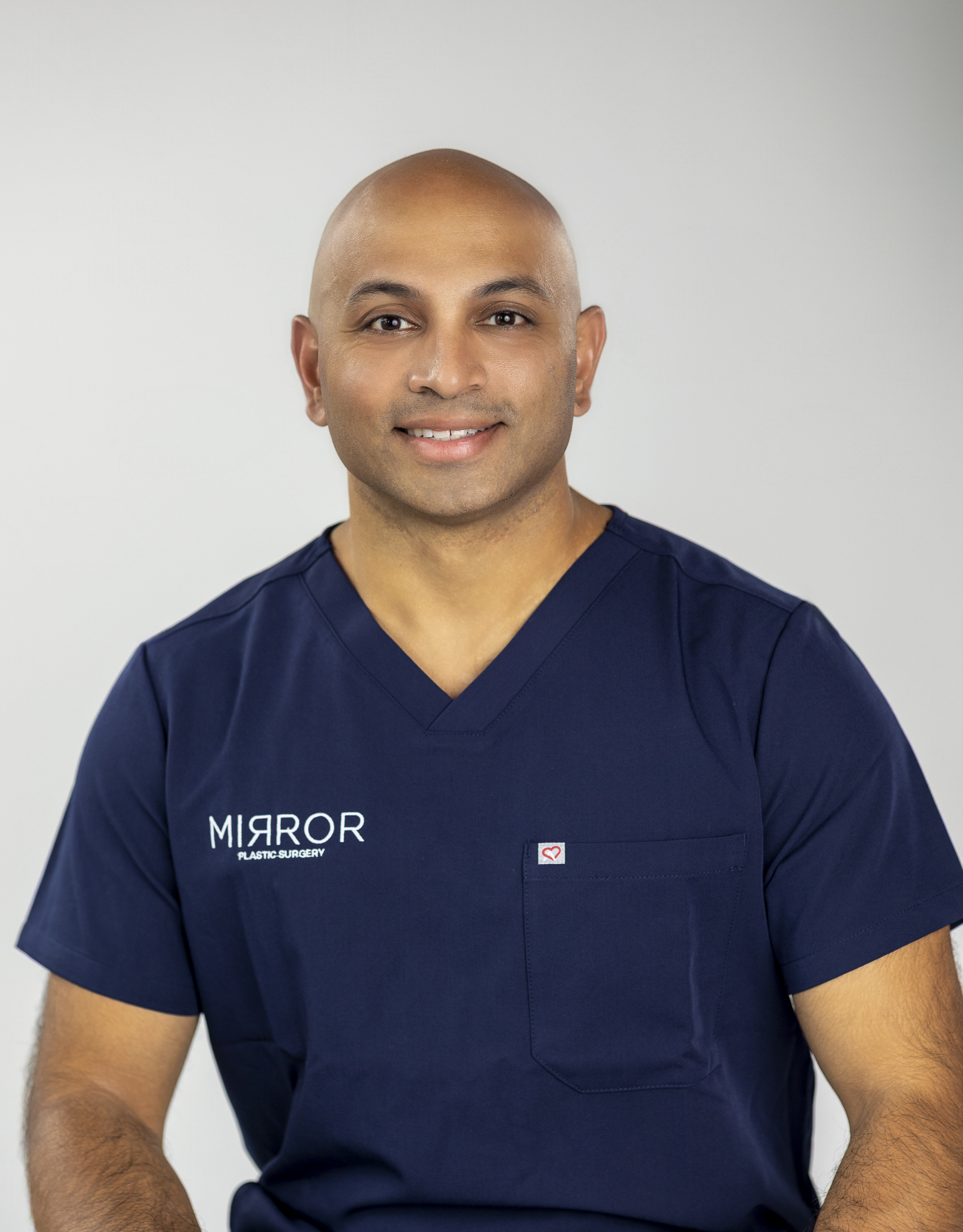
Written by: Dr. Akash Chandawarkar, Board Certified Plastic Surgeon, Mirror Plastic Surgery | Last updated: July 6, 2026
Key Takeaways
- Choosing a breast augmentation surgeon in Florida works best when you focus on fellowship training, daily surgical volume limits, accredited facilities, and safety protocols instead of procedure counts or photo galleries alone.
- Extensive experience reflects the depth and rigor of training, including elite fellowships like MEETH, rather than raw procedure volume, which does not guarantee better outcomes.
- Limiting surgeries to one or two per day, as practiced at Mirror Plastic Surgery, preserves surgical focus, lowers complication risk, and supports individualized care.
- Key evaluation criteria include board certification, fellowship training, facility accreditation with physician anesthesiologists, hospital privileges, and thorough pre-operative consultations to support safe, natural, and durable results.
- Patients seeking personalized breast augmentation care can schedule a consultation at Mirror Plastic Surgery for an anatomy-specific evaluation with Dr. Akash.
Why Choosing the Right Breast Augmentation Surgeon Matters
Breast augmentation is one of the most technically nuanced procedures in plastic surgery. Implant placement, pocket dissection, incision selection, and tissue handling all interact with each patient’s anatomy. A surgeon who evaluates those variables carefully, rather than applying a standard template, creates results that are safer, more natural, and more durable.1 The evaluation model that follows helps Florida patients move beyond surface-level comparisons.
What Extensive Experience Actually Means for Breast Augmentation Surgeons
The term “extensive experience” appears often in marketing but rarely comes with a clear definition. Two distinct models exist: volume-based experience, measured by raw procedure counts, and training-based experience, measured by the depth and rigor of surgical education.
Volume-based claims can mislead patients. Raw procedure volume does not automatically translate into superior outcomes. The quality and structure of the training behind each case matter more.
Training-based experience includes the rigor of residency, the specificity of fellowship training, the complexity of cases, and the surgeon’s ongoing engagement with current evidence. A simple procedure count cannot capture those factors.
The Value of Fellowship Training for Breast Augmentation Results
A general plastic surgery residency provides broad reconstructive and aesthetic training. An aesthetic surgery fellowship adds focused specialization in advanced breast surgery, body contouring, and facial rejuvenation under the mentorship of subspecialty leaders.
Dr. Akash completed his aesthetic surgery fellowship at the Manhattan Eye, Ear and Throat Hospital (MEETH), one of the most competitive programs in the country. MEETH training emphasizes anatomical precision, natural outcomes, and the nuanced judgment needed to individualize implant selection, pocket placement, and incision approach for each patient’s tissue characteristics. This level of specialization directly shapes the quality of breast augmentation results.
How Daily Surgical Volume Limits Improve Patient Safety
The number of surgeries a practice performs each day directly affects the attention, energy, and focus available for each patient. Mirror Plastic Surgery limits its schedule to one to two surgeries per day. High-volume practices may perform five to ten surgeries daily, which compresses pre-operative preparation, intraoperative decision-making, and post-operative monitoring.
Performing fewer surgeries per day keeps the surgical team fully present for every case, from pre-operative marking and anesthesia induction through closure and recovery room monitoring. For a procedure as anatomy-dependent as breast augmentation, that sustained attention narrows the margin for error and supports individualized care that produces consistent, natural results.1
Key Factors to Evaluate When Choosing a Surgeon
The table below compares training quality indicators with procedure volume metrics to help patients structure their evaluation.
| Evaluation Dimension | Training Quality Indicator | What to Ask | Why It Matters |
|---|---|---|---|
| Board Certification | American Board of Plastic Surgery (ABPS) | Is the surgeon ABPS-certified? | ABPS certification requires written and oral exams and grants privileged hospital access for rare complications. |
| Fellowship Training | Dedicated aesthetic surgery fellowship (e.g., MEETH) | Did the surgeon complete a post-residency aesthetic fellowship? | Fellowship training adds subspecialty depth beyond general residency, especially for breast and body contouring. |
| Facility Accreditation | Accredited surgical facility with board-certified physician anesthesiologist | Is the facility accredited? Is anesthesia provided by a physician anesthesiologist? | Accredited facilities and physician anesthesiologists lower perioperative risk.1 |
| Daily Surgical Volume | 1–2 surgeries per day (concierge model) | How many surgeries does the surgeon perform daily? | Lower daily volume preserves team focus and allows individualized intraoperative decision-making. |
Additional evaluation criteria include the surgeon’s approach to pre-existing medical conditions, the depth of the pre-operative consultation, and the practice’s policy on revision surgery. Patients should also confirm that the surgeon holds active hospital privileges, which provide a critical safety net if a rare complication requires inpatient care.
Schedule your evaluation with Dr. Akash to discuss how these criteria apply to your anatomy and goals.
Understanding Common Complications and Modern Safety Protocols
Two complications matter especially for breast augmentation patients who are evaluating surgeon expertise: capsular contracture and animation deformity.
Capsular contracture occurs when the scar tissue that naturally forms around a breast implant tightens excessively. This tightening can distort the implant’s shape and cause firmness or discomfort. Surgical technique, including meticulous pocket dissection, implant handling, and irrigation protocols, directly influences this risk.1 Dr. Akash uses precise techniques designed to limit bacterial contamination and lower capsular contracture incidence.1
Animation deformity refers to visible implant movement or distortion during muscle contraction, most often when implants sit beneath the pectoralis major muscle. Correcting animation deformity often involves repositioning implants above the muscle while preserving breast tissue. This revision technique requires advanced anatomical knowledge and careful surgical judgment.
Modern safety protocols at Mirror Plastic Surgery include advanced in-office ultrasound for pre-operative assessment, evidence-based implant selection, and a conservative approach to combining procedures. Performing too many surgeries at once can sharply increase complication rates, so combination plans are tailored with safety in mind.1
Special Considerations: Autoimmune Conditions and Implant Safety
Some patients need additional evaluation beyond standard complication discussions. Patients with autoimmune conditions such as Hashimoto’s thyroiditis require individualized pre-operative assessment before moving forward with breast augmentation. Breast implant illness (BII) refers to a wide range of symptoms, including joint and muscle pain, chronic fatigue, and cognitive difficulties, that may overlap with autoimmune conditions such as Hashimoto’s thyroiditis.
In 2021, the FDA began requiring breast implant manufacturers to include boxed warnings and patient decision checklists as part of the informed consent process. Patients with Hashimoto’s or other autoimmune conditions should review their full medical history with their surgeon, including current thyroid function, immunosuppressive medications, and any prior inflammatory symptoms, before making an implant decision. Fat transfer augmentation using AlloClae may offer an alternative for patients with autoimmune concerns.
Meet Dr. Akash: Elite Training and Consecutive Newsweek Recognition
Dr. Akash’s credentials combine academic excellence, surgical specialization, and innovation leadership that remain rare in aesthetic plastic surgery. His undergraduate training at MIT in neuroscience and nuclear engineering preceded acceptance into the highly selective Harvard-MIT Division of Health Sciences and Technology program, where he graduated from Harvard Medical School with Honors.
He completed a seven-year integrated plastic and reconstructive surgery residency at Johns Hopkins University, which included complex cancer and trauma reconstruction, emergency reconstructive procedures at the R Adams Cowley Shock Trauma Center, and microsurgical training at the Curtis National Hand Center. He then completed his aesthetic surgery fellowship at MEETH and a biodesign innovation fellowship at Stanford University.
Dr. Akash was selected to testify before the U.S. Food and Drug Administration on breast implant safety, reflecting his standing as a national authority on the subject. He serves as Next Generation Editor for the Aesthetic Surgery Journal and sits on advisory boards for companies developing advanced technologies, including Motiva breast implants and AlloClae adipose fillers. Dr. Akash has been named in America’s Best Plastic Surgeons 2025 by Newsweek for two consecutive years.
Experience the difference that fellowship-level training makes by requesting a consultation to discuss your breast augmentation options with Dr. Akash.
Choosing Between Implants, Fat Transfer, and Revision Surgery
With the right surgeon identified, the next step involves selecting the approach that fits your anatomy and goals. Mirror Plastic Surgery offers three primary pathways for breast augmentation. Implant-based augmentation uses high-quality silicone gel implants with meticulous technique to lower capsular contracture risk.
Fat transfer augmentation using AlloClae provides natural volume enhancement with improved fat integration compared with traditional fat transfer methods, without the risks associated with older approaches. Revision breast surgery addresses complications from prior procedures, including implant malposition, capsular contracture, and animation deformity. Many revision cases involve repositioning implants above the muscle while preserving existing breast tissue.
Addressing Common Misconceptions About Surgeon Experience
High procedure volume does not equal better outcomes. As discussed earlier, training quality determines results more reliably than procedure volume.
This volume-quality tradeoff becomes visible in consultation length. Rushed consultations reflect a structural issue in high-volume practices, not a personal failing by one surgeon. When a practice schedules five to ten surgeries per day, consultation time becomes compressed. The one-to-two surgery daily limit discussed earlier has a direct structural effect: hour-long initial consultations become realistic, which Mirror Plastic Surgery provides.
Recovery timelines also often get misrepresented. Patients may hear that they will return to normal activity within days. Realistic recovery from breast augmentation involves several weeks of restricted activity, and full tissue integration with final aesthetic results takes several months. Accurate recovery counseling forms a core part of informed consent, not an afterthought.
Frequently Asked Questions
How do I verify a surgeon’s fellowship training?
Ask the surgeon which fellowship program they completed, how long the training lasted, and the name of their fellowship director. Legitimate aesthetic surgery fellowships are affiliated with accredited institutions and can be independently verified. The American Society for Aesthetic Plastic Surgery (ASAPS) maintains a directory of accredited fellowship programs. Board certification by the American Board of Plastic Surgery is a separate but equally important credential, as it requires rigorous written and oral examinations and is not granted automatically after residency.
What does extensive experience mean for complication rates in breast augmentation?
As explained in the experience section above, extensive experience is best defined by the depth and structure of a surgeon’s training rather than by raw procedure counts. A surgeon who has completed a dedicated aesthetic surgery fellowship, trained at high-complexity institutions, and stays current with evidence is better positioned to anticipate and manage complications than one who has simply performed a high number of cases. Complication rates also depend on facility accreditation, anesthesia quality, implant selection, and the thoroughness of pre-operative evaluation, which together reflect a practice’s overall standard of care.
Can patients with Hashimoto’s safely undergo breast augmentation?
Patients with Hashimoto’s thyroiditis can be candidates for breast augmentation, but they need a thorough pre-operative evaluation that includes current thyroid function, medication review, and a detailed discussion of breast implant illness risk. Because BII symptoms can overlap with autoimmune conditions and may be triggered by implants in susceptible individuals, the decision requires individualized risk-benefit analysis. Fat transfer augmentation using AlloClae avoids implant-related systemic risks and may suit select patients. This conversation should occur in a consultation setting with enough time for honest, evidence-based discussion.
What is a typical recovery timeline after breast augmentation?
Most patients return to light daily activities within one to two weeks after breast augmentation.1 Strenuous exercise, heavy lifting, and upper-body exertion usually remain restricted for four to six weeks. Final implant position and tissue softening continue to change for three to six months, so the appearance at two weeks does not represent the final result.1 Patients should receive a detailed written recovery protocol at their pre-operative appointment and have direct access to their surgical team throughout recovery.
How should I compare surgeons beyond before-and-after photos?
Before-and-after photos show a curated selection of outcomes and do not serve as a reliable comparison tool. More meaningful evaluation criteria include board certification status, fellowship training specifics, the accreditation status of the surgical facility, whether a board-certified physician anesthesiologist administers anesthesia, the surgeon’s hospital privileges, the length and depth of the pre-operative consultation, and the practice’s approach to managing complications and revisions. Asking how a surgeon handles capsular contracture or animation deformity, and what their revision policy is, reveals more about their expertise than any photo gallery.
Conclusion: Making an Informed Decision
Selecting a breast augmentation surgeon in Florida with extensive experience benefits from a structured, evidence-based evaluation. Training depth, fellowship specialization, daily surgical volume, facility accreditation, and individualized pre-operative assessment are the variables that most reliably support safe, natural, and durable outcomes. Procedure counts and marketing claims cannot replace those criteria. Patients who invest time in this evaluation process are more likely to choose a surgeon whose model of care aligns with their priorities and whose results reflect genuine expertise rather than volume efficiency.
Ready to move forward? Book your consultation at Mirror Plastic Surgery in St. Petersburg, Florida, and begin your breast augmentation journey with a surgeon whose training, credentials, and concierge approach center your safety, function, and aesthetic goals.
1 Results may vary from person to person. Editorial content, before and after images, and patient testimonials do not constitute a guarantee of specific results.


