
Written by: Dr. Akash Chandawarkar, Board Certified Plastic Surgeon, Mirror Plastic Surgery | Last updated: July 5, 2026
Key Takeaways for Your Florida Breast Augmentation Consult
- A breast augmentation consultation in Florida follows a structured seven-step process that focuses on education, anatomy, and individualized planning over sales pressure.
- Preparation, medical history review, physical examination, implant education, goal alignment, risk discussion, and next steps build on each other to create a complete experience.
- Thorough consultations at practices like Mirror Plastic Surgery dedicate up to an hour per patient, which allows time for detailed measurements, supplier-neutral implant education, and honest risk conversations.
- Florida-specific factors such as heat, humidity, and UV exposure require tailored recovery planning that should be covered during the consultation.
- Patients ready to begin their personalized journey can start with a one-hour consultation at Mirror Plastic Surgery.
Step-by-Step: The 7 Stages of a Florida Breast Augmentation Consultation
Step 1 — Preparation. Before arriving, patients gather their full medical history, a list of current medications and supplements, and any prior imaging or surgical records. These documents help the surgeon assess candidacy and identify potential complications. Patients also prepare a clear description of their aesthetic goals. Reference photos help, especially when they show realistic outcomes rather than a specific celebrity result.1
Step 2 — Medical History Review. The surgeon reviews past surgeries, chronic conditions, medications, allergies, family history of breast disease, and lifestyle factors such as smoking status and planned future pregnancies. Autoimmune conditions, thyroid disorders, and clotting histories receive particular attention because they influence surgical timing, anesthesia planning, and implant candidacy.
Step 3 — Physical Examination. A thorough hands-on examination measures chest wall width, breast base diameter, skin elasticity, nipple-to-fold distance, existing breast volume, and tissue thickness. At Mirror Plastic Surgery, advanced in-office ultrasound may also be used for precise pre-operative tissue assessment.
Step 4 — Implant Education. The surgeon presents implant options in a supplier-neutral, evidence-based way, covering material, shape, surface texture, profile, and volume ranges. Sizer try-ons and, where available, 3D imaging simulation help patients visualize potential outcomes before making a decision.1
Step 5 — Goal Alignment. The surgeon listens to the patient’s aesthetic priorities and compares them with anatomical realities. This is where the Mirror Plastic Surgery philosophy of safety first, function second, and aesthetics third becomes most visible. The team will not pursue a result that looks beautiful but compromises tissue health or long-term function.
Step 6 — Risk Discussion. Capsular contracture, implant displacement, changes in nipple sensation, the need for future revision, and anesthesia considerations are discussed plainly and without minimization. Patients with specific medical histories receive individualized risk profiles rather than generic disclaimers.
Step 7 — Next Steps. The consultation closes with a clear surgical plan outline, pre-operative instructions, and a timeline. Patients leave knowing exactly what will happen between the consultation and the operating room.
What to Wear to a Breast Augmentation Consultation
Clothing choices directly affect how efficiently the physical examination proceeds. Beyond understanding the consultation process itself, this practical preparation helps the visit feel smoother and more comfortable.
Wear a simple, easy-to-remove top, such as a front-closure bra or a soft bralette rather than a structured underwire bra. A button-down shirt or zip-up top allows the examination to proceed without requiring full undressing. Avoid one-piece garments, tight compression tops, or anything with internal chest seams that could leave temporary skin marks and affect tissue assessment. Skip heavy jewelry around the neck and chest. Comfortable, elastic-waist bottoms and slip-on shoes complete a practical outfit, especially if sizer try-ons are part of the visit.
The same clothing principles help during early recovery. Button-down shirts, zip-up hoodies, soft cardigans, and flowy blouses in breathable fabrics like cotton or bamboo jersey reduce the need to raise arms overhead. Elastic-waist bottoms and slip-on shoes also make dressing easier. Arriving to the consultation already familiar with these garment types helps patients plan their recovery wardrobe in advance.
Questions Typically Asked at a Breast Augmentation Consultation
Surgeons ask patients about their motivations, timeline, prior breast procedures, breastfeeding history, mammogram status, and any medications that affect bleeding or healing. Patients benefit from preparing specific answers rather than broad generalities.
Patients, in turn, should ask whether the surgeon is board-certified by the American Board of Plastic Surgery. Additional helpful questions include: What implant placement is recommended for my anatomy and why? What incision approach do you use most often and what are the trade-offs? How will my results change if I become pregnant or lose significant weight?1 What is the revision process if I am unhappy with the outcome?
A surgeon who answers these questions with anatomical detail rather than vague statements shows the depth of assessment that distinguishes a concierge consultation from a high-volume one.
How Medical Conditions Like Hashimoto’s Are Evaluated
One area where this depth of assessment becomes especially important is the evaluation of pre-existing medical conditions. Hashimoto’s thyroiditis is an autoimmune condition that causes the immune system to attack thyroid tissue, which leads to hypothyroidism in most cases. Uncontrolled hypothyroidism slows wound healing, increases bleeding risk, and can affect anesthesia metabolism. The autoimmune component raises questions about immune response to implant materials, although current evidence does not show a causal link between breast implants and the onset or worsening of autoimmune disease in the general population.
At a thorough consultation, a surgeon evaluating a patient with Hashimoto’s requests recent thyroid function labs (TSH and free T4), confirms that the condition is well-managed with medication, and coordinates with the patient’s endocrinologist if values fall outside the normal range. Surgery is typically deferred until thyroid levels are stable. Florida’s warm climate does not change autoimmune screening, but it does affect recovery. Heat and humidity can increase post-operative swelling and make compression garments less comfortable, which deserves attention during the consultation.
Patients with other autoimmune conditions such as lupus, rheumatoid arthritis, or Sjögren’s syndrome undergo similar individualized screening. The goal is to time surgery appropriately and reduce modifiable risk factors before proceeding, not to disqualify candidates automatically.
Anatomy, Implant Options, and Placement Decisions Explained
Implant selection relies on measurements rather than preference alone. Chest wall width sets the maximum base diameter an implant can occupy without creating lateral displacement. Skin elasticity and tissue thickness determine how much volume the soft tissue envelope can support without thinning over time. Nipple-to-fold distance influences whether a lift should accompany augmentation.
Placement options such as subglandular, subfascial, or submuscular each carry distinct trade-offs related to animation deformity risk, palpability, mammography interference, and long-term implant behavior. Incision location, including inframammary fold, periareolar, or transaxillary, affects scar visibility and surgical access. Surgeons make these decisions using the physical examination data gathered in Step 3.
Florida-Specific Factors for Weather, Recovery, and Practice Style
Tampa Bay’s subtropical climate creates recovery considerations that patients in cooler states do not face. High ambient temperatures and humidity can accelerate swelling in the early post-operative period and make compression garments less tolerable. Patients should plan to stay in air-conditioned environments for the first two weeks and avoid outdoor heat exposure, which can also increase bruising visibility. Sun exposure to incision sites must be avoided for several months to prevent hyperpigmentation, a particular concern in Florida’s year-round UV environment.
Regionally, Florida’s plastic surgery market spans a wide spectrum, from boutique concierge practices that perform one to two surgeries per day to high-volume clinics that operate at five to ten procedures daily. The consultation experience differs accordingly. Extended consultations allow time for the full seven-step process described above. Shorter, higher-volume visits may compress or omit steps, especially the physical measurement phase and the individualized risk discussion.
What Sets Thorough Consultations Apart from High-Volume Experiences
This extended timeframe is standard practice at Mirror Plastic Surgery, not an exception. Patients receive a slower, more detailed experience that centers on safety and education.
The measurable difference appears in three areas. First, measurement depth: a thorough consultation produces a documented set of anatomical data points that directly inform implant selection, while a rushed visit may rely on visual estimation alone. Second, education time: patients who understand why a specific implant profile or placement was recommended are better equipped to give informed consent and hold realistic expectations. Third, medical history integration: autoimmune screening, medication review, and lifestyle factor assessment require time that high-volume models structurally cannot provide. Mirror Plastic Surgery performs one to two surgeries per day, which keeps the entire clinical team’s focus on each individual patient before, during, and after the procedure. Experience this concierge approach firsthand by scheduling your consultation.
Credentials That Signal Expertise Patients Should Seek
Board certification by the American Board of Plastic Surgery is the baseline credential patients should verify before any consultation. Fellowship training in aesthetic surgery, particularly at programs with competitive selection processes, signals advanced, focused specialization beyond residency.
Dr. Akash at Mirror Plastic Surgery holds an M.D. from Harvard Medical School (graduated cum laude with Honors), completed a seven-year integrated plastic and reconstructive surgery residency at Johns Hopkins University, and completed an aesthetic surgery fellowship at the Manhattan Eye, Ear and Throat Hospital (MEETH), one of the most selective aesthetic training programs in the country. He also completed a Biodesign Innovation Fellowship at Stanford University and has testified before the U.S. Food and Drug Administration on breast implant safety. Dr. Akash has been named to Newsweek’s America’s Best Plastic Surgeons list two years in a row, including 2025. He currently serves as Next Generation Editor for the Aesthetic Surgery Journal and sits on advisory boards for companies developing next-generation breast augmentation technologies, including Motiva.
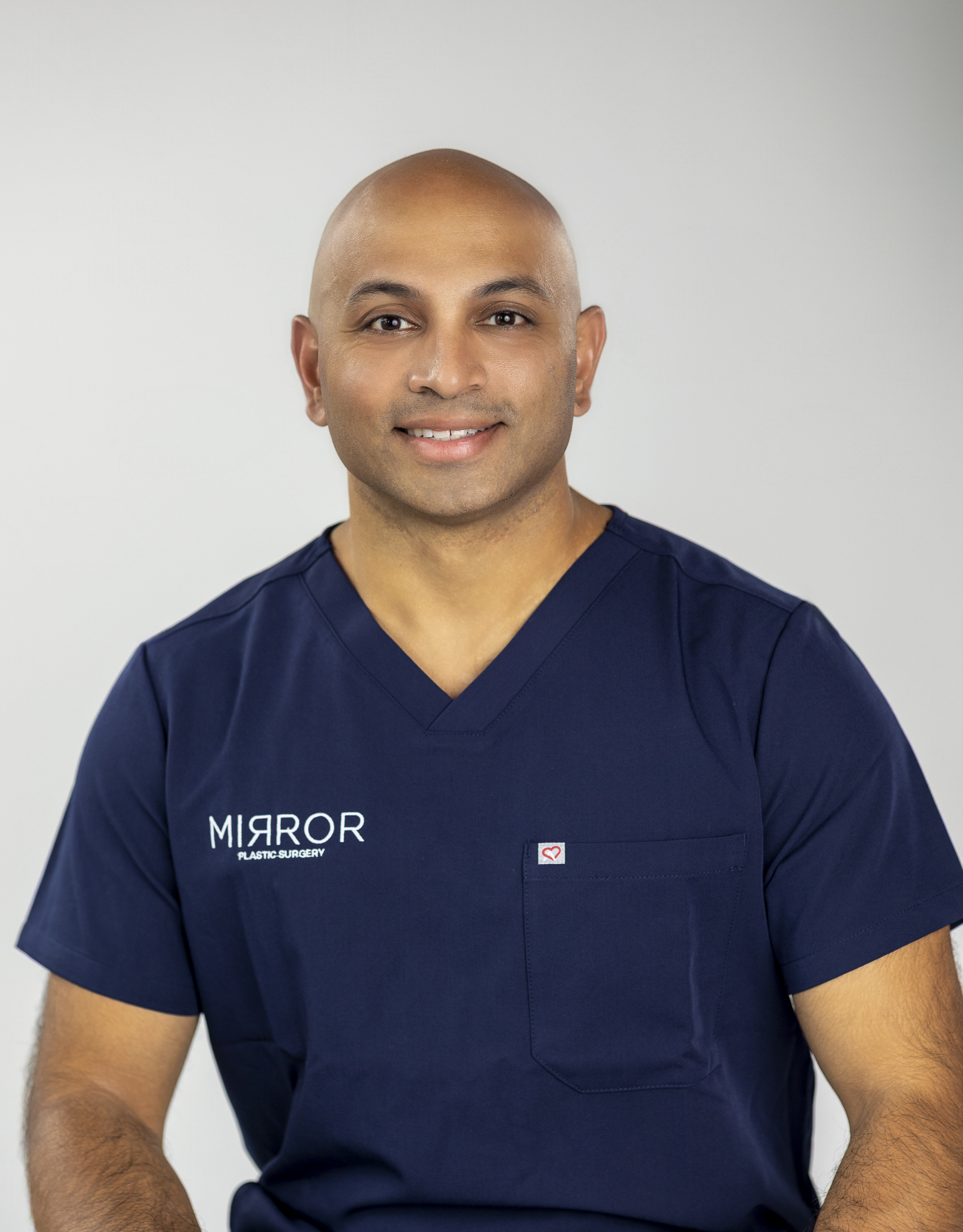
These credentials shape the depth of anatomical knowledge, evidence-based decision-making, and safety protocols that patients experience during every consultation and procedure at Mirror Plastic Surgery.
Frequently Asked Questions
How long does a breast augmentation consultation typically last at Mirror Plastic Surgery?
Consultations at Mirror Plastic Surgery are structured to last up to one hour. This time covers a full medical history review, hands-on physical examination with detailed anatomical measurements, implant education, goal alignment, and a thorough risk discussion. This extended format is a deliberate feature of the practice’s concierge model and contrasts with shorter visits common at higher-volume clinics.
Can I get breast implants if I have Hashimoto’s disease or another autoimmune condition?
Having Hashimoto’s or another autoimmune condition does not automatically disqualify a patient from breast augmentation, but it does require additional pre-operative evaluation. Dr. Akash reviews recent thyroid function labs, confirms that the condition is well-controlled, and may coordinate with your endocrinologist before clearing you for surgery. The goal is to improve your health status before proceeding, not to exclude you from consideration. Each patient’s situation is evaluated individually.
What should I bring to my breast augmentation consultation?
Bring a complete list of current medications and supplements, including over-the-counter products and herbal remedies. Prior breast imaging such as mammograms or ultrasounds and records of previous surgeries are also helpful. Prepare a clear description of your aesthetic goals and, if you wish, reference photos. Wear a simple, easy-to-remove top and a soft, non-underwire bra so the physical examination can proceed efficiently.
How is implant size selected during the consultation?
Implant size is determined by the anatomical measurements taken during the physical examination described in Step 3, combined with your aesthetic goals. Sizer try-ons and 3D imaging simulation may be used to help visualize potential outcomes. No implant size recommendation is made without this measurement data. Dr. Akash takes a supplier-neutral approach, so recommendations are driven by your anatomy and goals rather than brand preference.
What Florida-specific recovery factors should I discuss during my consultation?
Tampa Bay’s heat and humidity can intensify post-operative swelling and make compression garments less comfortable during the first weeks of recovery. Plan to remain in air-conditioned environments for at least the first two weeks. Sun exposure to incision sites must be avoided for several months to prevent hyperpigmentation, which is a heightened concern given Florida’s year-round UV intensity. Discuss your lifestyle, work schedule, and any planned outdoor activities with Dr. Akash so your recovery timeline can match your routine.
Next Steps for Scheduling Your Consultation
A breast augmentation consultation at Mirror Plastic Surgery is the starting point for a process built on anatomical precision, honest communication, and safety-first planning. Dr. Akash, Harvard-MIT educated, Johns Hopkins-trained, and recognized nationally for surgical excellence, dedicates the time and expertise required to give every patient a complete, individualized assessment. Mirror Plastic Surgery serves patients throughout the Tampa Bay and St. Petersburg area at 780 4th Ave S, St. Petersburg, FL 33701. Schedule your consultation to begin your personalized assessment.
1 Results may vary from person to person. Editorial content, before and after images, and patient testimonials do not constitute a guarantee of specific results.