
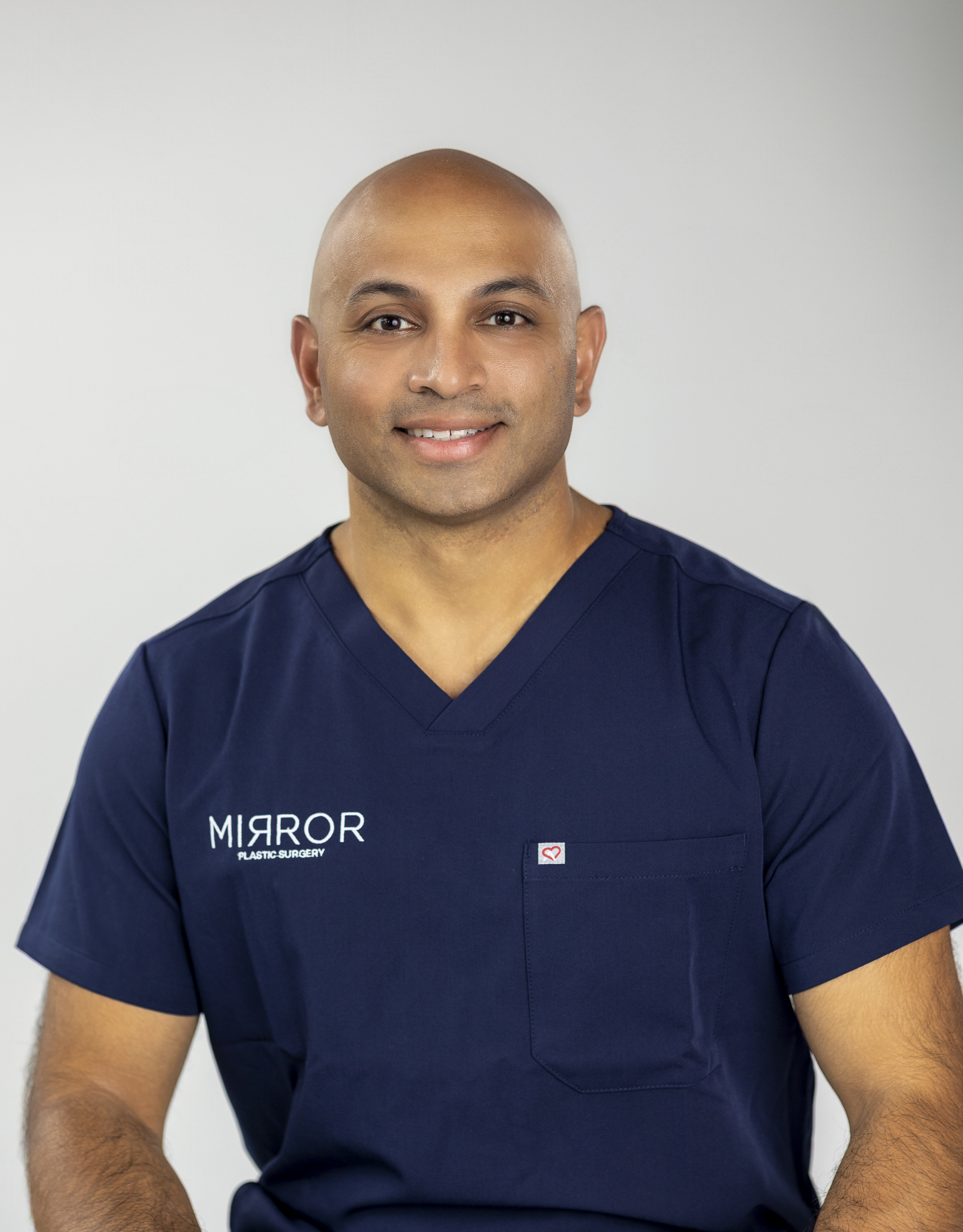
Written by: Dr. Akash Chandawarkar, Board Certified Plastic Surgeon, Mirror Plastic Surgery
Key Takeaways
- Brazilian butt lift recovery follows a phased timeline rather than a single date, with direct sitting restrictions typically lasting 6–8 weeks and final results settling over 3–6 months.1
- The first week is the most restrictive, with peak swelling, no direct sitting, and a Stage 1 open-back compression garment worn 22–23 hours daily to protect grafted fat.
- Patients can usually return to desk work around week 2 using a BBL pillow for short sitting sessions, while driving and more active jobs resume between weeks 3–4.1
- Low-impact cardio may begin around weeks 5–6, with full exercise including glute resistance training cleared between weeks 8–12 once fat grafts have stabilized.1
- Mirror Plastic Surgery provides personalized, evidence-based recovery guidance as part of every BBL consultation in St. Petersburg, Florida.
Get Your Personalized BBL Recovery Plan
BBL Recovery Week By Week: Timeline At A Glance
The table below shows how the three main restrictions, sitting, compression, and exercise, lift at different points. You can see at a glance which phase you are in and what changes next. The following phases represent typical ranges.1 Individual protocols vary based on volume transferred, donor-site locations, and healing response. Always follow your surgeon’s specific instructions.
Week 1: The Strictest Phase And The Worst Day
The first week after a BBL is the most physically and logistically demanding. Swelling peaks around days 3–5, bruising is visible across liposuction donor sites, and drainage from small incisions is common. Mobility is limited. Most patients need a caregiver for the first 24 hours for basic tasks including bathroom trips and positioning.
The worst day after a BBL is typically within the first 24–72 hours, when anesthesia wears off, swelling peaks, and liposuction sites are most tender. Pain often peaks in the first 3–5 days, and patients commonly rate it 6–8 out of 10 during the first 24 hours. From there it decreases noticeably by day 3, and by the end of week 1 most patients describe it as muscular soreness rather than sharp pain. It improves steadily after that initial window.
The anatomical rationale for the no-direct-sitting rule is straightforward. Transferred fat cells have no immediate blood supply. They survive initially through plasmatic imbibition, absorbing nutrients by diffusion from surrounding tissue, before new blood vessels grow into the graft through a process called neovascularization. This vascular ingrowth begins within 48–72 hours but continues for weeks. Sitting directly on the buttocks compresses the grafted fat against the pelvic bones, restricting blood flow to cells that have not yet established their own supply. Direct pressure during the first two weeks can compromise fat survival by up to 30%.1 ASPS-affiliated guidance identifies avoiding direct pressure on the buttocks during the first weeks after a BBL as the most important patient-controlled factor in reducing contour irregularities and protecting grafted fat in early recovery.
Sleeping position during week 1 is stomach or side only, never on the back or buttocks. The compression garment (a Stage 1 open-back faja) is worn 22–23 hours per day, removed only for showering. The open-back design is deliberate: it compresses liposuction donor sites while leaving the grafted buttock area free from direct pressure.
A common and entirely reasonable concern is toilet use. Toilet use is planned for from the start, because it is short, necessary, and the brief contact time does not produce the sustained compression that damages fat cells. The technique is simple. Lean slightly forward, keep body weight on the thighs and feet rather than the buttocks, and stand up promptly. A raised toilet seat or BBL-friendly toilet riser can reduce the depth of the sit and make this easier. Planning this setup before surgery makes the first days significantly more manageable.
Red Flags: Call Your Surgeon Immediately
- Fever above 38.5°C (101.3°F) not resolving within a few hours
- Spreading redness, warmth, or red streaking from an incision
- Foul-smelling or pus-like drainage from any wound
- Sudden shortness of breath or chest pain, go to the emergency room immediately
- One leg significantly more swollen than the other, or calf pain (possible DVT)
- Skin turning dark or black around incisions
- Sudden increase in pain after a period of improvement
- A hard, localized lump in the buttock distinct from general swelling (possible fat necrosis)
Essential Recovery Tools And Rules
Having the right tools and rules in place before surgery makes the strict early phase much easier to manage.
Essential tools:
- BBL pillow or wedge cushion, positions weight on the thighs during any necessary sitting
- Stage 1 and Stage 2 compression garments (two of each), one to wear and one to wash, open-back design required for BBL
- Raised toilet seat or toilet riser, reduces depth of the sit during the no-sitting phase
- Loose, elastic-waist clothing, avoids pressure on healing areas and garment friction
- Support person for the first week, needed for medication management, positioning, and basic tasks
Core rules with anatomical rationale:
- No direct sitting for 6–8 weeks, because sustained pressure restricts blood flow to grafted fat before vascularization is complete
- No smoking, as nicotine constricts blood vessels and impairs fat survival and wound healing, and a minimum 4-week cessation before and after surgery is standard
- No strenuous exercise until cleared, because increased blood flow and pressure during intense activity can affect fragile fat grafts
- No sleeping on the buttocks, stomach or side sleeping for the first 6–8 weeks
- Compression garment worn as directed, with 24 hours a day for the first 4–6 weeks, removed only for showering
These rules all protect the same thing, the blood supply to the grafted fat. Direct sitting compresses the graft before vascularization is complete, nicotine constricts the vessels that are trying to form, and strenuous exercise raises pressure around fragile grafts. Each restriction is a different way of keeping that early blood supply undisturbed.
Weeks 2–4: BBL Pillow, Desk Work, And The Sitting Question
A BBL pillow is a firm foam wedge placed under the upper thighs so the buttocks extend beyond the pillow’s edge and hang unsupported. It transfers body weight to the thighs rather than the grafted tissue. The pillow must be positioned so the buttocks are completely off the sitting surface, because placing it too far back defeats its purpose. Even with a BBL pillow, sitting sessions should be short. Most patients begin brief pillow-assisted sitting around weeks 2–4, with sessions typically limited to about 10–20 minutes at a time.
Most patients with desk jobs can return to work around 2 weeks post-surgery, provided they use a BBL pillow, take frequent standing breaks, and have a workspace that allows position changes. A standing desk eliminates the sitting problem entirely during this phase. Jobs requiring lifting, bending, or prolonged standing require 3–4 weeks or more before return.
Driving is not permitted in the first 2 weeks. Driving typically resumes between weeks 3–4, once the patient is off narcotic pain medication, can sit comfortably with a BBL pillow, and can perform emergency braking without hesitation. Being a passenger with a BBL pillow for short journeys may be possible earlier, with surgeon guidance.
The anatomical rationale for continued restrictions in this window matches week 1. Transferred fat becomes more established by weeks 6–12, at which point the risk of graft loss decreases significantly. Pressure or shear forces during weeks 2–4 can still kill cells that would otherwise survive. The grafted fat that survives this window is the fat that remains permanently.
Because sitting remains restricted, toilet use still requires the lean-forward technique. A BBL pillow or raised toilet seat continues to be useful. The same restrictions that make bowel movements awkward also make constipation more likely. Constipation is common after surgery due to anesthesia, reduced activity, dehydration, and opioid pain medication. Starting stool softeners and maintaining hydration proactively from day one is standard practice.
Weeks 5–8: Transitioning To Normal Movement And Exercise
Weeks 5–8 represent a controlled transition from strict protection to gradual reintroduction of activity. This phase is a controlled return guided by how healing has progressed, not a green light for unrestricted sitting or exercise.
Compression garments taper to part-time wear around weeks 5–6, supporting swelling control and skin contraction at donor sites as the body continues to remodel. Most patients finish active garment wear between weeks 6 and 12.
Exercise reintroduction follows a staged protocol. Low-impact cardio such as walking on a treadmill or gentle elliptical may begin around weeks 5–6.1 Strenuous lower-body exercise, squats, lunges, and direct glute work are typically deferred until weeks 8–12 with surgeon clearance. The anatomical rationale is clear. Increased blood flow and intramuscular pressure during intense exercise can affect fragile fat grafts that are still completing vascularization.
Around weeks 5–8, many patients notice what the recovery community calls “fluffing.” Fluffing is the visual effect of swelling resolving while transferred fat settles into its final position, not a separate medical event. The fluffing stage typically becomes noticeable around 6–8 weeks, with active changes continuing through months 3–6. The buttocks may appear fuller or more projected as the skin relaxes and the fat softens from a firm, swollen feel to something more natural. This is a shape and projection change, not new fat growth, and actual fat volume is stable or slightly reduced from reabsorption at this point.
BBL vs. Butt Implants: Recovery Comparison
BBL recovery centers on protecting transferred fat cells during vascularization, which drives the sitting restrictions and compression garment design. Butt implant recovery involves different considerations, including implant positioning, capsule formation, and muscle recovery, without the fat-survival biology that governs BBL aftercare. For a detailed comparison of both approaches, see the Mirror Plastic Surgery guide on Brazilian Butt Lift vs. Butt Implants.
Ask Dr. Akash About Your Activity Timeline
Months 3–6: Fluffing, Fat Survival, And Final Results
By month 3, most swelling has resolved. The transferred fat that survived has established a blood supply and integrated with surrounding tissue. Most fat reabsorption after a BBL occurs during the first three to six months, and fat that survives this period is considered permanently established. This is why the buttocks may appear smaller at month 3 than immediately after surgery. That early size included both swelling and fat that was subsequently reabsorbed.
How much survives, on average, is now well quantified. A 2026 meta-analysis published in the Aesthetic Surgery Journal reported a pooled 12-month fat graft volume retention of 61.3%,1 with retention varying by harvesting technique, processing method, and biologic enrichment. A separate 2026 retrospective review of 7,000 consecutive BBL procedures estimated fat graft survival at approximately 70%.1 These figures reflect the range patients can realistically expect, and surgeons typically overfill slightly to account for predictable reabsorption.
The “fluffing” that began in weeks 5–8 continues through this phase. The most noticeable refinement happens between months 3 and 6, when residual swelling fully resolves and fat cells finish integrating. The shape at month 3 is close to the final result but continues to soften and look more natural through month 6, which represents the practical endpoint for judging outcomes.
Maintaining a stable weight during this window is the single most important lifestyle factor for preserving results. Prospective MRI data show that postoperative weight change strongly affects fat graft retention: one BMI point of weight loss was associated with only 22% retention, versus 57–85% in patients who maintained or gained weight.1 Aggressive dieting during recovery can trigger resorption of fat cells that would otherwise survive.
Long-Term Outlook: 1 Year And 10 Years After A BBL
At 1 year, results are stable. MRI-measured fat graft retention remains measurable and durable beyond the first postoperative year,1 confirming that the fat present at 12 months represents the patient’s long-term result. Any residual swelling is gone, and the shape visible at this point is the shape that will persist provided weight remains stable.
Transferred fat behaves exactly like the patient’s own fat because it is the patient’s own fat. It can shrink or grow with weight changes, and it ages with the body. A well-maintained BBL can last 10 years or more. The two conditions are fat survival of approximately 60–80% of transferred volume and stable weight. Over a decade, the buttocks may lose some projection due to natural aging, skin laxity, and gravity, but the transferred fat does not disappear on its own. The most accurate representation of final BBL contour is typically seen around 6 months to 1 year, with later changes driven mainly by aging and weight fluctuation.
Patients who experience significant weight loss or gain after recovery will see corresponding changes in buttock volume, because the grafted fat cells respond to caloric fluctuations like fat anywhere else in the body. Maintaining weight within 10–15 lbs of surgery-day weight is the single most effective strategy for preserving BBL results long term. Revision options exist for patients who desire additional volume after results have fully stabilized, typically no earlier than 6–12 months after the primary procedure.
For select cases where structural fat support is desired without traditional fat transfer, newer options such as AlloClae are available at Mirror Plastic Surgery. These are discussed individually during consultation based on each patient’s anatomy and goals.
Why A Concierge, Safety-First Practice Changes The BBL Recovery Experience
A practice that limits itself to one to two surgeries per day can provide a fundamentally different recovery experience than a high-volume operation running five to ten procedures daily. The difference shows up in three places: pre-operative planning, post-operative access, and how much attention each patient receives. The entire team’s attention, before, during, and after surgery, is concentrated on a small number of patients. Pre-operative recovery planning is detailed and individualized. Post-operative access for questions is direct rather than filtered through a call center.
Mirror Plastic Surgery in St. Petersburg, Florida is built on exactly this model. The practice’s philosophy, safety first, function second, aesthetics third, directly shapes its BBL protocols, including the decision to avoid combining too many procedures at once. Published data show that combining multiple major procedures exponentially increases complication risk, and Mirror Plastic Surgery’s approach reflects that evidence rather than patient pressure for maximum results in a single session.
Dr. Akash leads the practice. A Harvard-educated physician and Johns Hopkins-trained plastic surgeon, Dr. Akash completed an additional aesthetic surgery fellowship at the Manhattan Eye, Ear and Throat Hospital (MEETH)/Lenox Hill Hospital and a Stanford Biodesign Innovation Fellowship. He is board certified by the American Board of Plastic Surgery and has been named in America’s Best Plastic Surgeons 2025 by Newsweek for two consecutive years. The practice is supplier-neutral and evidence-based, meaning recommendations are grounded in each patient’s anatomy and goals, not product quotas or volume incentives.
Mirror Plastic Surgery is located at 780 4th Ave S, St. Petersburg, FL 33701. Patients can call or text 727-361-6515 or email hello@mirrorplasticsurgery.com to schedule a consultation.
Schedule Your BBL Consultation In St. Petersburg
Frequently Asked Questions
Below are answers to the questions patients most often ask about BBL recovery timing and restrictions.
What’s The Worst Day After A BBL?
The worst day is typically within the first 24–72 hours after surgery, when anesthesia wears off, swelling peaks, and liposuction donor sites are most tender. Pain during this window is commonly rated 6–8 out of 10 and decreases noticeably by day 3. By the end of week 1, most patients describe discomfort as muscular soreness rather than sharp pain. Having a caregiver present and pain medication on a consistent schedule, rather than waiting for pain to peak, makes this phase significantly more manageable.
Can I Sit To Poop After A BBL?
Yes. Toilet use is planned for from the first day of recovery. The technique is to lean slightly forward, keep body weight on the thighs and feet rather than the buttocks, and stand up promptly. Brief toilet contact does not produce the sustained compression that damages fat cells. A raised toilet seat or BBL-friendly riser reduces the depth of the sit and makes the lean-forward position easier to maintain. Constipation is common after surgery due to anesthesia, reduced activity, and opioid pain medication, and starting stool softeners and staying hydrated from day one is standard practice.
When Can I Sit Normally After A BBL?
Most patients begin brief pillow-assisted sitting around weeks 2–4, with sessions typically limited to about 10–20 minutes at a time and weight kept on the thighs. As noted in the timeline, most patients can gradually return to normal sitting around six to eight weeks, with surgeon clearance. Long, uninterrupted sitting is the last restriction to lift. Individual timelines vary based on volume transferred, healing response, and adherence to post-operative instructions, and the treating surgeon’s protocol takes precedence over any general timeline.
Will My BBL Get Bigger After 3 Months?
The buttocks do not gain new fat after 3 months, but they often appear fuller, rounder, and more projected as swelling resolves and the surviving fat settles into its final position. This is the “fluffing” stage, a shape and projection change driven by swelling resolution and tissue softening, not new fat growth. Actual fat volume is stable or slightly reduced from reabsorption by this point. As explained in the Months 3–6 section, fat that survives the first three to six months is considered permanently established. Final shape continues to refine through month 6.
How Long Does It Take To Heal From A BBL And Lipo?
When BBL is combined with lipo 360 or additional liposuction areas, recovery involves two healing processes simultaneously, the buttocks recovering from fat transfer and the donor sites recovering from liposuction. Recovery is typically longer than a standalone BBL, often 8–10 weeks rather than 6–8 weeks for a full return to daily activity, with final results settling over 3–6 months as fat graft survival stabilizes. The liposuction sites add their own soreness, swelling, and compression garment requirements, and the combined recovery timeline is generally longer than either procedure alone. Most patients with desk jobs return to work around 2 weeks with a BBL pillow, and physically demanding jobs require 3–4 weeks or more.
What Happens To A BBL After 10 Years?
Fat that survives the initial integration period after a BBL, generally considered permanent once results stabilize around 6 months, is living tissue that has established its own blood supply through neovascularization and behaves like native fat thereafter. It behaves like the patient’s own fat for the rest of their life, and it can shrink with weight loss and expand with weight gain. Over a decade, the buttocks may lose some projection due to natural aging, skin laxity, and gravity, but the transferred fat does not disappear on its own. Patients who maintain their surgical weight within 10 lb (4.5 kg) report the most consistent long-term BBL results, while fluctuations above 10–15 lb (4.5–7 kg) are the most common reason results change after the initial 6-month stability point. A softer, more natural version of the original result over 10 years is typical, with aging and skin quality affecting how the buttock sits over time.
What Is A BBL Pillow And Do I Really Need One?
A BBL pillow is a firm foam wedge placed under the upper thighs so the buttocks extend beyond the pillow’s edge and hang completely unsupported. It transfers body weight to the thighs rather than the grafted tissue during any necessary sitting. Most surgeons consider a BBL pillow essential, not optional, for any sitting during the 6–8 week sitting-restriction period after BBL, though it is typically introduced around week 3 after an initial 1–2 weeks of no sitting at all and its use ultimately follows the individual surgeon’s protocol. Even with a BBL pillow, sitting sessions should be kept short and standing breaks taken frequently. Patients should carry it everywhere, including restaurants, cars, and workspaces, during the weeks when direct sitting is restricted. A BBL pillow does not make unlimited sitting safe, and it makes necessary sitting safer.
Conclusion: Protecting Your Investment With A Realistic Timeline
A realistic Brazilian butt lift recovery time and activity timeline is phased, not a single date. The most important early rule, avoiding direct pressure on the buttocks, exists because transferred fat cells must establish a blood supply before they can survive sustained compression. That biological rationale separates patients who protect their results from those who inadvertently compromise them.
Fat-graft biology after BBL proceeds through an acute repair phase of plasmatic imbibition in the first 48–72 hours, followed by neovascularization and revascularization, with the acute regenerative phase completed by about 3 months and a chronic stabilizing and remodeling phase continuing up to 12 months. After that point, surviving fat behaves like native fat and fluctuates with body weight. Following the protocol reflects this biology and is the mechanism by which the surgery succeeds.
Choosing a board-certified plastic surgeon who provides personalized, evidence-based recovery guidance, and following their specific protocol rather than a generic timeline found online, is the most reliable way to protect the investment and achieve the intended result.
Schedule Your BBL Consultation In St. Petersburg
Mirror Plastic Surgery serves patients in the St. Petersburg and Tampa Bay area of Florida. Dr. Akash and the Mirror team provide detailed, individualized BBL recovery planning as part of every consultation, not as an afterthought.
To schedule a consultation, contact Mirror Plastic Surgery at 780 4th Ave S, St. Petersburg, FL 33701. Call or text 727-361-6515 or email hello@mirrorplasticsurgery.com.
Book Your Consultation With Dr. Akash
1 Results may vary from person to person. Editorial content, before and after images, and patient testimonials do not constitute a guarantee of specific results.