Written by: Dr. Akash Chandawarkar, Board Certified Plastic Surgeon, Mirror Plastic Surgery
Key Takeaways
- Liposuction alone cannot correct flabby arms when skin laxity is the main problem. Combined brachioplasty with liposuction treats both excess fat and reduced skin elasticity in one operation.
- Adults over 60 and patients with major weight loss usually need brachioplasty as the foundation. Liposuction is added only when a meaningful fat layer still contributes to arm size.
- Patient selection depends on skin quality, fat volume, and functional goals. The pinch-and-release test helps determine whether liposuction alone, brachioplasty alone, or a combined approach fits best.
- When surgeons integrate liposuction during brachioplasty, they remove fat first. This sequence refines contour, lowers tension on the incision, and supports smoother healing while preserving tissue for blood flow.
- Patients who want personalized arm contouring can schedule a consultation at Mirror Plastic Surgery for an evidence-based, anatomy-focused treatment plan tailored to their skin quality and goals.
Arm Tightening After 60: Why Brachioplasty Usually Leads
Adults over 60 face a convergence of age-related changes that make isolated liposuction unreliable for upper-arm contouring. Collagen and elastin decline with age, sarcopenia reduces underlying muscle volume, and decades of sun exposure weaken the dermis. Older patients with reduced skin elasticity from atrophy, diminished collagen and elastin, and sarcopenia benefit from liposuction only when a meaningful fat layer exists alongside loose skin, and even in that scenario the skin excision portion of brachioplasty provides most of the contour change.
This anatomical reality shapes treatment planning. Patients over 60 with hanging upper-arm skin should expect brachioplasty to serve as the structural foundation of any arm-contouring plan. Liposuction is then added selectively when residual fat clearly contributes to arm circumference. Published research links older age at body contouring surgery with higher risks of bleeding and fluid collection, so a careful preoperative assessment matters more than simply removing as much volume as possible.
When Liposuction Alone Can Improve Bat Wings
Liposuction can improve bat wings only in a narrow group of patients. These patients have mild to moderate diet-resistant fat and skin that still snaps back after fat removal. A practical bedside test is the pinch-and-release. Skin that flattens back within one to two seconds shows adequate recoil, while skin that stays creased or forms a hanging fold shows poor elasticity for liposuction alone.
Patients with significant skin laxity, especially after major weight loss, do not get correction from liposuction alone. In those cases, liposuction can even exaggerate looseness. The bat-wing deformity that persists despite stable weight and regular exercise almost always combines excess skin with residual fat, which places it beyond the reach of liposuction as a stand-alone solution.
Choosing Between Liposuction, Brachioplasty, or Both
Choosing the right procedure starts with a structured look at skin quality, fat volume, and the patient’s functional and aesthetic goals. The criteria below outline how surgeons typically guide that decision.
Liposuction alone may be appropriate when:
- The main concern is localized, diet-resistant fat without meaningful extra skin.
- Skin demonstrates the brisk recoil described in the pinch-and-release test above.
- The patient is under 40 and has no history of major weight swings.
- No stretch marks appear along the triceps region.
Combined brachioplasty with liposuction is indicated when:
- Both excess fat and reduced skin elasticity are present, which is the most common pattern in patients over 40 or those with major weight changes.
- Prior weight loss exceeds 30 pounds, age is over 45, or long-term sun exposure has weakened collagen and elastin regardless of current weight.
- Stretch marks run horizontally across the back of the upper arm, showing that the skin has stretched past its recovery limit.
- Skin has not tightened on its own within 12 to 18 months after reaching a stable post-loss weight.
- The contour concern continues into the armpit, lateral chest, or upper back.
Brachioplasty without liposuction is appropriate when:
- The arm is very thin after weight loss with minimal remaining fat, and aggressive fat removal would increase irregularity and threaten wound circulation.
- Skin laxity is the only concern and no meaningful fat layer contributes to arm size.
How Surgeons Combine Liposuction and Brachioplasty Safely
Combined procedures follow a specific sequence and respect key anatomical landmarks. Standard technique removes excess fat with liposuction first, then tightens the arm with brachioplasty in the same session. This order lets the surgeon see the true skin envelope after fat reduction before deciding how much skin to remove.
The medial arm contains the medial cutaneous nerve of the forearm, the basilic vein, and lymphatic channels that run near the brachial neurovascular bundle. Keeping the cannula within the fatty layer and avoiding overly forceful passes lowers the risk of nerve injury. Preserving lymphatic vessels reduces the chance of lymphedema, and surgeons often place drains for 24 to 72 hours to limit fluid buildup.
Performing liposuction before skin excision refines contour and reduces tension on the incision, which supports faster and better-quality healing. Conservative fat removal guides the operation because excessive liposuction can compromise wound healing. Surgeons remove fat only when it clearly improves contour and preserve enough tissue to maintain blood flow and support the incision during recovery.
Scar Placement and Care After Brachioplasty with Liposuction
Scar placement in brachioplasty usually follows the medial arm groove, the natural shadow between the biceps and triceps, running from near the armpit toward the elbow. This position keeps the scar out of direct view from the front and back when the arm rests at the side. In mini brachioplasty, the incision sits inside the armpit when sagging is mild and limited to the upper arm.
Scar maturation follows a predictable timeline:
- Months 1–3: Scars appear as pink or red lines, and silicone sheeting or gel usually starts around weeks two to three.
- Months 3–6: Scars may temporarily darken or thicken before they begin to soften.
- Months 6–18: Scars gradually fade to a thin, pale line with consistent silicone use and sun protection.1
Evidence-based scar care includes daily silicone once incisions are dry and closed, gentle massage when the surgeon approves, and strict UV protection with sleeves and SPF. If scar quality raises concern, options such as scar revision, lasers, and microneedling can further refine the result. Careful closure that limits tension across the incision remains one of the most effective ways to keep scars narrow from the start.
Recovery Milestones After Brachioplasty with Liposuction
Recovery from combined brachioplasty and liposuction follows a stepwise pattern. The milestones below describe function and comfort, not final cosmetic results, which take longer.
- Days 1–3 (Peak soreness): Bandages and drains stay in place, and arm motion remains limited. Patients avoid lifting more than a coffee mug or raising arms above shoulder level. Pain is usually moderate, often described as tight and aching.
- Week 1: Arms stay close to the torso with elbow support, and only gentle elbow and wrist motion is allowed, with lifting capped at 5 to 10 pounds. Bruising typically peaks during this week.
- Week 2: Most patients manage light household tasks and computer work while keeping arms below shoulder height. Bruising fades, and silicone scar care begins once incisions are dry.
- Weeks 3–6: Patients usually return to desk work and driving once off narcotics and able to grip the steering wheel. Light, low-impact cardio is added when cleared, and by week six most patients can reach overhead comfortably.
- Weeks 8–12: Heavier lifting and overhead work usually resume once healing checkpoints are met.
- Months 3–6: Final contour results after brachioplasty are typically close to or at their best by three to six months, although complete swelling resolution can take six to twelve months.1
Book a consultation with Dr. Akash to receive a recovery plan that matches your activity level, job demands, and healing profile.
Special Considerations for Arm Surgery After 60
Chronological age does not solely determine candidacy for arm contouring. Skin elasticity and current tissue quality carry more weight than the number of birthdays. Building on the age-related tissue changes described earlier, the preoperative assessment for patients over 60 must also account for several added factors:
- Degree of skin laxity and whether it extends into the armpit or lateral chest wall.
- History of GLP-1 medication use or bariatric surgery, which often creates skin laxity out of proportion to current body weight.
- Nutritional status, including protein, iron, and vitamin levels, which strongly influence wound healing after major weight loss.
- Smoking history, which significantly increases the risk of wound problems and skin loss.
- Stability of current weight, since further loss can create new laxity and weight gain can stretch the surgical result.
When skin retains better elasticity, some patients qualify for liposuction combined with energy-based tightening. Once significant laxity or poor elasticity appears, traditional brachioplasty usually becomes necessary. For patients over 60 with both loose skin and a meaningful fat layer, the combined procedure often provides the most durable contour, as long as the plan reflects their tissue quality and overall health.
Dr. Akash’s Anatomy-First Method for Arm Contouring
Dr. Akash, named to Newsweek’s America’s Best Plastic Surgeons list in 2024 and 2025, applies a detailed anatomy-first approach to combined brachioplasty and liposuction. His training began at MIT in neuroscience and nuclear engineering, continued through the Harvard-MIT Division of Health Sciences and Technology, and concluded with a seven-year integrated plastic and reconstructive surgery residency at Johns Hopkins University that included complex trauma reconstruction and microsurgical training at the Curtis National Hand Center. An aesthetic fellowship at the Manhattan Eye, Ear and Throat Hospital (MEETH) then provided advanced body-contouring experience at a highly competitive program.
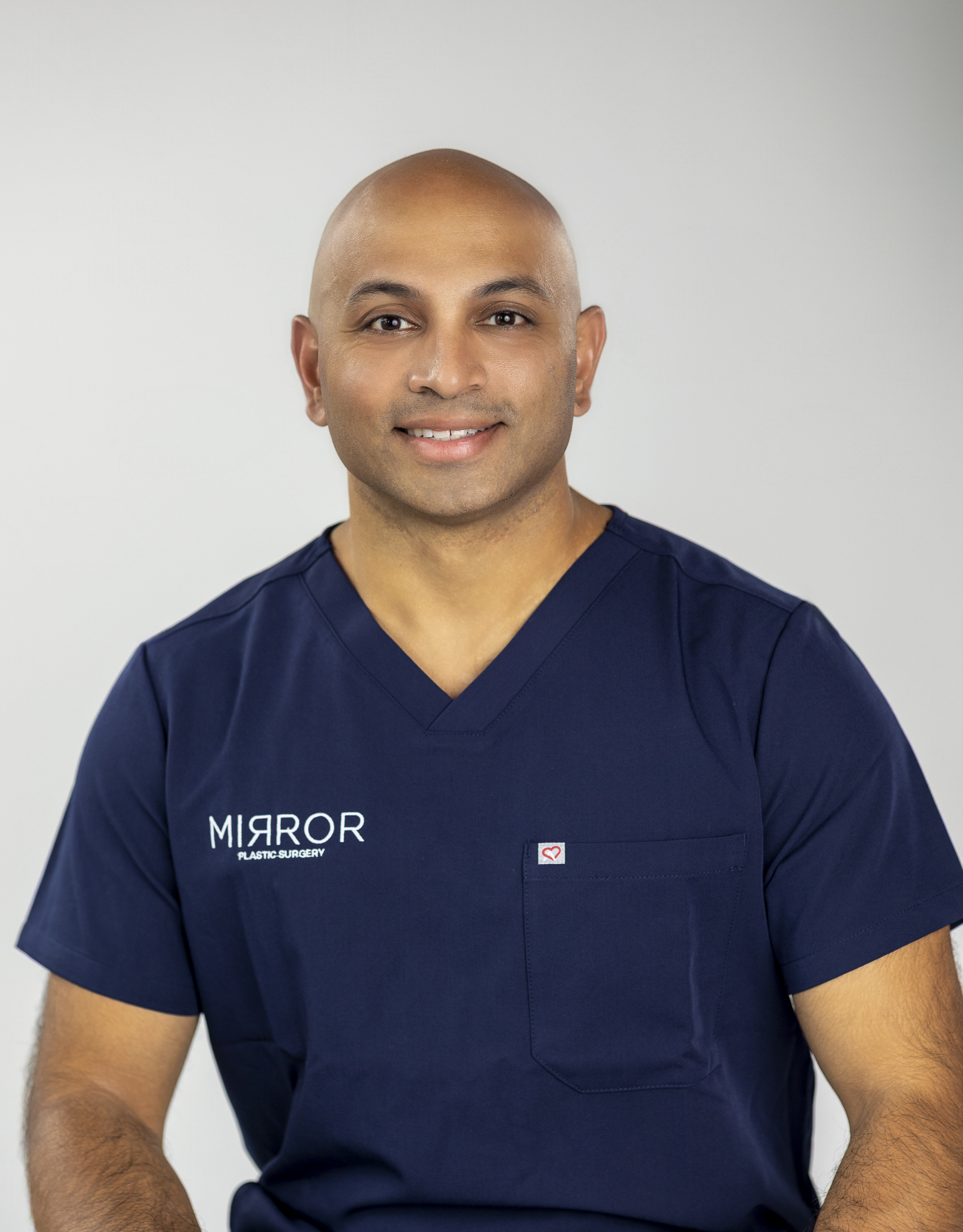
At Mirror Plastic Surgery, this background shapes every arm-contouring consultation. Safety comes first, function comes second, and aesthetics follow closely behind. Dr. Akash often spends up to an hour mapping each patient’s anatomy, skin quality, fat distribution, and functional goals before recommending surgery. The practice limits the schedule to one or two surgeries per day so that each combined brachioplasty and liposuction patient receives focused attention from the entire team from planning through final follow-up.
Frequently Asked Questions
Is combined brachioplasty with liposuction safe for patients in their 50s and 60s?
Combined brachioplasty with liposuction can be performed safely in patients in their 50s and 60s when the preoperative evaluation confirms good overall health, stable weight, and adequate nutrition. Age-related factors such as reduced skin elasticity, lower collagen density, and any history of major weight loss are reviewed individually. The safety-first philosophy at Mirror Plastic Surgery means that each surgical plan reflects the patient’s tissue quality and health profile, and procedures take place in accredited facilities with board-certified physician anesthesiologists. Patients are advised not to stack too many procedures in one session because evidence shows that extensive combinations raise complication rates disproportionately.
Will the scar from brachioplasty with liposuction be visible?
The brachioplasty scar usually runs along the medial arm groove, the natural shadow between the biceps and triceps, which keeps it out of direct view from the front and back when the arm rests at the side. When laxity stays limited to the upper arm, the incision may sit entirely within the armpit. Scars start as pink or red lines, may thicken slightly between months three and six, and then gradually fade to a thin, pale line over 12 to 18 months with consistent silicone use and sun protection. Laser therapy and microneedling can further refine scars when needed. Most patients feel that the improvement in arm shape and proportion outweighs their concern about the scar.1
How long before I can return to normal activities after combined brachioplasty and liposuction?
Most patients return to light desk work and basic household activities within one to two weeks.1 Driving usually resumes once patients no longer need narcotic pain medication and can grip the steering wheel comfortably. Light, low-impact cardio is often cleared between weeks four and six, and heavier lifting or overhead work generally restarts between weeks eight and twelve once healing milestones are confirmed. As noted in the recovery timeline above, most patients see their final contour by three to six months, with complete swelling resolution taking up to a year. Individual recovery varies based on procedure extent, age, nutrition, and overall health, so Dr. Akash customizes a recovery plan during consultation.
Can liposuction alone fix bat wings after significant weight loss?
In most post-weight-loss cases, liposuction alone cannot correct bat wings. Significant weight loss, especially after bariatric surgery or GLP-1 medication use, usually creates skin laxity that exceeds the skin’s ability to retract after fat removal. Removing fat from this inelastic envelope can make looseness look worse. The combined brachioplasty plus liposuction approach fits better when both excess fat and reduced skin elasticity are present, which is common in this group. A thorough in-person assessment of skin recoil, fat volume, and the extent of laxity is necessary to select the right procedure.
How do I know if I need brachioplasty, liposuction, or both?
The choice depends on excess fat, skin laxity, and skin quality. A simple self-check uses the pinch-and-release test. Skin that flattens quickly suggests enough recoil for liposuction consideration, while skin that stays creased or forms a hanging fold points toward excision. Additional factors that push candidacy toward brachioplasty or a combined procedure include prior weight loss of 30 or more pounds, age over 45, stretch marks along the triceps, and skin that has not tightened within 12 to 18 months after reaching a stable weight. An in-person consultation with Dr. Akash, including a detailed anatomical exam, remains the most reliable way to choose the right approach for your arms and goals.
Book a consultation with Dr. Akash at Mirror Plastic Surgery in St. Petersburg, Florida, and receive an evidence-based, anatomy-driven arm contouring plan tailored to your skin quality, weight history, and functional goals.
1 Results may vary from person to person. Editorial content, before and after images, and patient testimonials do not constitute a guarantee of specific results.