
Written by: Dr. Akash Chandawarkar, Board Certified Plastic Surgeon, Mirror Plastic Surgery | Last updated: June 30, 2026
Key Takeaways for Choosing Your Eyelid Surgeon
-
Blepharoplasty is anatomically demanding. Even a millimeter of over-resection can create hollowing, lid malposition, or a startled look.
-
Patients should confirm that their surgeon completed fellowship-level training in eyelid or facial surgery, not just general board certification.
-
Before-and-after photos should show proportional crease height, a rested appearance, preserved orbital volume, and consistent photo conditions.
-
Preserving or repositioning orbital fat, rather than aggressively removing it, helps maintain youthful contours and slows visible aging after surgery.1
-
A consultation at Mirror Plastic Surgery includes a one-hour, safety-first anatomical assessment with Dr. Akash.
Why Eyelid Surgery Requires Specialized Training
The eyelid is a layered structure that controls blink mechanics, tear film distribution, corneal protection, and orbital fat support. Changes to one layer affect the others and can create functional and aesthetic problems that are difficult to reverse.
Eyelid surgery directly affects vision, blink mechanics, tear film dynamics, and corneal health, so the ophthalmic perspective carries equal weight with the aesthetic one. Surgeons who routinely manage dry eye disease, lid malposition, exposure keratopathy, and lacrimal disorders before elective eyelid procedures bring a functional baseline that purely cosmetic training does not match.
This functional baseline varies across the three main surgical specialties that perform blepharoplasty. General plastic surgeons train across the entire body, including breast, abdomen, extremities, and face, so eyelid surgery represents a small portion of total case volume. Facial plastic surgeons focus on the face and neck, yet the share of their practice devoted to periocular anatomy can differ widely.
Oculoplastic surgeons complete ophthalmology residency followed by a two-year ASOPRS-certified fellowship in ophthalmic plastic and reconstructive surgery. Their training centers on lid function that protects the cornea, delivers tears, and ensures complete closure.
The most qualified surgeons for natural blepharoplasty outcomes combine microsurgical precision, an ophthalmic understanding of lid mechanics, and dedicated fellowship training in facial aesthetics. This combination is rare and worth confirming directly.
How to Verify Board Certification and Fellowship Credentials
Board certification by the American Board of Plastic Surgery or the American Board of Facial Plastic and Reconstructive Surgery establishes baseline surgical competence. It does not automatically indicate eyelid-specific fellowship training or a practice centered on periocular anatomy. The table below outlines the three primary credential pathways relevant to blepharoplasty.
|
Training Pathway |
Eyelid-Specific Focus |
Functional Emphasis |
|---|---|---|
|
General Plastic Surgery (ABPS) |
Broad, with eyelid surgery as one component of full-body training |
Moderate, with functional reconstruction included but not periocular-specific |
|
Facial Plastic Surgery (ABFPRS) |
High for face and neck, with periocular depth varying by fellowship |
Moderate to high depending on fellowship emphasis |
|
Highest, with a two-year fellowship dedicated to eyelid, orbit, and lacrimal system |
Highest, with lid function and corneal protection as primary training objectives |
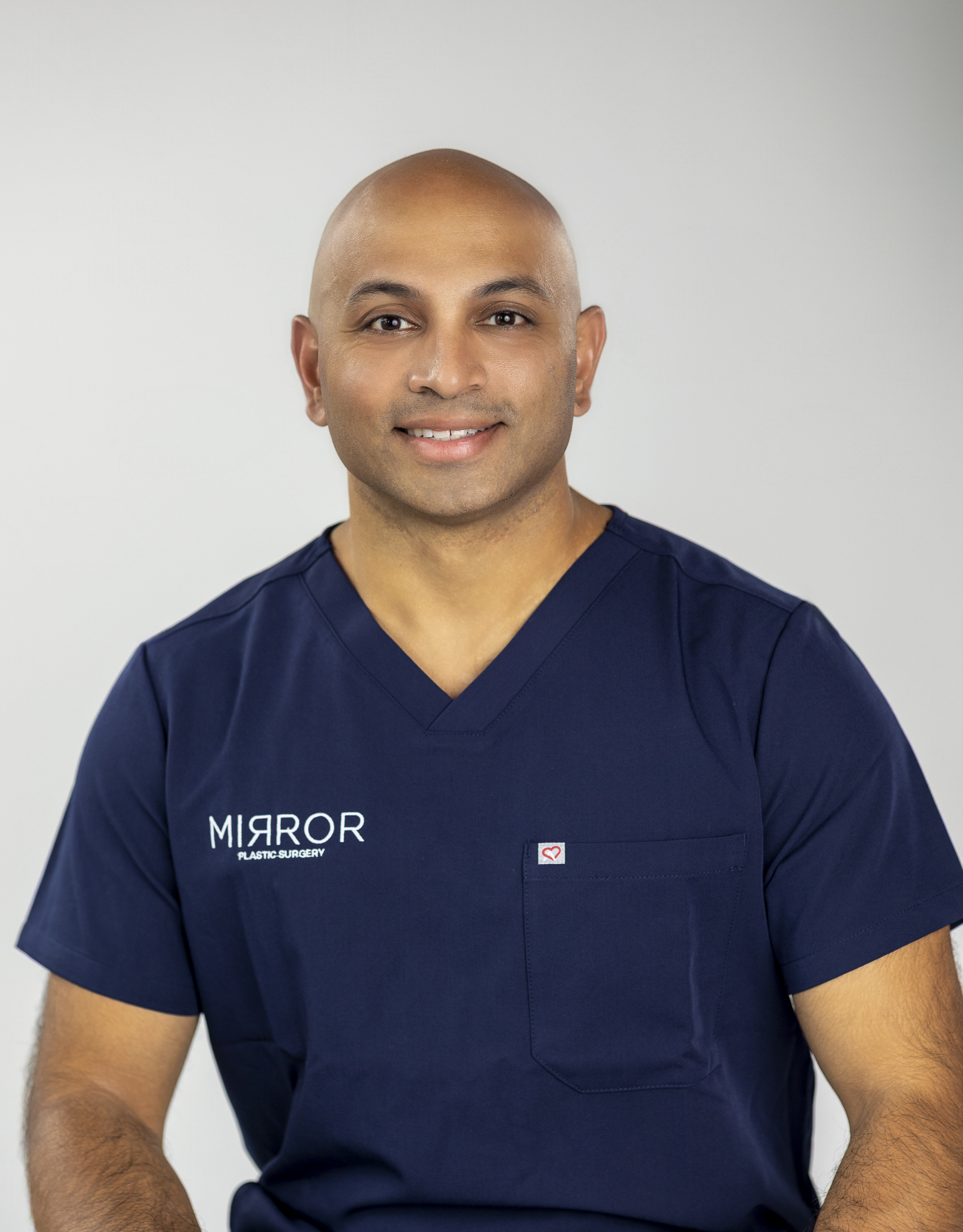
Dr. Akash holds an M.D. from Harvard Medical School, completed a seven-year integrated plastic and reconstructive surgery residency at Johns Hopkins University, and then completed an aesthetic surgery fellowship at the Manhattan Eye, Ear and Throat Hospital (MEETH). This fellowship is one of the most competitive aesthetic programs in the country and focuses specifically on facial rejuvenation, including blepharoplasty. He has been named to Newsweek’s America’s Best Plastic Surgeons list two years in a row, based on peer nominations and patient outcomes. His training at Harvard-MIT, Johns Hopkins, and MEETH places him at the intersection of reconstructive precision and aesthetic refinement that natural eyelid surgery requires.
How to Read Before-and-After Photos for Natural Results
Before-and-after galleries offer the most accessible evidence of a surgeon’s aesthetic judgment. Many patients look only for general improvement, yet a structured review shows whether a surgeon delivers natural results or tends toward over-correction.
When evaluating any surgeon’s gallery, look for these five specific markers of natural technique:
-
Proportional crease height: The upper lid crease should sit at an anatomically appropriate level, typically 8–10 mm from the lash margin in women and slightly lower in men. A crease that sits too high often signals over-resection.
-
Rested, not startled, appearance: Beyond crease position, evaluate the overall expression. The eyes should look refreshed and open, not wide or surprised. Excessive skin removal can elevate the brow-lid complex unnaturally and create a startled look.
-
Absence of orbital hollowing: The upper orbit should retain soft, gentle volume. A skeletonized or sunken appearance suggests aggressive fat removal instead of preservation or repositioning.
-
Consistent photo conditions: Lighting, camera angle, and facial expression should remain consistent across before and after images. Inconsistent conditions can hide true outcomes or exaggerate improvements.
-
Lower lid position: The lower lid margin should rest at or just below the iris. A lid that pulls down or exposes more sclera can indicate excessive tissue removal or laxity.
Key Questions About Fat Preservation and Surgical Volume
The move from aggressive fat removal to fat preservation and repositioning represents a major advance in modern blepharoplasty. Removing orbital fat can create quick improvement, yet it often accelerates the hollowed, aged appearance that patients want to avoid. Preservation techniques maintain volume while redistributing it to smooth the lid-cheek junction.
Direct questions help you understand how a surgeon thinks about anatomy, safety, and long-term results. Ask any prospective surgeon the following:
-
Do you remove, preserve, or reposition orbital fat, and how do you decide which approach fits my anatomy?
-
How do you assess brow position before planning upper lid surgery? Brow ptosis can mimic excess upper lid skin. Operating on the lid without addressing the brow can create incomplete or distorted results.
-
How many blepharoplasty procedures do you perform per week, and what share of your surgical practice focuses on eyelid surgery?
-
What is your protocol for evaluating dry eye and lid laxity before lower lid surgery?
At Mirror Plastic Surgery, every blepharoplasty evaluation follows a safety-function-aesthetics hierarchy. Structural integrity and lid mechanics are confirmed first, then the aesthetic plan is refined. This sequence forms the clinical basis for results that remain stable over years, not just months.1
Warning Signs of High-Volume Eyelid Surgery Practices
Practice volume directly affects the attention each patient receives. Certain patterns often appear in high-volume models and can compromise individualized care.
-
Consultations under 20 minutes: A thorough brow-to-lid assessment, dry eye screening, and anatomical education require time. A very brief appointment rarely allows for this level of detail.
-
Five or more surgeries scheduled per day: Brief consultations often accompany high surgical volume. Surgical fatigue and reduced team focus become real concerns when a surgeon schedules five or more procedures in a single day. Mirror Plastic Surgery performs one to two surgeries per day, a deliberate limit that keeps the entire clinical team fully engaged with each patient before, during, and after surgery.
-
No discussion of functional anatomy: A surgeon should explain how the brow, lid, and orbital fat interact before recommending a procedure. Skipping this explanation suggests an incomplete assessment.
-
Pressure toward combined procedures without anatomical rationale: Adding procedures without a clear functional or anatomical reason increases complication risk without a matching benefit.
-
Inability to answer questions about revision rates or complication protocols: Ask about fellowship training, the percentage of practice devoted to eyelid surgery, and complication and revision rates for lower lid procedures. Vague answers in these areas are meaningful red flags.
Book a consultation with Dr. Akash to experience the difference a concierge, low-volume practice provides from the first visit.
Regret, Aging, and Candidacy by Age
Do patients regret blepharoplasty? Regret after eyelid surgery most often relates to over-resection, where too much skin or fat is removed. This pattern can create a hollowed or startled appearance that proves difficult to correct. Patients who choose fellowship-trained surgeons who use preservation techniques and who receive thorough pre-operative counseling report higher satisfaction.1 A thoughtful consultation that aligns expectations with anatomical reality reduces the gap between anticipated and actual outcomes.
Why do some patients look older after eyelid surgery? Aggressive fat removal depletes the orbital volume that supports a youthful, soft contour around the eyes. As the face continues to age, this hollowing becomes more visible instead of less. Preservation and repositioning of orbital fat maintain the structural foundation that supports long-term rejuvenation.1
Is blepharoplasty appropriate at 70 and older? Age alone does not rule out surgery. Relevant factors include skin quality, lid laxity, brow position, dry eye status, and overall health. When vision is involved, even indirectly, the surgeon’s primary responsibility must be ocular function. This functional priority becomes even more critical for older patients. For those in their late sixties and seventies, a conservative plan that emphasizes functional improvement and subtle rejuvenation over dramatic change tends to be safer and more durable.
Inside a Safety-First Consultation at Mirror Plastic Surgery
At Mirror Plastic Surgery in St. Petersburg, the initial consultation follows a one-hour, top-to-bottom anatomical assessment. Dr. Akash evaluates brow position, upper and lower lid anatomy, orbital fat distribution, skin quality, and tear film function before making any surgical recommendation. Patients leave with a clear understanding of their own anatomy, the reasoning behind any proposed procedure, and realistic expectations for results.
This process reflects the practice’s core philosophy. Safety comes first, function follows, and aesthetics build on that foundation. No procedure is recommended unless it supports the patient’s long-term well-being rather than a volume target or standardized protocol. Honest communication, including a candid discussion of what surgery cannot achieve, forms a required part of every consultation.
Your Eyelid Surgeon Selection Checklist
Use this summary checklist before committing to any blepharoplasty surgeon in the Tampa Bay or St. Petersburg area:
-
☐ Fellowship-level training in eyelid or facial surgery confirmed, not general board certification alone
-
☐ Before-and-after photos reviewed for proportional crease, rested appearance, and absence of hollowing
-
☐ Fat preservation or repositioning discussed as the default technique
-
☐ Brow-lid relationship assessed as part of the pre-operative evaluation
-
☐ Dry eye and lid laxity screening confirmed for lower lid procedures
-
☐ Surgical volume confirmed at a low, concierge level that allows focused care
-
☐ Consultation lasted at least one hour and included anatomical education
-
☐ No pressure toward additional procedures without a clear anatomical rationale
-
☐ Surgeon able to discuss complication protocols and revision approach directly
Conclusion: Applying a Structured Framework to Your Choice
Choosing an eyelid surgeon for natural results requires more than browsing a gallery or confirming board certification. Five evaluation steps create a repeatable framework for Tampa Bay patients. These steps include verifying fellowship credentials, analyzing photos with a structured checklist, asking direct questions about preservation techniques, assessing practice volume, and evaluating the consultation itself.
Dr. Akash’s training at Harvard-MIT, Johns Hopkins, and MEETH, combined with Mirror Plastic Surgery’s concierge model and safety-function-aesthetics hierarchy, reflects the standard this framework is designed to identify. With this peer-recognized expertise, Dr. Akash offers the anatomical depth and honest communication that sophisticated patients in St. Petersburg and Tampa Bay expect.
Book a consultation with Dr. Akash and begin your evaluation with a surgeon whose practice centers on your long-term well-being.
Frequently Asked Questions
What is the difference between an oculoplastic surgeon and a facial plastic surgeon for eyelid surgery?
An oculoplastic surgeon begins as an ophthalmologist, completing medical school, internship, and a three-year ophthalmology residency, then adds a two-year ASOPRS-certified fellowship dedicated to the eyelids, orbit, and lacrimal system. This pathway builds deep expertise in lid function, corneal protection, and tear film mechanics. A facial plastic surgeon focuses on the face and neck more broadly, with periocular expertise that varies by fellowship. A board-certified plastic surgeon with dedicated aesthetic fellowship training in facial surgery, such as the MEETH program, combines reconstructive precision with aesthetic refinement and can perform blepharoplasty effectively when their practice shows a meaningful focus on periocular anatomy and conservative technique.
What is preservation blepharoplasty, and why does it matter for long-term results?
Preservation blepharoplasty uses techniques that retain and reposition orbital fat instead of removing it. Traditional blepharoplasty often relied on aggressive fat excision, which created immediate improvement but depleted the volume that gives the periocular area a youthful, soft contour. As the face ages, that volume loss becomes more obvious and can create a hollowed or skeletonized look. Preservation techniques maintain the structural foundation of the orbit while redistributing fat to smooth the lid-cheek junction. These methods support results that age more gracefully and reduce the need for corrective procedures later.1
How do I know if a surgeon’s practice volume is too high for safe, personalized blepharoplasty?
A surgeon who performs five to ten surgeries per day has limited time for detailed pre-operative assessment, precise surgery, and close post-operative monitoring. A concierge volume limit allows the clinical team to focus on each patient throughout the surgical experience. During your consultation, ask how many surgeries are scheduled on a typical operating day and how long the pre-operative assessment usually lasts. A consultation under 20 minutes that skips a brow-to-lid anatomical evaluation and dry eye screening represents a meaningful red flag, regardless of credentials.
Is blepharoplasty safe for patients over 65, and what special considerations apply?
Blepharoplasty can be safe for patients over 65 when the evaluation is thorough. Skin laxity, lid tone, brow descent, dry eye severity, and overall systemic health all influence the surgical plan and expected recovery. For patients in their late sixties and seventies, a conservative approach that prioritizes functional improvement, such as correcting visual field obstruction from ptotic upper lids, alongside subtle aesthetic rejuvenation usually proves safer and more durable than aggressive resection. A detailed pre-operative assessment that includes lid laxity testing, snap-back evaluation, and tear film analysis is essential before any lower lid procedure in this age group.
What should I expect during a first consultation at Mirror Plastic Surgery for eyelid surgery?
The consultation follows the comprehensive assessment described earlier, with Dr. Akash evaluating all structural and functional elements before making any recommendation. Patients receive an educational explanation of their own anatomy and the reasoning behind any proposed procedure, along with an honest discussion of what surgery can and cannot achieve. No procedure is recommended unless it supports the patient’s long-term well-being. The consultation gives patients in the Tampa Bay and St. Petersburg area the information they need to make a confident, fully informed decision, without pressure and without a one-size-fits-all protocol.
1 Results may vary from person to person. Editorial content, before and after images, and patient testimonials do not constitute a guarantee of specific results.