
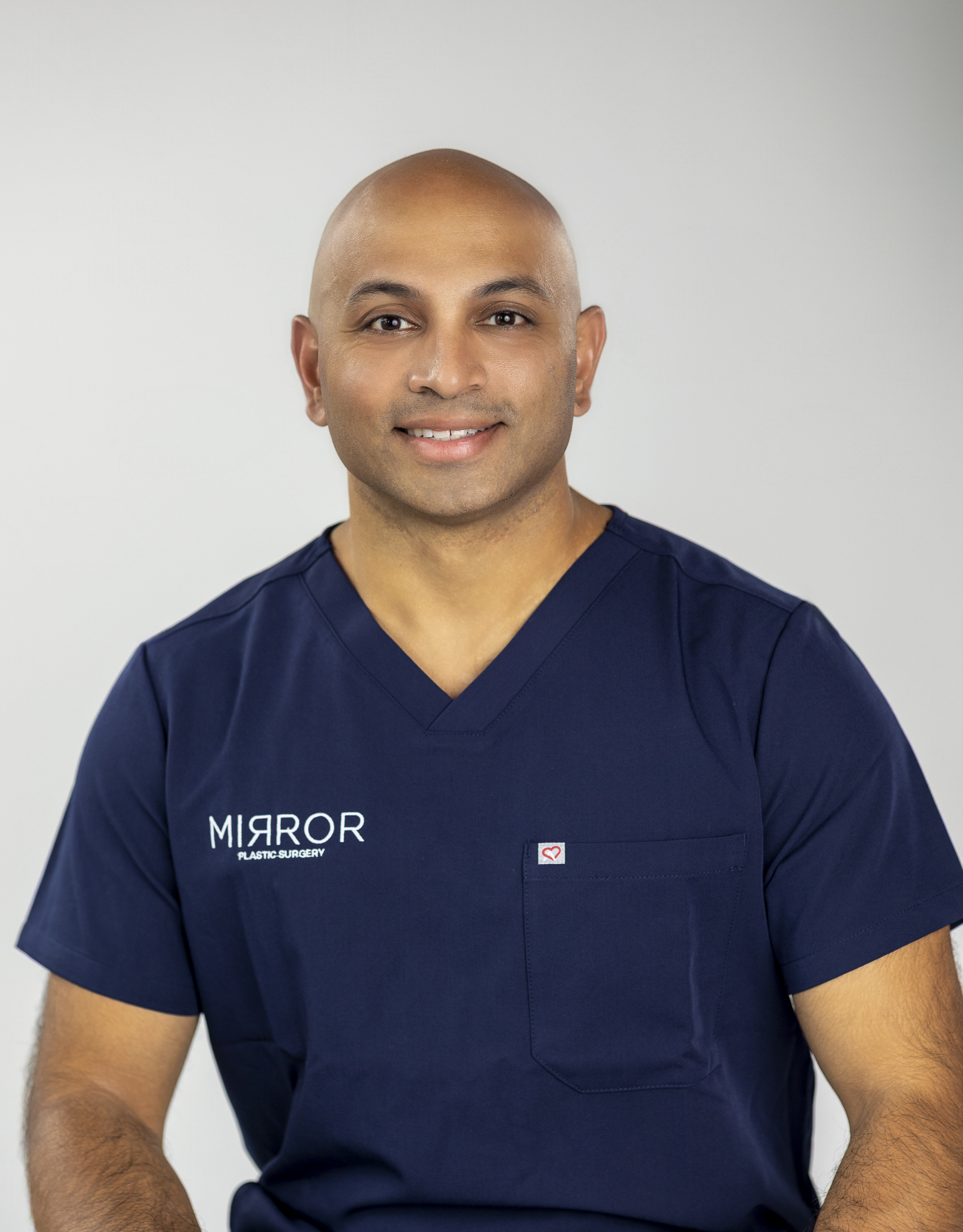
Written by: Dr. Akash Chandawarkar, Board Certified Plastic Surgeon, Mirror Plastic Surgery | Last updated: July 1, 2026
Key Takeaways
- Consultation communication directly affects blepharoplasty safety, eyelid function, and how natural your results look.
- Exceptional surgeons listen carefully, explain your unique anatomy, and set realistic expectations before any procedure.
- Prepared questions and attention to red flags help you spot rushed or template-driven consultations.
- Specialized training and limited daily surgical volume support deeper education and individualized surgical planning.
- Schedule your personalized blepharoplasty consultation with Dr. Akash at Mirror Plastic Surgery for unhurried, education-first care.
Smart Questions to Ask in Your Blepharoplasty Consultation
Arriving with specific questions gives you a clear way to evaluate a surgeon’s communication depth. The questions below surface both clinical competence and communication quality.
- Am I a candidate for upper blepharoplasty, lower blepharoplasty, or both, and why? The answer should reference your exact anatomy, not a generic protocol.
- Is there a functional component to my upper lid drooping, and does that affect insurance coverage or surgical planning? Ptosis and dermatochalasis are distinct conditions, and a knowledgeable surgeon explains the difference.
- What anatomical changes are driving the appearance I want to address? Fat prolapse, skin laxity, and muscle changes each call for different techniques.
- What are the realistic risks, and how do you manage them if they occur? Dry eye, asymmetry, and over-resection are known complications, and a transparent surgeon discusses them in detail.
- What does recovery look like week by week, and when can I expect to see final results? Swelling timelines differ between upper and lower procedures.
- What long-term maintenance should I anticipate? Blepharoplasty results last many years, but skin and soft tissue continue to age.1
- How many blepharoplasty procedures do you perform, and is this a primary focus of your practice? Volume alone does not equal quality, but fellowship-trained focus matters.
A surgeon who answers these questions with anatomical specificity, referencing your photographs, lid position, and functional concerns, demonstrates a communication standard that aligns with better outcomes.
Signs Your Eyelid Surgery Consultation Is Being Rushed
Even with strong questions prepared, you still need enough time to ask them and receive thoughtful answers. Rushed consultations are a documented source of patient dissatisfaction in aesthetic surgery. Watch for these red flags:
- The appointment ends within 20 to 30 minutes and no meaningful time is reserved for your questions.
- The surgeon skips a detailed eyelid examination or does not reference your photographs during the discussion.
- Risk discussion is missing or reduced to a brief statement before consent paperwork appears.
- Recovery expectations are presented as a fixed number of days instead of a personalized range based on your anatomy and lifestyle.
- You feel pressure to book surgery before you have processed the information or spoken with family.
- The conversation shifts quickly to add-on procedures before your primary concern is fully addressed.
- The surgeon cannot clearly explain why a specific technique fits your anatomy better than alternatives.
High-volume practices that perform five to ten surgeries daily face structural pressures that work against consultation depth. Mirror Plastic Surgery’s limited daily surgical volume exists to remove these pressures. Extended consultation time is the standard, not the exception.
How to Judge a Blepharoplasty Surgeon’s Communication Style
Communication quality can be evaluated across several dimensions during and after your consultation.
Listening quality: A strong surgeon allows you to describe your concerns fully before responding. A conversation that feels scripted, with frequent interruptions or premature redirection, signals a template-driven approach instead of individualized care.
Clarity of anatomical explanation: The surgeon should explain in plain language what is causing the appearance you want to change. Vague comments such as “you have excess skin” without reference to fat compartments, muscle position, or lid-cheek junction anatomy suggest limited depth.
Safety and function before aesthetics: A surgeon who leads with aesthetic promises before discussing candidacy, risks, and functional issues is reversing the correct order. The proper sequence is clear: confirm you are a safe candidate, confirm that function will improve or at least not worsen, then outline the realistic aesthetic result.
Transparency about limitations: No surgeon can guarantee a specific outcome. A communicative surgeon acknowledges variables such as healing, anatomy, and baseline asymmetry instead of overpromising.
Willingness to recommend against surgery: A surgeon who sometimes advises that a patient is not yet a candidate, or that a non-surgical option is better, shows that patient welfare guides recommendations rather than booking targets.
Experience this communication standard firsthand. Schedule your consultation with Dr. Akash for detailed anatomical education and honest expectation-setting.
How Dr. Akash’s Training Elevates Your Consultation
Surgical training shapes both technical skill and the depth and accuracy of patient communication. Dr. Akash’s background ranks among the most rigorous in aesthetic surgery.
He completed undergraduate studies in neuroscience and nuclear engineering at MIT, then earned his medical degree through the Harvard-MIT Division of Health Sciences and Technology, graduating from Harvard Medical School with Honors. His surgical training included a seven-year integrated plastic and reconstructive surgery residency at Johns Hopkins University, one of the world’s most respected programs.
He then completed an aesthetic surgery fellowship at the Manhattan Eye, Ear and Throat Hospital (MEETH), a highly competitive program focused on facial rejuvenation, breast surgery, and body contouring. He also completed the Stanford University Biodesign Innovation Fellowship, which trains physician-innovators to identify unmet clinical needs and develop evidence-based solutions.
This foundation means that when Dr. Akash explains why a particular approach fits your eyelid anatomy, the explanation draws on reconstructive principles, aesthetic refinement, and innovation literacy at the same time. He has been named to Newsweek’s America’s Best Plastic Surgeons list for two consecutive years and serves on the editorial board of the Aesthetic Surgery Journal. His communication reflects a physician-scientist trained to translate complex anatomy into language patients can understand.
What a One-Hour Blepharoplasty Consultation Looks Like
A well-structured one-hour blepharoplasty consultation at Mirror Plastic Surgery follows a consistent, patient-centered flow.
- Minutes 0–10: Medical and aesthetic history review. Current medications, prior eye surgeries, dry eye symptoms, contact lens use, and aesthetic goals are documented and discussed.
- Minutes 10–20: Anatomical examination and photography. Lid position, skin laxity, fat prolapse, brow position, and lower lid support are assessed. Standardized photographs are taken for reference during the discussion.
- Minutes 20–30: Anatomy education. The surgeon explains, using your photographs, which anatomical factors contribute to your concerns and which are addressable surgically versus non-surgically.
- Minutes 30–40: Candidacy and approach discussion. Upper lid, lower lid, or combined surgery is reviewed with clear rationale. Functional considerations, including any visual field impairment, are addressed.
- Minutes 40–50: Risk and recovery discussion. Specific risks such as dry eye exacerbation, asymmetry, scarring, and over-resection are reviewed. Recovery milestones by week are outlined based on your anatomy and lifestyle.
- Minutes 50–60: Expectation alignment and questions. Realistic outcomes are discussed with reference to before-and-after examples. Remaining questions are answered without time pressure.
Mirror Plastic Surgery’s Safety-First Blepharoplasty Approach
Mirror Plastic Surgery follows a guiding principle of safety first, function second, aesthetics third, and this sequence directly shapes blepharoplasty evaluation.
Candidacy assessment begins with safety. Dry eye disease, prior refractive surgery, and certain systemic conditions can increase surgical risk and must be reviewed before any aesthetic discussion. Function comes next. Upper lid surgery that improves visual field obstruction carries a different risk-benefit profile than purely cosmetic lower lid work, and that difference guides the surgical plan.
Aesthetic goals are addressed last, within the boundaries set by safety and functional considerations. This sequence protects patients from results that may look appealing in consultation but create functional problems after surgery. By establishing safety and functional limits first, the surgeon can then tailor aesthetic recommendations to what is achievable for your anatomy, health history, and goals instead of applying a standardized package to every patient.
Frequently Asked Questions About Eyelid Surgery in Tampa
How do I know if I need upper blepharoplasty, lower blepharoplasty, or both?
The distinction depends on your anatomy. Upper lid concerns usually involve excess skin that may hood the eye or, in more advanced cases, impair peripheral vision. Lower lid concerns often involve fat prolapse that creates puffiness, hollowing at the lid-cheek junction, or skin laxity. Many patients have concerns on both lids, but the correct surgical plan requires a direct anatomical examination. A thorough consultation identifies which structures drive your appearance and whether one or both lids need treatment.
Is blepharoplasty safe, and what are the most important risks to understand?
Blepharoplasty is one of the most commonly performed facial procedures and has a well-established safety profile when performed by a trained surgeon in an accredited facility. Key risks include dry eye exacerbation, which is why pre-existing dry eye must be assessed before surgery, asymmetry related to healing or anatomy, and over-resection of skin or fat, which can cause difficulty closing the eye. Discussing these risks in detail during consultation, as a substantive conversation rather than a formality, signals a surgeon who prioritizes your safety.
How should I compare blepharoplasty surgeons in the Tampa area?
Credentials, fellowship training, and board certification by the American Board of Plastic Surgery form the baseline. Beyond credentials, evaluate the consultation itself. Notice whether your anatomy was explained specifically, whether risks were discussed proactively, and whether the surgeon recommended against any procedures or presented surgery as the answer to every concern. Communication quality during consultation is a reliable proxy for the care you will receive throughout the surgical process.
What is the recovery timeline for eyelid surgery?
Most patients experience bruising and swelling for one to two weeks after blepharoplasty.1 Sutures, if used, are usually removed within five to seven days. Many patients feel comfortable returning to social activities within ten to fourteen days, although residual swelling can persist for several weeks. Final results, including scar maturation, are typically visible at three to six months.1 Recovery varies based on the extent of surgery, whether upper and lower lids are treated together, and individual healing factors.1
What questions should I ask to find a surgeon who will not oversell procedures?
Ask whether you are a candidate for surgery or whether a non-surgical approach might address your concerns. Ask about the risks of doing nothing. Ask whether there are any procedures the surgeon would recommend against for your anatomy. A surgeon who answers these questions honestly, including recommending against surgery when appropriate, shows the patient-centered communication standard that separates education-driven practices from volume-driven ones.
Next Steps for Choosing a Blepharoplasty Surgeon in Tampa Bay
Selecting a blepharoplasty surgeon in Tampa deserves the same rigor you would apply to any major medical decision. Consultation communication quality, including how thoroughly a surgeon listens, explains anatomy, discusses risk, and sets expectations, is one of the most reliable indicators of the care you will receive.
Mirror Plastic Surgery’s concierge model, with one-to-two surgeries per day and hour-long consultations, exists to give Tampa-area patients the depth of discussion that complex eyelid surgery decisions require.
Book a consultation with Dr. Akash at Mirror Plastic Surgery in St. Petersburg and begin your blepharoplasty evaluation with a surgeon whose training, communication standard, and patient-first philosophy set a distinct benchmark in the Tampa Bay area.
1 Results may vary from person to person. Editorial content, before and after images, and patient testimonials do not constitute a guarantee of specific results.