
Written by: Dr. Akash Chandawarkar, Board Certified Plastic Surgeon, Mirror Plastic Surgery | Last updated: June 29, 2026
Key Takeaways for Tampa Eyelid Surgery Safety
- Blepharoplasty near the eye requires strict credential checks because mistakes can create lasting vision problems.
- Patients should personally confirm ABPS board certification, active Florida licensure, and hospital privileges instead of trusting marketing claims.
- Comparing training pathways, such as ABPS plastic surgery versus ASOPRS oculoplastic, helps match the surgeon’s background to your goals.
- Accredited facilities, limited daily case volume, and a clean disciplinary record are key safety signals for Tampa eyelid surgery.
- Verify credentials firsthand by consulting with Mirror Plastic Surgery, where Dr. Akash’s Harvard-MIT training and ABPS certification are independently documented.
What a Fully Verified Tampa Blepharoplasty Surgeon Looks Like
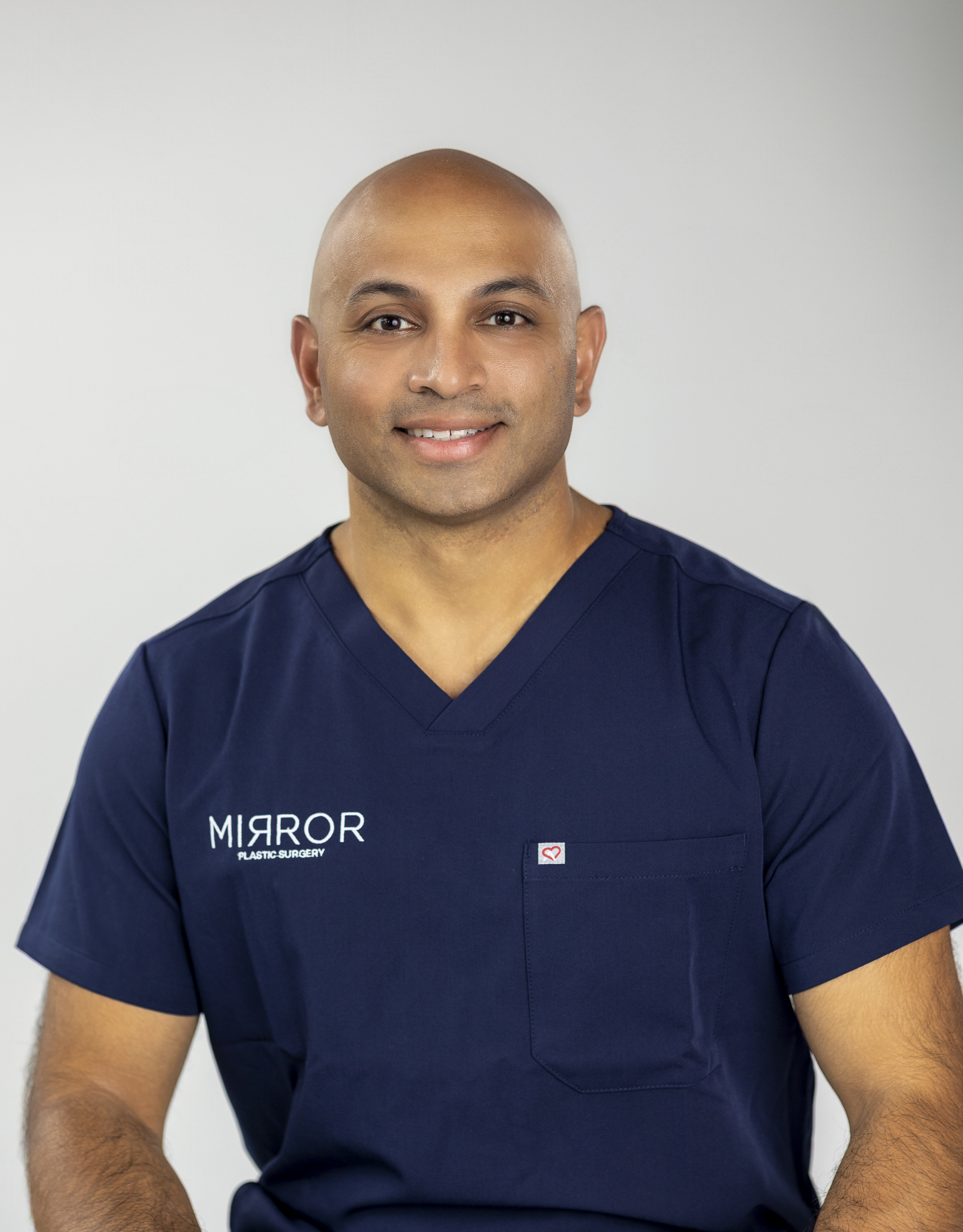
Patients make better choices when they see a real example of a fully verified surgeon. Dr. Akash of Mirror Plastic Surgery in St. Petersburg provides that benchmark. His academic path began at MIT with undergraduate studies in neuroscience and nuclear engineering. He then completed the Harvard-MIT Division of Health Sciences and Technology joint M.D. program, graduating cum laude with Honors.
His surgical training continued with a seven-year integrated plastic and reconstructive surgery residency at Johns Hopkins University, one of the most competitive programs in the country. He then completed an aesthetic surgery fellowship at the Manhattan Eye, Ear and Throat Hospital (MEETH), a program focused on advanced facial rejuvenation techniques, including blepharoplasty. He is board certified by the American Board of Plastic Surgery (ABPS) and holds an active Florida medical license.
Newsweek has named him one of America’s Best Plastic Surgeons for two consecutive years, including 2025. This combination of training, certification, and recognition sets a clear standard that patients should verify, not assume, in any surgeon they consider. The following seven-step process shows you exactly how to perform that verification for any Tampa-area surgeon.
7-Step Verification Checklist for Tampa Blepharoplasty Surgeons
Step 1: Confirm ABPS Certification. The ABPS Physician Directory allows free public searches by name and state. ABPS is the only board recognized by the American Board of Medical Specialties (ABMS) for plastic surgery. Confirm that the surgeon’s name appears, that certification is current, and that no lapse is listed.
Step 2: Verify Florida Medical Licensure. The Florida Department of Health Medical Quality Assurance license lookup shows real-time license status, expiration date, and any disciplinary actions on record. Enter the surgeon’s name or license number and confirm that the license is active and unrestricted.
Step 3: Check Hospital Privileges at Tampa-Area Facilities. Contact Tampa General Hospital and St. Joseph’s Hospital directly and ask whether the surgeon holds active admitting or surgical privileges. Privilege status confirms that a credentialing committee, composed of peer physicians, has independently reviewed the surgeon’s training, outcomes, and professional standing.
Step 4: Compare ASOPRS and ABPS Training Pathways. The American Society of Ophthalmic Plastic and Reconstructive Surgery (ASOPRS) is a subspecialty society for ophthalmologists who complete additional oculoplastic training. ABPS certifies plastic surgeons who complete a full plastic surgery residency. Both pathways can produce qualified blepharoplasty surgeons, yet the training routes differ substantially. An ABPS-certified plastic surgeon with a dedicated aesthetic fellowship has broad reconstructive and facial anatomy training. An ASOPRS-trained surgeon approaches the eyelid from an ophthalmologic foundation. Patients should know which credential their surgeon holds and what that training includes.
Step 5: Assess Case Volume and Facility Accreditation. Ask the practice how many blepharoplasty procedures the surgeon performs each year. Also ask whether the surgical facility holds accreditation from AAAASF, AAAHC, or The Joint Commission. Accredited facilities follow standardized safety protocols for equipment, staffing, anesthesia, and emergency response.
Step 6: Review Disciplinary History and Malpractice Records. In addition to the Florida DOH lookup, review the National Practitioner Data Bank Public Use File for any reported adverse actions. Individual malpractice settlements are not always public. Patterns of disciplinary action or license restrictions, however, are documented and searchable.
Step 7: Evaluate Practice Model and Daily Case Volume. A surgeon who performs five to ten procedures per day has less time for pre-operative planning, intraoperative precision, and post-operative follow-up for each case. A concierge model, with one to two surgeries per day, allows the team to maintain focused attention. Ask directly how many surgeries the practice schedules daily and how long a typical consultation lasts.
Tampa Hospital Privileges and Why They Matter for Eyelid Surgery
Tampa General Hospital and St. Joseph’s Hospital are major academic and tertiary-care facilities in the Tampa Bay area where board-certified plastic surgeons may hold privileges. Hospital privilege verification matters for blepharoplasty patients because rare but serious complications, such as orbital hemorrhage, require immediate access to advanced surgical and ophthalmologic resources. A surgeon with active privileges at a major Tampa hospital has undergone independent credentialing review and maintains the institutional access needed to manage complications that exceed the capacity of an outpatient surgical suite.
Key Factors to Compare Between Tampa Eyelid Surgeons
Several credential combinations carry the most weight when you compare blepharoplasty surgeons in Tampa. Board certification pathway, fellowship training specific to the periorbital region, active Florida licensure without restrictions, accredited surgical facilities, and a practice model that allows enough time per patient all influence safety and outcomes. Each factor adds a different layer of protection.
Surgeons who combine ABPS certification with a dedicated aesthetic fellowship, especially at a program like MEETH with a focused facial surgery curriculum, bring a layered skill set to eyelid surgery that general cosmetic training does not match. The surgeon’s training determines technical capability and judgment in the operating room. The surgical environment must also meet rigorous standards to support that skill. Facility accreditation confirms that the setting where surgery occurs follows independently audited safety standards, not only the surgeon’s self-reported protocols.
Common Misunderstandings About Eyelid Surgeon Credentials
Many patients assume that any physician who markets themselves as an “eyelid specialist” or “oculoplastic surgeon” holds equivalent formal certification. That assumption is incorrect. The term “oculoplastic surgeon” does not always mean that a physician has completed an ASOPRS fellowship or holds ABPS certification. Dermatologists, general ophthalmologists, and non-core-specialty physicians may legally perform blepharoplasty in Florida without the specialized training those titles suggest.
Another frequent misunderstanding is that online reviews and before-and-after photo galleries count as credential verification. Patient satisfaction scores reflect subjective experience. They do not confirm board certification status, licensure standing, or whether a surgeon has faced disciplinary action. Verification requires checking primary sources such as ABPS, Florida DOH, and hospital credentialing offices instead of relying on review aggregators.
Quick Verification Checklist for Tampa Patients
Before scheduling a blepharoplasty consultation in Tampa, confirm:
- Current ABPS certification confirmed (see Step 1 for lookup instructions).
- Florida medical license is active and unrestricted via the Florida DOH lookup.
- Active surgical privileges confirmed at Tampa General Hospital or St. Joseph’s Hospital.
- Certification pathway, ABPS or ASOPRS, is clear and matches the surgeon’s stated training.
- Surgical facility holds accreditation from AAAASF, AAAHC, or The Joint Commission.
- No disciplinary actions appear on record via Florida DOH or the NPDB.
- Practice performs one to two surgeries per day, and consultation length is at least 45 to 60 minutes.
Questions to ask at consultation: What board certifies you, and is that certification current? Where did you complete your aesthetic fellowship? How many blepharoplasties do you perform each year? What accreditation does your surgical facility hold? What is your protocol if a complication requires hospital-level care?
Frequently Asked Questions About Tampa Blepharoplasty Credentials
Is there a separate board certification specifically for oculoplastic surgery?
No ABMS-recognized board exists exclusively for oculoplastic surgery. Surgeons who pursue oculoplastic training usually complete an ophthalmology residency followed by an ASOPRS-approved fellowship. Plastic surgeons who perform blepharoplasty are certified by the American Board of Plastic Surgery, which is ABMS-recognized. Both pathways are legitimate but represent different foundational training. Patients should ask which pathway their surgeon followed and what specific fellowship training in periorbital surgery they completed.
How do I check a surgeon’s hospital privileges in Tampa?
Call the medical staff offices at Tampa General Hospital and St. Joseph’s Hospital directly. Request confirmation of whether a named physician holds active surgical or admitting privileges. Hospital credentialing offices do not have to share the details of a privilege review, yet they can confirm active status. This step is separate from the Florida DOH license lookup and adds another layer of peer-reviewed verification.
Does ABPS certification guarantee a surgeon is qualified for blepharoplasty specifically?
ABPS certification confirms that a surgeon has completed an accredited plastic surgery residency and passed rigorous written and oral examinations covering the full scope of plastic surgery, including eyelid anatomy and periorbital procedures. Certification alone does not prove subspecialty volume or fellowship-level expertise in blepharoplasty. Patients should ask about the surgeon’s fellowship training in facial surgery and the number of blepharoplasty cases performed annually to gauge depth of experience beyond baseline certification.
What does facility accreditation mean for an outpatient blepharoplasty procedure?
Accreditation by AAAASF, AAAHC, or The Joint Commission means the surgical facility has been independently inspected and meets defined standards for equipment maintenance, staff credentialing, anesthesia protocols, infection control, and emergency preparedness. An accredited outpatient surgical center is different from a physician’s office procedure room, which may operate without any external safety audit. For a procedure performed near the eye, the difference in emergency response capability between an accredited and non-accredited facility can be clinically significant.
Why does the surgeon’s daily case volume matter for blepharoplasty?
Blepharoplasty requires precise pre-operative marking, careful intraoperative tissue management, and attentive post-operative monitoring. A practice that schedules one to two surgeries per day gives the surgical team time to focus on each patient across all three phases. Practices that schedule five to ten surgeries daily compress the time available for each case. For a procedure where a few millimeters of tissue removal determine both function and appearance, the margin for inattention is narrow. Asking about daily surgical volume offers a direct way to assess the level of individualized care a patient will receive.
Conclusion: Use Verification to Protect Your Vision and Results
Blepharoplasty is a precise surgical procedure with meaningful anatomical risk. Tampa patients who follow a structured seven-step verification process, confirming ABPS certification, Florida licensure, hospital privileges, facility accreditation, disciplinary history, fellowship training, and practice model, enter consultations with an objective basis for comparison instead of relying on marketing or reviews alone. The verification tools are publicly available, free to use, and usually take less than thirty minutes to complete. Surgeons who meet every criterion on this checklist have earned that standing through independent review, not self-designation.