
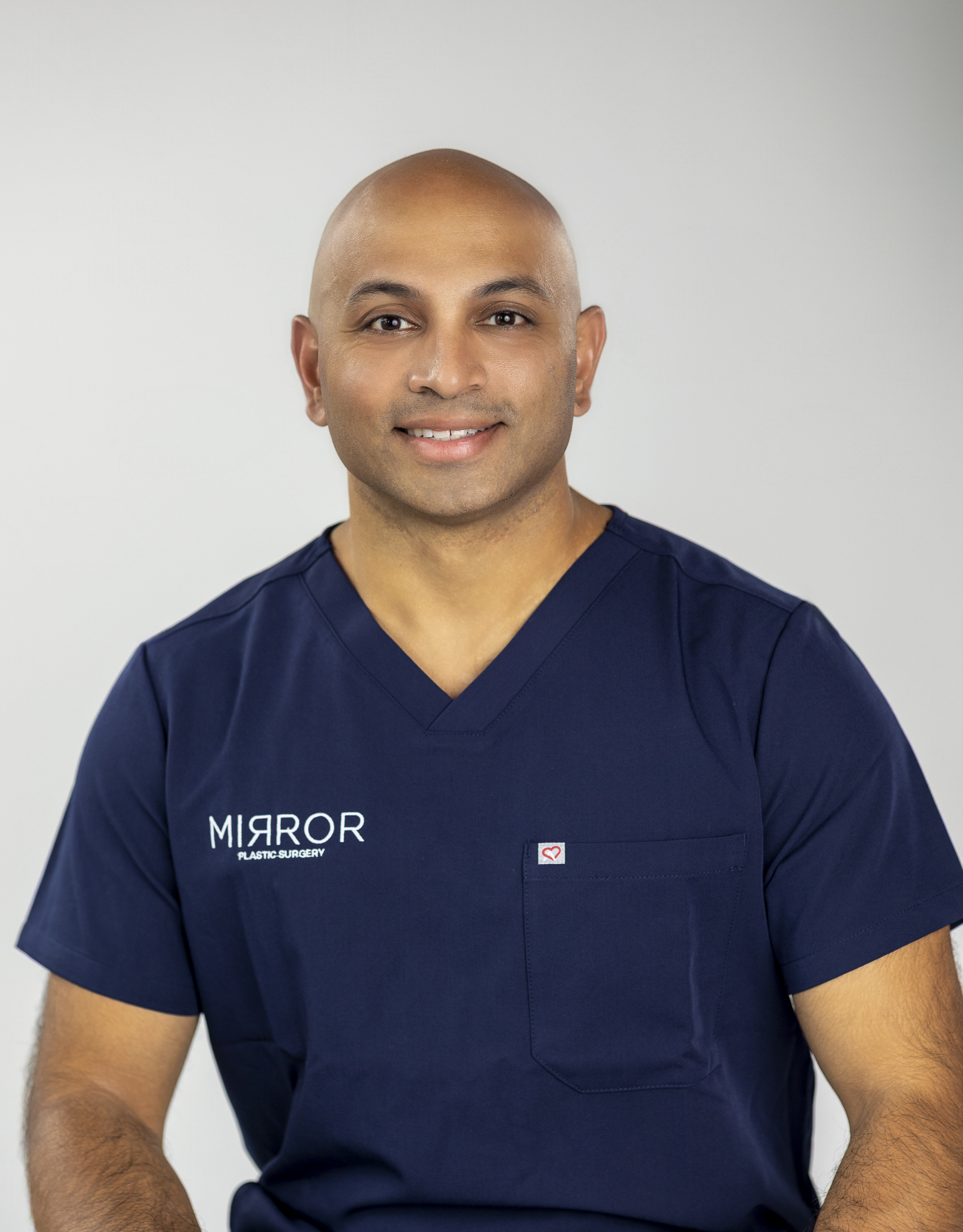
Written by: Dr. Akash Chandawarkar, Board Certified Plastic Surgeon, Mirror Plastic Surgery | Last updated: July 12, 2026
Key Takeaways
- A natural-looking tummy tuck depends on complete abdominal-wall restoration, precise scar placement, and calibrated muscle repair from chest to pubic region.
- Full abdominoplasty with comprehensive diastasis recti repair and umbilical reconstruction creates athletic, proportionate results, unlike mini procedures that often leave upper-abdominal concerns.1
- Low, tension-managed scars and precise umbilical technique are critical for long-term natural aesthetics, and fellowship-level training with layered closure methods improves scar quality and healing.
- Surgeon credentials such as board certification, aesthetic fellowship training, and a low-volume concierge model directly influence the consistency and safety of natural outcomes.
- Patients seeking the best tummy tuck surgeon in Tampa Bay for natural results can schedule a personalized consultation at Mirror Plastic Surgery for a thorough anatomical evaluation and individualized treatment plan.
Natural-Looking Tummy Tuck Results Are Achievable
Abdominoplasty can look completely natural when it includes comprehensive muscle repair and careful umbilical technique. The primary anatomical focus is the rectus abdominis muscle pair, which can separate along the midline after pregnancy or significant weight change, a condition called diastasis recti. Muscle plication re-establishes midline abdominal strength, flattens the abdominal wall, and improves both contour and core function for patients with visible diastasis recti.1
Plication must extend from the chest to the pubic region, not just the lower segment. Partial repair leaves the upper abdominal wall unsupported and produces a residual pooch above the navel that disrupts a natural silhouette. In cases of weak fascia or significant rectus diastasis, additional suture layers or absorbable mesh can reinforce the abdominal wall and reduce recurrence risk.1 Umbilical stalk preservation also plays a central role. The belly button is detached from the surrounding skin, the skin is repositioned, and the navel is re-anchored through a new opening sized and shaped to match the patient’s natural anatomy. When executed with precision, the reconstructed umbilicus appears virtually indistinguishable from a naturally formed navel.
Excessive muscle tightening during plication can create an unnaturally square torso and visible abdominal fullness shifts. Calibrated tension management prevents this outcome and supports an athletic, balanced contour instead of an artificial appearance.1
Modern Tummy Tuck Methods Focus on Full Restoration
Current abdominoplasty standards emphasize comprehensive abdominal-wall restoration rather than limited or mini approaches. Surgeons now recognize that the abdominal wall functions as an integrated unit. Treating only the lower segment while leaving upper muscle separation intact produces incomplete functional and aesthetic results.
A full abdominoplasty involves a hip-to-hip incision, removal of excess skin and fat from both the upper and lower abdomen, comprehensive muscle repair from top to bottom for diastasis recti, and navel repositioning. This approach addresses the entire midsection from just below the chest to the pubic region. A mini abdominoplasty uses a shorter incision, removes limited tissue, may tighten only the lower abdominal muscles for mild laxity, and does not reposition the navel. As a result, upper-abdominal contour concerns often remain.
At Mirror Plastic Surgery, abdominoplasty focuses on restoring the entire abdominal musculature from chest to pubic area for true functional restoration. Mini tummy tucks that address only the lower abdomen are generally avoided because they routinely leave a residual upper pooch that patients find dissatisfying. The objective is a result that is structurally sound and visually natural across the full midsection.
How Scar Placement Shapes a Natural-Looking Abdomen
Comprehensive muscle repair establishes the foundation for natural results, and scar placement determines whether those results appear discreet in daily life. Scar placement is one of the most visible long-term indicators of surgical quality. A well-positioned tummy tuck incision sits low enough to be concealed beneath underwear or swimwear, follows the natural contour of the lower abdomen, and is closed under minimal tension to promote fine, flat healing. Fellowship training helps surgeons refine scar placement and quality, with well-executed surgery producing low, thin, well-healed scars instead of thick, wide, or poorly placed scars.
Tension management during closure directly affects scar width and elevation. Layered closure techniques distribute tension across tissue planes rather than concentrating it at the skin surface, which reduces the risk of widened or hypertrophic scarring. Post-operative scar care further refines the outcome. Scar gel and silicone tape therapies typically begin at approximately two weeks, and gentle scar massage usually starts at approximately four weeks, then continues with consistent routines throughout the healing period.
The umbilical scar follows the same principles. A natural-appearing navel has a subtle inward depression, a consistent shape, and no visible tension lines radiating outward. Achieving this appearance requires precise inset technique and appropriate wound closure. Surgeons refine these skills through focused aesthetic fellowship training in body contouring.
The Mirror Plastic Surgery Concierge Care Model
Mirror Plastic Surgery follows a concierge medicine philosophy that directly supports high-quality surgical outcomes. Each patient receives an initial consultation of up to one hour. During this visit, Dr. Akash performs a comprehensive top-to-bottom anatomical assessment, reviews the patient’s goals and medical history, and creates an individualized treatment plan grounded in evidence-based principles. The practice follows a clear hierarchy of priorities: safety first, function second, aesthetics third. Every surgical decision is evaluated for its impact on overall well-being before cosmetic effect.
Mirror Plastic Surgery limits surgical volume to one to two procedures per day to preserve this level of attention. High-volume practices may perform five to ten surgeries daily, which can divide focus. The lower volume at Mirror Plastic Surgery ensures that the entire clinical team maintains focused, unhurried attention on each patient before, during, and after the procedure. This structural safeguard supports consistent, natural outcomes.1
Schedule your consultation with Dr. Akash and experience a full hour of personalized, anatomy-based evaluation without rushed assessments.
Surgeon Credentials That Support Natural Results
Subspecialty focus strongly influences aesthetic outcomes. A surgeon who concentrates most of their practice on defined procedures develops more refined expertise in scar placement, tension management, and functional results. Dr. Akash’s training reflects one of the most rigorous credential pathways available in plastic surgery.
His academic foundation began at MIT with studies in neuroscience and nuclear engineering, followed by the Harvard-MIT Division of Health Sciences and Technology joint M.D. program, from which he graduated with Honors. He then completed a seven-year integrated plastic and reconstructive surgery residency at Johns Hopkins University, one of the world’s most respected programs. An aesthetic surgery fellowship at the Manhattan Eye, Ear and Throat Hospital (MEETH) provided advanced training in body contouring, facial rejuvenation, and breast surgery. He also completed the Stanford University Biodesign Innovation Fellowship, which trains physician-innovators to identify and solve unmet clinical needs.
Dr. Akash has been named to Newsweek’s America’s Best Plastic Surgeons list for two consecutive years, including 2025. He is board certified by the American Board of Plastic Surgery, holds hospital privileges for rare complication management, and serves on the editorial board of the Aesthetic Surgery Journal.
Comparing Tummy Tuck Techniques and Trade-Offs
Clear distinctions between abdominoplasty approaches help patients match procedures to their anatomy and goals. A full abdominoplasty suits patients with significant post-pregnancy or post-weight-loss changes, including extensive skin laxity and muscle separation across the entire midsection. It delivers comprehensive contouring with navel repositioning and full diastasis repair. Many patients return to work 2–4 weeks after a full tummy tuck, although full recovery often takes 6–8 weeks or longer because the procedure includes abdominal muscle tightening.
An extended abdominoplasty adds lateral thigh and flank contouring to the full procedure. This option works well for patients with excess skin extending around the hips after major weight loss.
A mini abdominoplasty typically suits patients with a small amount of excess skin and fat below the navel who maintain a stable weight and have no significant diastasis recti above the navel. It offers subtle lower-abdomen refinement but does not address upper-abdominal concerns. Initial recovery from a mini tummy tuck generally takes one to two weeks, and most patients can return to light activities or desk jobs within that timeframe, although full healing often requires three to six weeks.
Key Decision Factors for Tummy Tuck Candidates
Candidacy for abdominoplasty depends on a combination of anatomical, health, and lifestyle factors. A thorough pre-operative evaluation should address several core considerations that shape both safety and long-term results.
- Stable weight: Candidates should be at or near their goal weight, because significant post-operative weight fluctuation can distort results. Long-term maintenance depends on consistent weight, core strength development after full healing, and balanced nutrition.
- Completed family planning: Future pregnancies can re-separate repaired muscles and stretch repositioned skin, which compromises outcomes.
- Recovery timeline: Final natural results appear as swelling subsides and tissues settle over several months.1 The abdominal wall needs time to heal, and patients should avoid heavy lifting, pushing, or pulling during this period.
- Scar longevity: Scars are permanent but usually continue to fade and flatten for twelve to eighteen months. Silicone therapy and sun protection support faster and smoother maturation.
- Nutrition and supplementation: Daily supplementation of 500–1000 mg Vitamin C and 15–30 mg zinc supports collagen production and tissue regeneration during recovery.
Addressing Common Tummy Tuck Misconceptions
Several persistent misconceptions shape how patients view abdominoplasty and surgeon selection. These beliefs often arise from experiences with outdated techniques or rushed care models.
The belief that tummy tucks always feel unnaturally tight stems from patients who experienced over-tightened muscle plication or excessive skin removal under tension. This misconception persists because these technically flawed procedures can create lasting discomfort. Properly calibrated repair produces firmness that normalizes within weeks as tissues adapt, rather than a rigid or constricted sensation.
Unnatural belly buttons represent another visible marker of technically deficient surgery. They often result from poorly sized openings, excessive tension at the inset, or inadequate stalk preservation. Surgeons with fellowship-level training in aesthetic body contouring treat umbilicoplasty as a distinct technical skill that requires the same precision as the primary closure.
Rushed consultations reflect a structural problem in many high-volume practices. When a surgeon evaluates multiple patients per hour, the anatomical nuances that determine technique selection, such as degree of diastasis, skin quality, fascial integrity, and body proportions, may not receive adequate attention. This environment encourages a one-size-fits-all approach and increases revision risk.
Board certification alone does not guarantee aesthetic expertise. Patients should ask whether a surgeon completed a fellowship, where it took place, and what that fellowship emphasized, in addition to ABPS certification and high procedure volume in the specific surgery needed.
Frequently Asked Questions
Is a tummy tuck safe, and what factors most affect safety?
Abdominoplasty has a strong safety profile when performed by a board-certified plastic surgeon in an accredited facility with a board-certified physician anesthesiologist. Safety depends on the patient’s overall health, the extent of correction planned, whether procedures are combined, and the surgeon’s training and judgment. At Mirror Plastic Surgery, pre-operative evaluation includes advanced diagnostic tools such as ultrasound for precise anatomical assessment. The practice also advises against combining too many procedures at once, because evidence shows that extensive combinations can sharply increase complication rates. Dr. Akash’s board certification by the American Board of Plastic Surgery also provides hospital privileges for the rare event of a surgical complication.
How do I know if I need a full tummy tuck or a mini tummy tuck?
The appropriate procedure depends on the location and extent of your anatomical concerns. A mini tummy tuck addresses only the area below the navel and suits patients close to their ideal weight with mild lower-abdominal skin laxity and no significant muscle separation above the navel. A full abdominoplasty is indicated when skin laxity extends across the entire midsection, diastasis recti reaches above the navel, or pregnancy or weight change has distorted the belly button. Most post-pregnancy and post-weight-loss patients require a full procedure to achieve comprehensive, natural-looking results. Accurate determination requires a hands-on anatomical evaluation rather than a photo review or online questionnaire.
How long does recovery take, and when will I see my final results?
Most patients return to light daily activities within two to four weeks after a full abdominoplasty. Strenuous exercise and heavy lifting usually remain restricted for approximately twelve weeks so the repaired abdominal wall can heal fully. Light cardio such as stationary cycling often resumes around four weeks. Final results, including full scar maturation and complete resolution of swelling, typically appear six to twelve months after surgery.1 Recovery timelines are individualized based on the extent of correction, muscle repair involvement, and the patient’s overall health profile.
What should I look for when comparing tummy tuck surgeons in Tampa Bay?
Key criteria include board certification by the American Board of Plastic Surgery, completion of an aesthetic surgery fellowship with a focus on body contouring, and a before-and-after gallery that shows consistently natural scar placement and umbilical results. A consultation model that allows sufficient time for thorough anatomical assessment also matters. Volume structure plays a role as well. Practices that limit daily surgical volume to one or two cases can provide focused, unhurried attention that high-volume environments rarely match. Ask whether the surgeon performs full muscle repair from chest to pubic region or limits plication to the lower segment, because this distinction significantly affects long-term contour.
How do I maintain my results long-term?
Long-term success after abdominoplasty depends on maintaining weight within approximately ten pounds of your post-surgery weight, developing core strength after your surgeon confirms full healing, and following a balanced nutritional approach. Annual check-ins with your surgeon help track healing and address any concerns early. Significant weight gain or future pregnancies can re-separate repaired muscles and stretch repositioned skin. Scar care with silicone products and sun protection during the first year supports optimal scar maturation. Surgical improvements provide a durable foundation, and lifestyle consistency largely determines how long results last.
Conclusion: Choosing a Thoughtful, Anatomy-First Approach
Natural-looking abdominoplasty outcomes result from a coordinated approach that includes comprehensive rectus diastasis repair from chest to pubic region, precise umbilical reconstruction, tension-managed scar closure, and a surgical philosophy that prioritizes anatomy and patient well-being over volume and speed. Patients in Tampa Bay who select a surgeon with fellowship-level aesthetic training, a low-volume concierge model, and a transparent, evidence-based consultation process are more likely to achieve results that are both functionally sound and visually natural.1
Mirror Plastic Surgery and Dr. Akash offer this standard of care in St. Petersburg, Florida. With elite fellowship-level training and a low-volume concierge practice model, the focus remains entirely on you.
Book a consultation with Dr. Akash and take the first step toward a natural, lasting abdominoplasty result built on safety, function, and anatomical precision.
1 Results may vary from person to person. Editorial content, before and after images, and patient testimonials do not constitute a guarantee of specific results.