
Written by: Dr. Akash Chandawarkar, Board Certified Plastic Surgeon, Mirror Plastic Surgery | Last updated: July 17, 2026
Key Safety Takeaways for Tampa Plastic Surgery
- Verifiable ABPS board certification, facility accreditation, and active hospital privileges are the most reliable predictors of safety and quality in Tampa plastic surgery.
- Independent credential checks across ABMS databases, Florida licensure records, and FSMB disciplinary tools are essential because Florida allows any licensed physician to call themselves a cosmetic surgeon.
- QUAD A or AAAHC accreditation holds outpatient facilities to hospital-level standards for anesthesia safety, infection control, and emergency preparedness with ongoing inspections.
- Limiting daily surgical volume to one or two cases preserves full team focus, reduces fatigue-related risk, and supports individualized pre- and post-operative care.
- Schedule your consultation at Mirror Plastic Surgery to review how these safety standards apply to your procedure and health profile.
What ABPS Board Certification Means for Your Safety
The American Board of Plastic Surgery (ABPS) is the only board the American Board of Medical Specialties (ABMS) recognizes specifically for plastic surgery. ABPS certification requires completion of an accredited plastic surgery residency, passage of rigorous written and oral examinations, and fulfillment of additional ethical and professional criteria. Certification status can be verified in under 60 seconds at the ABMS certification database or directly through the ABPS verification tool. In Florida, the titles “plastic surgeon” and “cosmetic surgeon” do not require specific plastic surgery training, so any licensed physician may use them regardless of specialty background.
How to Verify a Surgeon’s Credentials Step by Step
A complete credential check covers five independent sources because no single database captures every safety detail. ABMS tools confirm specialty certification but do not list state-level sanctions. Florida licensure records show current legal standing but do not verify hospital privileges. Hospital privilege checks confirm peer review but do not reveal actions in other states. Each source closes a gap the others leave open.
- ABPS certification status: Search the surgeon’s full legal name at abplasticsurgery.org and cross-check through the ABMS certification database to confirm the certification is active, current, and specifically in plastic surgery, not a non-ABMS board such as the American Board of Cosmetic Surgery, which is not ABMS-recognized.
- Florida state license: Confirm active licensure and absence of disciplinary actions through the Florida Department of Health’s online verification system.
- Disciplinary history: Run the surgeon’s name through the Federation of State Medical Boards DocInfo tool at FSMB.org to identify sanctions, malpractice settlements, or license restrictions across all states.
- Hospital privileges: The American Society of Plastic Surgeons requires all members to maintain unrestricted plastic surgery operating privileges at an accredited hospital in their community. Lack of such privileges is a recognized safety red flag.
- Facility accreditation: Confirm the operating facility holds current accreditation from a recognized body, which the next section explains in detail.
Board eligible status for ABPS means a surgeon has an approved application, has completed plastic surgery residency within the last five years, and has not yet passed both the written and oral examinations. Board eligible does not equal board certified.
How QUAD A and AAAHC Accreditation Protect Patients
Outpatient surgical facility accreditation functions separately from surgeon credentials and focuses on the safety of the environment where surgery occurs. The two most commonly cited bodies for office-based plastic surgery settings are QUAD A (AAAASF) and AAAHC. The table below highlights how each organization approaches key safety standards.
Accredited private plastic surgery clinics meet hospital-level safety standards while limiting exposure to the diverse patient populations, including immunosuppressed individuals, that hospital settings treat. Beyond these facility-level safeguards, anesthesia provider standards add another critical layer of protection.
Anesthesia Provider and Monitoring Standards in Outpatient Surgery
Anesthesia oversight represents one of the most consequential safety variables in outpatient plastic surgery. The American Society of Anesthesiologists (ASA) Standards require qualified anesthesia personnel to remain present in the room throughout all general anesthetics, regional anesthetics, and monitored anesthesia care. Minimum monitoring requirements under those standards include the following elements, which work together to track oxygenation, ventilation, circulation, and temperature stability.
- Continuous pulse oximetry (SpO₂) with plethysmography
- Capnography with waveform display for all general anesthesia cases
- Noninvasive blood pressure and heart rate recorded at minimum every five minutes
- Continuous ECG monitoring using three or five leads throughout the procedure
- Temperature monitoring before anesthesia and every 30 minutes for procedures lasting more than 30 minutes
Florida regulations require that, before any office surgery, a physician evaluate the risk of anesthesia and of the surgical procedure. Written informed consent must document the type of anesthesia, the anesthesia provider, and confirmation that a choice of anesthesia provider exists. Mirror Plastic Surgery uses board-certified physician anesthesiologists, the highest credential tier, for all surgical procedures.
How Low Daily Surgical Volume Supports Safer Outcomes
Daily surgical volume directly affects team focus, fatigue exposure, and the level of individualized attention each patient receives. A University of Michigan study of more than 15,000 bariatric surgery patients found that serious complication rates were inversely associated with both surgeon and hospital annual procedural volume. That research examined annual volume, yet the same mechanisms of fatigue, reduced team focus, and compressed preparation time apply to practices scheduling five to ten surgeries per day.
A CosmetAssure database analysis of abdominoplasties found that major complications occurred at a higher rate than for other cosmetic procedures, with combined procedures identified as a key risk factor. This evidence supports limiting the number of procedures combined in a single operative session, a policy Mirror Plastic Surgery follows explicitly.
Mirror Plastic Surgery limits its schedule to one to two surgeries per day. This structure allows the entire clinical team to maintain full concentration on each patient before, during, and after the procedure, which high-volume practices running five to ten daily cases cannot easily replicate. The surgeon leading that focused team brings credentials that align with every safety standard outlined in this guide.
Surgeon Profile: Dr. Akash and His Training Path
Dr. Akash completed his medical degree through the Harvard-MIT Division of Health Sciences and Technology (HST), graduating from Harvard Medical School with Honors. His surgical training included a seven-year integrated plastic and reconstructive surgery residency at Johns Hopkins University, with rotations at the Johns Hopkins Hospital, the R Adams Cowley Shock Trauma Center, and the Curtis National Hand Center for microsurgical training. After residency, he completed an aesthetic surgery fellowship at the Manhattan Eye, Ear and Throat Hospital (MEETH), one of the most competitive aesthetic fellowship programs in the country, with advanced training in facial rejuvenation, breast surgery, and body contouring. He also completed the Stanford University Biodesign Innovation Fellowship, which focuses on physician-led medical device development.
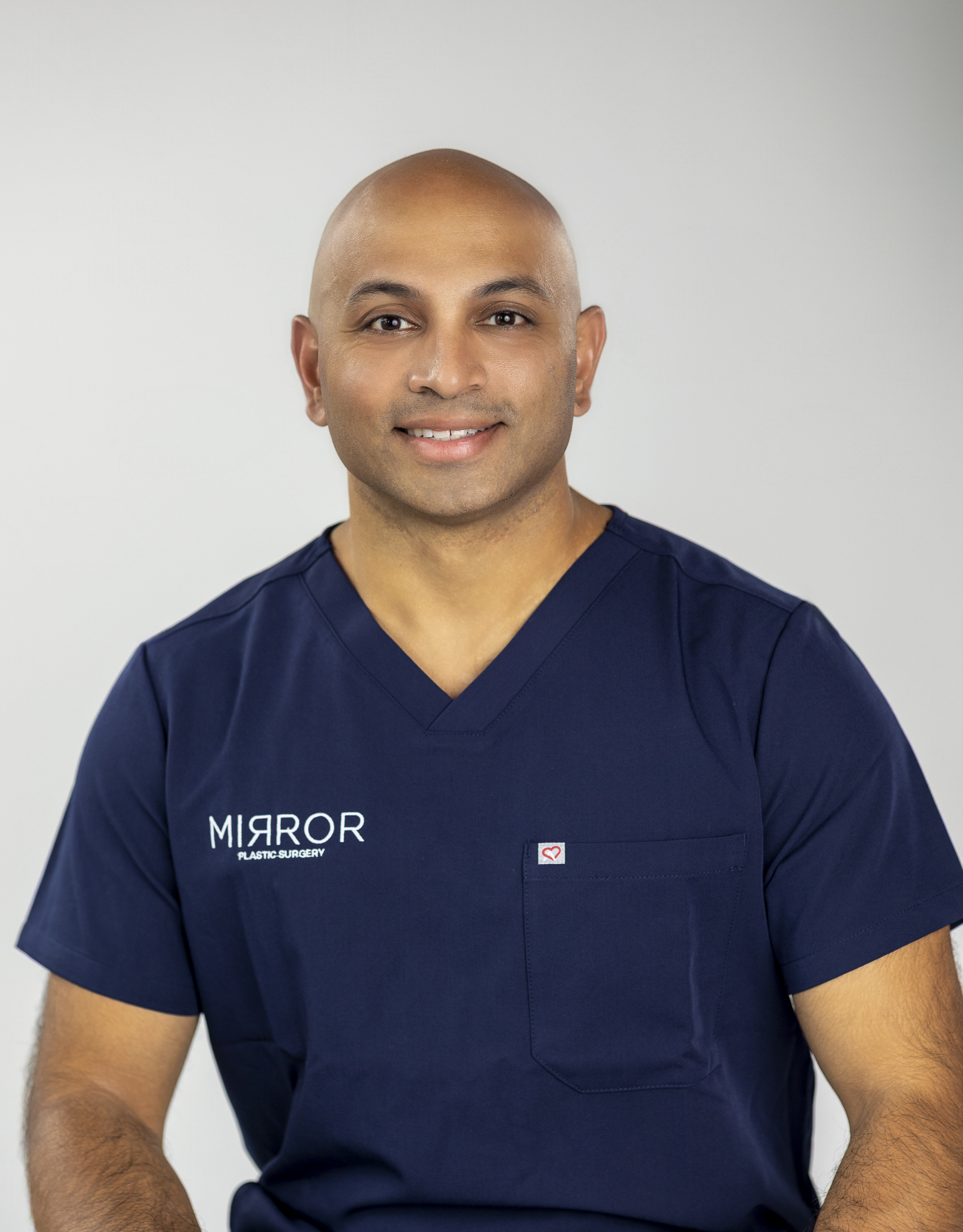
Dr. Akash is board certified by the American Board of Plastic Surgery, holds active hospital privileges, and serves on the editorial board of the Aesthetic Surgery Journal as Next Generation Editor. He has been named to America’s Best Plastic Surgeons by Newsweek for two consecutive years. His advisory roles include Motiva (breast augmentation), Tiger Aesthetics (AlloClae and Avéli), Cypris Medical, and Merz Aesthetics.
Recovery Difficulty and Downtime by Procedure Type
Objective recovery data helps you plan realistically and decide whether a practice’s post-operative support model matches the complexity of your procedure.
- Abdominoplasty: Major complication rates reach 4%, the highest among common cosmetic procedures in the CosmetAssure database.1 Typical downtime is four to six weeks for return to non-strenuous activity.1 Risk increases substantially when surgeons combine abdominoplasty with other body procedures in the same operative session.
- Breast procedures: Liposuction performed in combination with other procedures carries a 3.5% complication rate.1 Breast augmentation combined with a lift follows the same pattern. Combining procedures in a single operative session increases cumulative anesthesia time, fluid shifts, and metabolic demand, which raises complication risk above what either procedure would carry alone. Standard recovery for augmentation alone is two to three weeks, while combined procedures often extend this timeline.1
- Facial surgery: Facelifts, rhinoplasty, and blepharoplasty generally carry lower systemic complication profiles than body procedures. Typical downtime ranges from one to two weeks for blepharoplasty, two to three weeks for rhinoplasty, and two to four weeks for facelifts. Final result stabilization, particularly for rhinoplasty tip refinement, can require up to 12 months.1
The American Society of Plastic Surgeons stated in March 2026 that plastic surgery carries real risks and that the risk of complications is never zero. This position reinforces the value of choosing a surgeon with hospital privileges and a documented complication-management protocol.
Questions to Bring to Your Consultation
The following questions map directly to the verifiable safety criteria outlined in this guide. Any surgeon operating at a high standard should answer each one clearly and without hesitation.
- Can you confirm your ABPS board certification status, and where can I verify it independently?
- What accreditation does the surgical facility hold, such as QUAD A, AAAHC, or Joint Commission, and when was the last inspection?
- Who provides anesthesia, and what are their credentials? Is a board-certified MD anesthesiologist present throughout the procedure?
- How many surgeries do you perform on the day of my procedure?
- What is your protocol if a complication arises, and do you hold active hospital privileges for transfer and management?
- Are you recommending any procedure combinations, and what does the evidence show about cumulative complication risk for that combination?
Bring this list to your consultation, and plan to have each question addressed in full during your hour-long assessment.
Frequently Asked Questions
How do I verify that a Tampa plastic surgeon is truly board certified by the ABPS?
Visit certificationmatters.org, enter the surgeon’s first and last name, and select “Plastic Surgery” as the specialty. Results appear immediately and come from the ABMS database, which is refreshed daily and recognized by The Joint Commission, NCQA, and URAC as primary source verification. Cross-check the result at abplasticsurgery.org using the same name. If the surgeon does not appear in both databases as currently certified, they do not hold active ABPS certification regardless of what their website states. In Florida, any licensed physician may legally call themselves a cosmetic surgeon without ABMS certification, so independent verification remains essential.
What is the difference between QUAD A and AAAHC accreditation for a plastic surgery facility?
Both QUAD A (AAAASF) and AAAHC are nationally recognized accrediting bodies whose standards cover facility design, infection control, anesthesia safety, emergency preparedness, and staff credentialing. QUAD A was established in 1980 and accredits thousands of facilities across various outpatient surgical, procedural, and other medical settings. AAAHC was formed in 1979 and accredits approximately 6,700 organizations including ambulatory surgical centers and community health centers. Facilities holding active accreditation from either AAAHC or Joint Commission automatically receive the highest score on five Leapfrog patient safety measures. For patients, the practical takeaway is that both require ongoing compliance and regular inspections, and both mandate documented infection-control protocols, emergency equipment availability, and credentialed anesthesia providers.
Does it matter whether my anesthesia is provided by an MD anesthesiologist versus a nurse anesthetist?
Both board-certified MD anesthesiologists and certified registered nurse anesthetists (CRNAs) are licensed anesthesia providers recognized by accrediting bodies. The most important distinction involves credential verification and adherence to robust monitoring standards during your procedure. ASA standards require the continuous monitoring protocols outlined earlier, including SpO₂, capnography, blood pressure, ECG, and temperature tracking, regardless of provider type. Florida regulations also require that your informed consent document the specific anesthesia provider and confirm that you were offered a choice. Mirror Plastic Surgery uses board-certified physician anesthesiologists, the highest credential tier, for all surgical procedures.
Why does daily surgical volume matter for my safety?
Daily surgical volume affects team fatigue, preparation time, and the degree of individualized attention each patient receives. Practices performing five to ten surgeries per day often compress pre-operative preparation, limit post-operative monitoring time per patient, and expose the surgical team to cumulative fatigue across the operative day. Mirror Plastic Surgery limits its schedule to one to two surgeries per day so the full clinical team can focus on a single patient throughout the perioperative period. This model also preserves time for thorough pre-operative evaluation, including ultrasound assessment when indicated, which reduces intraoperative surprises.
What should I do if I find a disciplinary action in a surgeon’s history?
A single resolved complaint does not automatically disqualify a surgeon, yet the nature, recency, and pattern of any disciplinary action matter significantly. Use the Federation of State Medical Boards DocInfo tool at FSMB.org to review the full history across all states where the surgeon has held a license, not just Florida. Check the Florida Department of Health’s online verification system for current license status and any active restrictions. Ask the surgeon directly about any findings during your consultation; a surgeon who values transparency will address the history without evasion. If hospital privileges have been restricted or revoked, treat that as a serious safety signal, because hospital credentialing committees conduct independent peer review before granting or revoking privileges.
Conclusion: Applying These Standards to Your Own Care
The strongest predictors of safety and quality in Tampa plastic surgery are verifiable. ABPS board certification confirmed through ABMS databases, facility accreditation from QUAD A or AAAHC with documented ongoing compliance, board-certified MD anesthesiologist oversight with ASA-standard monitoring, active hospital privileges, and a daily surgical volume that preserves full team focus all contribute to safer care. Marketing language and website testimonials cannot replace these objective criteria.
Mirror Plastic Surgery meets each standard in this framework. Dr. Akash holds active ABPS board certification, operates in an accredited facility with board-certified physician anesthesiologists, and limits the practice to one to two surgeries per day. His training spans Harvard-MIT HST, Johns Hopkins integrated residency, MEETH aesthetic fellowship, and Stanford Biodesign, and his national recognition, including Newsweek honors, reflects that background.
Schedule your consultation at Mirror Plastic Surgery’s St. Petersburg location to receive a thorough, evidence-based assessment of your goals, anatomy, and the safest path to achieving them.
1 Results may vary from person to person. Editorial content, before and after images, and patient testimonials do not constitute a guarantee of specific results.