

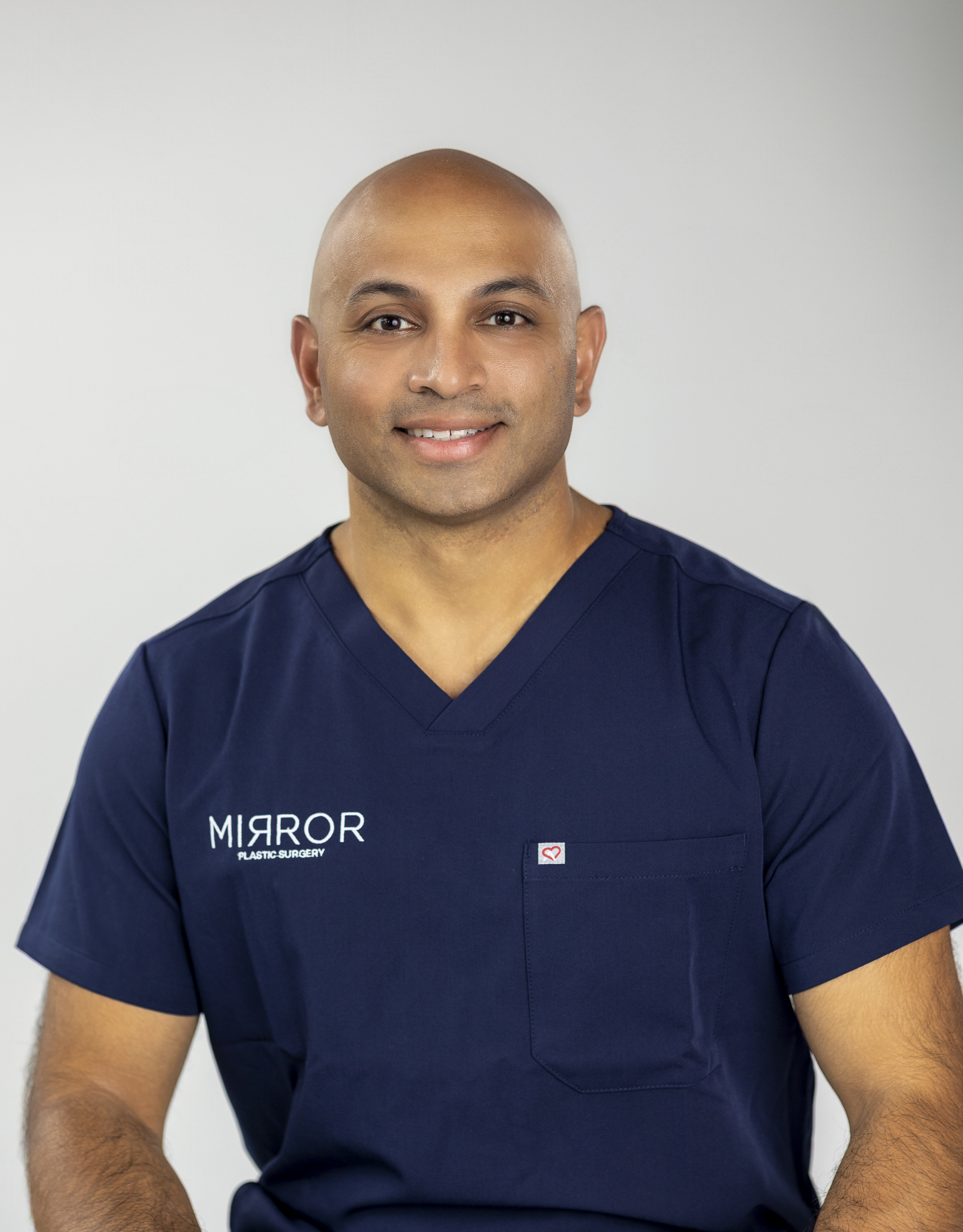
Written by: Dr. Akash Chandawarkar, Board Certified Plastic Surgeon, Mirror Plastic Surgery | Last updated: June 28, 2026
Key Takeaways
-
The best blepharoplasty surgeon near you in Tampa combines oculoplastic-level eyelid expertise with board-certified plastic-surgery training and follows a safety-function-aesthetics hierarchy.
-
Practices that limit daily surgical volume and reserve about an hour for each consultation are better positioned to catch risk factors before surgery.
-
Thorough preoperative evaluation of tear-film health, eyelid laxity, and other functional variables helps minimize complications and preserve natural eyelid function.
-
Board-certified plastic surgeons with dedicated aesthetic fellowships at high-volume eyelid programs, such as MEETH, bring both functional and aesthetic skill sets to complex cases.
-
Schedule a consultation with Dr. Akash at Mirror Plastic Surgery for a personalized assessment and clear cost breakdown based on your anatomy and goals.
Blepharoplasty Regret Rate and Why It Happens
Blepharoplasty consistently ranks among the highest-satisfaction procedures in aesthetic surgery.1 Regret most often stems from preventable issues such as unrealistic expectations from rushed consultations, removal of too much skin or fat that creates a hollow or over-operated look, and functional problems like dry eye or eyelid laxity that worsen after surgery.
Thorough preoperative evaluation and honest, unhurried communication form the main defense against dissatisfaction.1 Practices that limit daily surgical volume and invest an hour in each consultation are structurally positioned to catch these risk factors before an incision is made.
Ideal Timing: Best Age Range for Blepharoplasty
No universal minimum or maximum age exists for eyelid surgery. Candidacy depends on anatomy, health status, and functional need rather than a specific birthday. In younger patients, hereditary fat prolapse or congenital ptosis can justify earlier intervention. In older patients, skin laxity, brow descent, and reduced tear-film production require careful assessment before moving forward. The guiding principle is straightforward: the patient should be in stable systemic health, hold realistic expectations, and show eyelid changes that surgery can meaningfully improve.
Blepharoplasty Candidacy With Sjögren’s Syndrome
Sjögren’s syndrome causes severe aqueous-deficient dry eye and falls within the group of autoimmune disorders that represent a relative contraindication to blepharoplasty. Preoperative examination should include a Schirmer test and tear-film break-up time to quantify ocular surface health before any eyelid surgery is planned.
Removing excess skin or fat from already-compromised eyelids can reduce blink-closure surface area, which accelerates corneal exposure and desiccation. A surgeon who follows a safety-first protocol will co-manage these patients with an ophthalmologist, adjust lubrication therapy, and may modify the surgical plan or defer surgery entirely based on objective tear-film data.
Blepharoplasty Cost in Florida and Why Prices Vary
Blepharoplasty pricing in Florida changes based on whether the procedure is upper, lower, or combined, whether ptosis repair is included, the surgical facility and anesthesia type, and the surgeon’s training and case volume. Each patient’s anatomy and goals differ, so the practice provides a personalized quote during the consultation instead of a generic price list. The total cost of a revision, including financial, physical, and emotional impact, almost always exceeds the cost of choosing a highly trained surgeon the first time.
Receive a personalized cost breakdown and assessment during your consultation with Dr. Akash, with a clear quote based on your specific anatomy and goals.
Schedule your blepharoplasty cost consultation to review pricing, options, and timing in detail.
Oculoplastic vs Aesthetic-Plastic Training for Tampa Eyelid Surgery
Two primary training pathways produce surgeons who perform blepharoplasty. Oculoplastic surgeons complete ophthalmology residency followed by a two-year fellowship in ophthalmic plastic and reconstructive surgery. Their strength lies in deep knowledge of ocular surface disease, tear-film mechanics, and functional eyelid repair. Aesthetic plastic surgeons complete a five-to-seven-year plastic and reconstructive surgery residency and may then pursue an additional aesthetic fellowship. Their strength lies in comprehensive facial anatomy, soft-tissue management, and integration of eyelid surgery within a broader facial rejuvenation plan.
The most capable blepharoplasty surgeons draw from both disciplines. A board-certified plastic surgeon who completed a dedicated aesthetic fellowship at a program with high eyelid-surgery volume, such as the Manhattan Eye, Ear and Throat Hospital (MEETH), gains the functional eyelid knowledge of an oculoplastic specialist along with the full-face anatomical perspective of a plastic surgeon. That combination is rare and represents a top tier of preparation for complex or combined eyelid cases. The table below compares how each training pathway structures eyelid-surgery volume, hospital access, and fellowship focus, which directly affect a surgeon’s ability to manage both functional and aesthetic eyelid concerns.
How Eyelid Training Pathways Compare
|
Training Pathway |
Annual Eyelid Cases (Typical) |
Hospital Privileges |
Fellowship Focus |
|---|---|---|---|
|
Oculoplastic Surgeon (Ophthalmology + ASOPRS Fellowship) |
High functional eyelid volume, cosmetic blepharoplasty volume varies by practice |
Ophthalmology-credentialed hospitals, plastic-surgery OR access varies |
Functional repair, orbital disease, lacrimal system, eyelid reconstruction |
|
High-Volume Aesthetic Plastic Surgeon (Residency Only) |
Variable, blepharoplasty is one of many procedures in a broad menu |
Board-certified, hospital privileges maintained per ABPS requirements |
General aesthetic surgery across face, breast, and body, limited eyelid specialization |
|
Concierge Aesthetic Plastic Surgeon (Residency + Aesthetic Fellowship at Eyelid-Focused Program) |
Concentrated eyelid volume within a low-daily-case model, each case receives full-team focus |
Full plastic-surgery hospital privileges, emergency escalation pathway maintained |
Advanced facial rejuvenation including blepharoplasty, ptosis repair, fat repositioning, and tear-film preservation alongside breast and body surgery |
Note: Annual case volume figures are not standardized across training programs and vary by practice setting. The values above reflect typical practice patterns rather than a single published dataset and are presented for structural comparison only.
Why Longer Consultations and Low Daily Volume Improve Safety
Patient selection for lower eyelid blepharoplasty requires a thorough medical and ophthalmic history covering current illnesses, medication list including anticoagulants, dry eye symptoms, previous eyelid surgery, and the patient’s goals and expectations. That level of intake does not fit into a fifteen-minute appointment.
Mirror Plastic Surgery structures each initial consultation to last up to an hour. That time covers systemic health, current medications, ocular surface history, prior facial procedures, and a walkthrough of eyelid anatomy so the patient understands exactly what is being proposed and why. Performing only one to two surgeries per day keeps the surgical team’s attention focused instead of spread across a packed operating schedule. The contrast with practices performing five to ten procedures daily is not just philosophical, it is a structural safety variable.
Dr. Akash, named to Newsweek’s America’s Best Plastic Surgeons list for two consecutive years including 2025, brings Harvard-MIT medical training, a seven-year Johns Hopkins plastic surgery residency, and a dedicated aesthetic fellowship at MEETH to every eyelid case. Board certification by the American Board of Plastic Surgery also ensures that hospital privileges remain active, which provides an escalation pathway in the rare event of a complication.
Functional Priorities: Ptosis, Fat, and Tear-Film Protection
Physical examination prior to lower eyelid blepharoplasty must evaluate visual acuity, tear film and ocular surface, Bell’s phenomenon, lower eyelid laxity, lagophthalmos, globe prominence, and negative vector to determine suitability and guide technique selection. Each variable shapes the surgical plan and supports a safety-first approach.
Ptosis, or drooping of the upper eyelid from levator muscle weakness, is frequently mistaken for excess skin. Treating it with skin excision alone produces an incomplete result and may worsen the droop, so identifying and repairing the levator aponeurosis comes before any aesthetic skin removal. This focus on function before appearance also applies to the lower eyelid. Repositioning prolapsed orbital fat over the orbital rim, instead of excising it, restores volume to the tear-trough region without creating a hollow look. Both techniques depend on careful preoperative screening that many practices skip, including ruling out active eye disease, dry eyes, and thyroid disease, because compromised tear-film function worsens when eyelid closure surface area is reduced.
Schedule a functional eyelid evaluation with Dr. Akash to review your eyelid anatomy, tear-film health, and overall candidacy before any surgical plan is discussed.
Choosing Between Transconjunctival and Transcutaneous Techniques
Upper blepharoplasty uses a transcutaneous incision placed within the natural eyelid crease, which allows removal or redistribution of excess skin and herniated fat with a scar that becomes nearly invisible at rest. The critical technical variable is the amount of skin removed. Too little leaves the result unchanged, while too much causes lagophthalmos, corneal exposure, and a permanently startled appearance.
Lower blepharoplasty can use a transcutaneous approach through a subciliary incision or a transconjunctival approach through the inner surface of the eyelid. The transconjunctival route leaves no external scar and works well when fat repositioning or removal is the main goal and skin laxity is minimal. The transcutaneous approach allows simultaneous skin excision but carries a higher risk of lower eyelid retraction if eyelid laxity is not assessed and treated at the same time. Lower eyelid laxity, globe prominence, and negative vector must be evaluated preoperatively because each factor shifts the risk-benefit balance between approaches.
Combining upper and lower blepharoplasty in a single session is common and generally safe when the patient’s health supports it. Adding a brow lift or midface lift in the same operative session requires careful judgment about total operative time and cumulative tissue disruption. That decision belongs within a safety-first framework rather than a volume-driven one.
Frequently Asked Questions
Who is the best eyelid surgeon in Tampa?
The best eyelid surgeon in Tampa for any given patient is the one whose training, case focus, and consultation philosophy align with that patient’s anatomy and goals. Helpful markers include board certification by the American Board of Plastic Surgery or an equivalent body, fellowship training at a program with dedicated eyelid-surgery volume, hospital privileges that provide a safety escalation pathway, and a consultation structure that allows enough time to assess ocular surface health, eyelid laxity, and functional variables before any surgical plan is proposed. Dr. Akash at Mirror Plastic Surgery holds all of these credentials and also carries the Newsweek recognition mentioned earlier.
What kind of doctor is best for a blepharoplasty?
Both oculoplastic surgeons and board-certified aesthetic plastic surgeons perform blepharoplasty. Oculoplastic surgeons bring deep expertise in functional eyelid repair and ocular surface disease. Aesthetic plastic surgeons with a dedicated facial fellowship bring comprehensive soft-tissue and facial anatomy knowledge along with eyelid-specific technique. The strongest candidates for complex or combined cases are plastic surgeons who completed their aesthetic fellowship at a program with high eyelid-surgery volume, such as MEETH, because they integrate both skill sets. The surgeon’s consultation approach, especially whether they assess tear-film health, eyelid laxity, and functional variables before recommending a technique, is as important as the credential itself.
Is 70 too old for eyelid surgery?
Age alone does not disqualify a patient from blepharoplasty, and there is no established upper age limit for eyelid surgery. What matters is stable systemic health, ocular surface status, and realistic expectations. Patients in their seventies often present with the most functionally significant eyelid changes, such as marked ptosis, dermatochalasis that obstructs the visual field, and lower eyelid fat prolapse, and they can achieve meaningful improvements in both function and appearance.1 Preoperative evaluation becomes more detailed with age, with greater attention to dry eye severity, anticoagulant use, and cardiovascular status, yet a well-selected older patient remains an excellent surgical candidate.
What is the downside of blepharoplasty?
The most common downsides of blepharoplasty are temporary issues such as bruising, swelling, and light sensitivity that last two to three weeks. More significant risks include dry eye exacerbation, asymmetry, under- or over-correction, lower eyelid retraction, and, rarely, vision changes. Most serious complications trace back to inadequate preoperative screening, especially failure to identify pre-existing dry eye, eyelid laxity, or thyroid eye disease, or to aggressive tissue removal in a single session. A surgeon who screens for these variables systematically, limits daily operative volume, and follows a safety-first protocol substantially reduces the likelihood of these outcomes.1
How do I evaluate a blepharoplasty surgeon’s credentials?
Start with board certification, since the American Board of Plastic Surgery and the American Board of Ophthalmology are the two relevant certifying bodies. Confirm that the surgeon holds active hospital privileges, which requires ongoing peer review and provides a safety net for rare complications. Ask directly about fellowship training and where eyelid surgery served as a primary focus of that fellowship. Review before-and-after photographs for natural eyelid contour, symmetry, and the absence of a hollow or over-resected appearance that signals aggressive fat removal. Finally, evaluate the consultation itself. A surgeon who spends less than thirty minutes with a new eyelid patient and does not ask about dry eye symptoms, prior eyelid surgery, or thyroid history is not following evidence-based screening protocols.
Next Steps With Mirror Plastic Surgery
Choosing the right blepharoplasty surgeon in Tampa rewards careful research. Training pathway, fellowship focus, daily surgical volume, consultation length, and preoperative screening protocols are all measurable variables, and each one influences outcomes. Dr. Akash at Mirror Plastic Surgery brings Harvard-MIT and Johns Hopkins training, a dedicated aesthetic fellowship at MEETH, and a concierge practice model built around the consultation and surgical-volume structure described earlier. He has also earned the national recognition described above.
Book your eyelid consultation with Dr. Akash at Mirror Plastic Surgery in St. Petersburg to receive a thorough eyelid evaluation, a transparent discussion of your options, and a surgical plan built around your anatomy rather than a template.
1 Results may vary from person to person. Editorial content, before and after images, and patient testimonials do not constitute a guarantee of specific results.



