
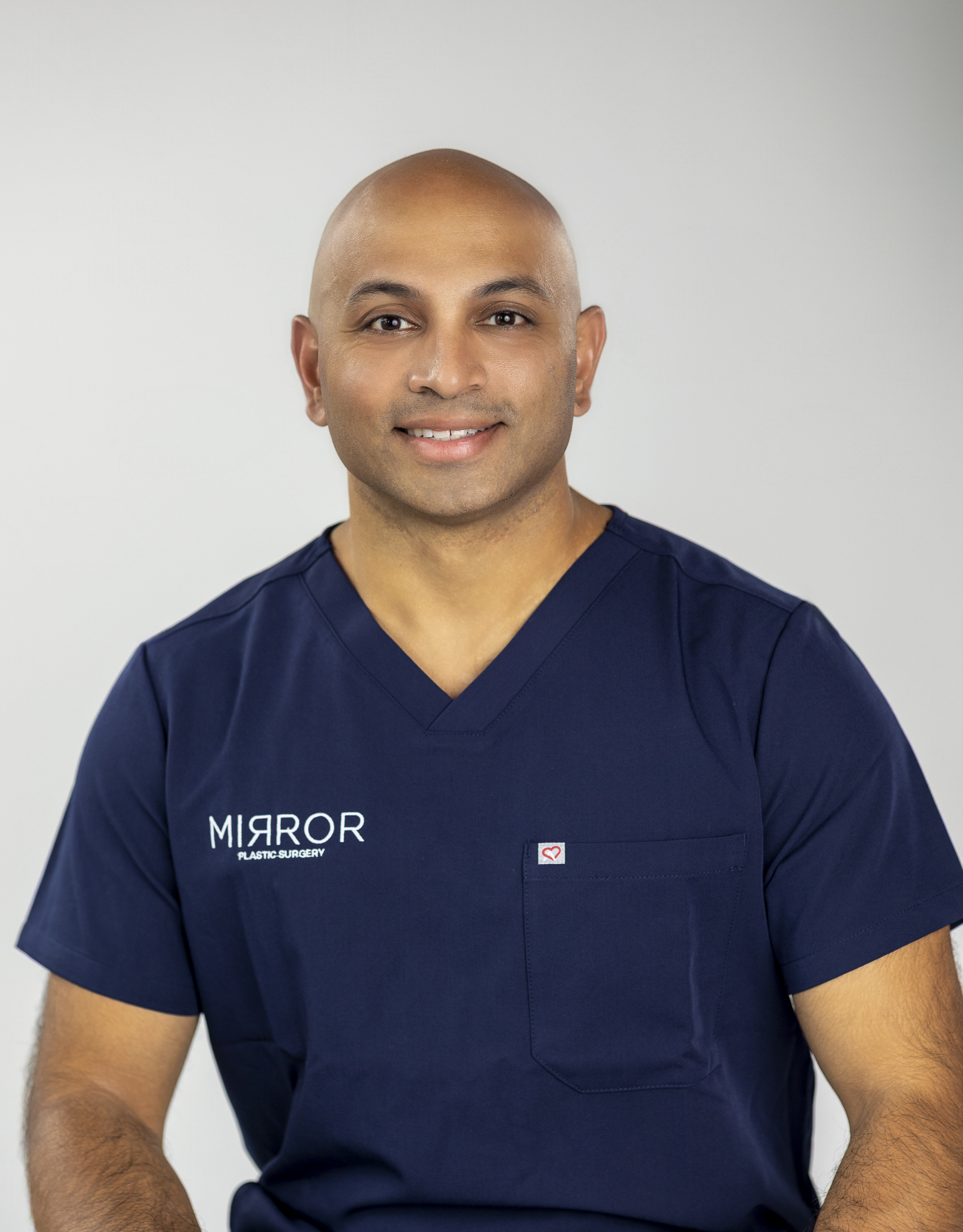
Written by: Dr. Akash Chandawarkar, Board Certified Plastic Surgeon, Mirror Plastic Surgery | Last updated: July 16, 2026
Key Takeaways
- Surgical hair restoration moves DHT-resistant follicles using FUE, FUT, or DHI. Outcomes depend most on surgeon skill and donor preservation, not the branded technique.
- Clinical concepts such as graft survival rate, transection rate, donor density, and Norwood staging help patients interpret surgeon claims and set realistic expectations.
- FUE, FUT, and DHI each offer specific advantages based on Norwood stage, scalp laxity, hair texture, and donor density. No method has been proven categorically superior.
- Overharvesting, shock loss, and the need for lifelong medical therapy are key limitations that highlight the value of conservative planning and experienced surgical care.
- Patients who want individualized planning can schedule a consultation with Dr. Akash at Mirror Plastic Surgery for a detailed donor assessment and evidence-based recommendations.
How Mirror Plastic Surgery Plans Your Procedure
Mirror Plastic Surgery uses a concierge medicine model that shapes every step of hair restoration. Each consultation lasts about 60 minutes and covers scalp anatomy, donor density, Norwood stage, and long-term hair loss trajectory before any technique is recommended. The practice performs only one to two surgeries per day, in contrast to high-volume centers that complete five to ten procedures daily, so the entire team can focus on a single patient before, during, and after surgery.
The guiding hierarchy is safety first, function second, and aesthetics third. This hierarchy directs how consultation time is used and how surgery is planned. Donor preservation and anatomical precision take priority over chasing the highest possible graft count in one session. Overharvesting is treated as a patient-safety issue, not just an aesthetic concern, because a depleted donor zone permanently removes future restoration options.
Schedule your personalized donor assessment with Dr. Akash to receive technique recommendations grounded in your anatomy and long-term goals.
Why Surgeon Background Matters for Donor Safety
The conservative, safety-first approach described above depends on technical precision and deep anatomical understanding shaped by training and experience. The clinical foundation at Mirror Plastic Surgery is Dr. Akash. His academic path began at MIT in neuroscience and nuclear engineering, continued through the Harvard-MIT Division of Health Sciences and Technology, and culminated in a Harvard Medical School degree with Honors. He then completed a seven-year integrated plastic and reconstructive surgery residency at Johns Hopkins University, followed by an aesthetic surgery fellowship at Manhattan Eye, Ear and Throat Hospital (MEETH) and a Stanford University Biodesign Innovation Fellowship focused on evidence-based innovation.
Dr. Akash is board certified by the American Board of Plastic Surgery and holds hospital privileges that provide an extra safety net for rare complications. He has been recognized by Newsweek as one of America’s Best Plastic Surgeons for two consecutive years. He serves on the editorial board of the Aesthetic Surgery Journal and has testified before the U.S. Food and Drug Administration on implant safety, reflecting commitment to the broader field as well as to individual patient care.
Key Hair Restoration Terms in Plain Language
Clear language helps patients evaluate claims and understand tradeoffs. The terms below appear frequently in clinical literature and consultations.
- Graft survival rate: The percentage of transplanted follicular units that establish blood supply, survive the ischemic period, and grow terminal hair at 12 months. Rates at experienced centers typically range from 90 to 95 percent.1
- Transection rate: The share of follicles cut or damaged during extraction, which makes them non-viable. In a 2,000-graft procedure, a 20 percent transection rate destroys 400 follicles, while a 2 percent rate destroys only 40, a 360-graft difference that permanently affects donor supply.
- Donor density: The number of follicular units per square centimeter in the safe donor zone. Lower densities limit how many grafts can be safely harvested.
- Safe donor zone: The occipital and parietal band of scalp that contains DHT-resistant follicles, as defined in ISHRS guidelines.
- Shock loss: Temporary shedding of transplanted or native hairs triggered by surgical trauma. Shedding of transplanted hairs usually occurs in weeks 2 to 4 and is considered completely normal, because follicles remain intact beneath the scalp.
- Norwood staging: The standard scale for male pattern hair loss from Stage I (minimal recession) to Stage VII (extensive loss). Stage guides graft volume planning and influences technique selection.
Where Surgical Hair Restoration Fits Today
FUE accounts for 73 percent of procedures performed in 2026, largely because patients prefer minimal visible scarring. The remaining share includes FUT, DHI, and hybrid approaches. This distribution reflects lifestyle priorities such as wearing short hair without a visible linear scar rather than proof that FUE produces better clinical outcomes.
The volume-outcome relationship in surgery is well documented, with higher surgeon volume often linked to better results. In hair restoration, the 2025 ISHRS Practice Census reports that 6.9 percent of all hair transplants performed in 2024 were repair procedures, up from 5.4 percent in 2021, with overharvesting and technician-only surgeries cited as leading causes.
How Mirror Evaluates FUE, FUT, and DHI for You
FUE vs FUT in 2026
The choice between FUE and FUT depends on four measurable factors: Norwood stage, scalp laxity, hair texture, and donor density. Norwood I through III patients usually need fewer than 2,500 grafts, while Norwood V through VII patients often require 4,000 or more. Scalp laxity determines whether FUT strip closure can be completed without tension. Tight scalps raise the risk of wide or hypertrophic scars, with FUT hypertrophic scarring rates reported between 1.5 and 15 percent. Curly or Afro-textured hair increases FUE transection risk because follicles curve beneath the skin, and FUT’s direct microscopic visualization can reduce that risk.
DHI vs FUE in Everyday Practice
The ISHRS classifies DHI as an implantation tool that uses the Choi pen, while harvesting still occurs through FUE or FUT. Standard FUE creates recipient channels first, then places grafts with forceps. DHI combines channel creation and implantation in a single motion. DHI can reduce graft ex-vivo ischemic time to under 20 minutes per graft, and peer-reviewed comparisons of implanter pen versus forceps placement have shown higher graft survival with the implanter pen. DHI often works well for precise hairline work and density boosts in areas with existing hair, where pre-made channels might damage nearby follicles.
Estimating Your Graft Count
Natural scalp density ranges from 80 to 120 follicular units per square centimeter, while transplants usually reach 40 to 60 units per square centimeter. Full restoration in a single session is mathematically impossible for advanced Norwood VI and VII patients. Each patient has a finite lifetime donor supply, so surgeons should limit extraction per session to protect options for future procedures. Age, rate of ongoing loss, and family history of advanced Norwood patterns all shape conservative graft planning, especially for younger patients.
Get a precise graft estimate during your consultation with Dr. Akash, based on your Norwood stage, donor density, and projected hair loss pattern.
Comparing FUE, FUT, and DHI Techniques
| Technique | Harvest Method | Typical Session Size | Donor Scarring |
|---|---|---|---|
| FUE | Individual follicular unit extraction using a motorized or manual punch (0.8–1.0 mm) | 2,500–3,500 grafts per session | Diffuse circular micro-scars under 1 mm each, usually undetectable at short guard lengths |
| FUT | Linear strip excision from occipital scalp with stereomicroscopic dissection into follicular units | Varies by patient factors | Single linear scar, with width influenced by technique and healing; trichophytic closure can reduce visibility |
| DHI | FUE extraction followed by immediate Choi implanter pen placement without pre-made recipient channels | Often allows higher implantation density than standard FUE | Same donor scarring as FUE; recipient area avoids trauma from pre-made channels |
Graft survival across all three approaches converges when experienced surgeons perform the procedure. No large randomized controlled trials prove that one technique is superior, while surgeon expertise, graft handling, and ischemic time management have a larger impact on outcomes. Technique branding, including claims that DHI is categorically superior, does not match current clinical evidence.
What to Expect After Surgery
| Phase | FUE / DHI | FUT | Key Milestones |
|---|---|---|---|
| Days 1–3 | Swelling, scab formation, mild discomfort | Swelling, suture line present, tighter donor sensation | Swelling peaks days 2–3, with head elevation recommended |
| Days 4–10 | FUE donor sites surface-heal in 7–10 days as scabs loosen and shed | FUT donor healing takes 2–4 weeks, with sutures removed days 10–14 | Most FUE and DHI patients can return to desk work by days 3–5 |
| Weeks 2–4 | Shedding of transplanted hairs, known as shock loss, occurs across all techniques while follicles remain intact beneath the scalp. | This phase is completely normal and often called the “ugly duckling” stage | |
| Months 3–6 | New fine hair growth usually begins around months 3–4. Visible density often reaches 50–70% of the final result by month 6.1 | Native shock loss typically resolves by months 3–4 | |
| Months 12–18 | Full visible results appear between 12 and 18 months, and transplanted hair usually remains permanent.1 | Crown areas may continue to mature beyond 12 months | |
Risks, Limits, and Common Misconceptions
Overharvesting is the most serious and irreversible risk in hair restoration. Repair cases due to previous black-market hair transplants rose to 10 percent of all ISHRS member repair cases in 2024, up from 6 percent in 2021. A depleted donor zone creates a permanent moth-eaten appearance and removes the option for future procedures. High-volume practices that perform many cases per day often face pressure to maximize graft counts per session, which conflicts with conservative donor preservation.
Shock loss is often mistaken for treatment failure. It occurs in 30–80 percent of hair transplant patients, usually between 2 and 4 weeks after surgery, and resolves within 3–6 months.1
Revision rates correlate closely with practitioner experience. Board-certified surgeons who perform hair restoration regularly tend to have lower revision rates than low-volume or technician-driven practices.
No hair transplant stops native hair from thinning around transplanted grafts. Lifelong medical management with finasteride or minoxidil usually forms part of long-term planning.
Acorn Biolabs Secretome is available at Mirror Plastic Surgery as a possible adjunct in combination protocols to support follicular health alongside surgical restoration.
Smart Questions to Ask Your Surgeon
Targeted questions help reveal a surgeon’s experience, planning style, and approach to safety.
- What is your documented transection rate for my hair type? Experienced FUE surgeons working on straight to wavy hair usually maintain transection rates below 5 percent.
- How many hair restoration procedures have you personally performed, and do you perform the extraction yourself? Delegating extraction to technicians is a major cause of poor outcomes.
- What is your donor management plan across my lifetime? A thoughtful answer addresses progressive loss, future sessions, and a maximum safe extraction threshold per session.
- How do you determine hairline placement for my age and projected loss pattern? Hairlines designed for a 28-year-old must still look natural at 55, so conservative placement signals long-term thinking.
- What follow-up protocol do you use at 3, 6, and 12 months? Structured follow-up supports better long-term outcomes and early detection of complications.
- What medical therapy do you recommend alongside surgery? Medical therapy is often paired with surgery to support improved long-term density and stability.
Frequently Asked Questions
Is there a meaningful difference in graft survival between FUE, FUT, and DHI?
When experienced surgeons work in accredited facilities, all three approaches achieve the 90–95 percent survival rates mentioned earlier. DHI’s Choi implanter pen can reduce graft ischemic time, and some studies report survival approaching 97 percent in expert hands. FUT has historically shown slightly higher survival in controlled comparisons because strip dissection under direct microscopic visualization reduces transection. In everyday practice, surgeon skill, graft handling, and ischemic time management matter more than the technique label.
Is DHI a separate technique from FUE?
DHI does not represent a separate harvesting method. The ISHRS classifies DHI as an implantation tool, the Choi pen, used after FUE extraction. The extraction phase matches standard FUE. The difference lies in placement, because DHI combines channel creation and graft insertion in one motion and removes the need for pre-made recipient channels. Clinics that market DHI as a fundamentally different procedure use terminology that does not match ISHRS classification, which can make comparisons difficult for patients.
How many grafts will I need, and is one session enough?
Graft requirements depend on Norwood stage, donor density, hair shaft diameter, and which zones you want treated. Most patients need between 1,500 and 4,000 grafts per session. The ISHRS 2025 Practice Census reports that over 33 percent of hair restoration patients undergo two procedures across their lifetime, and the mean number of procedures needed to reach desired results is 1.5. A single session cannot fully restore advanced Norwood VI or VII loss because the donor zone is only about one-third the size of the potential bald area. Conservative planning that preserves donor supply for future sessions is a hallmark of experienced practice.
What causes shock loss and how long does it last?
Shock loss is a temporary telogen effluvium triggered by transplant trauma. Transplanted hair shafts usually shed during weeks 2 to 6 while follicles remain intact beneath the scalp. Native hairs near the recipient zone can also shed temporarily in 5 to 15 percent of FUE patients and 10 to 20 percent of FUT patients. New growth from transplanted follicles typically begins around months 3 to 4, with visible density between months 6 and 9 and full maturation between 12 and 18 months. Shock loss does not indicate graft failure and instead reflects a predictable response of the hair cycle to surgery.
Do transplanted hairs last permanently?
Follicles taken from the safe donor zone carry DHT-resistant genetics that persist after relocation, a principle first described by Dr. Norman Orentreich’s donor dominance theory and supported by decades of follow-up. Transplanted hairs from this zone usually grow for life regardless of whether FUE, FUT, or DHI is used.1 However, native hair around transplanted grafts can continue to thin. Ongoing medical therapy with finasteride or minoxidil is standard to protect non-transplanted follicles and maintain overall density.
Planning Your Next Step
Surgical hair restoration outcomes depend most on surgeon expertise, donor preservation strategy, and anatomy-based planning rather than on technique branding. FUE, FUT, and DHI each have clear indications based on Norwood stage, scalp laxity, hair texture, and donor density. Evidence consistently supports conservative procedures performed by experienced, board-certified surgeons over high-volume sessions focused on graft count alone. Realistic expectations about shock loss, the 12 to 18 month maturation timeline, and the likelihood of future sessions support long-term satisfaction.
Begin your hair restoration journey with a comprehensive consultation at Mirror Plastic Surgery in St. Petersburg, Florida, including donor assessment, Norwood staging, and a personalized surgical plan built on safety-first, evidence-based principles.
1 Results may vary from person to person. Editorial content, before and after images, and patient testimonials do not constitute a guarantee of specific results.