
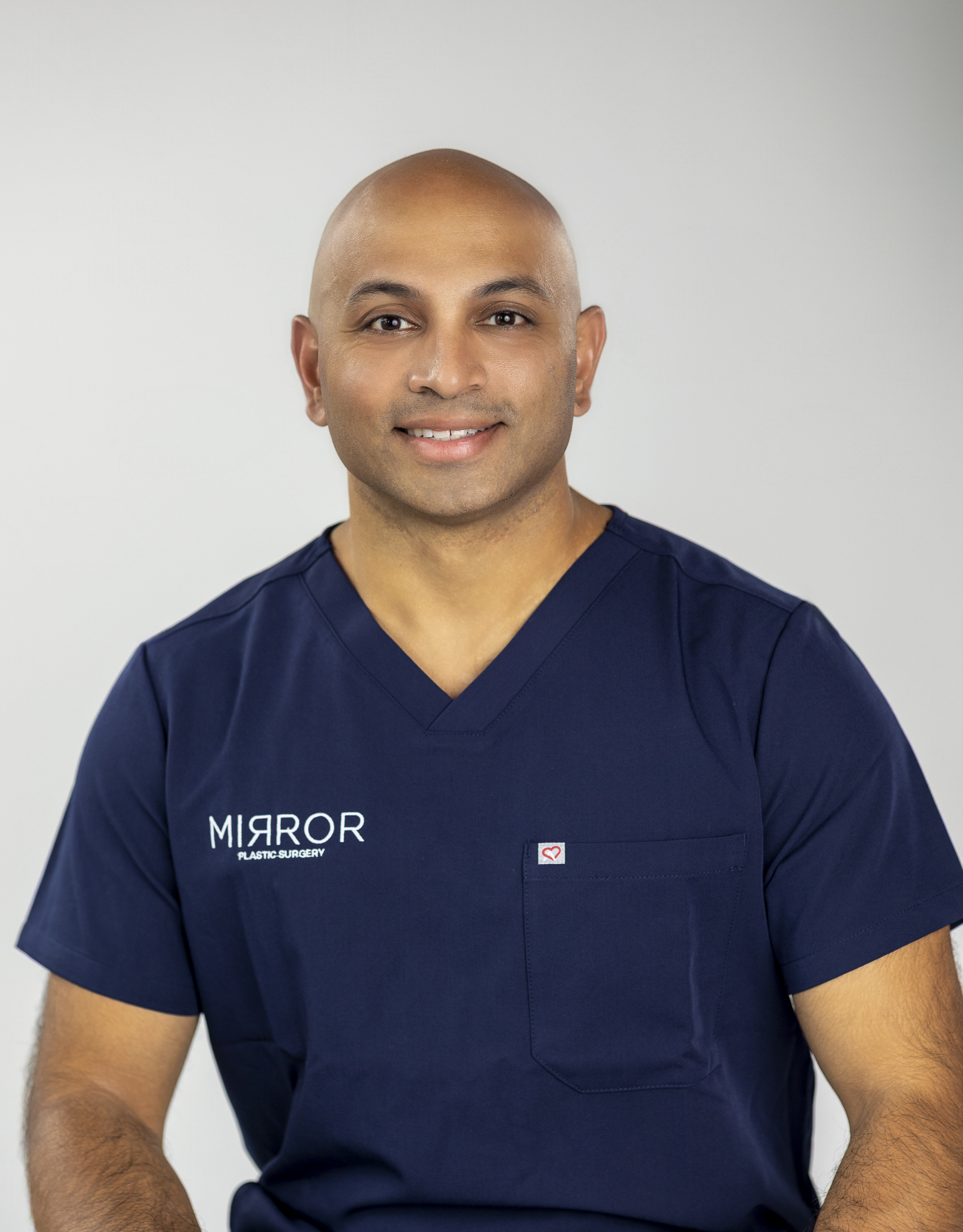
Written by: Dr. Akash Chandawarkar, Board Certified Plastic Surgeon, Mirror Plastic Surgery | Last updated: July 21, 2026
Key Takeaways
- Concierge plastic surgery relies on 60-minute consultations, one to two surgeries daily, and direct physician access throughout recovery.
- Florida practices vary widely, and true concierge models prioritize individualized anatomical assessment over high-volume efficiency for patients aged 45–60.
- Elite training at Harvard-MIT, Johns Hopkins, and MEETH closely correlates with more consistent surgical outcomes and longer-lasting results.1
- Deep-plane and dual-plane facelifts often deliver results that last 10–15 years, but they require structured recovery planning and safety-focused protocols.1
- Patients seeking personalized concierge care in Florida can book a consultation at Mirror Plastic Surgery for an anatomy-specific evaluation from Dr. Akash.
How Concierge Plastic Surgery Works in Real Life
Concierge physicians typically see six to twelve patients per day, compared with 20 to 30 for a high-volume provider. In plastic surgery, that lower volume translates into specific operational commitments that you can verify. The following seven criteria separate genuine concierge practices from those that use the term loosely.
- Consultation duration: Concierge visits typically last 30–120 minutes, compared with 7–15 minutes in traditional high-volume settings.
- Daily surgical volume: A true concierge surgical practice limits itself to one to two procedures per day, so the entire clinical team can remain focused on a single patient before, during, and after surgery.
- Direct physician access: Concierge models provide same-day or next-day appointments and direct physician access, often including 24/7 phone or email availability.
- Structured follow-up: Boutique clinics typically offer surgeon-led follow-up at multiple intervals throughout the first six months after surgery.
- Dedicated anesthesia: A dedicated anesthesiologist remains physically present in the operating room for the entire general anesthesia case, rather than covering multiple rooms at once.
- Anatomy-specific planning: Each consultation addresses the patient’s individual anatomy, aging pattern, and functional goals, not a standardized menu of procedures.
- No same-day consult-surgery scheduling: Boutique clinics refuse same-day consult-surgery scheduling in favor of a mandatory gap that allows for thorough pre-operative evaluation.
Mirror Plastic Surgery in St. Petersburg, Florida meets all seven criteria. The practice performs one to two surgeries per day and dedicates up to one hour per consultation to a top-to-bottom anatomical assessment.
Book a consultation with Dr. Akash to experience a genuinely concierge evaluation in Tampa Bay.
How Elite Surgical Training Shapes Your Results
Fellowship training after base residency is the key variable that determines depth of facial surgical specialization. For complex procedures such as deep-plane facelifts, the technical execution requires extensive, highly specialized training that occurs in a fellowship setting. Weekend courses cannot provide mastery of advanced techniques.
Additional fellowship training in facial plastic surgery or aesthetic surgery signals a deeper level of specialization beyond standard plastic surgery residency. The most reliable training path combines a rigorous academic medical degree, a multi-year plastic surgery residency at a major academic center, and a dedicated aesthetic surgery fellowship.
Dr. Akash completed this full sequence. His medical degree came from Harvard Medical School through the Harvard-MIT Division of Health Sciences and Technology, a program that integrates rigorous research with clinical medicine. His seven-year integrated plastic and reconstructive surgery residency at Johns Hopkins University included rotations at the Johns Hopkins Hospital for complex cancer and trauma reconstruction, the R Adams Cowley Shock Trauma Center, and the Curtis National Hand Center for microsurgical training. Residency training at high-volume trauma centers exposes surgeons to deep facial structures, including the SMAS layer, deep plane, and sub-mandibular region, under emergency conditions, which builds anatomical fluency not available in cosmetic-only settings.
Dr. Akash then completed an aesthetic surgery fellowship at the Manhattan Eye, Ear and Throat Hospital (MEETH), one of the most competitive programs in the country for advanced facial rejuvenation, breast surgery, and body contouring. He also completed the Stanford University Biodesign Innovation Fellowship and serves as Next Generation Editor for the Aesthetic Surgery Journal. Dr. Akash was named to America’s Best Plastic Surgeons 2025 by Newsweek for two consecutive years.
Procedures With the Toughest Recoveries
Recovery difficulty depends on the anatomical depth of dissection, the number of body regions involved, and the patient’s baseline health. Procedures that address multiple structural layers or combine several anatomical zones at once create longer recovery timelines and higher physiological demand.
Combined body procedures, such as a full abdominoplasty with muscle repair paired with breast surgery, require the abdominal musculature to be restored from the chest to the pubic area. This repair limits mobility for several weeks. Circumferential body lifts, which address the torso in 360 degrees, involve extensive tissue repositioning and often require the longest inpatient monitoring.
For facial procedures, deep-plane facelifts involve sub-SMAS dissection near facial nerves and vascular structures. This depth produces more significant swelling and a longer social recovery than superficial techniques, yet the same depth also creates longer-lasting results. Temporary nerve weakness affects a small percentage of deep-plane facelift patients and generally resolves over several months.1
The safety-first principle at Mirror Plastic Surgery keeps recovery risk in clear focus. Combining too many procedures at once can exponentially increase complication rates. Each patient’s surgical plan prioritizes safety and function before aesthetics, with recovery logistics planned in advance.
Average Facelift Pricing in Florida
Published data from multiple Florida sources shows a wide price range. Facelift costs in Tampa in 2026 typically range from about $12,000 to $25,000 or more all-in, aligning with a broader national range of roughly $8,700–$18,000, depending on procedure extent, surgeon experience, and facility. Florida facelift costs in 2026 are typically reported in the $8,000–$25,000 range, with most patients paying $12,000–$18,000, and these figures usually reflect surgeon fees only, excluding anesthesia and facility costs.
Advanced techniques carry different cost profiles. A deep-plane facelift with platysmaplasty at an accredited Florida center can reach $37,000–$38,000 inclusive of facility and anesthesia fees. This variation reflects surgeon training, facility accreditation level, anesthesia model, and the anatomical complexity of the individual case.
Facility accreditation and anesthesia credentials are non-negotiable safety factors that influence cost. Board-certified physician anesthesiologists and accredited surgical centers add to the total but form essential components of a safe surgical environment. Every patient at Mirror Plastic Surgery receives a personalized quote during consultation, based on their anatomy, goals, and the specific procedure plan.
Facelift Techniques Delivering the Longest Results in 2026
Evidence consistently favors techniques that address deeper anatomical structures rather than skin tension alone. A randomized controlled trial comparing deep-plane versus SMAS plication in the same patient found significantly greater longevity and soft-tissue mobilization on the deep-plane side.
A 2026 study reviewing 93 patients who underwent revision facelift after a prior deep-plane procedure found the average interval between primary and revision surgery was 10.9 years.1 High SMAS facelift techniques average 12 years before secondary procedures, while deep-plane approaches can extend results up to 15 or more years.1
Mirror Plastic Surgery performs facelifts using a dual-plane approach that combines aspects of SMAS and deep-plane techniques, tailored to each patient’s anatomy. Minimally invasive options, including the eXact midface lift and eXact neck lift, are available for patients whose anatomy and goals are better served by a less extensive dissection. The team selects techniques based on anatomical assessment, not on a single preferred method applied uniformly.
Book a consultation with Dr. Akash to receive an anatomy-specific facelift recommendation based on your facial structure and goals.
How to Evaluate Any Florida Practice
Whether you are considering Mirror Plastic Surgery or another Florida provider, you can use a consistent framework to assess concierge claims. The following seven-step framework applies to any practice under consideration, without reference to any specific competitor.
- Verify board certification: Board certification specifically in plastic surgery by the American Board of Plastic Surgery is the preferred credential for surgeons performing complex procedures.
- Confirm fellowship training: Ask whether the surgeon completed a dedicated aesthetic surgery or facial plastic surgery fellowship after residency, and where.
- Ask about daily surgical volume: A practice performing five to ten surgeries daily operates on a fundamentally different model than one performing one to two.
- Assess consultation length: Ultra-premium concierge practices provide appointment lengths of 45–60 or more minutes. A consultation shorter than 30 minutes cannot support a thorough anatomical assessment.
- Confirm facility accreditation: Surgery should occur in an AAAASF- or Joint Commission-accredited facility with a board-certified physician anesthesiologist.
- Evaluate complication management: Ask whether the surgeon holds hospital privileges, which provide a critical safety backstop if a rare complication requires inpatient care.
- Review follow-up structure: Confirm that the operating surgeon personally conducts post-operative visits rather than delegating them entirely to support staff.
Recovery Support and Out-of-Town Care at Mirror Plastic Surgery
Patients traveling to Tampa Bay for surgery benefit from Mirror Plastic Surgery’s accredited facility partnerships and structured recovery planning. All surgical procedures take place in accredited centers with board-certified physician anesthesiologists present throughout the case.
Dr. Akash holds hospital privileges, so in the rare event of a complication, patients have a direct pathway to inpatient care managed by the same surgeon. This continuity creates a meaningful safety distinction from practices that operate only in outpatient settings without hospital affiliations.
Recovery logistics, including post-operative monitoring, follow-up scheduling, and accommodation guidance for out-of-town patients, are addressed during the consultation. The practice’s low daily surgical volume keeps the clinical team’s attention focused rather than divided across multiple simultaneous cases on the day of surgery.
Common Misconceptions and Red Flags in Plastic Surgery Marketing
Several recurring patterns in plastic surgery marketing deserve careful attention from informed patients.
- Rushed consultations presented as efficiency: A consultation that does not include a top-to-bottom anatomical assessment cannot produce a genuinely individualized surgical plan. Speed in consultation usually reflects high patient volume, not clinical confidence.
- High daily case loads framed as experience: High surgical volume does indicate technical repetition, team experience, and complication management capabilities. However, raw case count alone cannot deliver the focused, individualized attention that defines a true concierge model.
- Technique names without anatomical explanation: Terms like “deep plane” or “SMAS” should come with a clear explanation of why that technique suits the patient’s specific anatomy. A surgeon who cannot explain the anatomical rationale for a recommendation signals a red flag.
- Combining too many procedures at once: Studies show that combining multiple procedures can exponentially increase complication rates. A safety-first practice will advise against over-combining rather than upselling additional procedures.
- Lack of hospital privileges: Board certification in plastic surgery by the American Board of Plastic Surgery includes the ability to obtain hospital privileges, which provide an essential safety net for rare surgical complications.
Frequently Asked Questions
What makes Mirror Plastic Surgery different from other Florida plastic surgery practices?
Mirror Plastic Surgery operates on a concierge model with a strict limit of one to two surgeries per day and consultations of up to one hour. This structure contrasts with high-volume practices that may perform five to ten surgeries daily. The practice’s philosophy places safety first, function second, and aesthetics third, so every surgical plan centers on the patient’s anatomy, health, and long-term well-being before cosmetic goals. Dr. Akash’s training at Harvard-MIT, Johns Hopkins, and the Manhattan Eye, Ear and Throat Hospital, combined with his consecutive Newsweek recognition, creates a clinical foundation that is rare in any market.
Am I a good candidate for a facelift or facial rejuvenation procedure?
Candidacy depends on factors such as skin quality, facial anatomy, bone structure, medical history, and realistic goals. Patients in their 40s through 60s with visible laxity in the mid-face, jowl, or neck region are often good candidates for surgical rejuvenation. Non-surgical options, including minimally invasive lifts and injectable treatments, may suit patients with earlier-stage changes. The only reliable way to determine the right approach is through a thorough in-person anatomical assessment. Dr. Akash evaluates each patient from a top-to-bottom perspective before recommending any procedure.
How should I prepare for a plastic surgery consultation?
Arrive with a clear sense of your primary concerns, any previous procedures or treatments, your current medications and supplements, and your recovery timeline constraints. Bring reference images if they help communicate your aesthetic goals, while understanding that results remain anatomy-dependent, so what works for one person’s facial structure may not translate directly to another’s. Be prepared to discuss your medical history honestly, including smoking status, weight history, and any prior surgeries. The consultation at Mirror Plastic Surgery functions as a two-way educational conversation, not a sales presentation.
What is the recovery timeline for a deep-plane facelift?
Most patients undergoing a deep-plane facelift experience significant swelling and bruising for the first two weeks, with social presentability returning for many patients around the two-to-three-week mark. Residual swelling continues to resolve over three to six months, and final results usually become fully apparent at about one year.1 Strenuous activity is typically restricted for four to six weeks.1 Recovery timelines vary based on individual healing, the extent of the procedure, and whether additional treatments occur at the same time. Dr. Akash provides structured follow-up at multiple intervals to monitor healing and address any concerns directly.
How do I know if a Florida plastic surgeon is truly board certified?
Board certification by the American Board of Plastic Surgery can be verified directly through the American Board of Medical Specialties website. This certification requires completion of an accredited plastic surgery residency, passage of written and oral examinations, and ongoing continuing medical education. It differs from self-designated “board certifications” offered by non-ABMS-recognized organizations. Also confirm that the surgeon holds active hospital privileges at an accredited facility, which indicates that a hospital credentialing committee has independently reviewed the surgeon’s qualifications.
Book a consultation with Dr. Akash at Mirror Plastic Surgery in St. Petersburg, Florida, and receive a personalized, anatomy-first evaluation from one of Florida’s most credentialed concierge plastic surgeons.
1 Results may vary from person to person. Editorial content, before and after images, and patient testimonials do not constitute a guarantee of specific results.