
Written by: Dr. Akash Chandawarkar, Board Certified Plastic Surgeon, Mirror Plastic Surgery | Last updated: July 15, 2026
Key Takeaways
- Modern hair restoration technologies such as robotic FUE, DHI, and AI-assisted mapping now achieve graft survival rates of 90–97% under expert surgical direction.1
- Advanced techniques including no-shave FUE and curl-adaptive methods for textured hair minimize visible recovery and lower transection rates for diverse hair types.
- Emerging non-surgical options like PP405 remain investigational and unavailable until at least 2027, so surgical transplantation is still the only proven permanent solution for advanced hair loss.
- Surgeon expertise in hairline design, donor assessment, and long-term planning is the decisive factor that turns technology into natural, undetectable results.
- Patients seeking personalized hair restoration should schedule a personalized hair restoration consult with Dr. Akash to evaluate candidacy and technology options.
2026 Hair Restoration Technologies and What They Deliver
Four technology categories define the current standard of care in hair restoration today.
Robotic FUE (ARTAS). The ARTAS system extracts individual follicular units with an average transection rate of 6.6%.1 Its randomized harvesting algorithm distributes extraction sites to prevent localized over-harvesting. The platform is FDA-cleared for men with straight, dark hair. It is suboptimal for grey, blonde, or tightly curled follicles because its machine-vision algorithms were trained on high-contrast dark straight hair.
DHI with the Choi Implanter Pen. DHI removes the separate pre-made channel incision step. The Choi pen loads, angles, and implants each graft in a single motion, controlling insertion angle to 40–45 degrees and achieving implantation density of 60–80 follicular units per cm², which can be up to 50% higher than standard FUE.1 Reduced out-of-body ischemic time is the primary driver of DHI’s survival advantage.
AI-assisted diagnostic mapping. AI trichoscopy platforms perform objective, high-resolution scalp analysis. They quantify hair caliber, true follicular density per square centimeter, and total donor capacity rather than relying on visual estimation. The software calculates precise graft counts and maps the topographical trajectory of hair loss. Hairline design itself remains a human task that requires aesthetic judgment.
Biologic adjuncts. Mirror Plastic Surgery offers hair restoration with Acorn Biolabs Secretome, a biologic adjunct applied to support follicular health alongside procedural treatment.
The following table compares graft survival rates and angle-control mechanisms across four primary techniques. Survival rates cluster in the 90–97% range, while the methods differ in how they achieve angle precision and density control.1
| Technique | Graft Survival at 12 Months | Angle Control | Source |
|---|---|---|---|
| Picasso Robotic DHI | 98.1% | AI-guided mapping + 0.75 mm Choi pen | Dr. Terziler Exclusive Clinic, 2024–2026 |
| Standard DHI | 90–97% | 40–45° mechanical control | Vera Clinic Academy Database, 2026 |
| Robotic FUE (ARTAS) | 90–95% | Algorithm-guided extraction only, placement manual | Zhu et al., Journal of Cosmetic Dermatology, 2024 |
| Sapphire FUE | 90–95% | Surgeon-directed | Dr. Terziler Exclusive Clinic, 2024–2026 |
Schedule a technology evaluation to determine which approach is appropriate for your hair type, loss pattern, and long-term goals.
No-Shave FUE Recovery and Textured-Hair Technique Adjustments
No-shave FUE trims only the donor area at the back of the scalp, so surrounding hair can conceal early healing. Many professionals prefer this approach because they can return to work with minimal visible change.
Patients with curly or Afro-textured hair need a distinct set of technical adaptations. Standard rotary punches follow a straight-line path through tissue. Afro-textured follicles often curve 20–40 degrees from their surface exit angle before reaching the bulb, and Type 4 follicles can spiral more than 90 degrees beneath the scalp. Surgeons use specialized curved or non-rotary punches ranging from 0.8 mm to 1.1 mm to follow the natural C-shaped and J-shaped arc of curved follicles. These adjustments achieve transection rates below 5–10% where conventional methods historically produced rates as high as 32%.1
Additional considerations for textured hair include:
- Recipient sites cut at acute angles, often 10–15 degrees at the hairline, then gradually raised posteriorly so regrowth lays flat rather than protruding
- True single-hair feathering at the frontal transition zone, then careful mixing of two- and three-hair units for density behind
- A comprehensive keloid prevention framework, including FUE preference over FUT, smaller punch sizes, conservative graft density, and corticosteroid protocols for patients with elevated keloid risk
- Pre-operative evaluation of follicular curvature depth, curl pattern classification, and scalp elasticity
- Medical control of active scarring alopecias such as central centrifugal cicatricial alopecia (CCCA) before any transplantation
Curly hair also offers a practical coverage advantage. Its natural volume allows many patients to reach similar visual fullness with about 30% fewer grafts than straight-haired patients, which preserves donor reserves for future procedures. Current robotic FUE platforms cannot adapt in real time to the complex three-dimensional curves of coiled follicles. Experienced manual or motorized FUE with curl-adaptive technique remains the standard of care for Afro-textured hair.
PP405 Timelines Compared With Surgical Transplantation
PP405 is an investigational topical small-molecule therapy developed by Pelage Pharmaceuticals from UCLA stem-cell metabolism research. It inhibits the mitochondrial pyruvate carrier (MPC1/MPC2) in hair-follicle stem cells, raising intracellular lactate levels to switch follicles from the resting (telogen) phase back to active growth (anagen). This mechanism was first demonstrated in a 2017 Nature Cell Biology study by Flores et al.
In the Phase 2a randomized, double-blind, vehicle-controlled trial (NCT06393452, n=78), 31% of men with higher-degree hair loss who applied 0.05% PP405 topical gel once daily for four weeks showed greater than 20% increase in hair density at week eight.1 The placebo group showed 0% with that level of response. No systemic absorption was detected in blood plasma, and the trial met its primary safety endpoint.
Several limitations define where PP405 fits relative to surgical transplantation:
- PP405 requires intact dormant follicles with viable stem cells. It cannot regenerate follicles in completely bald or scarred areas and is therefore ineffective for advanced baldness (Norwood V–VII).
- As of July 2026, PP405 remains unapproved by the FDA and is not commercially available. Realistic US market availability is estimated at 2027–2030 at the earliest.
- Phase 3 trials are planned for 2026. Long-term durability, maintenance frequency, and comparative efficacy against finasteride or minoxidil remain unknown.
- No peer-reviewed publication of the Phase 2a efficacy data exists as of July 2026. Results were announced via press release and presented at the 2026 AAD Annual Meeting.
Hair transplantation remains the only proven method that permanently restores density in areas where follicles have already been lost. If PP405 gains approval, it may serve as a complementary tool to protect native hair in early-to-moderate loss stages, not a replacement for surgical restoration in candidates with visible bald areas.
Why Surgeon Expertise Still Drives Natural Outcomes
Devices improve extraction consistency and angle repeatability, but they do not design hairlines. Automated or robotic systems cannot create a natural hairline because they lack aesthetic judgment and spatial awareness. Designing a natural hairline requires a deep understanding of facial proportions, facial thirds, and age-appropriate symmetry.
ARTAS automates only the FUE harvesting phase. Recipient-site creation, hairline design, angle, direction, depth, and density decisions remain manual surgeon tasks. Algorithmic slit patterns cannot reproduce the micro-irregularities of a natural hairline without substantial physician override.
The structural difference between a concierge model and a high-volume clinic appears clearly in outcomes. Reputable boutique surgeons often achieve 95–97% graft survival rates, while technician-run practitioners see significantly lower rates.1 A patient who pays for 2,000 grafts in a lower-quality setting may receive the functional equivalent of only 1,400 surviving grafts. High-volume clinics also tend to have higher complication rates than lower-volume practices. Repair procedures rose from 5.4% of all hair transplants in 2021 to 6.9% in 2024, with technician-led and black-market providers driving much of this increase.
Mirror Plastic Surgery limits its schedule to one to two surgeries per day. This structure allows the surgeon to personally perform hairline design, recipient-site creation, and all non-delegable acts throughout each procedure, not only during the initial consultation.
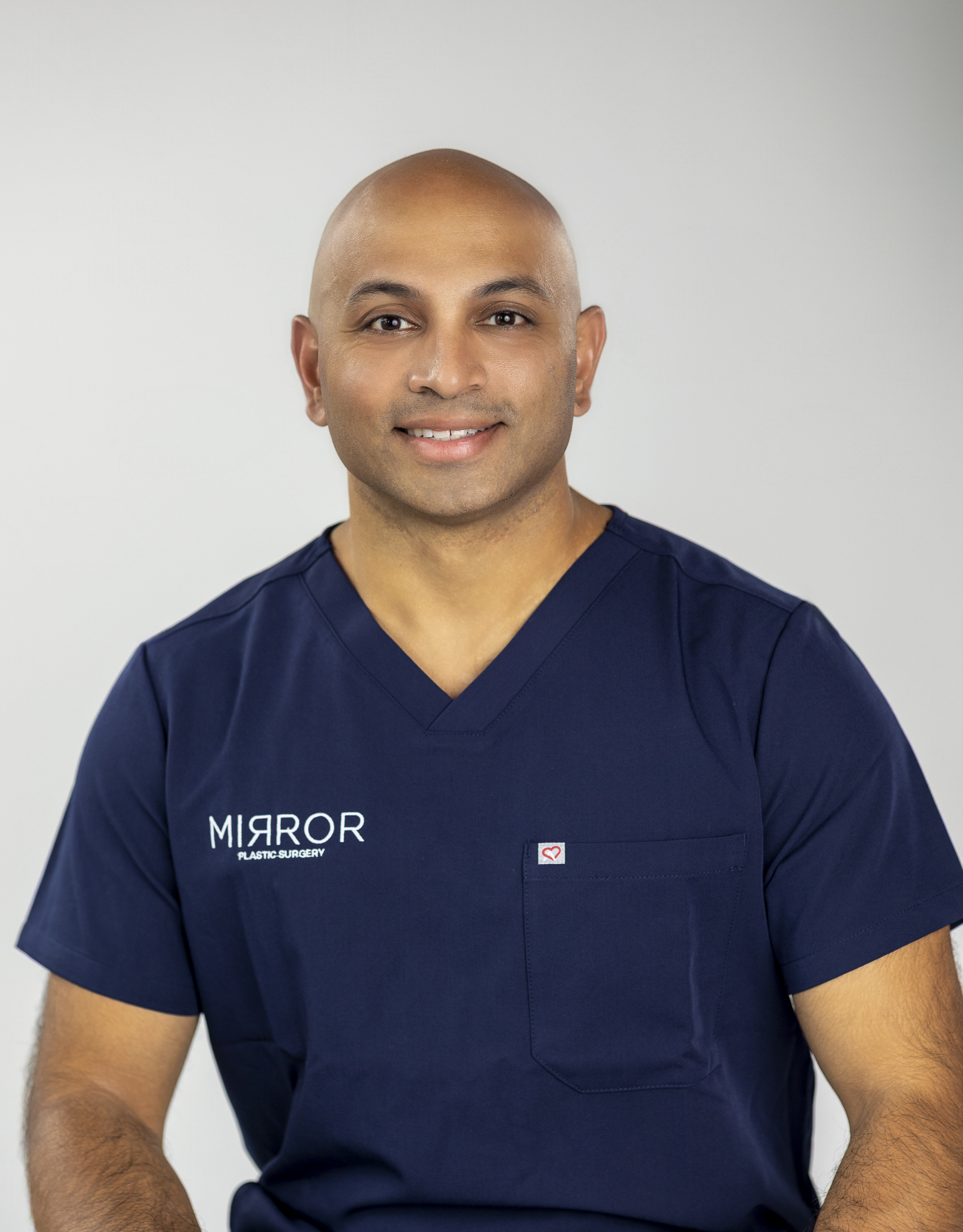
Dr. Akash completed his medical degree through the Harvard-MIT Division of Health Sciences and Technology, his seven-year integrated plastic and reconstructive surgery residency at Johns Hopkins University, an aesthetic surgery fellowship at the Manhattan Eye, Ear and Throat Hospital (MEETH), and the Stanford University Biodesign Innovation Fellowship. He serves on the editorial board of the Aesthetic Surgery Journal as Next Generation Editor and has testified before the FDA on breast implant safety. He has also been recognized in Newsweek’s America’s Best Plastic Surgeons list for two consecutive years, including 2025. This depth of training informs every hairline design decision, donor-zone assessment, and long-term graft planning conversation at Mirror Plastic Surgery.
Request a candidacy and donor assessment to receive a surgeon-directed evaluation of your donor capacity and the technology best suited to your anatomy.
Key Decision Factors for Your Hair Restoration Plan
A thorough pre-operative evaluation addresses several core factors before any technology selection occurs.
- Candidacy: Donor density below 40 follicular units per cm² is generally marginal for large-session transplants regardless of hair type. Active scarring alopecias require medical control before transplantation.
- Lifetime graft budget: A first-time transplant averaging 2,347 grafts can consume 35–40% of a patient’s total lifetime harvestable donor supply of roughly 6,000 grafts. High transection rates permanently waste part of this finite resource.
- Hair type suitability: Robotic FUE works best for straight, dark hair. Textured or curly hair requires curl-adaptive manual or motorized FUE with specialized punches.
- Downtime: No-shave FUE limits visible recovery signs. Full-shave procedures require a longer discretion period but may allow higher graft counts per session.
- Longevity: Transplanted DHT-resistant follicles are permanent. Native hair continues to miniaturize without adjunct medical therapy such as finasteride, minoxidil, or emerging options like PP405 when approved.
- Future planning: About 33.1% of hair restoration patients require two procedures and 9.6% require three. This pattern underscores the need for surgeon-led long-term planning of the finite donor budget from the first session.
- Keloid risk: Patients with a personal or family history of keloid formation require a patch-test protocol before a full procedure.
Common Misconceptions About Scarring, Plugs, and Density
Misconception: Modern transplants still produce visible plugs. The plug appearance came from large multi-follicular grafts used in early techniques. Contemporary FUE and DHI transplant individual follicular units of one to four hairs. Hairline design mistakes, not graft technology, account for roughly 20% of corrective surgeries. Surgeon artistic judgment remains the primary determinant of whether a result looks natural.
Misconception: FUE leaves no scarring. FUE produces small circular micro-puncture scars rather than a linear strip scar. These are typically imperceptible at normal hair lengths but can become visible if the donor area is over-harvested. Boutique practices maintain transection rates below 2%, compared with the NIH StatPearls acceptable ceiling of 5% and industry averages that can exceed 20–30% in technician-led settings.
Misconception: Higher graft counts always produce better density. Megasessions above about 4,500–5,000 grafts in a single sitting correlate with higher overharvesting risk and lower per-graft survival rates. This pattern depletes the finite donor area and limits future options. For textured hair, equivalent visual density is often achievable with about 30% fewer grafts because curly fibers provide natural volume and light-blocking.
Misconception: Technology alone determines the outcome. The ISHRS notes that hairline design is 80% art and 20% surgery. In 2026, elite practices achieve graft survival rates between 95% and 98%1, so survival rates alone no longer distinguish top clinics. The differentiating variable is the surgeon’s aesthetic judgment in hairline placement, angulation, density distribution, and long-term planning.
Frequently Asked Questions
How do I know if I am a candidate for hair transplantation?
Candidacy depends on several factors evaluated during a comprehensive consultation. These include the degree and pattern of hair loss (Norwood-Hamilton scale for men, Ludwig scale for women), donor density and quality, scalp elasticity, hair type, and overall health. Patients with active scarring alopecias such as CCCA must achieve medical control of the inflammatory process before transplantation. Patients with advanced baldness and insufficient donor reserves may not be suitable for large-session transplants. A thorough pre-operative assessment, including trichoscopic analysis of follicular density per square centimeter, establishes realistic expectations and protects the finite lifetime graft budget.
What is the realistic timeline for visible results after a hair transplant?
Transplanted follicles enter a resting phase immediately after the procedure, and most transplanted hair sheds within the first two to six weeks. New growth typically begins at three to four months, with meaningful density visible at six to nine months.1 Full results, including final texture and density, are generally assessed at twelve to eighteen months. Afro-textured hair may require up to eighteen months for full density and appearance to become clear. Adjunct medical therapies such as finasteride, minoxidil, or biologic adjuncts are often recommended to protect native hair during and after this period.
How should I evaluate a hair restoration provider?
Several factors matter most when you evaluate a provider. Board certification in plastic surgery or a hair-restoration-specific credential is essential. Documented training in the specific technique being offered also matters. Direct surgeon involvement in hairline design and recipient-site creation, rather than delegation to technicians, strongly predicts quality. A daily procedure volume that allows full surgeon attention per case further protects outcomes.
High-volume clinics tend to have higher complication rates than lower-volume practices. Ask specifically who performs the hairline design, who creates the recipient sites, and how many procedures the surgeon performs per day. Vague answers about surgeon involvement are a meaningful red flag.
Is PP405 available as an alternative to surgery?
As noted in the main discussion, PP405 remains unavailable pending FDA approval. It is still in clinical trials, with Phase 3 trials planned for 2026 and the earliest realistic approval window estimated at 2027–2029. Even if approved, PP405 would face the follicular limitations described earlier. It cannot address areas where follicles have already been lost or replaced by scar tissue, so it would not replace hair transplantation for patients with visible bald areas. Patients interested in emerging non-surgical options should discuss current evidence and realistic timelines during a consultation.
What makes no-shave FUE appropriate for some patients but not others?
No-shave FUE trims only the donor area at the back of the scalp, which preserves the appearance of surrounding hair throughout recovery. It suits patients who need discretion during the recovery period and those planning smaller graft-count sessions. For larger sessions that require about 2,500 or more grafts, a full or partial shave of the donor area may be necessary to allow adequate extraction density without over-harvesting any single zone. The decision depends on the total graft count required, donor density, and the patient’s lifestyle priorities, all of which are assessed during the pre-operative evaluation.
Conclusion: Choosing a Path to Lasting Natural Results
The 2026 landscape of hair restoration offers measurably superior technology compared with prior eras. Robotic FUE, DHI, AI-assisted diagnostic mapping, and biologic adjuncts collectively raise the ceiling for graft survival, angle precision, and density. These tools are necessary but not sufficient. The surgeon who designs the hairline, evaluates the donor zone, selects the appropriate technique for each patient’s hair type, and personally performs the non-delegable steps of the procedure is the variable that converts technology into an undetectable, lasting result.
Mirror Plastic Surgery’s concierge model, with the limited daily schedule described earlier, hour-long consultations, and a safety-first philosophy that prioritizes anatomy and long-term planning over throughput, reflects the structural conditions under which these outcomes are consistently achievable. Dr. Akash’s training across Harvard-MIT, Johns Hopkins, MEETH, and Stanford Biodesign, combined with the national recognition noted earlier, provides the clinical foundation for every hair restoration evaluation at the practice.
Begin your hair restoration evaluation at Mirror Plastic Surgery in St. Petersburg, Florida, to receive a comprehensive, surgeon-directed assessment of your options.
1 Results may vary from person to person. Editorial content, before and after images, and patient testimonials do not constitute a guarantee of specific results.