Weight Loss Plateau Solutions: 7 Steps to Break Through
Content
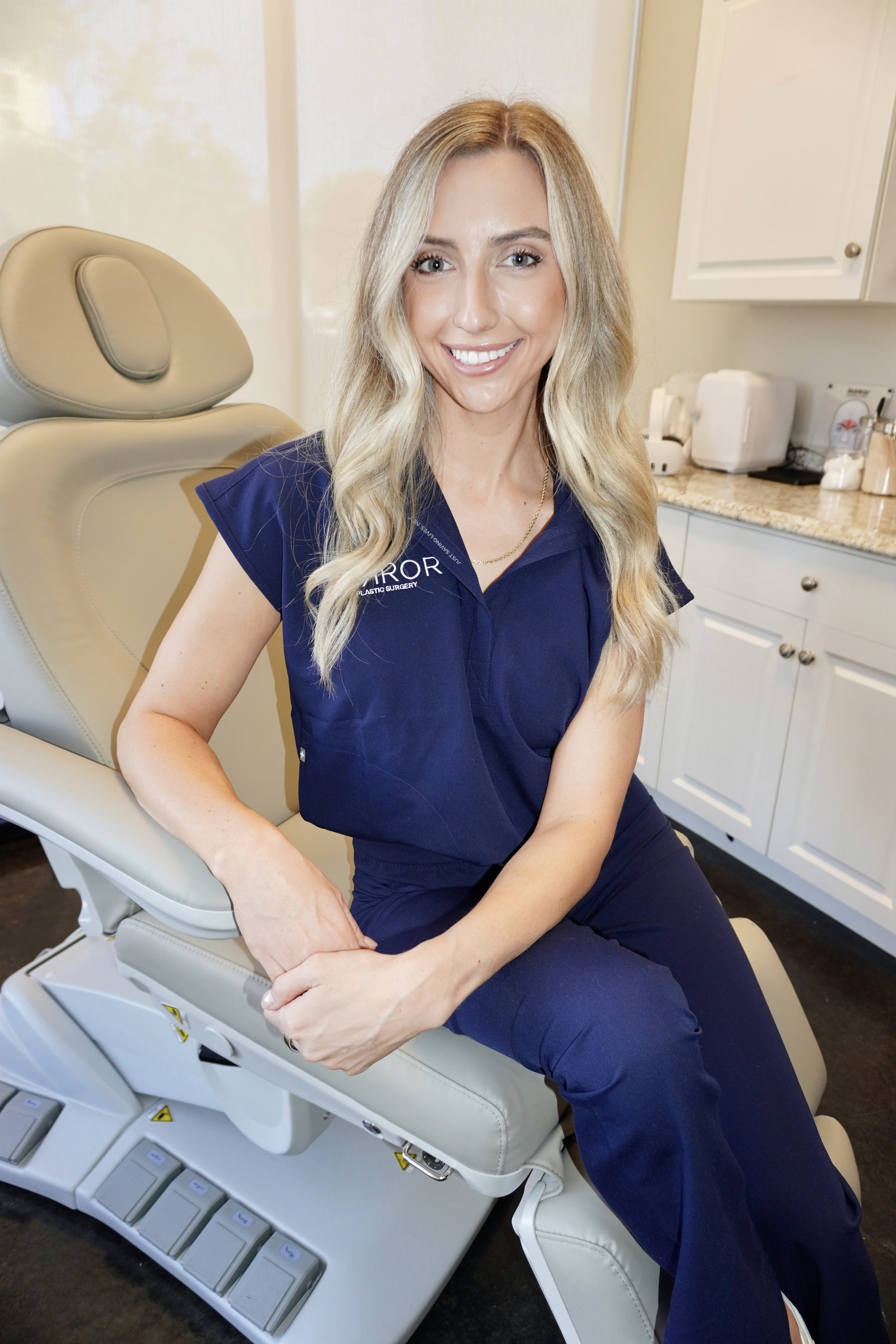
Written by: Ellie Pranckevicius, FNP-BC, Aesthetic Nurse Practitioner & Aesthetic Injector | Facial Restoration & Regenerative Injectable Specialist, Mirror Plastic Surgery | Last updated: July 23, 2026
Key Takeaways for Tirzepatide Plateaus
A weight-loss plateau on tirzepatide usually reflects normal physiology, not medication failure. Adaptive thermogenesis, counterregulatory hormones, and receptor habituation drive the stall.
Confirm a true plateau with a 4-week rolling average weight plus body-circumference and strength metrics before changing your plan.
Recalculate TDEE at your current weight, run a 7–14 day weighed food log, and restore a 300–500 calorie deficit while prioritizing protein and resistance training.
Use diet breaks at maintenance calories or reduced-frequency dosing to address GLP-1-specific adaptations before considering supervised peptide escalation.
When lifestyle adjustments are no longer enough, Mirror Plastic Surgery’s concierge program offers lab-guided peptide escalation and monitoring. Schedule your consultation for a personalized assessment.
How Long a Tirzepatide Weight-Loss Plateau Typically Lasts
When standard lifestyle adjustments have been applied and the scale remains static for more than four weeks, the plateau calls for a clinical strategy.
Step 6: Consider Supervised Peptide Escalation With Lab Guidance
When Steps 1–5 have been followed carefully and the plateau persists, lab-guided peptide escalation becomes the appropriate next step. This decision should not rest on online anecdotes or unverified suppliers. It requires a full metabolic workup to identify the specific physiological bottleneck.
Mirror Plastic Surgery GLP-3R Protocol: What to Expect
GLP-3R is a newer-generation peptide similar in mechanism to GLP-1 but formulated to address several limitations of older incretin therapies. Key features of the Mirror Plastic Surgery protocol include:
Fewer gastrointestinal side effects compared with first-generation GLP-1 agonists
Reduced likelihood of muscle wasting relative to standard GLP-1 monotherapy
The idea of “shocking” the body refers to introducing a new stimulus that disrupts the energy-conservation balance your body has created. Two practical tactics have supporting evidence.
Escalating beyond standard lifestyle adjustments works best under medical supervision. Mirror Plastic Surgery’s concierge peptide program offers a 30–60 minute consultation, comprehensive lab analysis, batch-tested peptide sourcing, 24/7 text access, and remote delivery across the United States. This model differs sharply from buying unverified peptides online without screening, dosing guidance, or safety monitoring.
Before choosing any peptide provider, ask these questions:
Do you require baseline lab work before prescribing, including metabolic panel, thyroid, and fasting insulin?
Are your peptides sourced from suppliers with documented batch testing for purity and accurate dosage?
What is your monitoring schedule during active therapy?
Do you have a protocol for red-flag lab findings that require immediate cessation?
Is there direct, ongoing access to a licensed practitioner, not just a patient portal?
Can the program be delivered remotely if I am not local to your clinic?
Book an appointment to receive a lab-guided assessment and a personalized peptide escalation plan.
Meet the Mirror Plastic Surgery Clinical Team
The lead practitioner for peptide therapies is a board-certified Family Nurse Practitioner. She holds a Bachelor’s in Health Science from Boston University, completed an aesthetics licensure program, and earned both her Bachelor’s and Master’s in Nursing from the University of South Florida. Four years in the Neuroscience ICU at Tampa General Hospital gave her a deep foundation in physiology, metabolic health, and recovery, which now informs her approach to peptide escalation in plateau patients.
Ellie Pranckevicius, FNP-BC
Her practice centers on education and transparency. She explains the physiology behind each recommendation in clear language, tells patients when a service is not yet necessary, and builds protocols around individual lab results rather than generic templates. Her work is supported by the surgical expertise of Mirror Plastic Surgery founder Dr. Akash Chandawarkar, MD, a Harvard-educated, Johns Hopkins-trained plastic surgeon with fellowship training at Manhattan Eye Ear & Throat Hospital and medical innovation training at Stanford University.
Frequently Asked Questions
Are peptides approved by the FDA?
Many peptides used in weight management and wellness protocols are not FDA-regulated as drugs. However, they have been studied in clinical settings for more than a decade. The main risk with peptide therapy usually comes from obtaining compounds from unregulated sources without quality control. Mirror Plastic Surgery sources peptides exclusively from suppliers with documented batch testing for purity and accurate dosage. Every patient receives an in-depth consultation that may include lab panels before any protocol begins, and Ellie Pranckevicius provides ongoing medical supervision throughout treatment.
What happens to muscle on GLP-1 therapies?
Muscle loss is a real and clinically significant concern during GLP-1 therapy. As mentioned in the muscle-preservation section above, GLP-1 therapies carry a meaningful risk of muscle loss alongside fat loss. This loss reduces resting metabolic rate, contributes to plateau formation, and increases the risk of weight regain after discontinuation. The most effective countermeasures include maintaining adequate protein intake, performing resistance training 3–4 times per week, and, when appropriate, incorporating peptides such as GLP-3R or growth hormone secretagogues that are associated with better muscle preservation than first-generation GLP-1 monotherapy. Mirror Plastic Surgery’s lab-guided protocols treat muscle preservation as a core goal alongside fat loss.
What happens if I stop peptides?
Stopping peptide therapy without a structured maintenance plan often reverses many of the benefits you gained. For weight management peptides, the physiological drivers of weight gain, including elevated ghrelin, suppressed leptin, and reduced energy expenditure, are no longer pharmacologically controlled after cessation, and weight regain usually follows. The degree and speed of regain depend on how well lifestyle habits such as protein intake, resistance training, sleep, and NEAT have been built and maintained independent of the medication. Mirror Plastic Surgery’s approach includes designing a maintenance protocol before any de-escalation, with reduced-frequency dosing options and ongoing lab monitoring to preserve metabolic gains over time.
How soon will I see results with supervised escalation?
The timeline depends on the individual, the specific peptide protocol, and the main cause of the plateau. Patients whose plateau stems from behavioral drift or suboptimal protein and training habits often see scale movement within two to four weeks after correcting those variables.1 Patients who need peptide escalation, such as a transition from semaglutide to tirzepatide or the addition of GLP-3R, typically see renewed weight loss within four to eight weeks of starting the new protocol1, which aligns with dose-escalation timelines in clinical trials. Lab markers such as fasting insulin, HbA1c, and lipid panels often improve measurably within the first three months. Ellie Pranckevicius reviews progress at structured intervals and adjusts protocols based on objective lab data rather than subjective reporting alone.
Conclusion: Break Plateaus With Individualized Oversight
A weight-loss plateau on tirzepatide or any GLP-1 therapy reflects adaptive thermogenesis, hormone shifts, and receptor habituation, not personal failure. The seven-step framework above addresses the most common modifiable contributors in sequence. You confirm that the plateau is real, recalibrate energy balance, protect muscle through protein and resistance training, restore NEAT and sleep, address GLP-1-specific adaptations, escalate to lab-guided peptide protocols when indicated, and implement a structured maintenance plan.
Each step builds on the last, and the most durable outcomes come from applying them together under consistent medical supervision rather than cycling through isolated quick fixes. Mirror Plastic Surgery’s concierge peptide program, led by Ellie Pranckevicius, FNP-BC, and backed by the clinical standards of Dr. Akash Chandawarkar, provides the lab-guided, personalized, and continuously monitored framework needed for a sustainable metabolic reset. Consultations are available in person in St. Petersburg, Florida, and remotely across the United States.
Book an appointment with Ellie and take the next step toward a personalized, evidence-based plan to break your plateau and protect your results long term.
1 Results may vary from person to person. Editorial content, before and after images, and patient testimonials do not constitute a guarantee of specific results.
Peptide therapy is intended for wellness and optimization purposes and is not prescribed to diagnose, treat, cure, or prevent disease unless specifically stated. Many peptides are not FDA-approved and may be used off-label. Some have limited long-term safety data, with a potential for unknown risks, complications, or desensitization with prolonged use.