
Written by: Ellie Pranckevicius, FNP-BC, Aesthetic Nurse Practitioner & Aesthetic Injector | Facial Restoration & Regenerative Injectable Specialist, Mirror Plastic Surgery | Last updated: July 26, 2026
Key Takeaways
- Tissue regeneration restores original cellular structure and function through stem cells, growth factors, and an intact extracellular matrix, while scar-based repair replaces damaged tissue with structurally inferior fibrous connective tissue.
- Human tissues differ in regenerative capacity: labile tissues such as skin and intestinal epithelium regenerate readily, while permanent tissues like cardiac muscle and most neurons rely primarily on scar formation.
- Peptides including BPC-157, TB-500, and GHK-Cu modulate inflammation, promote angiogenesis, and support collagen synthesis, with promising preclinical data but limited high-quality human evidence.1
- Medical supervision, verified sourcing, and individualized lab-guided protocols are essential for safety and efficacy because unapproved peptides carry contamination risks and lack established dosing guidelines.
- At Mirror Plastic Surgery, Ellie Pranckevicius, FNP-BC, develops personalized peptide protocols that complement surgical care and support recovery; schedule a consultation to explore a medically supervised approach tailored to your goals.1
How Tissue Regeneration Works
Tissue regeneration restores the original specialized cells, structure, and function. Repair restores physical continuity but often replaces damaged areas with fibrous connective tissue that forms a scar lacking elasticity and specialized structures.
Three biological players drive true regeneration:
- Stem cells, which self-renew and differentiate into the specific cell types needed to replace lost tissue
- Growth factors, such as VEGF, FGF, IGF, and HGF, which coordinate cell proliferation, migration, and differentiation
- Extracellular matrix (ECM), a structural and biochemical scaffold that stores positional information and actively guides regeneration rather than serving only as a passive scaffold
Tissue Regeneration vs Scar-Based Repair
True regeneration restores the original tissue type and structure in high cell-division tissues such as liver, skin, and bone marrow, while repair restores continuity with scar tissue rather than original structure in tissues like tendons, ligaments, and cartilage. The condition of the ECM often determines which outcome occurs.
Normal tissue architecture returns only when the extracellular matrix framework remains undamaged. When the ECM is disrupted, healing shifts toward scar formation and fibrosis.
Four overlapping phases shape tissue repair:
- Hemostasis, the immediate vascular response that stops bleeding
- Inflammation, immune cell recruitment to clear debris and signal repair (days 1–5)
- Proliferation/Tissue Formation, angiogenesis, fibroplasia, and collagen deposition (days 5–21)
- Remodeling, collagen maturation and tensile strength restoration (weeks to years)
Tissues With Strong and Weak Regenerative Capacity
Human tissues vary considerably in their ability to regenerate. Labile tissues such as hematopoietic cells, skin, and gastrointestinal epithelium regenerate easily via preserved stem cells. Stable tissues such as liver and kidney parenchyma have limited regeneration except for the liver. Permanent tissues including most neurons and cardiac muscle rely primarily on scar formation.
- High capacity: Intestinal epithelium, skin epidermis, blood-forming (hematopoietic) tissue, liver
- Moderate capacity: Skeletal muscle (via satellite cells), bone, peripheral nerves
- Limited capacity: Tendons, ligaments, cartilage, cardiac muscle, central nervous system
Neurons and striated muscle cells such as cardiac muscle are non-mitotic and cannot regenerate after injury, which causes permanent functional loss in events like stroke or myocardial infarction. Cartilage presents a particular clinical challenge because cartilage has almost no intrinsic ability to repair itself.
These differences in baseline capacity set the stage for which tissues may respond most meaningfully to regenerative strategies, including peptide protocols.
Factors That Support Tissue Regeneration
Several biological and environmental factors influence whether healing moves toward true regeneration or fibrotic scar formation. Healing rate and quality decline with age because stem cells become fewer, growth factor responsiveness drops, and collagen synthesis slows. Systemic factors that impair repair include infection, diabetes, protein or vitamin C deficiency, glucocorticoids, and poor tissue perfusion.
Mechanical loading also shapes healing quality. Mechanical loading during healing guides fibroblasts to align collagen fibers along lines of stress, which improves structural organization and mechanical properties of repaired tissue. During remodeling, type III collagen is replaced by type I collagen, and lysyl oxidase, which requires copper and vitamin C, cross-links the fibers to increase tensile strength.
How Peptides Influence Tissue Repair
Mesenchymal stem cell-derived peptides exert regenerative effects through five interconnected paracrine mechanisms: immunomodulation and anti-inflammation, antioxidative and anti-apoptotic protection, angiogenesis and tissue remodeling, metabolic regulation, and core paracrine signaling. These peptides activate pathways including PI3K/Akt, JAK/STAT, MAPK/ERK, and AMPK, which support cellular survival, immune balance, and vascular restoration during tissue repair.
Peptide signaling also affects collagen dynamics directly. Collagen peptides promote matrix collagen synthesis in aging skin by activating the TGF-β/Smad signaling pathway. A 2026 randomized, double-blind, placebo-controlled pilot trial reported that 20 g/day collagen peptide supplementation for 4 weeks significantly increased serum P1NP, a marker of type I collagen synthesis, and reduced IL-6 concentrations in endurance-trained premenopausal women.
Peptide Therapy at Mirror Plastic Surgery
Peptide therapy at Mirror Plastic Surgery uses short amino acid sequences to influence specific pathways involved in inflammation, collagen synthesis, angiogenesis, and soft-tissue repair. All peptide protocols are led by Ellie Pranckevicius, FNP-BC.
Ellie holds a Master’s in Nursing from the University of South Florida. Her four years in the Neuroscience ICU at Tampa General Hospital gave her deep experience with complex physiology, severe injury, and recovery patterns. This critical care foundation, combined with her esthetics training, allows her to align aesthetic goals with the clinical science required to pursue them safely.
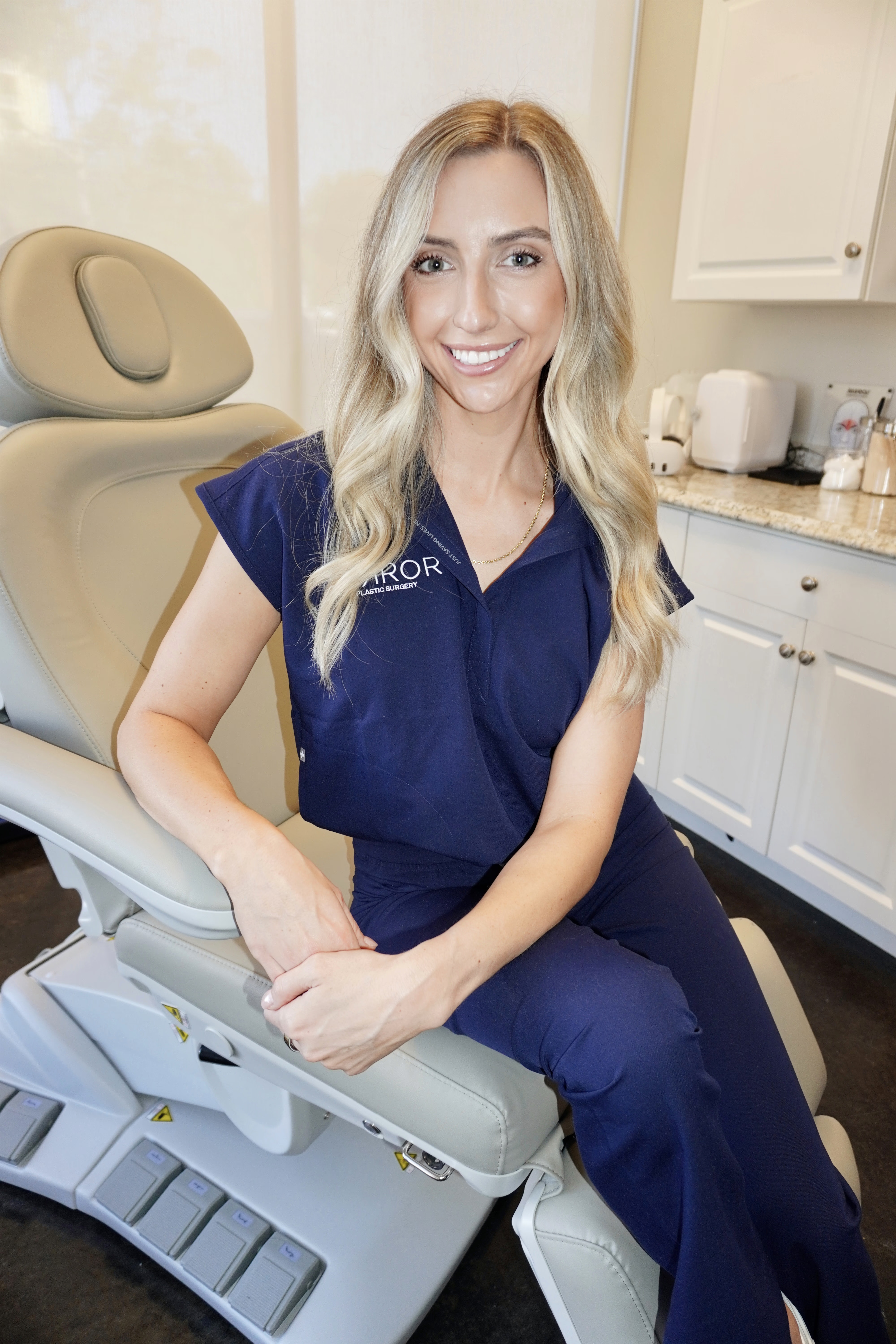
Mirror Plastic Surgery’s flagship tissue-focused offering is the Glow Stack. This protocol combines GHK-Cu, BPC-157, and TB-500 to address systemic inflammation, collagen and elastin production, and soft-tissue repair. Each protocol follows in-depth lab analysis and a comprehensive consultation rather than a one-size-fits-all template.
BPC-157 and Tissue Regeneration
BPC-157, a synthetic 15-amino-acid peptide, activates VEGFR2 and NO pathways through the Akt-eNOS axis to promote angiogenesis and tissue repair. Animal data suggest benefits for new blood vessel growth, inflammation reduction, and healing in tendons, ligaments, muscles, and the gastrointestinal tract.1
The human evidence base remains limited. Only three small human studies have examined BPC-157, and they lacked strong design, control groups, and large-scale safety or efficacy data. BPC-157 is not FDA-approved for any human use, and WADA bans it under the S0 Unapproved Substances category because of insufficient safety data. Medical supervision, verified sourcing, and thorough screening remain non-negotiable for any responsible protocol.
Peptides in Post-Surgical Recovery
Post-surgical recovery engages all four phases of tissue repair at once, with the proliferative and remodeling phases shaping long-term function and appearance. TB-500, a synthetic fragment of thymosin β4, is used at Mirror Plastic Surgery to address soft-tissue inflammation and wound repair. Thymosin β4 supports cell migration, angiogenesis, and wound repair as part of the MSC secretome.
GHK-Cu, a copper peptide, supports collagen and elastin production. This support aligns with the remodeling phase, when collagen cross-linking restores tensile strength.
Mirror Plastic Surgery integrates post-surgical peptide protocols with procedures performed by Dr. Akash Chandawarkar, MD, a Harvard-educated physician and Johns Hopkins-trained plastic surgeon with fellowship training at Manhattan Eye Ear & Throat Hospital. This surgical-to-wellness continuum gives patients coordinated care across every phase of recovery.
Current Research on Peptides and Repair
The broader peptide research landscape shows meaningful preclinical signals alongside clear gaps in human data. In a 2026 preclinical study in Arthritis & Rheumatology, synthetic PEPITEM reduced arthritic joint swelling in mouse models to a degree comparable to infliximab, with less joint inflammation, cartilage damage, bone erosion, and leukocyte infiltration.
On collagen synthesis, fish collagen oligopeptides at 25–100 µg/mL promoted fibroblast homeostasis, inhibited inflammation, and protected mitochondria in skin cells through the NAD+/SIRT1/PGC1α pathway. These findings support the biological plausibility of collagen-focused peptide protocols.
Translational limitations remain significant. Many cytokines including VEGF and EGF have failed in clinical studies of skin wound healing despite strong preclinical data. Researchers attribute these failures to complex and incompletely understood regeneration biology, in vitro models that poorly mimic in vivo conditions, and animal models that do not fully match human skin wound regeneration. Most growth factor therapeutics remain in the preclinical phase.
How Mirror Uses Peptides in Practice
Mirror Plastic Surgery’s peptide protocols focus on three main clinical contexts. This structure helps patients understand where peptides may fit into their broader care plan.
- Chronic inflammation and autoimmune conditions: BPC-157 and KPV target systemic and gut-specific inflammation pathways. Under supervision, some clients have reported improvements and, in select cases, reversal of conditions such as psoriasis.1
- Post-operative recovery: The Glow Stack and targeted TB-500 protocols aim to reduce post-surgical inflammation and support the proliferative and remodeling phases of healing.1 These protocols complement surgical procedures performed at the practice.
- Age-related tissue decline: With age, stem cell number and function decline because of accumulated DNA damage, changes in stem cell niches, chronic inflammation, and reduced growth factor signaling, which slows healing and reduces regeneration capacity. GHK-Cu and NAD protocols address collagen decline and mitochondrial function in this context.
Book an appointment with Ellie to receive a lab-guided assessment and a peptide protocol matched to your specific tissue repair or recovery goals.
Risks, Limitations, and Safety Checks
Sourcing represents the primary safety variable for peptide therapy. Compounded peptides may vary in concentration and show bacterial contamination. Research peptides such as BPC-157 and TB-500 add further risks, including industrial chemicals, heavy metals, and bacterial endotoxins.
Absolute contraindications include active malignancy for angiogenic peptides such as BPC-157 and TB-500 because of their VEGF-mediated mechanisms. Pregnant and breastfeeding patients should avoid these therapies because safety data are insufficient. No randomized controlled trials in humans have established an optimal BPC-157 dosage, so current human protocols rely on extrapolations from rodent studies and anecdotal reporting.
Mirror Plastic Surgery mitigates these risks by sourcing from reputable providers with batch testing, performing in-depth medical history reviews, ordering baseline lab panels, and offering ongoing concierge monitoring by Ellie. Patients have direct text access to Ellie for questions, dosing guidance, and follow-up throughout their protocol.
Why Peptides Matter Clinically
Peptide-based approaches to tissue regeneration sit at the intersection of longevity medicine, post-surgical recovery, and evidence-based wellness. The field is advancing quickly. In skeletal muscle regeneration, coordinated inflammation resolution through the M1-to-M2 macrophage shift and balanced growth factor cues including IGF-1, HGF, and FGF-2 enable full functional regeneration in minor injuries. This biology provides a mechanistic rationale for peptide interventions that modulate similar pathways.
As research matures, the gap between preclinical promise and human clinical validation will narrow. The current standard of care, however, still requires medical supervision, verified sourcing, and individualized protocols rather than unguided self-administration.
Mirror Plastic Surgery’s concierge model, which limits patient volume, dedicates up to an hour per consultation, and provides 24/7 practitioner access, reflects a commitment to the personalized oversight that responsible peptide therapy demands.
In summary: The distinction between true regeneration and scar-based repair, shaped by stem cell availability, ECM integrity, and growth factor signaling, underpins peptide protocols that aim to shift healing toward higher-quality tissue restoration. Specific peptides including BPC-157, TB-500, and GHK-Cu show mechanistic relevance to inflammation reduction, collagen synthesis, and soft-tissue repair, with promising preclinical data and emerging human evidence. The safety and effectiveness of any peptide protocol depend on verified sourcing, individualized dosing guided by lab results, and ongoing medical supervision, which Mirror Plastic Surgery applies to every patient.
Book an appointment with Ellie at Mirror Plastic Surgery’s St. Petersburg, Florida practice to begin a lab-guided, concierge-supervised peptide protocol built around your biology and goals.
Required Disclaimers: The information in this article is intended for educational purposes only and does not constitute medical advice, diagnosis, or treatment. Many peptides discussed, including BPC-157 and TB-500, are not FDA-approved for the indications described and exist in an evolving regulatory environment. Individual results vary. Peptide therapy should only occur under the supervision of a qualified healthcare provider following a thorough medical evaluation, including relevant laboratory testing. Mirror Plastic Surgery’s peptide protocols are personalized to each patient’s health profile and are not a substitute for standard medical care.
Frequently Asked Questions
How does tissue regeneration differ from scar-based repair?
Tissue regeneration replaces damaged cells with the same specialized cell type and restores the original architecture and function of the tissue. Scar-based repair fills the injured area with fibrous connective tissue, primarily collagen, which restores structural continuity but lacks the mechanical properties, elasticity, and specialized functions of the original tissue.
This distinction matters clinically because scar tissue in a tendon, for example, is weaker and less flexible than native tendon, which increases re-injury risk. The outcome of healing, regeneration versus fibrosis, depends on the tissue type, the integrity of the extracellular matrix, the inflammatory environment, and the availability of stem cells and growth factors. Peptide protocols that modulate inflammation and support collagen remodeling aim to tilt the balance toward higher-quality repair, even when true regeneration is not biologically possible in a given tissue.
Are BPC-157 and TB-500 safe, and what does medical supervision add?
BPC-157 and TB-500 have extensive preclinical safety records across animal studies, with no documented organ toxicity at therapeutic doses in those models. Human clinical data remain limited, and no large-scale randomized controlled trials have established optimal dosing, long-term safety profiles, or confirmed efficacy for soft-tissue repair in humans.
The primary safety risks often arise from unverified sourcing. Products obtained without medical oversight may contain contaminants, incorrect concentrations, or bacterial endotoxins. Medical supervision adds several layers of protection, including baseline lab panels to screen for contraindications such as active malignancy, verified sourcing from compounding pharmacies with batch testing, individualized dosing based on body weight and health status, and ongoing monitoring for adverse responses.
At Mirror Plastic Surgery, Ellie Pranckevicius conducts a comprehensive intake evaluation before starting any protocol and remains available throughout the patient’s treatment cycle.
Which patients are most likely to benefit from a peptide protocol?
Mirror Plastic Surgery’s peptide protocols are designed for adults dealing with chronic inflammation or autoimmune conditions, post-surgical recovery needs, age-related decline in collagen production and tissue repair capacity, and metabolic or energy concerns. The Glow Stack, which combines GHK-Cu, BPC-157, and TB-500, is particularly relevant for individuals with systemic inflammation, soft-tissue injuries, or skin and connective tissue aging.
Post-surgical patients may use targeted protocols to support the proliferative and remodeling phases of healing after procedures performed at the practice. Patients with gut-specific inflammation may benefit from KPV, while those seeking energy and anti-aging support may be candidates for NAD therapy. Because results vary based on genetics, lifestyle, and individual physiology, every protocol begins with a thorough consultation and, when appropriate, lab panels to identify root causes and tailor the approach.
How long does tissue repair-focused peptide therapy take to show results?
The timeline for measurable outcomes from peptide therapy depends on the condition treated, the specific peptides used, and the individual’s baseline health. Inflammation-related improvements, such as reduced joint discomfort or lower systemic inflammatory markers, may appear within the first one to four weeks of a protocol.1
Collagen synthesis and structural tissue remodeling progress more slowly. Meaningful changes in skin quality, tendon integrity, or connective tissue strength usually require several weeks to months of consistent use, mirroring the natural remodeling phase of wound healing, which can extend from weeks to over a year depending on tissue type.1 Post-surgical patients using peptides as a complement to recovery protocols may notice faster resolution of swelling and improved tissue quality during follow-up visits.1
Ellie tracks outcomes using objective markers when possible and adjusts protocols based on individual response so that each patient’s plan evolves with their progress.
Can peptide therapy replace conventional treatment for inflammatory or autoimmune conditions?
Peptide therapy does not replace conventional medical treatment and is not positioned that way at Mirror Plastic Surgery. It serves as an evidence-informed complementary approach that may address root causes of inflammation, support tissue repair, and, in some cases, reduce reliance on certain pharmaceuticals over time.
Any change in standard medications must occur under the guidance of the prescribing physician. Some patients have transitioned away from specific medications after sustained improvement on peptide protocols, but this outcome is individualized rather than guaranteed. Mirror Plastic Surgery prioritizes honest, unbiased communication. Ellie advises patients when a peptide protocol is not appropriate and coordinates with other treating physicians when needed to ensure integrated, safe care.
1 Results may vary from person to person. Editorial content, before and after images, and patient testimonials do not constitute a guarantee of specific results.
Peptide therapy is intended for wellness and optimization purposes and is not prescribed to diagnose, treat, cure, or prevent disease unless specifically stated. Many peptides are not FDA-approved and may be used off-label. Some have limited long-term safety data, with a potential for unknown risks, complications, or desensitization with prolonged use.