
Written by: Dr. Akash Chandawarkar, Board Certified Plastic Surgeon, Mirror Plastic Surgery | Last updated: September 9, 2026
Key Takeaways
- Licensed physicians, nurse practitioners, or physician assistants must prescribe peptide therapy in a medical spa.
- Only licensed nursing professionals or higher, working under a physician order, may administer peptide injections.
- Aestheticians and medical assistants never have legal authority to prescribe or inject peptides in any state.
- A qualified medical director (MD/DO) must provide real oversight with written protocols, standing orders, and chart review.
- California, Florida, and Texas add specific rules on ownership, delegation agreements, and staff qualifications that require close attention.
- Patients should confirm that their peptide provider follows a physician-led model with genuine medical oversight.
Prescribing And Administering As Separate Legal Roles
The core staffing decision in any peptide program rests on the legal difference between prescribing and administering. Prescribing is an independent medical act that requires a license to practice medicine. Administering is a delegated medical act that licensed nurses can perform under a prescriber’s order. Many med spas run into compliance trouble when they blur this line.
A prescriber evaluates the patient, reviews labs, determines clinical appropriateness, and writes a patient-specific order. An administering clinician follows that order within their licensed scope. These functions remain legally distinct. Training, certification, or physician supervision cannot give prescribing authority to a role that state law does not recognize as a prescriber.
Who Can Prescribe Peptides? (MD/DO, NP, PA)
Physicians (MD/DO) hold full independent authority to evaluate patients, order labs, and prescribe peptides. They can also serve as medical directors and delegate administration to qualified nursing staff.
Nurse Practitioners (NP) can prescribe in all 50 states, but many states require a collaborative or supervisory agreement with a physician. In states with full practice authority, such as Colorado and Arizona, an NP can own and operate a med spa. They can also prescribe injectable treatments without a collaborative physician agreement. In Florida, ARNPs must work under a written collaborative agreement or hold autonomous registration under a specific statutory pathway. In Texas, an APRN must operate under a valid Prescriptive Authority Agreement (PAA) with a delegating physician, as required by Texas Occupations Code Chapter 157.
Physician Assistants (PA) prescribe under a practice agreement with a supervising physician in virtually all states. In Texas, physicians, nurse practitioners, and physician assistants may perform good faith exams and write orders. In California, physician assistants may inject, operate devices, and perform the good-faith examination within a signed practice agreement with a supervising physician.
The prescriber must have enough clinical knowledge to interpret labs, select appropriate peptides, and manage interactions. At Mirror Plastic Surgery, peptide protocols are designed and supervised by Dr. Akash Chandawarkar, whose credentials are detailed below. Each protocol is tailored to the patient’s labs and physiology, which supports safer and more effective treatment.1
Who Can Administer Peptide Injections? (RN, LPN, NP, PA)
Administration is a delegated act. The delegating physician must provide appropriate training and supervision, and the order must be patient-specific rather than a broad blanket order.
Registered Nurses (RN) can administer peptide injections under a physician’s order in states that permit this delegation, including California, Florida, and Texas. However, the conditions vary. In Florida, RNs may administer injectables under a physician order or standing order with supervision, as governed by Board of Nursing declaratory statements. In California, RNs may administer neurotoxins and dermal fillers only when three conditions are met simultaneously: a written standardized procedure covering the function, documented training and evaluated competence, and a physician, PA, or NP who has examined that specific patient and ordered that treatment.
Licensed Practical Nurses (LPN/LVN) face significant restrictions. In Florida, LPNs generally cannot inject. In Texas, LVNs are severely limited in administering injections. They work under direct supervision and cannot implement protocols that require independent judgment, such as recognizing adverse events or deciding to hold a dose. In California, LVNs and medical assistants cannot administer injectables, even with a physician physically supervising.
NPs and PAs can administer injections when they are the prescriber or when they act under proper delegation. Physicians may administer directly but often delegate to nursing staff in a med spa setting.
Who Cannot Administer Peptides? (Aestheticians, Medical Assistants)
Aestheticians and medical assistants cannot prescribe or inject peptides in any state, under any circumstances, regardless of training or physician supervision.
Aestheticians and unlicensed staff cannot inject in any state; only licensed medical professionals such as NPs, PAs, and RNs under physician delegation can administer injectables. This is because injection therapy is a medical procedure that requires nursing or physician-level training to manage risks such as infection, dosing errors, and adverse reactions.
Even when an aesthetician completes a cosmetic injection course, they still lack legal authority to administer peptides in a medical spa. In California, an esthetician’s license authorizes work only on the epidermis. The Barbering and Cosmetology Act does not grant authority to practice medicine. As a result, estheticians cannot inject, operate lasers or IPL, or perform microneedling that penetrates the dermis, regardless of physician supervision. Texas and Florida apply the same prohibition.
The table below summarizes each role’s legal authority:
| Role | Can Prescribe | Can Administer | Can Serve as Medical Director |
|---|---|---|---|
| Physician (MD/DO) | Yes | Yes | Yes |
| Nurse Practitioner (NP) | Yes (conditions vary by state) | Yes | In most states, No; in full-practice-authority states, conditions apply |
| Physician Assistant (PA) | Yes (under practice agreement) | Yes | No |
| Registered Nurse (RN) | No | Yes (under physician order) | No |
| LPN/LVN | No | No in most states; severely restricted where permitted | No |
| Aesthetician | No | No | No |
| Medical Assistant | No | No | No |
The Medical Director: Required Clinical Oversight
Most states with active med spa regulation require a licensed physician (MD or DO) with an active in-state license to serve as medical director. Some states allow qualified nurse practitioners to serve in this role under full practice authority.
The medical director’s responsibilities remain substantive. A medical director drafts or approves and signs written clinical protocols for every service offered. These protocols cover patient eligibility, contraindications, pre-treatment assessment requirements, dosing parameters, and emergency response procedures. The medical director also issues written standing orders that authorize each non-physician provider to perform each delegated procedure.
“Ghost director” arrangements, where a physician signs an agreement, takes a monthly fee, and performs no actual oversight, are treated as professional misconduct by state medical boards. Operating without a compliant medical director can lead to serious consequences, including state medical board investigation, cease-and-desist orders, and civil monetary penalties. In severe cases, providers may face license suspension or revocation, malpractice liability, and forced closure. Disciplinary actions against ghost directors have increased every year since 2022.
At Mirror Plastic Surgery, Dr. Akash Chandawarkar serves as medical director and lead physician for all peptide protocols. He provides direct, concierge-level oversight, including 24/7 access via text, comprehensive lab analysis, and personalized protocol design for every patient.
State Variations In Peptide Therapy Rules
State laws add a critical layer of complexity on top of federal requirements. California, Florida, and Texas illustrate how dramatically these rules can differ.
California follows one of the strictest frameworks. A licensed prescriber such as an MD, DO, NP, or PA must perform a Good Faith Exam and issue a documented, individualized Patient-Specific Order before prescription-classified treatments are prescribed. As of 2026, broad or generic standing orders no longer meet this standard. LVNs and medical assistants cannot administer injectables regardless of supervision or training, and estheticians never can. California’s Corporate Practice of Medicine doctrine requires med spas that perform medical procedures to be owned through a physician-controlled Professional Corporation, with physicians holding at least 51 percent.
Florida has the highest med spa concentration in the country. The medical director for a Florida med spa must be a Florida-licensed MD or DO in good standing with the Florida Board of Medicine and actively practicing. Some situations include radius or quantity restrictions on the number of spas one director may supervise. Non-physician ownership of a med spa is permitted but triggers the requirement to obtain a Health Care Clinic License from the Agency for Health Care Administration and to appoint a qualified medical director. Florida does not permit NP-owned med spas to operate independently of a physician. ARNPs must work under a written collaborative agreement or hold autonomous registration under a specific statutory pathway.
Texas is strict on structure and broad on scope. Texas Medical Board Rule 169.28, effective January 2025, explicitly recognizes non-surgical cosmetic procedures as the practice of medicine. It requires all delegation to be in writing and adds physician posting and staff-identification duties. LVNs, medical assistants, and estheticians cannot inject under any circumstances, regardless of physician presence or private injector certificates. A delegating physician may hold Prescriptive Authority Agreements with no more than seven APRNs or PAs at a time, measured as full-time equivalents, under Texas Occupations Code §157.0512.
This overview is not exhaustive. Owners should verify current requirements with their state medical board, nursing board, and qualified healthcare counsel.
Compliance Checklist For Med Spa Owners
The steps below form a basic foundation for a defensible peptide staffing structure.
- Verify that your medical director is a licensed physician (MD/DO) with an active, unrestricted in-state license and relevant clinical experience.
- Confirm that all prescribers hold valid licenses and, when required, current collaborative or delegation agreements that explicitly cover peptide therapy.
- Ensure that only licensed nurses (RN or higher) or physicians administer injections, and never aestheticians or medical assistants.
- Create written, patient-specific protocols for evaluation, dosing, monitoring, and emergency response for each peptide category.
- Source peptides only from FDA-registered compounding pharmacies, such as 503A pharmacies for patient-specific prescriptions or 503B outsourcing facilities for office-use supply.
- Maintain thorough documentation of staff credentials, training records, supervision agreements, and chart reviews.
- Develop separate standing orders for each peptide category with dosing ranges, contraindications, and required screening labs instead of relying on a single blanket peptide order.
- Review state regulations and FDA compounding guidance regularly, because enforcement is intensifying and peptide rules continue to evolve.
Why Mirror Plastic Surgery For Peptide Therapy
Mirror Plastic Surgery offers a physician-led, concierge-level approach to peptide care. Dr. Akash Chandawarkar is board-certified by the American Board of Plastic Surgery, educated at MIT and Harvard Medical School through the Harvard-MIT Division of Health Sciences and Technology, trained during a seven-year integrated plastic and reconstructive surgery residency at Johns Hopkins University, and a graduate of the Stanford University Biodesign Innovation Fellowship. He also serves on advisory boards for companies developing emerging technologies in the field.
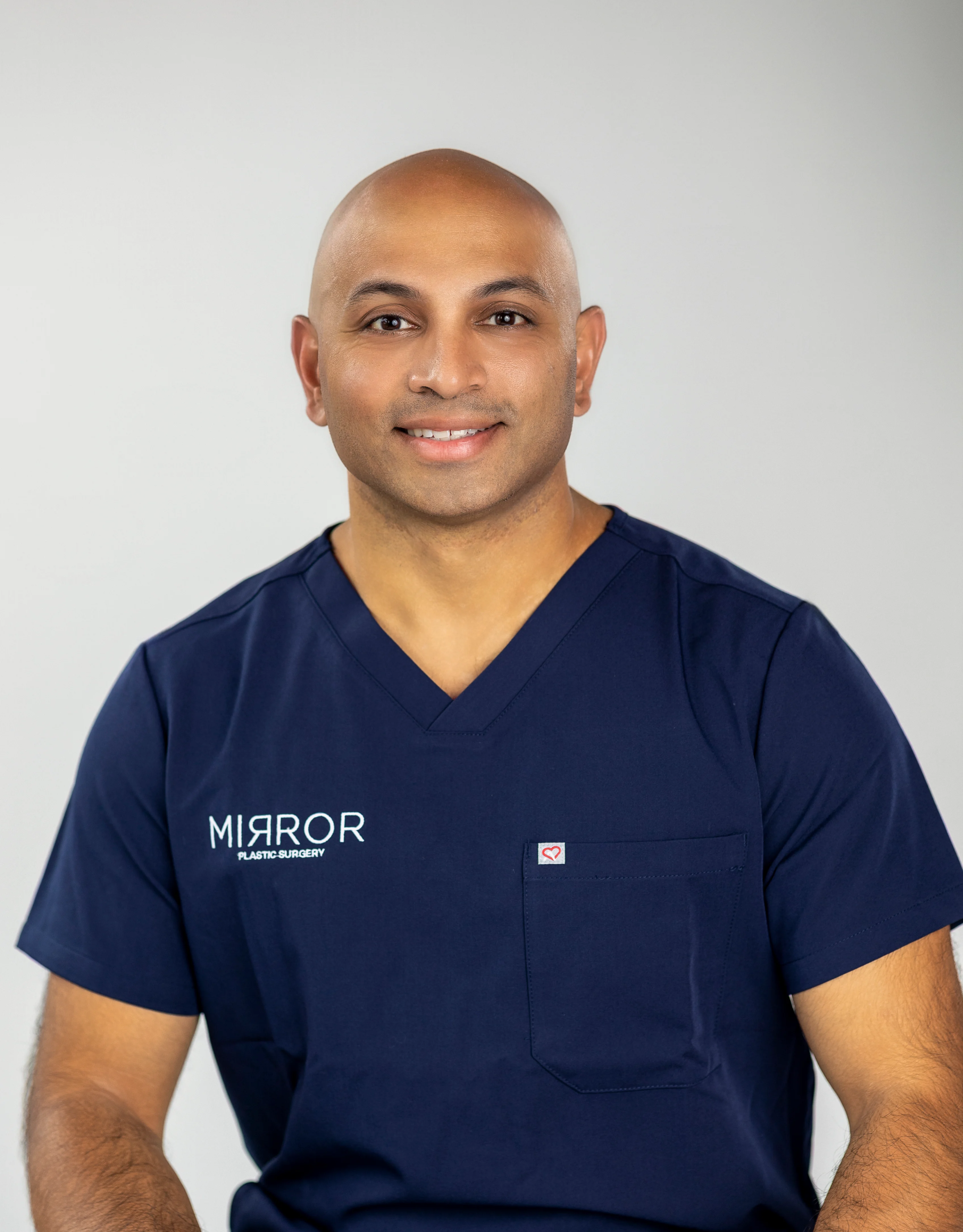
Each peptide protocol at Mirror Plastic Surgery starts with a 30–60 minute consultation, detailed lab analysis, and a personalized plan based on the patient’s physiology and goals. Patients receive direct 24/7 access to Dr. Chandawarkar via text for ongoing support, refill requests, and clinical questions. Peptides are sourced only from reputable providers with rigorous batch testing to confirm quality, purity, and accurate dosage.
Book an appointment with Ellie at Mirror Plastic Surgery to experience physician-led peptide therapy in the Tampa Bay area or through remote care across the United States.
Frequently Asked Questions
Can A Nurse Practitioner Prescribe Peptides In A Med Spa?
Yes. Nurse practitioners can prescribe peptides in all 50 states, but the conditions differ by jurisdiction. In full-practice-authority states such as Colorado and Arizona, an NP can prescribe without a physician collaborative agreement. In Florida, ARNPs must work under a written collaborative agreement or hold autonomous registration. In Texas, APRNs require a Prescriptive Authority Agreement with a delegating physician. Owners should confirm the exact requirements in their state, including whether the NP’s scope covers the peptide categories being prescribed and whether any collaborative agreement is current and properly documented.
Can Aestheticians Administer Peptide Injections?
No. As detailed above, aestheticians cannot administer peptide injections in any state. An aesthetician’s license authorizes work on the epidermis only and does not permit medical procedures involving needles or injections. This prohibition applies even when a physician is physically present. Med spa owners who allow aestheticians to inject peptides expose themselves, their medical director, and their practice to criminal charges, license revocation, and civil liability.
What Is The Role Of A Medical Director In Peptide Therapy?
A medical director for a peptide program is a licensed physician (MD/DO) who oversees the full clinical governance of the practice. Core duties include establishing written protocols for each peptide category, defining staff qualifications and scope, reviewing patient charts, conducting or overseeing good faith exams, issuing patient-specific orders, and remaining available for clinical questions and emergencies. The medical director must hold an active, unrestricted license in the state where the facility operates. Nominal or “ghost” arrangements, where a physician lends their name but provides no real oversight, are treated as professional misconduct and have led to license revocations and practice closures in California, Florida, and Texas.
Can A Med Spa Sell Peptides?
A med spa can administer compounded peptides to patients only when specific legal conditions are satisfied. A licensed prescriber must issue a valid, patient-specific prescription after a good faith exam. The peptides must come from a properly licensed compounding pharmacy, such as a 503A pharmacy for patient-specific prescriptions or 503B facility for office-use supply. A licensed professional must then administer the peptides within their scope of practice. Med spas cannot purchase peptides from unregulated online vendors, overseas suppliers, or research-use-only distributors and then administer them to patients. Doing so counts as administering an unapproved drug under federal law, regardless of labeling. The FDA’s compounding eligibility criteria for specific peptides continue to change, so sourcing must be checked against current regulatory status.
What Should I Look For In A Peptide Provider?
A reliable peptide provider operates under direct physician supervision with genuine involvement. Look for a board-certified physician who designs protocols, reviews your labs, and stays accessible throughout treatment. The practice should source peptides only from licensed compounding pharmacies with documented batch testing, not from online retailers or unverified vendors. Informed consent should clearly state that peptides are compounded, not FDA-approved for most indications, and that clinical evidence varies by substance. Avoid providers who offer one-size-fits-all protocols without reviewing your medical history and laboratory results or who cannot identify the compounding pharmacy that supplies your peptides. At Mirror Plastic Surgery, Dr. Chandawarkar personally oversees lab review, protocol design, and ongoing monitoring for every peptide patient.
Conclusion: Create A Compliant Peptide Therapy Program
Staff qualifications in peptide therapy center on two distinct legal functions. Prescribing requires an MD/DO, NP, or PA. Administering can be delegated to licensed nurses under a physician’s order. Aestheticians and medical assistants cannot perform either function in any state. A fully engaged medical director remains essential, and state laws in California, Florida, Texas, and other jurisdictions add layers of detail that demand ongoing attention as enforcement increases.
Mirror Plastic Surgery, led by Dr. Akash Chandawarkar, follows a physician-directed model that includes comprehensive lab analysis, personalized protocols, verified peptide sourcing, and concierge-level access to the supervising physician. Schedule your peptide therapy consultation to explore a safe, medically guided approach to your wellness goals.
This article is for informational purposes only and does not constitute legal advice. Regulations vary by state and are subject to change. Consult a qualified healthcare attorney and your state medical board before structuring or modifying a peptide therapy program.
1 Results may vary from person to person. Editorial content, before and after images, and patient testimonials do not constitute a guarantee of specific results.
Peptide therapy is intended for wellness and optimization purposes and is not prescribed to diagnose, treat, cure, or prevent disease unless specifically stated. Many peptides are not FDA-approved and may be used off-label. Some have limited long-term safety data, with a potential for unknown risks, complications, or desensitization with prolonged use.