
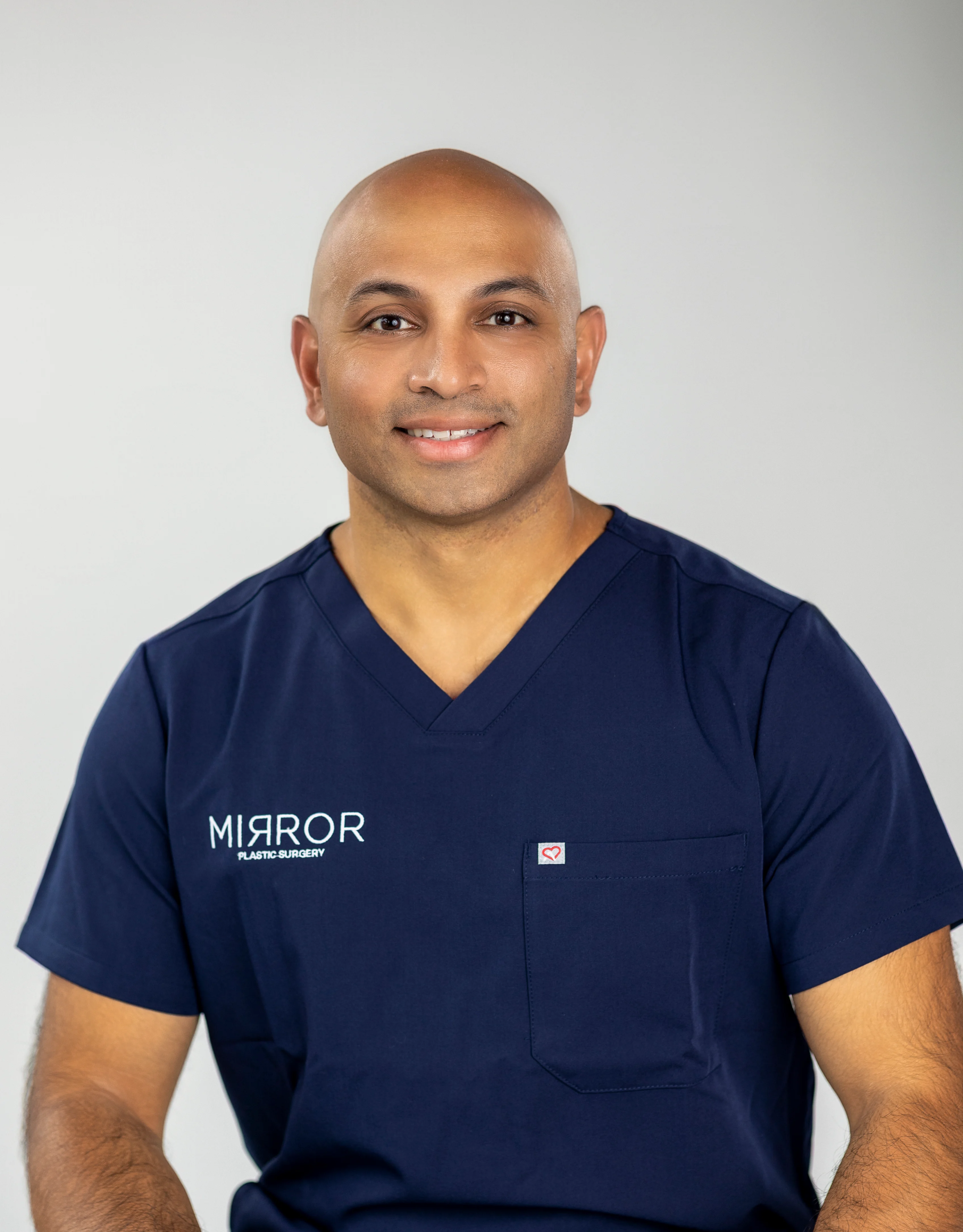
Written by: Dr. Akash Chandawarkar, Board Certified Plastic Surgeon, Mirror Plastic Surgery | Last updated: September 9, 2026
Key Takeaways
- Sermorelin is a prescription peptide that stimulates natural growth hormone release through the body’s own feedback pathways, unlike direct HGH injections.
- Potential benefits include improved energy, sleep quality, lean muscle mass, fat loss, and skin elasticity, though results vary and respond best when paired with healthy lifestyle habits.1
- A legitimate medical-spa protocol uses comprehensive lab testing, personalized dosing, ongoing IGF-1 monitoring, and physician oversight to reduce risks such as elevated IGF-1 or injection-site reactions.
- Choosing a qualified provider is critical. Look for board-certified physician supervision, baseline and follow-up labs, and peptides sourced from licensed 503A or 503B compounding pharmacies.
- At Mirror Plastic Surgery, Dr. Akash Chandawarkar provides concierge-level peptide care with direct physician access and lab-driven protocols; schedule your personalized consultation today.
How Sermorelin Works In Your Body
Sermorelin is a synthetic 29-amino-acid analog of growth hormone-releasing hormone (GHRH) that binds GHRH receptors on somatotroph cells in the anterior pituitary. This binding triggers the body’s own pulsatile growth hormone release. This mechanism distinguishes it mechanically from exogenous human growth hormone (HGH). HGH supplies GH directly from outside the body and bypasses the pituitary’s natural feedback loop entirely. With sermorelin, somatostatin, the hormone that prevents GH from rising too high, remains active and acts as a built-in safety check.
Growth hormone output decreases by roughly 14% per decade after age 30, a process sometimes called somatopause. By age 60, the average healthy adult secretes approximately half the daily GH of a 20-year-old. Sermorelin works upstream at the level of the signal itself. It prompts the pituitary to release more GH on its natural schedule rather than replacing the hormone from an external source.
The original FDA-approved brand, Geref, received approval in 1997 for diagnosing and treating growth hormone deficiency in children. The manufacturer voluntarily withdrew it from the US market, and a 2013 Federal Register determination confirmed the withdrawal was for commercial reasons, not safety or effectiveness concerns. Sermorelin prescribed in the United States is now available through licensed compounding pharmacies (503A or 503B) under a physician’s order. It is not FDA-approved for adult wellness use, and adult goals such as improved energy, sleep, and body composition are not yet supported by large randomized controlled trials.
Potential Benefits Of Sermorelin Therapy
Sermorelin and other GHRH analogs have been studied most often for effects on body composition, sleep quality, recovery, skin health, and metabolic markers. GH plays a role in lipolysis and protein synthesis, so body composition is a commonly examined outcome in GH-related research. Studies in GH-deficient adults often track changes in trunk fat and lean body mass over extended protocols.
Reported benefits associated with sermorelin therapy include:
- Improved energy and vitality
- Better sleep quality and depth, as GH is released primarily during deep sleep stages and there is a feedback relationship between GH secretion and slow-wave sleep architecture
- Increased lean muscle mass
- Reduced body fat, particularly visceral fat, with clinical studies showing sermorelin therapy over 6–12 months producing meaningful increases in lean mass and reductions in fat mass
- Improved skin elasticity and collagen production, commonly reported after 4–6 months as GH and IGF-1 stimulate collagen synthesis
- Enhanced workout recovery and tissue repair
- Better mood and mental clarity
These benefits carry important caveats. For healthy adults with normal age-related GH decline, the wellness benefits are largely theoretical or based on anecdotal reports, not large clinical trials. A 2007 systematic review by Liu et al. in the Annals of Internal Medicine, analyzing 31 studies of GH therapy in healthy older adults, found modest changes of about 2.1 kg less fat and 2.1 kg more lean mass. These shifts did not translate into gains in strength or fitness, and the GH group experienced more side effects. Results vary significantly by individual. Benefits are most noticeable over 3–6 months of consistent use alongside proper sleep, nutrition, and strength training. Sermorelin supports good habits and does not replace them.
What To Expect During Sermorelin Treatment At A Medical Spa
A legitimate sermorelin protocol at a medical spa follows a structured, lab-driven process. The following steps reflect standard clinical practice for medically supervised therapy.
Step 1: Comprehensive Consultation (30–60 Minutes)
A qualified provider reviews your medical history, symptoms, goals, current medications, and contraindications before considering any prescription. This visit functions as a clinical evaluation, not a simple questionnaire.
Step 2: Baseline Lab Testing
Baseline labs before starting sermorelin should include IGF-1, thyroid function (TSH, Free T4), and fasting glucose and metabolic panel. Untreated hypothyroidism blunts the pituitary’s response to GHRH and must be addressed before starting therapy. These labs also screen for contraindications such as active cancer or uncontrolled diabetes.
Step 3: Personalized Protocol Design
Most protocols start at 200–300 mcg nightly and titrate upward based on IGF-1 labs at 3 months and clinical response. No two protocols should look identical. Dosing depends on baseline IGF-1 status, body composition, protocol goals, and individual response.
Step 4: Instruction On Self-Administration
Patients learn proper subcutaneous injection technique, site rotation across the abdomen, hip, thigh, and upper arm, and storage requirements. Reconstituted sermorelin must be refrigerated and used within 30 days.
Step 5: Ongoing Monitoring And Follow-Up
As for the timeline of results, sleep and energy improvements are commonly reported within a few weeks, while body composition and recovery changes tend to build over three to six months of consistent use. IGF-1 levels usually respond within four to eight weeks.
At Mirror Plastic Surgery, every sermorelin protocol begins with an in-depth consultation and comprehensive lab analysis led personally by Dr. Akash Chandawarkar, a Harvard-educated, Johns Hopkins-trained, board-certified plastic surgeon. Patients receive concierge-level support with direct access to Dr. Akash throughout their protocol, and peptides are sourced from reputable compounding pharmacies with rigorous batch testing.
Schedule your consultation with Ellie to begin with a personalized assessment and lab-based plan.
Downsides And Risks Of Sermorelin
Sermorelin is generally well-tolerated under proper medical supervision, yet it carries real risks that every prospective patient should understand before starting therapy.
Common Side Effects
Common side effects include pain, redness, or swelling at the injection site (the most common), and rare systemic effects like headache, flushing, dizziness, sleepiness, and trouble sitting still. These are typically temporary. Injection site reactions often improve within several days, and mild systemic symptoms typically resolve within one to two weeks.
Contraindications
Sermorelin should be avoided in pregnancy or breastfeeding, active or recent cancer, untreated thyroid disorders, or uncontrolled diabetes. Active cancer is a particularly important contraindication. Higher IGF-1 levels have been linked to a greater risk of several cancers including colorectal, breast, and prostate cancer, and growth hormone can fuel the growth of existing tumors.
Monitoring Concerns
IGF-1 must be tracked throughout therapy. If IGF-1 climbs above the upper limit of normal, that is a signal to reduce the dose or pause therapy. At high IGF-1 levels, water retention, joint aches, and carpal tunnel-like symptoms may occur, and dose reduction typically resolves these.
The Risk Of Unsupervised Use
Compounded sermorelin products do not go through the same premarket approval and standardized manufacturing as approved drugs, so quality, purity, and consistency can vary from one source to another. Obtaining sermorelin from online research-chemical vendors is neither legal nor safe. These sources offer no third-party testing for quality, no screening for contraindications, and no monitoring, which creates significant risk.
The Endocrine Society’s 2023 Scientific Statement on Hormones and Aging concluded that no GHRH analog or growth hormone therapy is approved for anti-aging use. Additionally, the World Anti-Doping Agency prohibits growth hormone secretagogues, including sermorelin, both in and out of competition, which matters for competitive athletes.
How Sermorelin Compares To TRT, Ipamorelin, And HGH
This section explains where sermorelin fits among other hormone therapies so you can better understand your options.
Sermorelin Vs. TRT
Sermorelin and testosterone replacement therapy target different hormonal axes and are not interchangeable. TRT directly replaces deficient testosterone in men with lab-confirmed hypogonadism. Sermorelin stimulates natural growth hormone production and has no consistent or direct effect on testosterone. For men with confirmed low testosterone, TRT is the evidence-based choice. Sermorelin may help men on TRT who continue to experience fatigue, poor body composition, and recovery issues despite normalized testosterone levels, because it addresses the GH axis, a second hormonal axis that TRT does not target.
Sermorelin Vs. Ipamorelin
Both sermorelin and ipamorelin are growth hormone secretagogues, yet they work through distinct pathways. Sermorelin is a GHRH analog that binds the GHRH receptor on pituitary somatotrophs, activating the cAMP/PKA pathway. In contrast, ipamorelin is a selective ghrelin-receptor (GHS-R1a) agonist that stimulates GH release via a distinct Gq/11 protein-coupled pathway. The combination of sermorelin and ipamorelin produces supra-additive GH release due to dual receptor occupancy and complementary second-messenger crosstalk, which makes it a common stacking approach under medical supervision. Mirror Plastic Surgery offers sermorelin and ipamorelin as part of its personalized growth hormone peptide protocols. You can learn more in our concierge peptide therapy guide.
Sermorelin Vs. Synthetic HGH
Sermorelin signals the pituitary to produce its own GH, while exogenous HGH supplies GH directly from outside the body. Sermorelin preserves the pituitary’s natural feedback loop, while exogenous HGH bypasses that feedback entirely. This difference describes how they work. The idea that sermorelin is safer than HGH rests on this mechanism, as no large head-to-head trial has directly compared them.
How To Choose A Qualified Provider For Sermorelin
Choosing the right provider is the single most important decision in sermorelin therapy. The following criteria separate legitimate medical supervision from shortcuts that create risk.
- Board-Certified Physician Oversight. A qualified provider for sermorelin therapy should be a licensed physician who oversees dosing and ongoing monitoring throughout the course of treatment. Your protocol should be designed and supervised by a physician, not a salesperson or a questionnaire algorithm.
- Comprehensive Lab Testing Before And During Therapy. A legitimate sermorelin provider must order baseline serum IGF-1 before prescribing and a follow-up IGF-1 at 3 months minimum.
- Personalized Protocols. One-size-fits-all dosing is a red flag. Dosing should reflect your baseline IGF-1, body composition, health history, and response to therapy.
- Quality Peptide Sourcing. Ask about the compounding pharmacy, whether 503A or 503B, and whether they provide certificates of analysis. Patients should ask for a Certificate of Analysis showing HPLC purity above 98% and endotoxin testing results.
- Ongoing Support And Follow-Up. You should have direct access to your provider for questions, dose adjustments, and refill guidance throughout your protocol.
Red flags include telehealth clinics that guarantee a prescription before any evaluation, refuse to disclose their compounding pharmacy partner, skip baseline lab work, or market sermorelin with anti-aging or guaranteed-result language. A provider willing to prescribe after a questionnaire alone signals a meaningful safety concern.
At Mirror Plastic Surgery, Dr. Akash Chandawarkar brings board-certified expertise, a Johns Hopkins surgical residency, and a Stanford Biodesign Innovation Fellowship to every peptide protocol. Every plan begins with an in-depth consultation and lab analysis, and patients receive concierge-level support with direct 24/7 access to Dr. Akash. Peptides are sourced from reputable compounding pharmacies with rigorous batch testing. Costs are personalized during consultation based on your protocol and goals.
Mirror Plastic Surgery offers advanced peptide therapies that address a wide range of health and wellness concerns, from inflammation and autoimmune conditions to weight management and healthy aging. Talk to Ellie about how a tailored sermorelin protocol can be built around your labs and physiology.
Frequently Asked Questions
Is Sermorelin Safe?
When prescribed and monitored by a qualified physician, sermorelin is generally well-tolerated. The most common side effects, including injection site reactions, transient flushing, mild headache, and dizziness, are typically temporary and resolve within the first one to two weeks of therapy. More serious concerns, such as elevated IGF-1 above the normal range for age or changes in fasting glucose, explain why ongoing lab monitoring belongs in every legitimate protocol. Safety depends on proper screening before therapy begins, individualized dosing, and consistent follow-up. Contraindications include active or recent cancer, pregnancy or breastfeeding, untreated hypothyroidism, and uncontrolled diabetes. Obtaining sermorelin from unregulated online sources without screening, dosing guidance, or monitoring creates significant risk.
How Long Does It Take To See Results From Sermorelin?
Results develop gradually and vary by individual. Sleep quality and subtle energy improvements are often among the first changes reported, typically within two to four weeks of starting therapy. Enhanced workout recovery and mental clarity tend to follow in weeks three through six. Visible body composition changes, such as reduced abdominal fat and improved lean muscle definition, generally require three to six months of consistent nightly use. IGF-1 levels, the primary objective marker of GH axis response, usually begin rising within four to eight weeks. The six-month mark is generally considered the minimum timeframe for meaningful assessment of a sermorelin protocol. Results are most pronounced when therapy is paired with adequate sleep, strength training, and sufficient protein intake.
Can Sermorelin Be Stacked With Other Peptides?
Sermorelin can be combined with other peptides under medical supervision. It is frequently paired with ipamorelin for a synergistic effect on growth hormone release. The two peptides work through different receptor pathways, with sermorelin acting via the GHRH receptor and ipamorelin via the GHS-R1a ghrelin receptor, and their combination produces greater GH release than either compound alone. Other peptides, such as BPC-157 for tissue repair and inflammation, may be added to a broader protocol depending on individual goals and health history. Stacking should always follow a personalized plan, as each addition changes the overall risk and monitoring profile. At Mirror Plastic Surgery, Dr. Akash Chandawarkar designs all peptide stacks based on individual lab results and physiology.
Is Sermorelin Better Than TRT?
Sermorelin and TRT address entirely different hormonal axes and serve different purposes. Sermorelin stimulates the body’s own growth hormone production through the somatotropic axis. TRT directly replaces testosterone in men with confirmed, lab-documented testosterone deficiency. If you have symptomatic low testosterone confirmed on two separate fasting morning measurements, TRT is the evidence-based intervention, and sermorelin does not raise testosterone or replace TRT. For men with age-related GH decline who have already normalized testosterone through TRT but still experience fatigue, poor body composition, or slow recovery, sermorelin may complement TRT by addressing the GH axis. The decision requires a full hormonal evaluation and a personalized plan.
Do I Need A Prescription For Sermorelin?
Sermorelin requires a prescription. It is available only through licensed compounding pharmacies, either 503A pharmacies that compound for individual patients or 503B outsourcing facilities that operate under direct FDA oversight with stricter manufacturing standards. There is no FDA-approved finished sermorelin product currently on the market; as noted earlier, the original branded product, Geref, was voluntarily withdrawn for commercial reasons. Obtaining sermorelin from online research-chemical vendors is neither legal nor safe. These products carry no quality assurance, no sterility testing, and no guarantee of accurate dosing or purity. A valid prescription from a licensed physician, filled by a reputable compounding pharmacy, remains the appropriate path to sermorelin therapy.
Making An Informed Choice
Sermorelin therapy offers a researched option for adults who want to address age-related changes in energy, sleep, body composition, and recovery. The evidence shows that outcomes depend on proper medical supervision, personalized lab-based protocols, and quality sourcing from licensed compounding pharmacies. Choosing a provider who prioritizes your safety through comprehensive baseline labs, careful ongoing monitoring, honest communication about realistic outcomes, and direct access when questions arise matters more than any single peptide.
At Mirror Plastic Surgery, Dr. Akash Chandawarkar brings board-certified expertise and a concierge care model to every peptide protocol. Each plan is built around your labs and physiology, not a template. If you are ready to explore whether sermorelin is right for you, a personalized assessment provides the right starting point.
Contact Ellie to get started on your personalized plan.
Sermorelin is not FDA-approved for anti-aging or wellness; results vary. This article is for educational purposes and does not replace medical advice.
1 Results may vary from person to person. Editorial content, before and after images, and patient testimonials do not constitute a guarantee of specific results.
Peptide therapy is intended for wellness and optimization purposes and is not prescribed to diagnose, treat, cure, or prevent disease unless specifically stated. Many peptides are not FDA-approved and may be used off-label. Some have limited long-term safety data, with a potential for unknown risks, complications, or desensitization with prolonged use.