Semaglutide is FDA-approved for subcutaneous injection in the abdomen, thigh, or upper arm. Rotate sites each week to support consistent absorption and tissue health.
The abdomen usually offers the fastest, most reliable absorption and the easiest self-injection. The thigh absorbs slightly more slowly, and the upper arm often requires partner help.
Follow strict measurement rules: stay at least 2 inches from the navel, use the middle third of the outer thigh, and target the fatty back portion of the upper arm between shoulder and elbow.
Rotating across a 6-week cycle and avoiding previously used points helps prevent lipohypertrophy, which creates fibrous lumps that disrupt absorption and cause inconsistent results.
Patients who want safe, medically supervised semaglutide or GLP-1R compounded protocols with personalized injection training can schedule a consultation at Mirror Plastic Surgery for lab review, quality sourcing, and ongoing concierge support.
Choosing Between Abdomen, Thigh, and Upper Arm
The three approved sites differ in absorption speed, ease of self-injection, and day-to-day practicality. Use the table below to match your comfort with self-injection, your body type, and whether you prefer the fastest absorption or can accept slightly slower uptake that may feel gentler.
Site
Absorption Speed
Self-Injection Ease
Common Notes
Abdomen
Fastest
Easiest, large surface area, clear sightlines, controlled angle
Most consistent absorption, preferred for self-injection
Front/Outer Thigh
Slightly slower
Moderate, accessible seated or standing
Some patients report reduced nausea compared with abdominal injection, though this has not been confirmed in clinical trials, avoid inner thigh1
Back of Upper Arm
Intermediate
Difficult for self-injection, partner assistance typically required
Shows the most absorption variability, especially in people with lower body fat
The prescribing information approves the abdomen, thigh, and upper arm as injection sites. Semaglutide has a half-life of about seven days and reaches steady-state levels after four to five weeks of consistent dosing.
Front/Outer Thigh: Use the middle third of the outer thigh, roughly a hand width above the knee and a hand width below the hip along the outer edge of the leg. Avoid the inner thigh and the area directly over the kneecap.
See our semaglutide injection sites diagram for a visual reference of all three approved zones and their exclusion boundaries.
Step-by-Step Upper Arm Self-Injection With Help
The back of the upper arm is the most challenging site for self-administration because reaching the correct angle without strain is difficult. Most patients do best with help from a partner or caregiver. When assistance is available, follow these steps:
Wash hands thoroughly with soap and water for at least 20 seconds.
Have the assistant locate the fleshy outer-back portion of the upper arm, midway between the shoulder and elbow, avoiding the inner arm and shoulder joint.
The assistant pinches a skin fold to isolate subcutaneous fat and reduce intramuscular injection risk, especially in leaner individuals.
Remove the needle steadily without rubbing the site.
Dispose of the needle in an approved sharps container immediately.
Record the injection site and date for rotation tracking.
Where You Should Not Inject Semaglutide
Avoid injecting into skin that is tender, red, bruised, hard, scarred, or has stretch marks to lower the risk of local reactions and poor absorption. Additional contraindicated areas include:
Within 2 inches of the navel in any direction
The inner thigh, due to proximity to blood vessels and nerves
The inner arm, where veins are more prominent and skin is thinner
Visible veins, moles, or tattoos
Any site with existing lipohypertrophic lumps or hardened tissue
Avoiding these contraindicated zones covers only half of safe injection practice. The other half involves systematic rotation across approved sites to protect tissue from repeated use.
Six-Week Semaglutide Injection Site Rotation Schedule
A recommended 6-week semaglutide rotation cycle alternates sites so each zone has time to recover. The table below maps one complete rotation pattern that keeps every site unused for at least five weeks. Use it as a printable tracking tool or adapt the sequence to match your preferred injection sites.
Week
Site
Quadrant / Zone
Notes
1
Left Abdomen
Lower-left quadrant
At least 2 inches from navel
2
Right Abdomen
Lower-right quadrant
At least 2 inches from navel
3
Left Front Thigh
Middle third, outer edge
Avoid inner thigh and knee area
4
Right Front Thigh
Middle third, outer edge
Avoid inner thigh and knee area
5
Back of Left Upper Arm
Midpoint between shoulder and elbow
Partner assistance recommended, avoid inner arm
6
Back of Right Upper Arm
Midpoint between shoulder and elbow
Partner assistance recommended, avoid inner arm
This structured 6-zone rotation pattern aligns with ADA and Mayo Clinic Proceedings injection technique guidance. Place each new injection at a different point from the previous site within the same region. After completing the 6-week cycle, restart at Week 1 and continue shifting the exact injection point within each zone.
Preventing Lipohypertrophy With Consistent Rotation
Lipohypertrophy, which involves fatty lumps or thickened, fibrotic tissue from repeated injections in the same spot, is the most clinically significant complication of poor rotation. Studies estimate that lipohypertrophy affects a significant portion of people who inject regularly, and rates rise when rotation habits are inconsistent.
A firm or rubbery lump under the skin at an injection site
Visible thickening or dimpling of the skin surface
Reduced sensation or pain at a previously sensitive site
Unexplained weight loss plateaus or inconsistent appetite suppression
Once lipohypertrophy develops, standard guidance recommends resting the affected zone for 4–6 weeks before using it again. This rest period allows tissue to recover slowly, based on clinical standards from insulin literature. Studies show that patients who rotate injection sites have a lower incidence of lipohypertrophy than those who inject in the same general area every week.1
GLP-1R Compounded Semaglutide and Branded Formulations
Whether you use branded semaglutide pens or compounded formulations, the injection site selection and rotation principles stay the same. The two formats differ in dosing precision and quality controls, which affects how safely you can use them at home.
Mirror Plastic Surgery offers GLP-1R compounding, a newer-generation peptide approach similar to GLP-1 receptor agonists. It is reported to carry a lower side-effect burden and broader metabolic indications, including insulin resistance, weight management, and cardiovascular risk factors. The injection technique principles in this guide apply to both compounded and branded products.
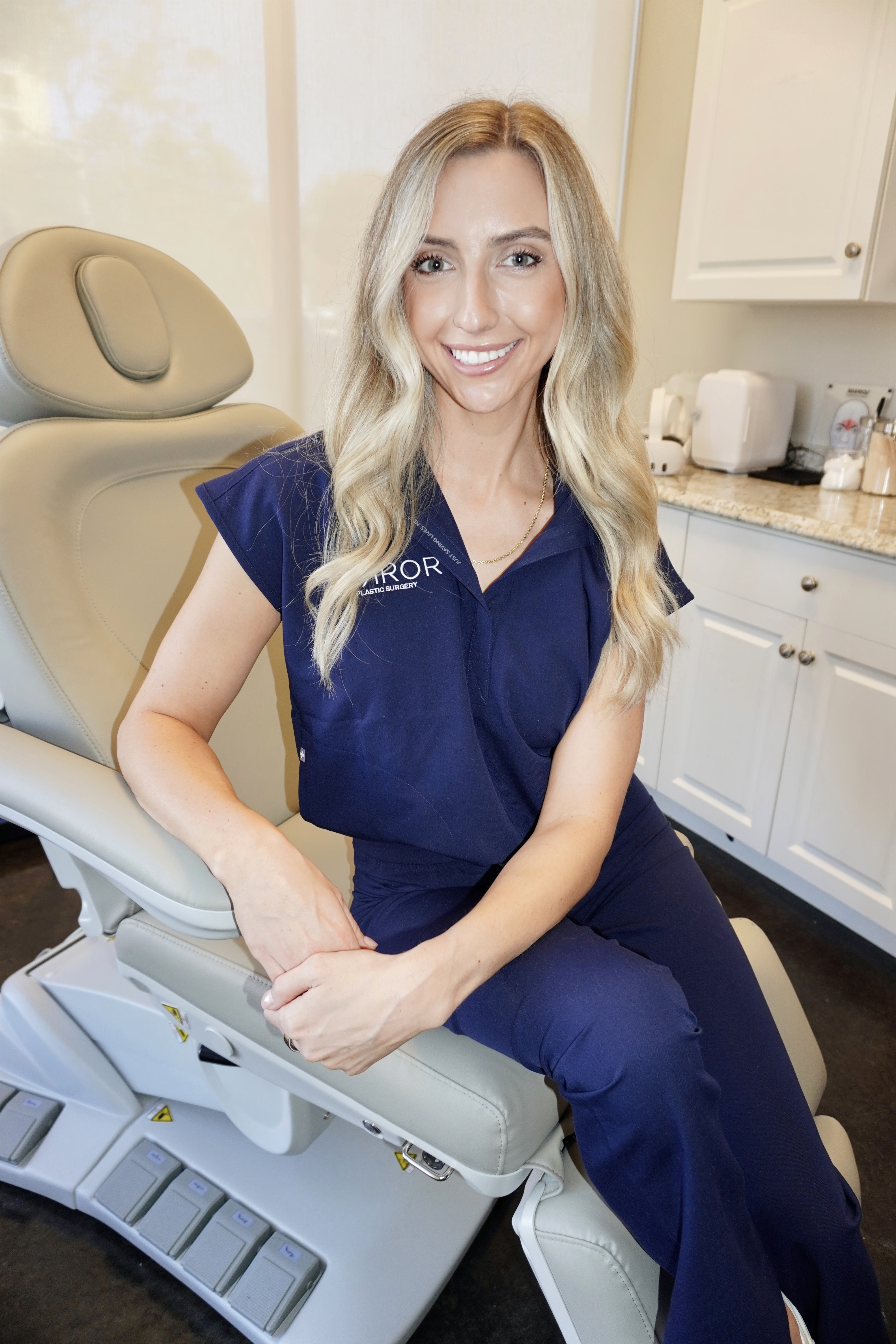
Peptide therapies at Mirror Plastic Surgery are led by Ellie Pranckevicius, FNP-BC, a board-certified Family Nurse Practitioner. Ellie earned her Bachelor’s in Health Science from Boston University, completed an aesthetics licensure program, and holds both her Bachelor’s and Master’s in Nursing from the University of South Florida.
Her clinical foundation includes four years in the Neuroscience ICU at Tampa General Hospital, where she developed deep expertise in physiology, metabolic health, and complex patient management. This critical-care background, combined with her esthetician training from a high-end Boston medical spa, gives Ellie a rare dual perspective. She understands the aesthetic outcomes patients want and the clinical science required to achieve them safely.
Ellie oversees all GLP-1R protocols at Mirror Plastic Surgery, including injection training, lab review, quality sourcing, and ongoing concierge support.
Ellie Pranckevicius, FNP-BC
Supervised Concierge Care vs. Online Peptide Purchases
Obtaining semaglutide or GLP-1R compounds without medical oversight introduces risks that extend well beyond injection technique. The following red flags signal that unsupervised self-administration should prompt immediate contact with a qualified provider:
A lump or hardened area at the injection site that lasts more than 2 weeks
Expanding redness, warmth, pus, or fever at or near the injection site
Hives, intense itching, or swelling beyond 2 inches from the injection point
Severe abdominal pain, persistent vomiting, or signs of pancreatitis
Redness larger than a silver dollar, spreading or throbbing pain, or red streaking
Unexplained weight loss plateau after previously consistent results
Uncertainty about dose calculation or reconstitution of a compounded product
Mirror Plastic Surgery’s concierge model addresses these risks in a structured way. Ellie conducts in-depth lab panels, including thyroid, liver, kidney, diabetes markers, and hormone panels, before starting any GLP-1R protocol. Peptides come only from providers with rigorous batch testing to confirm purity and accurate dosage.
Patients receive direct 24/7 text access to Ellie for questions, dose adjustments, and troubleshooting. Detailed reconstitution and self-administration instructions are supported by video demonstrations. The entire process, from consultation through prescription and shipping, is available in person at Mirror’s St. Petersburg, Florida location or remotely across the United States.
Book an appointment with Ellie for professional injection training, lab review, and a personalized GLP-1R protocol tailored to your health profile.
Frequently Asked Questions
What is the best place to inject semaglutide?
The abdomen is the most commonly used and clinically preferred site for self-injection. It offers the largest subcutaneous surface area for most people, the most consistent absorption rate, and the easiest injection angle and sightlines.
The front or outer thigh is a practical alternative, especially for patients who experience nausea and want to try a slightly slower absorption profile. The back of the upper arm is approved but usually requires a partner to administer correctly. No single site produces greater weight loss or metabolic benefit than another when you use proper technique consistently.
Can I inject too close to my belly button?
Yes. The area within 2 inches (5 cm) of the navel in any direction must be avoided. Tissue composition changes near the navel, the subcutaneous fat layer becomes thinner, nerve density increases, and absorption grows less predictable.
Injecting too close to the navel raises the risk of pain, bruising, bleeding, and hard lumps under the skin. As described in the measurement rules section, a standard credit card provides a practical 2-inch measurement tool. The injection zone begins beyond the far edge of the card when you place one short side against the navel.
Do I need to pinch my stomach when injecting semaglutide?
Pinching a skin fold helps leaner individuals isolate the subcutaneous fat layer and lower the risk of accidental intramuscular injection. For most adults with adequate abdominal fat, a 90-degree injection angle with a 4 mm needle works well without pinching.
Accidental intramuscular injection causes faster absorption than intended, more site discomfort, and a higher chance of early gastrointestinal side effects such as nausea. If you are unsure whether your needle length and body composition require a skin fold, a supervised injection training session with a qualified practitioner, such as the training Ellie provides, resolves this quickly.
What happens if I stop rotating my injection sites?
Repeated injection into the same spot causes lipohypertrophy, which creates firm, fibrotic lumps under the skin that absorb semaglutide more slowly and less predictably than healthy subcutaneous fat. As noted in the lipohypertrophy section above, absorption from damaged tissue becomes blunted and unpredictable.
This change can lead to inconsistent appetite suppression, variable side effects, and possible weight loss plateaus. Once lipohypertrophy develops, the affected zone usually needs 4–6 weeks of rest before reuse. Systematic rotation from the first injection helps prevent this complication.
Is compounded semaglutide safe to self-administer without a provider?
Compounded semaglutide carries meaningful risks when used without medical supervision. The FDA has received hundreds of adverse event reports linked to dosing errors with compounded injectable semaglutide, including events that required hospitalization.
Unlike branded pens with fixed dose mechanisms, compounded formulations require accurate reconstitution and dose measurement, which benefit from provider training and ongoing oversight. At Mirror Plastic Surgery, Ellie reviews lab results before starting any GLP-1R protocol, sources compounds from batch-tested providers, and offers detailed administration instructions with video support and 24/7 direct access for questions.
Conclusion
Correct semaglutide injection technique, which includes selecting an approved anatomical site, maintaining the 2-inch navel exclusion zone, rotating across a 6-zone cycle, and resting lipohypertrophic tissue for 4–6 weeks, protects tissue health and supports consistent drug absorption over time. The three FDA-approved sites, abdomen, thigh, and upper arm, deliver comparable therapeutic outcomes when you use them with proper technique.1
Medical oversight adds a safety layer that technique guidance alone cannot match. Lab review identifies contraindications, quality-assured sourcing protects against substandard products, accurate dose calculation supports compounded formulations, and direct access to a qualified practitioner helps when complications arise. These elements create the structural difference between supervised concierge care and unsupervised online peptide use.
Book an appointment with Ellie at Mirror Plastic Surgery to begin a medically supervised GLP-1R protocol with personalized injection training, lab-informed dosing, and ongoing concierge support.
1 Results may vary from person to person. Editorial content, before and after images, and patient testimonials do not constitute a guarantee of specific results.
Peptide therapy is intended for wellness and optimization purposes and is not prescribed to diagnose, treat, cure, or prevent disease unless specifically stated. Many peptides are not FDA-approved and may be used off-label. Some have limited long-term safety data, with a potential for unknown risks, complications, or desensitization with prolonged use.