
Written by: Ellie Pranckevicius, FNP-BC, Aesthetic Nurse Practitioner & Aesthetic Injector | Facial Restoration & Regenerative Injectable Specialist, Mirror Plastic Surgery | Last updated: July 2, 2026
Key Takeaways
- Semaglutide works safest with structured pre-treatment screening, lab review, and individualized dose escalation under clinical supervision.
- Accurate dosing depends on proper subcutaneous injection technique, weekly site rotation, and correct pen priming to prevent leakage or lipodystrophy.
- Patients follow a stepwise titration schedule (0.25 mg to 2.4 mg) with ongoing lab monitoring and real-time guidance from a qualified practitioner to manage GI tolerance and safety.
- Concierge supervision at Mirror Plastic Surgery provides batch-tested medication, 24/7 practitioner access, and personalized protocols that unregulated online sources cannot match.
- Schedule your personalized consultation today at Mirror Plastic Surgery to begin a safe, lab-reviewed semaglutide weight-loss program with Ellie Pranckevicius, FNP-BC.
How Ellie Guides Your Subcutaneous Semaglutide Injections
Correct injection technique protects your skin and ensures you receive the full dose. To administer semaglutide subcutaneously, start by pinching a fold of skin at the abdomen, outer thigh, or upper arm. Insert a primed pen needle at a 90-degree angle and press the dose button until the counter returns to zero. Count five full seconds before withdrawing the needle to prevent leakage and support full dose delivery.
Pre-Treatment Screening and Contraindications for Semaglutide
Safe semaglutide use starts with a detailed medical evaluation. Ellie Pranckevicius reviews each patient’s full medical history and orders or reviews lab panels covering thyroid function, liver and kidney markers, fasting glucose, HbA1c, and a hormone panel. Semaglutide is contraindicated in patients with a personal or family history of medullary thyroid carcinoma or Multiple Endocrine Neoplasia syndrome type 2. It is not recommended during pregnancy due to potential risks and lack of safety data and in patients with a prior serious hypersensitivity reaction to semaglutide or any excipient in the formulation.
Patients with a history of pancreatitis, severe gastrointestinal disease, or diabetic retinopathy requiring active treatment receive additional clinical evaluation before proceeding. At Mirror Plastic Surgery, no protocol begins until lab results confirm that a patient’s baseline metabolic profile is appropriate for titration. Schedule your pre-treatment screening and lab review with Ellie before starting semaglutide.
Weekly Escalation Dosing Roadmap With Mirror Supervision
The standard semaglutide weight-loss titration follows a structured escalation that minimizes gastrointestinal side effects while your body adapts.1 The table below shows the exact weekly dose progression you follow, the lab checkpoints Ellie uses to approve each escalation, and the criteria that determine whether you stay at your current dose or move forward. Use it as your roadmap for what to expect at each stage of your program.
| Week | Dose (mg/week, subcutaneous) | Mirror Lab Review Note | Delay Guidance |
|---|---|---|---|
| 1–4 | 0.25 mg | Baseline labs confirmed; initiation approved by Ellie | Extend 4 additional weeks if nausea is persistent or severe |
| 5–8 | 0.5 mg | Tolerance check via direct text with Ellie | Delay escalation if GI symptoms remain unresolved |
| 9–12 | 1.0 mg | Mid-titration lab review recommended | Hold at 0.5 mg for additional 4 weeks if needed |
| 13–16 | 1.7 mg | Weight trend and metabolic markers reviewed | Delay if patient has not tolerated prior dose for full 4 weeks |
| 17+ | 2.4 mg (recommended maintenance) | Full lab panel review; ongoing monthly check-ins with Ellie | Remain at 1.7 mg if 2.4 mg is not tolerated |
The recommended semaglutide maintenance dose for weight loss is 2.4 mg once weekly, with 1.7 mg once weekly as an alternative if the higher dose is not tolerated, reached only after successful stepwise titration. Patients who cannot tolerate escalation remain at the highest well-tolerated dose under Ellie’s direct guidance.
Step-by-Step Injection Technique and Site Rotation
Semaglutide is administered once weekly via subcutaneous injection into one of three approved sites: the abdomen (at least two inches from the navel), the outer thigh, or the upper arm. Rotating between sites each week reduces the risk of lipodystrophy and injection-site reactions. Before injecting, inspect the solution, which should appear clear and colorless to slightly yellow with no particles. Avoid injecting into skin that is bruised, scarred, or irritated.
The list below walks you through the full injection process from preparation to disposal.
- Wash hands thoroughly with soap and water.
- Remove the pen from refrigeration 30 minutes before use to reach room temperature.
- Attach a new needle and prime the pen according to manufacturer instructions.
- Select the injection site and clean with an alcohol swab, then allow the skin to dry fully.
- Pinch a skin fold and insert the needle at a 90-degree angle, or 45 degrees for very lean patients.
- Press and hold the dose button until the dose counter reads zero.
- Count five full seconds before withdrawing the needle.
- Dispose of the needle immediately in an approved sharps container.
⚠ Warning: Never reuse needles. Discard a bent or damaged needle immediately and replace it before injecting. Needle reuse increases infection risk and causes inaccurate dosing.
Common Injection Mistakes and How Ellie Helps You Fix Them
Many patients who self-manage semaglutide without supervision repeat the same avoidable errors. Understanding why these mistakes cause problems makes it easier to correct them in real time.
- Medication leakage at the injection site: This usually occurs when the needle is removed before completing the five-second hold, so part of the dose escapes onto the skin instead of entering the tissue. Fix: always count to five after the counter reaches zero before removing the pen, which gives the medication time to disperse.
- Injecting into the same site repeatedly: Repeated injections into one area can cause localized fat changes and lumps that affect absorption. Fix: maintain a written rotation log and change sites weekly so each area has time to recover.
- Skipping the priming step: Skipping priming can leave air in the system and leads to underdosing on the first use of a new pen or cartridge. Fix: prime the pen before every new cartridge or pen device as directed so the first dialed dose is accurate.
- Storing the pen incorrectly: Semaglutide pens in use can be stored at room temperature (up to 86°F / 30°C) for up to 56 days, while unused pens must remain refrigerated. Exposure to heat or freezing degrades the medication and reduces effectiveness.
- Escalating dose too quickly: Patients who self-escalate without clinical oversight experience higher rates of severe nausea and vomiting because their GI tract has not adapted. Fix: follow the Mirror-supervised escalation table above and contact Ellie before any dose change so adjustments match your tolerance.
⚠ Warning: If you notice the solution is cloudy, discolored, or contains particles, do not inject. Contact Ellie immediately for guidance on replacement.
Diet and Lifestyle Support During Semaglutide Titration
Daily habits during titration strongly influence both tolerability and results. Semaglutide suppresses appetite through GLP-1 receptor agonism, yet patients still need supportive nutrition and movement. During the early escalation weeks, smaller, more frequent meals, reduced fat and spicy food intake, and steady hydration often reduce nausea. Alcohol intake should stay low, because it can compound nausea and mask hypoglycemic symptoms.
Protein intake deserves special focus to help preserve lean muscle mass during weight loss. Structured physical activity, even consistent walking, supports metabolic adaptation and cardiovascular health throughout the program. Mirror Plastic Surgery’s concierge model keeps Ellie available to adjust your dietary guidance in real time as you progress through titration, and this support continues into the monitoring phase described below.
Monitoring Schedule and Red-Flag Symptoms to Watch
Ongoing monitoring forms the backbone of safe semaglutide administration. Mirror Plastic Surgery recommends the following schedule:
- Baseline: Full metabolic panel, thyroid function, HbA1c, lipid panel, kidney and liver function.
- Week 8–12: Repeat metabolic markers and assess weight trend and GI tolerability.
- Week 16–20: Full lab panel review as you approach the maintenance dose.
- Monthly (maintenance phase): Weight, blood pressure, and symptom review with Ellie.
🚨 Red-Flag Symptoms — Seek Immediate Medical Attention: Severe and persistent abdominal pain (possible pancreatitis), vision changes, signs of thyroid tumor (neck lump, hoarseness, difficulty swallowing), severe hypoglycemic symptoms (shakiness, confusion, rapid heartbeat), or signs of allergic reaction (rash, swelling, difficulty breathing). Contact Ellie or go to the nearest emergency room immediately if any of these occur.
Choosing Between Semaglutide and GLP-3R at Mirror Plastic Surgery
Mirror Plastic Surgery offers both semaglutide protocols and GLP-3R compounding, and patients often want to understand how they differ. Semaglutide’s GI side-effect profile includes nausea, vomiting, and diarrhea, which are common during titration and managed through stepwise dose escalation. GLP-3R compounding is reported to produce fewer GI symptoms in newer formulations, although individual responses vary and direct comparative studies remain limited.
Semaglutide carries a risk of muscle wasting, so Ellie emphasizes adequate protein intake and resistance training. GLP-3R formulations are reported to carry a lower risk of muscle wasting, yet this has not been independently verified in head-to-head trials. Semaglutide is FDA-approved for specific indications under brand names such as Ozempic and Wegovy, while GLP-3R is compounded, not independently FDA-approved, and sourced from batch-tested suppliers at Mirror.
Both options require supervision, and Ellie reviews labs and monitors response throughout either protocol. The decision between semaglutide and GLP-3R is made collaboratively after a full lab review and medical history assessment, so your choice aligns with your tolerance and goals.
Meet Your Practitioner: Ellie Pranckevicius, FNP-BC
Ellie Pranckevicius is a board-certified Family Nurse Practitioner and the lead practitioner for peptide therapies at Mirror Plastic Surgery. She holds a Bachelor’s in Health Science from Boston University, a Bachelor’s and Master’s in Nursing from the University of South Florida, and four years of critical-care experience in the Neuroscience ICU at Tampa General Hospital. Her career began at a high-end medical spa in Boston, where she developed deep expertise in skin physiology and aesthetic assessment before advancing to her nurse practitioner credentials.
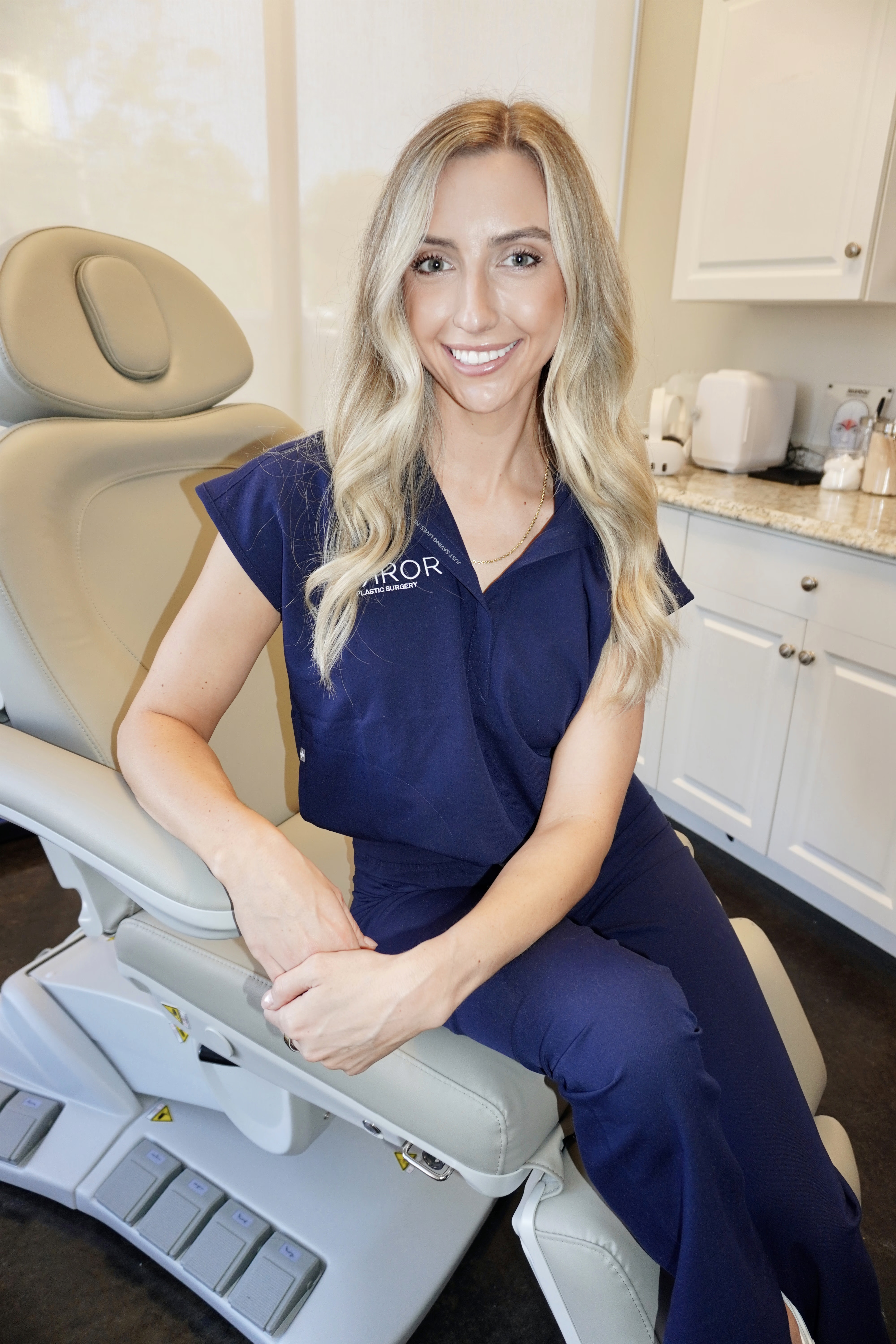
This dual background, esthetician training combined with advanced clinical nursing, gives Ellie a uniquely comprehensive perspective on metabolic health and aesthetic outcomes. Her approach is grounded in education, and she explains the physiology behind every recommendation in plain language. She is also known for telling patients when a treatment is not yet necessary for them. For Tampa and St. Petersburg patients seeking semaglutide supervision, Ellie provides the clinical rigor and personal accessibility that high-volume telehealth platforms cannot replicate. Start your personalized semaglutide protocol with Ellie, built on your lab results and health history.
Concierge Supervision Versus Unregulated Online Semaglutide
Buying semaglutide or other peptides from online vendors without medical oversight exposes patients to significant safety risks. Without third-party batch testing, patients have no assurance of product purity, accurate concentration, or sterility. Incorrect dosing from improperly labeled products can result in either no therapeutic effect or serious adverse events.
Unregulated sources also provide no clinical oversight to screen for contraindications, no escalation guidance, and no monitoring for red-flag symptoms. Mirror Plastic Surgery’s model works differently. Every patient receives a 30–60 minute consultation with Ellie, lab panel review, a custom protocol, and 24/7 direct text access to Ellie throughout their program. Peptides and semaglutide are sourced exclusively from suppliers with documented batch testing.
For Tampa and St. Petersburg patients, in-person consultations are available at 780 4th Ave S, St. Petersburg, FL 33701. Remote service is also available across the United States, so patients outside the area can still receive supervised care.
Pre-Injection Preparation Checklist
- Confirm it is your scheduled weekly injection day.
- Remove the pen from the refrigerator 30 minutes before use.
- Inspect the solution and confirm it is clear, colorless to slightly yellow, with no particles.
- Wash hands with soap and water for at least 20 seconds.
- Attach a new, unused needle to the pen.
- Prime the pen if starting a new device, following Ellie’s provided instructions.
- Select and clean the injection site with an alcohol swab, then allow it to dry.
- Confirm the dose dial is set correctly for your current escalation week.
Weekly Monitoring Checklist
- Record body weight at the same time of day and under the same conditions.
- Note any GI symptoms, including nausea, vomiting, diarrhea, or constipation.
- Assess the injection site for redness, swelling, or bruising.
- Log energy levels, appetite changes, and mood.
- Review hydration and protein intake for the week.
- Text Ellie with any concerns, dose questions, or red-flag symptoms before the next injection.
- Confirm your next scheduled lab review date if you are approaching Week 8, Week 16, or a monthly maintenance milestone.
Complementary Peptide Therapies for Metabolic Health
Semaglutide and GLP-3R focus on appetite and insulin regulation, yet metabolic health involves many interconnected systems. Mirror Plastic Surgery offers several complementary peptide therapies that Ellie may incorporate into a comprehensive protocol based on individual lab results and goals. NAD (Nicotinamide Adenine Dinucleotide) targets cellular mitochondria to support energy production and metabolic efficiency, which helps patients who experience fatigue during caloric restriction.1
If inflammation is the primary concern rather than energy, BPC-157 addresses systemic inflammation, which is frequently elevated in patients with obesity-related metabolic dysfunction. For patients whose labs show declining growth hormone markers, Sermorelin and Ipamorelin support natural growth hormone production and aid in lean muscle retention during weight loss, directly countering one of the primary concerns associated with GLP-based therapies.1 When gut health and microbiome balance are central issues, KPV targets gut microbiome inflammation and supports digestive health during the GI adjustment period common in early semaglutide titration.1
Ellie determines all complementary protocols after a full clinical assessment, and no stack is prescribed without a clear evidence-based rationale tied to the patient’s individual profile.
Frequently Asked Questions
What is the protocol for semaglutide for weight loss?
The semaglutide weight loss protocol begins with a pre-treatment screening that includes a full metabolic lab panel, medical history review, and assessment for contraindications. Once cleared, patients start at 0.25 mg once weekly for four weeks. The dose is then escalated in stepwise increments, typically 0.25 mg to 0.5 mg, then 1.0 mg, 1.7 mg, and finally the recommended maintenance dose, with each step held for a minimum of four weeks to allow GI tolerance to develop.
Once escalation is complete, patients reach the 2.4 mg maintenance dose discussed earlier, sustained long-term for continued weight management.1 Throughout the protocol, lab reviews occur at key intervals and patients have direct access to their supervising practitioner for real-time guidance. At Mirror Plastic Surgery, this entire protocol is managed by Ellie Pranckevicius, who personalizes each escalation schedule based on the patient’s lab results, tolerance, and weight loss trajectory.
How to correctly administer semaglutide?
Semaglutide is administered as a once-weekly subcutaneous injection using a prefilled pen device. The step-by-step technique is detailed in the “Step-by-Step Injection Technique and Site Rotation” section above, covering site selection, needle insertion angle, the critical five-second hold, and proper disposal. Patients at Mirror Plastic Surgery receive detailed written instructions and video demonstrations from Ellie, along with 24/7 text access for any administration questions.
What is the standard dosing protocol for semaglutide?
The standard dosing protocol follows the five-stage escalation detailed in the table above, with each step held for a minimum of four weeks to allow GI tolerance to develop. Each escalation step can be extended by four weeks if GI side effects are not adequately resolved, and patients who cannot tolerate the full 2.4 mg maintenance dose remain at the highest well-tolerated dose. At Mirror Plastic Surgery, dosing decisions are never made unilaterally by the patient, and every escalation is reviewed and approved by Ellie based on current symptoms, weight trends, and lab data.
How does supervised care differ from retail sources?
Supervised care through Mirror Plastic Surgery differs from retail or online sources in several fundamental ways. Every patient undergoes a comprehensive lab panel and medical history review before any peptide or semaglutide is prescribed, which screens for contraindications that could make the medication dangerous. Peptides and semaglutide sourced through Mirror come from suppliers with documented batch testing that confirms purity, concentration, and sterility.
Patients also receive a fully personalized escalation protocol rather than a generic dosing schedule. Ellie is available via direct text 24 hours a day, seven days a week, for real-time troubleshooting, side-effect management, and dose guidance. Online retail sources provide none of these safeguards, with no screening, no verified product quality, no clinical oversight, and no support when problems arise. For patients in Tampa and St. Petersburg, and remotely across the United States, Mirror Plastic Surgery’s concierge model represents a categorically different standard of care.
Conclusion
Safe semaglutide administration for weight loss depends on structured pre-treatment screening, individualized dose escalation, correct injection technique, ongoing lab monitoring, and immediate access to a qualified practitioner when questions arise. Every element of that framework is built into Mirror Plastic Surgery’s concierge peptide program, led by Ellie Pranckevicius, FNP-BC. Tampa and St. Petersburg patients have access to a level of personalized, lab-reviewed, 24/7-supported semaglutide care that high-volume telehealth platforms and unregulated online sources cannot provide.
Whether you are beginning your weight loss journey or seeking a safer, more supervised alternative to your current protocol, the next step is a direct conversation with Ellie. Begin your medically supervised semaglutide program at Mirror Plastic Surgery, built around your labs, your goals, and your long-term health.
1 Results may vary from person to person. Editorial content, before and after images, and patient testimonials do not constitute a guarantee of specific results.
Peptide therapy is intended for wellness and optimization purposes and is not prescribed to diagnose, treat, cure, or prevent disease unless specifically stated. Many peptides are not FDA-approved and may be used off-label. Some have limited long-term safety data, with a potential for unknown risks, complications, or desensitization with prolonged use.