
Written by: Ellie Pranckevicius, FNP-BC, Aesthetic Nurse Practitioner & Aesthetic Injector | Facial Restoration & Regenerative Injectable Specialist, Mirror Plastic Surgery | Last updated: July 11, 2026
Key Takeaways
- Personalized peptide therapy at Mirror Plastic Surgery uses your lab data and medical history to build targeted protocols instead of relying on generic medical-spa packages.
- Safety depends on sourcing from licensed 503A and 503B compounding pharmacies with batch testing and certificates of analysis, while unregulated suppliers carry documented risks of contamination and dosing errors.
- Medically supervised protocols include in-depth consultations, baseline labs, custom peptide stacks, and follow-up every four to six weeks for dose adjustments and monitoring.
- Common stacks at Mirror Plastic Surgery address inflammation, weight management, energy production, gut health, growth hormone support, and anxiety pathways with peptides such as GHK-Cu, BPC-157, TB-500, GLP-3R, NAD, KPV, Sermorelin/Ipamorelin, and Selank.
- Schedule your personalized consultation at Mirror Plastic Surgery to review your labs and receive a protocol tailored to your health goals.
Personalized Peptide Therapy vs Generic Spa Packages
Personalized and generic peptide approaches differ structurally across several safety and outcome factors. The table below compares how each model handles targeting, customization, sourcing, supervision, timelines, and maintenance so you can see where true medical oversight shows up in practice.
| Factor | Personalized Peptide Therapy | Generic Medical-Spa Package |
|---|---|---|
| Biological targeting | Protocol matched to individual lab markers and systemic pathways | Fixed menu applied uniformly to all clients |
| Customization process | Comprehensive consultation, full lab panel review, custom stack creation | Pre-set injection or topical package selected at intake |
| Sourcing standards | Licensed 503A/503B compounding pharmacy with batch testing, certificates of analysis, and sterility verification | Sourcing practices vary, and gray-market or unregulated suppliers are documented in the medical-spa channel |
| Supervision model | Ongoing NP or physician oversight with scheduled follow-ups and direct provider access | Limited or no follow-up after initial treatment session |
| Outcome timeline | Gradual and cumulative, with energy or inflammation changes appearing within weeks and body-composition shifts over months1 | Typically single-session or short-series with no structured monitoring |
| Maintenance requirements | Protocol adjusted periodically based on lab reassessment and patient response | Repeat purchases of the same package regardless of individual response |
With those structural differences in mind, a few core terms appear throughout personalized peptide protocols.
Peptides are short chains of amino acids that act as biological signals, instructing cells to perform specific functions such as producing collagen, resolving inflammation, or releasing growth hormone.
Stacks are combinations of two or more peptides selected to work together. For example, pairing BPC-157 with TB-500 can address both systemic and soft-tissue inflammation at the same time.
Batch testing refers to third-party laboratory verification of a compounded peptide’s identity, potency, purity, and sterility. Third-party analyses of unregulated online peptides have documented actual potency ranging from 50–200% of labeled concentration, bacterial endotoxin contamination, and heavy metal contamination including lead, mercury, and arsenic.
GLP-3R is a newer-generation compounded peptide formulation reported to address insulin resistance, weight management, and cardiovascular risk factors with a side-effect profile distinct from earlier GLP-1 receptor agonists.
How Personalized Peptide Therapy Works at Mirror Plastic Surgery
A medically supervised peptide protocol at Mirror Plastic Surgery follows a clear clinical workflow from consultation to follow-up. The process starts with a 30–60 minute visit that covers your full medical history, current medications, and specific health goals. For weight management, inflammatory conditions, or growth-hormone protocols, Ellie orders or reviews baseline labs such as a comprehensive metabolic panel, lipid panel, HbA1c, fasting insulin, IGF-1, thyroid panel, and body composition data.
Ellie then creates a custom peptide stack and dosing schedule based on those findings. You receive detailed reconstitution and self-administration instructions, often with video demonstrations, before you begin. Follow-up appointments every four to six weeks allow dose titration based on your response, and you have direct access to Ellie between visits for questions or adjustments.
Ellie Pranckevicius, FNP-BC, leads peptide therapy at Mirror Plastic Surgery and brings a dual background in critical care and aesthetics. She holds a Bachelor’s in Health Science from Boston University, a Bachelor’s and Master’s in Nursing from the University of South Florida, and four years of clinical experience in the Neuroscience ICU at Tampa General Hospital. She also spent early career years at a high-end medical spa in Boston, where she developed expertise in skin physiology and aesthetic assessment.
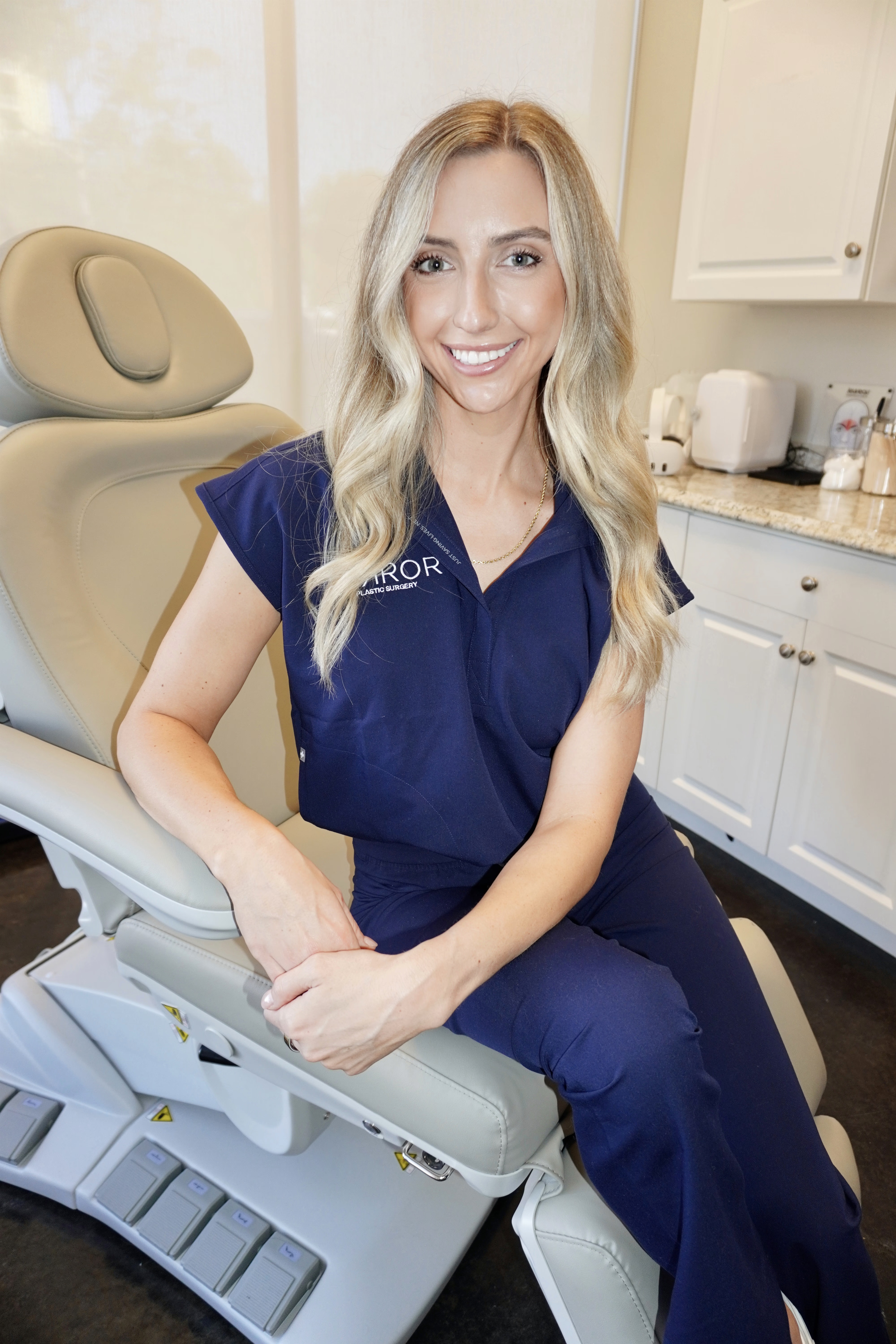
This combination of esthetician training and advanced clinical medicine shapes how Ellie designs peptide protocols that support both aesthetic goals and systemic health. She remains available to patients via text 24/7 and through scheduled telemedicine appointments, providing concierge-level continuity throughout the treatment journey.
Illustrative custom stacks at Mirror Plastic Surgery include:
- Glow Stack (GHK-Cu, BPC-157, TB-500): Targets systemic inflammation, melasma, and collagen and elastin production.
- GLP-3R: Addresses insulin resistance, weight management, and cardiovascular risk factors.
- NAD: Supports mitochondrial energy production and cellular anti-aging.
- KPV: Targets gut microbiome inflammation relevant to IBD and autoimmune conditions.
- Sermorelin/Ipamorelin: Stimulates natural growth hormone release to support muscle retention and metabolic fitness.
- Selank: Acts on anxiety pathways as a nootropic peptide without the dependency profile of benzodiazepines.
Book an appointment with Ellie to discuss which protocol aligns with your lab results and health goals.
Peptides in a Rapidly Changing Industry
Demand for injectable peptides is rising quickly across wellness and performance communities. Health and wellness influencers promoting peptides for weight loss, muscle growth, recovery, and anti-aging have driven an influx of patients seeking an extra edge. Younger clients often focus on appearance and performance, while many middle-aged adults pursue metabolic health and recovery support.
That demand has outpaced the regulatory framework, creating a fragmented market where medically supervised protocols and unverified online products coexist. The regulatory distinction matters because safety depends on three pillars: sourcing from a licensed 503A or 503B compounding pharmacy, physician or NP oversight for screening, dosing, and monitoring, and careful patient selection.
The FDA has issued a recent wave of warning letters concerning peptide compounding, signaling increased enforcement activity and closer regulatory scrutiny of peptide use in medical spas. On April 15, 2026, the FDA issued a notice scheduling a Pharmacy Compounding Advisory Committee meeting for July 23–24, 2026, to consider seven peptide bulk drug substances for the 503A bulks list, with five additional peptides slated for later evaluation.
Mirror Plastic Surgery operates within this landscape by sourcing exclusively from reputable compounding pharmacies with documented batch testing and by conducting in-depth lab analysis before protocol creation. The practice offers remote service delivery across the United States, including Hawaii and Alaska, and provides 24/7 direct NP access. Post-surgical peptide protocols are also available to complement procedures performed by Dr. Akash Chandawarkar, the practice’s Harvard-educated, Johns Hopkins-trained plastic surgeon.
Key Factors to Weigh Before Starting Peptides
Several evaluation factors work together to determine whether a peptide therapy program is appropriate and likely to produce meaningful results for you. These factors build on each other, starting with basic safety and moving toward personalization and expectations.
Safety and sourcing form the non-negotiable foundation. Knowing exactly where peptides come from and how they are manufactured determines whether the protocol can be safe at all.
Once sourcing is verified, the supervision model shapes how that product is used. Safety and effectiveness depend on proper evaluation, appropriate dosing, and continuous medical monitoring rather than a one-size-fits-all approach.
With safety established, personalization depth determines whether the protocol addresses root causes or only surface symptoms. Protocols built from individual lab data target the systemic pathways producing your symptoms, while fixed packages treat visible effects without understanding the underlying biology.
Expected timelines and outcome variability then set realistic expectations. Subtle changes in appetite or energy may appear within the first few weeks, while more significant metabolic or body-composition changes typically require a 3–6 month loading period.1 Results differ by individual based on genetics, baseline metabolism, hormonal health, lifestyle, and protocol adherence, which makes ongoing monitoring essential rather than optional.1
Risks, Limitations, and Safety Red Flags
Peptide therapy carries real constraints that every informed candidate should understand before beginning a protocol. Many peptides used in personalized wellness protocols are not FDA-approved for the indications being addressed. Research-grade peptides sold online lack the sterility, purity, and quality control of FDA-approved versions and carry risks of contamination and unknown long-term effects, including potential hormone imbalances.
Result variability is significant. Individual responses vary based on the specific peptides used, starting weight, metabolic rate, consistency with the treatment plan, genetics, and hormonal health. The FDA previously classified peptides including BPC-157, CJC-1295, and TB-500 as Category 2 substances due to safety concerns but removed them from that list in April 2026. Absolute contraindications for growth hormone secretagogues include active malignancy, uncontrolled diabetes, and untreated pituitary tumors. BPC-157 and TB-500 share the active malignancy contraindication because of theoretical angiogenesis concerns.
What to Avoid
- Unregulated online peptides: ECRI and ISMP have warned about quality concerns and insufficient clinical evidence for the safety of compounded peptide products marketed as wellness therapies.
- No lab work before starting: Skipping baseline labs, dose monitoring, and physician supervision raises the risk of incorrect dosing, drug interactions, missed contraindications, and unmonitored side effects.
- Providers without 24/7 access: Dose reactions and reconstitution questions often arise between scheduled visits, so direct provider availability functions as a structural safety feature, not a luxury.
- “Research use only” labeling: Research or experimental peptides labeled “for research use only” and marketed online pose the highest safety and legal risks when used for human consumption.
Book an appointment with Ellie to review your lab results and determine which peptides are appropriate for your health profile.
Common Misconceptions About Peptides
“Peptides are only for weight loss.” GLP-1 receptor agonists dominate media coverage, yet the peptide category spans inflammation resolution, autoimmune modulation, post-surgical recovery, collagen synthesis, neurological support, energy production, and sexual wellness. Peptides like GHK-Cu and KPV inhibit NF-kB activation and can reduce inflammatory markers by up to 60% in some studies1, which reflects a mechanism unrelated to weight management.
“All peptide sources are equivalent.” The third-party testing described earlier shows that unregulated sources cannot guarantee even basic product identity or purity. Licensed 503A and 503B compounding pharmacies operate under state board and direct FDA oversight respectively, with mandatory batch testing and certificates of analysis, which creates a fundamentally different safety standard.
“Results are permanent without maintenance.” Peptide therapy produces outcomes that require ongoing support to sustain. Patients who discontinued semaglutide often regain a substantial portion of lost weight within one year.1 That pattern appears across peptide categories when the underlying condition returns as soon as the modulating signal is removed. Maintenance protocols function as a clinical necessity, not an upsell.
FAQ
Are peptides FDA-approved?
Some peptides are FDA-approved for specific indications. Insulin for diabetes, GLP-1 receptor agonists for obesity and metabolic disease, and calcitonin for osteoporosis are established examples. Many peptides used in personalized wellness protocols are not FDA-approved for those indications and are instead compounded under 503A or 503B pharmacy pathways.
The primary risk usually comes from the source rather than the peptide molecule itself. Licensed compounding pharmacies with batch testing and certificates of analysis provide a verified product, while unregulated online suppliers do not. At Mirror Plastic Surgery, all peptides are sourced from reputable compounding pharmacies with documented quality controls, and every protocol is preceded by a thorough medical evaluation.
Who is a good candidate for personalized peptide therapy?
Adults experiencing chronic inflammation, autoimmune conditions, weight management challenges, declining energy, skin aging, anxiety, or post-surgical recovery needs often qualify as candidates. Candidacy is determined through a comprehensive consultation with Ellie that includes a review of medical history, current medications, and relevant lab panels.
Certain conditions, including active malignancy, uncontrolled diabetes, and untreated pituitary tumors, are absolute contraindications for specific peptide classes. That reality explains why a thorough intake evaluation is required before any protocol is created.
How long does it take to see results?
Result timelines depend on the peptide, the condition being addressed, and individual physiology. Some clients notice improvements in energy, sleep quality, or acute inflammation within the first one to two weeks. Protocols targeting body composition, hormonal balance, skin collagen, or chronic autoimmune conditions typically require a 3–6 month loading period before the most significant changes become measurable.1
Ellie schedules follow-up reviews every four to six weeks to assess response and adjust dosing. This cadence ensures the protocol evolves with your progress instead of remaining static.
What happens if I stop taking peptides?
When a peptide protocol stops, the biological signals it was providing disappear, and the underlying condition tends to drift back toward its baseline state. This pattern reflects the mechanism of action rather than a side effect. inflammation that was being modulated will likely re-escalate, and weight lost through appetite-regulating peptides often returns without a maintenance strategy.1
Ellie designs maintenance protocols for each patient to sustain outcomes over the long term, adjusting frequency and dosing as the body stabilizes.
What makes Mirror Plastic Surgery’s approach different from a standard medical spa?
Mirror Plastic Surgery’s peptide program is built on four structural differences that support safety and personalization. Lab-driven customization uses thyroid, metabolic, hormonal, and inflammatory panels before any protocol is created. Sourcing relies exclusively on compounding pharmacies with batch testing and verified certificates of analysis.
Patients receive 24/7 direct access to Ellie via text for questions, side-effect management, and refill requests, along with the option for remote service delivery across all 50 states. The practice also limits patient volume to preserve a concierge standard of care, which contrasts with high-volume models where personalized attention is difficult to maintain.
Summary: Choosing a Safe, Personalized Peptide Path
The choice between personalized peptide therapy and a generic medical-spa package reflects a choice of mechanism. Surface-level treatments address visible symptoms, while lab-driven protocols target the systemic pathways producing those symptoms. The evidence base for peptide therapy continues to evolve, regulatory requirements remain active and changing, and individual variability in outcomes is real.
These realities make medical supervision, quality sourcing, and ongoing lab monitoring the foundations of a safe and effective protocol rather than optional add-ons. For health-conscious adults who have not achieved their goals through conventional treatments or unmonitored online approaches, a structured consultation with a qualified provider offers the right starting point.
That conversation should include a review of current labs, a clear discussion of realistic timelines, and an explanation of which peptides fit your specific health profile. Book an appointment with Ellie at Mirror Plastic Surgery to begin with a comprehensive evaluation and a protocol built around your labs, your history, and your goals.
1 Results may vary from person to person. Editorial content, before and after images, and patient testimonials do not constitute a guarantee of specific results.
Peptide therapy is intended for wellness and optimization purposes and is not prescribed to diagnose, treat, cure, or prevent disease unless specifically stated. Many peptides are not FDA-approved and may be used off-label. Some have limited long-term safety data, with a potential for unknown risks, complications, or desensitization with prolonged use.