
Written by: Ellie Pranckevicius, FNP-BC, Aesthetic Nurse Practitioner & Aesthetic Injector | Facial Restoration & Regenerative Injectable Specialist, Mirror Plastic Surgery | Last updated: August 18, 2026
Key Takeaways for Hair Peptide Therapy
- Peptides such as GHK-Cu, BPC-157, and TB-500 act as biological signals that may support hair regrowth by influencing follicle cycling, inflammation, and growth-factor pathways, but none are FDA-approved for hair loss.
- Current evidence for copper peptides like GHK-Cu is limited to small pilot studies and preclinical data, so they work best as adjunctive scalp support rather than proven standalone treatments.
- Medically supervised protocols that include lab screening, personalized dosing, and ongoing clinical oversight significantly reduce safety risks compared with unregulated online peptide sources.
- Most patients see early changes around weeks 8–12 and peak benefits by month 6, then need maintenance protocols to sustain results.1
- Patients seeking a personalized, lab-informed peptide protocol for hair health can book a consultation at Mirror Plastic Surgery with Ellie Pranckevicius, FNP-BC.
How Peptides Fit Into Modern Hair Regrowth Plans
Peptide-based hair restoration has gained momentum as adults look beyond minoxidil and finasteride. Peptides such as GHK-Cu, BPC-157, and TB-500 interact with the scalp’s cellular environment through distinct pathways, including growth-factor signaling, inflammation control, and gene expression in follicle-supporting cells. As of 2026, these peptides function best as potential adjuncts to established therapies rather than standalone replacements, and none carry FDA approval for hair loss. The lack of large human randomized controlled trials makes medically supervised, personalized protocols essential for setting expectations and reducing risk.
At Mirror Plastic Surgery, Ellie Pranckevicius, FNP-BC, leads peptide therapy consultations that start with a comprehensive lab review and medical history assessment before any protocol is designed. This process keeps peptide selection aligned with each patient’s physiology instead of a generic formula.
Schedule your initial peptide consultation to explore whether a supervised peptide protocol fits your hair health goals.
Copper Peptides and GHK-Cu for Hair Growth
Copper peptides, particularly GHK-Cu (glycyl-L-histidyl-L-lysine copper complex), are among the most studied peptides for hair and scalp health. Human plasma GHK-Cu concentrations decline from approximately 200 ng/mL in the 20s to roughly 80 ng/mL by the 60s, which correlates with slower follicle cycling, thinner hair, and impaired scalp repair.
Early clinical work produced encouraging signals. Late-1990s Tricomin trials reported statistically significant increases in hair density, reduced shedding, and increased hair shaft diameter after 6 months. A related copper peptide, AHK-Cu, stimulated elongation of human hair follicles in a 2007 ex vivo study.
Despite this mechanistic promise, the clinical evidence remains limited. The evidence grade assigned to GHK-Cu for hair regrowth is Very low (GRADE), reflecting the absence of large-scale human trials mentioned earlier. Copper peptides are best viewed as support for the scalp environment rather than proven hair-loss drugs.
How GHK-Cu May Support Hair Regrowth
The biological mechanisms by which GHK-Cu may support hair regrowth are well described at the molecular level. GHK-Cu upregulates VEGF, FGF-7, and IGF-1 in the scalp microenvironment, which supports dermal papilla cell survival, follicular blood supply, and anagen phase duration. GHK-Cu also appears to activate the Wnt/β-catenin pathway in dermal papilla cells.
GHK-Cu may reduce androgen receptor expression in human follicle dermal papilla cells. This pattern suggests a way to blunt follicle sensitivity to DHT without directly blocking it. In mouse models, topical GHK-Cu has promoted anagen re-entry.
Human data remain limited. Pilot studies suggest that topical GHK-Cu can increase hair count. These findings look promising but do not yet establish GHK-Cu as a clinically proven therapy without larger independent replication.
Delivery also matters in practice. Copper peptides show limited passive skin penetration, and a 2015 microneedle-assisted delivery study found that microneedle pretreatment markedly improves GHK-Cu permeation compared with intact skin. This delivery insight carries over into broader peptide protocols.
Peptides Commonly Used for Hair Growth Support
Several peptides appear in supervised hair-regrowth protocols, each with a distinct mechanism and evidence profile. Building on the GHK-Cu data, Mirror Plastic Surgery’s Glow Stack combines three of the most studied options into a single protocol that targets inflammation, collagen production, and follicular health.
- GHK-Cu (Copper Tripeptide-1): Activates Wnt/β-catenin signaling, upregulates VEGF and IGF-1, and reduces androgen receptor expression in dermal papilla cells. Used individually or as part of the Glow Stack for hair, skin, and nail rejuvenation.
- BPC-157 (Body Protective Compound 157): A synthetic peptide derived from a gastric protein, used for systemic inflammation and soft-tissue repair. BPC-157 is unapproved by the FDA for any human indication and carries higher uncertainty because long-term human safety remains poorly studied. Proposed mechanisms for improved follicular blood flow remain speculative.
- TB-500 (Thymosin Beta-4 fragment): Supports soft-tissue inflammation and wound repair. TB-500 carries an FDA “Substance with Safety Concerns” classification for compounding and is WADA-prohibited. It is used as part of the Glow Stack for its anti-inflammatory properties.
- The Glow Stack (GHK-Cu + BPC-157 + TB-500): Mirror Plastic Surgery’s combined protocol that targets systemic inflammation, melasma, and collagen and elastin production. Patients often see reduced body inflammation along with improvements in hair, skin, and nail health.1
GHK-Cu vs Minoxidil: Practical Comparison
Supervised vs Unsupervised Peptide Therapy
The source of peptides and the presence of medical oversight are the two most consequential variables for safety outcomes. Research peptides are not FDA-regulated for quality, so purity, concentration, sterility, and identity are self-reported by suppliers, and injectable peptides should include third-party HPLC analysis confirming more than 98% purity and a certificate of analysis from an accredited laboratory.
| Factor | Mirror Plastic Surgery (Supervised) | Unverified Online Sources (Unsupervised) |
|---|---|---|
| Sourcing & Quality | Batch-tested peptides from reputable suppliers with certificates of analysis | Purity, concentration, and identity are self-reported with no independent verification |
| Lab Monitoring | In-depth lab panels (thyroid, liver, kidney, hormone markers) reviewed before and during the protocol | No baseline screening, so contraindications such as Wilson’s disease go undetected |
| Dosing Guidance | Custom protocol based on individual lab results, medical history, and goals, with reconstitution instructions and video support | No evidence-based dosing protocols exist, and circulating figures are extrapolations rather than clinical recommendations |
| Ongoing Support | 24/7 direct text access to Ellie Pranckevicius, FNP-BC, with scheduled telemedicine appointments available across all U.S. states | No clinical follow-up, so adverse events are managed without professional guidance |
Start your lab-informed protocol today to receive a personalized peptide plan with concierge support from day one.
Meet Your Peptide Specialist: Ellie Pranckevicius, FNP-BC
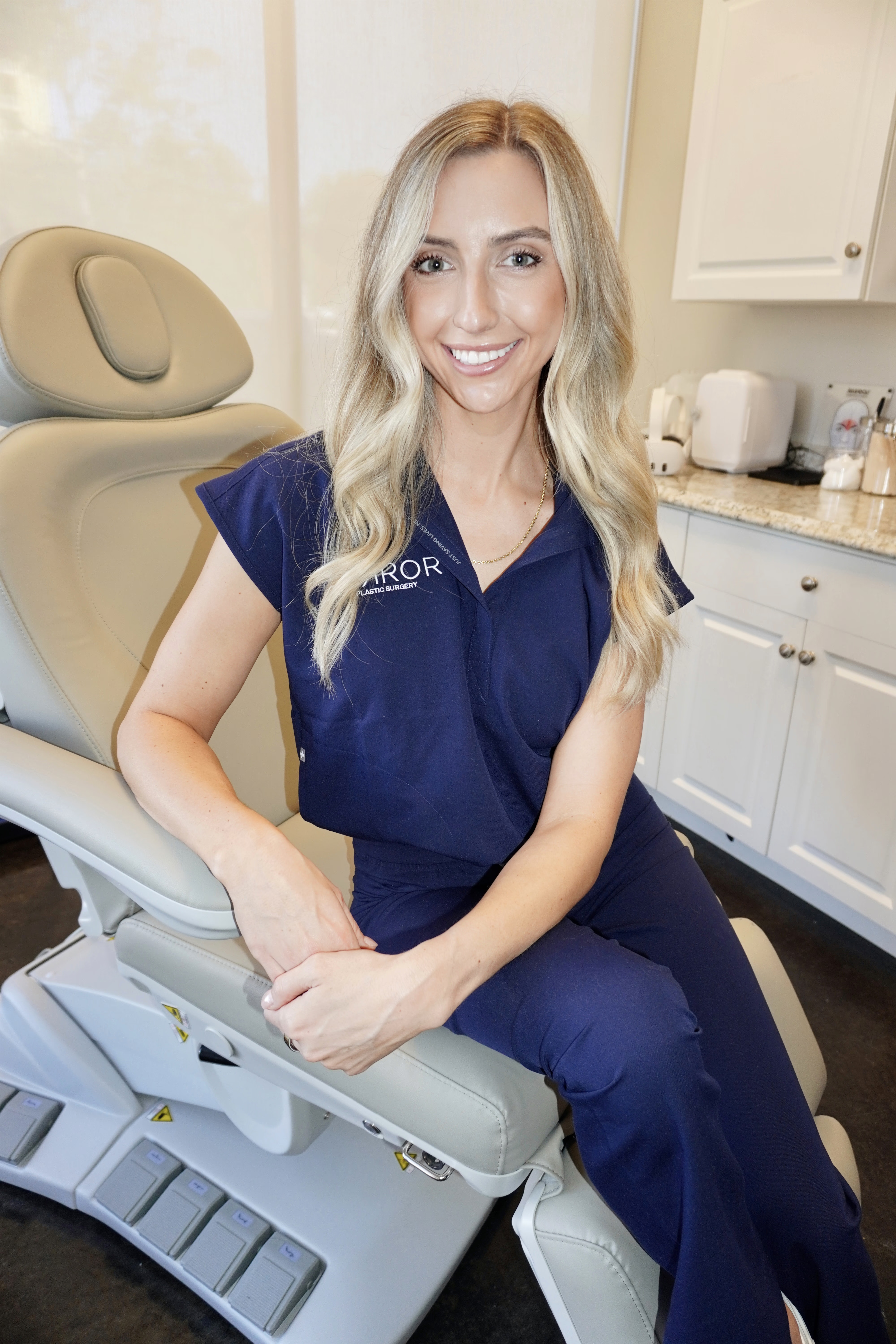
Ellie Pranckevicius is a board-certified Family Nurse Practitioner and the lead clinician for peptide therapies at Mirror Plastic Surgery. She earned her Bachelor’s in Health Science from Boston University on the premedical track, completed a rigorous aesthetics licensure program, and holds both her Bachelor’s and Master’s in Nursing from the University of South Florida. Her clinical foundation includes four years in the Neuroscience ICU at Tampa General Hospital, where she managed complex patients and developed a deep understanding of physiology, metabolic health, and recovery capacity.
Ellie began her career at a high-end medical spa in Boston, which gave her a dual perspective that blends aesthetic assessment with advanced clinical science. Her approach to peptide therapy centers on education and transparency. She explains the physiology behind each recommendation in plain language, tells patients when a service is not yet necessary, and prioritizes long-term outcomes over short-term revenue. When surgical care is indicated, Ellie’s work is complemented by Dr. Akash Chandawarkar, MD, a Harvard-educated physician, Johns Hopkins-trained plastic surgeon, and fellowship-trained aesthetic surgeon at Manhattan Eye Ear & Throat Hospital.
Step-by-Step Clinical Workflow at Mirror Plastic Surgery
Every peptide therapy engagement at Mirror Plastic Surgery follows a structured, patient-centered process.
- Consultation (30–60 minutes): Ellie reviews medical history, current medications, and hair-loss goals in a comprehensive one-on-one session.
- Lab Review: Relevant panels, including thyroid, liver, kidney, and hormone markers, are reviewed or ordered to identify root causes and contraindications.
- Custom Protocol Design: A personalized peptide stack is created based on lab results and individual goals, with no one-size-fits-all formulas.
- Reconstitution & Administration Support: Detailed instructions, often with video demonstrations, guide patients through safe self-administration.
- Ongoing Concierge Support: Patients have direct 24/7 text access to Ellie for questions, adjustments, and refill requests, with telemedicine appointments available throughout the U.S., including Hawaii and Alaska.
Emerging Research and Delivery Trends for Hair Peptides
The peptide delivery landscape is advancing quickly. A 2026 study in Journal of Nanobiotechnology developed a palmitoylated bioactive peptide delivered via a hyaluronic acid-based hydrogel microneedle system with a time-dependent prolonged release profile while preserving peptide structural integrity, and in a mouse model this system produced hair length and coverage statistically comparable to daily 2% minoxidil while requiring significantly lower application frequency.
A 2026 review in Biomedicines identified combining different formulations and nanosystems as an effective approach to address the limitations of short peptides in hair-loss treatments. Microneedling-assisted delivery is also gaining traction. A 2024 systematic review and meta-analysis found that microneedling combined with 5% minoxidil produced significantly greater hair regrowth than minoxidil alone, with approximately 16 additional hairs per cm². These delivery innovations are directly relevant to how copper peptides may be administered more effectively in clinical settings.
Key Decision Factors Before Starting Hair Peptide Therapy
Adults evaluating peptide therapy for hair loss should approach the decision systematically, starting with safety, then confirming quality sourcing, and finally tailoring the protocol.
- Safety and contraindications: Begin by ruling out medical contraindications. People with Wilson’s disease should consult a physician before using copper peptides. Active or recent cancer, pregnancy, and certain untreated endocrine conditions are additional contraindications for several peptides.
- Sourcing quality: Once candidacy is confirmed, verify peptide quality. Batch-tested, pharmaceutical-grade peptides from verified suppliers are essential for safety in an unregulated market.
- Personalization: With safe, verified peptides in place, the protocol must be tailored. Individual response varies based on genetics, hormones, nutrition, stress, and the specific peptide formulation used.
- Realistic timelines: Most patients notice initial changes around weeks 8–12, with peak benefits emerging by month 6, and consistent application for 3–6 months is required before measurable results appear.1
- Outcomes after discontinuation: Hair-loss interventions require ongoing use for most people, because stopping usually reverses gains. Maintenance protocols form a standard part of any long-term plan.
Risks, Limitations, and Common Misconceptions
Several misconceptions and genuine risks deserve clear discussion before beginning peptide therapy for hair loss.
Many people assume peptides are only for weight loss. In reality, GHK-Cu, BPC-157, and TB-500 each address distinct biological pathways such as inflammation, tissue repair, and follicular signaling that affect hair health independent of metabolic goals.
Another misconception is that results are permanent. Hair density after discontinuation moves back toward the trajectory the underlying genetic and hormonal process would have followed, and any accelerated shedding reflects a change in pace rather than new damage.1 Maintenance protocols are necessary to sustain benefits.
The unregulated online market presents the most significant practical risk. GHK-Cu (injectable) is scheduled for PCAC review at a February 2027 meeting, while non-injectable GHK-Cu was restored to Category 1 in May 2026. Regulatory status for other peptides in the Glow Stack differs. BPC-157 was designated FDA Category 2 (cannot be compounded commercially) in 2023, and TB-500 carries an FDA “Substance with Safety Concerns” classification for compounding.
Variability in results is also real. Individual response depends on degree of hair loss, follicle viability, hormonal environment, and adherence. Peptides cannot regenerate follicles that have already been lost in advanced androgenetic alopecia1, so earlier intervention usually produces better outcomes.
Frequently Asked Questions
Are peptides FDA-approved for hair loss?
No peptide is currently FDA-approved for hair loss. The only FDA-approved drugs for androgenetic alopecia remain minoxidil and finasteride. GHK-Cu (injectable) is scheduled for PCAC review at a February 2027 meeting, while non-injectable GHK-Cu was restored to Category 1 in May 2026, which means it may be eligible for compounding while evaluation continues, but this status does not equal final approval. BPC-157 is designated Category 2 and cannot be commercially compounded. All peptide use for hair loss remains off-label or investigational, so medical supervision, batch-tested sourcing, and thorough lab screening are essential parts of any responsible protocol.
Who is a good candidate for peptide hair therapy?
Adults with early-to-moderate hair thinning who still have viable follicles tend to respond best. Candidates who have tried conventional treatments without satisfactory results, or who have experienced side effects from minoxidil or finasteride, may find supervised peptide protocols a useful adjunct. A thorough consultation that includes lab panels such as thyroid, hormone, liver, and kidney markers is necessary to confirm candidacy, rule out contraindications such as Wilson’s disease or active cancer, and identify any underlying systemic causes of hair loss before a protocol is designed.
How long does it take to see results from peptide therapy for hair?
Most patients notice initial changes around weeks 8–12 of consistent use, with more meaningful improvements emerging by month 6. This timeline aligns with the natural hair growth cycle, which moves through anagen, catagen, and telogen phases over several months. Baseline scalp photos and hair counts in targeted areas, reviewed every 3–6 months, provide the most reliable way to track progress objectively. Patients with recent-onset hair loss within 2–3 years usually respond better than those with long-standing follicle miniaturization.
What happens if I stop peptide therapy?
Benefits from peptide therapy depend on continued use. When treatment stops, the biological processes that peptides were modulating, such as follicle cycling, inflammation control, and growth factor expression, move back toward their pre-treatment state. This pattern matches how current hair-loss treatments work, including minoxidil and finasteride. A maintenance protocol, often at a reduced frequency after an initial active phase, is the standard way to preserve gains achieved during the first 6 months of therapy.
Is supervised peptide therapy safer than buying peptides online?
Supervised peptide therapy is safer in several meaningful ways. Online peptide suppliers operate without regulatory oversight, so purity, concentration, and sterility are self-reported and unverified. Without a baseline lab panel, contraindications go undetected. Without clinical guidance, dosing errors, including the biphasic dose-response documented for AHK-Cu where higher concentrations inhibit rather than stimulate follicle growth, become more likely. Medically supervised protocols at Mirror Plastic Surgery use batch-tested peptides from verified suppliers, include pre-treatment lab review, and provide ongoing concierge support to adjust protocols based on individual response.
Conclusion: Choosing a Safe, Evidence-Informed Peptide Plan
Peptides such as GHK-Cu represent a biologically plausible and mechanistically rich area of hair-regrowth research. The existing evidence, while promising at the preclinical and small-trial level, does not yet support their use as standalone replacements for FDA-approved therapies. Current data support their role as adjunctive tools within a personalized, medically supervised protocol that accounts for individual lab values, contraindications, delivery method, and realistic timelines of 8–24 weeks.
The difference between a safe, effective peptide experience and an uncertain one rests largely on the quality of oversight and sourcing. At Mirror Plastic Surgery, Ellie Pranckevicius brings board-certified clinical expertise, critical-care physiological knowledge, and a transparent, education-first approach to every peptide consultation, so each protocol is built around the patient rather than a template.
Begin with a comprehensive consultation that includes lab review and a personalized peptide protocol designed for your hair health goals.
1 Results may vary from person to person. Editorial content, before and after images, and patient testimonials do not constitute a guarantee of specific results.
Peptide therapy is intended for wellness and optimization purposes and is not prescribed to diagnose, treat, cure, or prevent disease unless specifically stated. Many peptides are not FDA-approved and may be used off-label. Some have limited long-term safety data, with a potential for unknown risks, complications, or desensitization with prolonged use.