
Written by: Ellie Pranckevicius, FNP-BC, Aesthetic Nurse Practitioner & Aesthetic Injector | Facial Restoration & Regenerative Injectable Specialist, Mirror Plastic Surgery | Last updated: August 18, 2026
Key Takeaways
- Minoxidil and finasteride remain the only FDA-approved pharmacological treatments for androgenetic alopecia; no peptide currently holds regulatory approval for hair loss from the FDA or EMA.
- GHK-Cu has the strongest human evidence among peptides for hair applications, with small controlled studies showing hair density gains and good tolerability when properly formulated.1
- Peptides such as BPC-157 and Sermorelin/Ipamorelin have no published hair-specific trial data and should not serve as primary hair-loss treatments.
- Formulation quality, pH stability, and sourcing integrity are critical for peptide safety and effectiveness, and unsupervised online purchasing cannot reliably control these factors.
- Topical GHK-Cu is currently the lowest-risk peptide route for hair applications, while injectable research peptides carry higher uncertainty and lack meaningful human hair-loss trial data.
- Medical supervision, lab monitoring, and batch-tested sourcing support safer, more targeted peptide use for hair restoration.
How Dermatologists Prioritize Hair Regrowth Treatments
Current dermatology guidelines from the American Academy of Dermatology and the British Association of Dermatologists do not list topical peptides as standard therapy for androgenetic alopecia. Topical minoxidil 5% applied twice daily remains the guideline-recommended first-line topical treatment, and combining oral finasteride with minoxidil offers strong protection against progression. Peptides currently serve as adjunctive, off-label options rather than replacements. The table below highlights the evidence gap between FDA-approved medications and peptide therapies so you can see where each option realistically fits.
| Treatment | Evidence Level (2026) | Hair Density Outcome | Key Limitation |
|---|---|---|---|
| Minoxidil 5% topical | High, FDA-approved, decades of RCT data | Established regrowth and density gains | Scalp irritation, ongoing use required |
| Finasteride 1 mg oral | High, FDA-approved for men | Halts progression, stimulates regrowth | Sexual side effect risk deters many users |
| GHK-Cu topical (1–2%) | Moderate-low, small controlled cosmetic studies | Improved hair density in small controlled studies1 | No large multicenter RCT, industry-funded trials |
| BPC-157 | Very low, theoretical only | No measured hair density or thickness data | Zero hair-specific trial data, claims rest on VEGF mechanisms |
| Sermorelin / Ipamorelin | Very low, no hair-specific trials | No published hair density outcomes | Systemic GH stimulation, off-label, prohibited in competitive sport under WADA S2 |
Ellie Pranckevicius, FNP-BC: Clinical Lead for Peptide Protocols
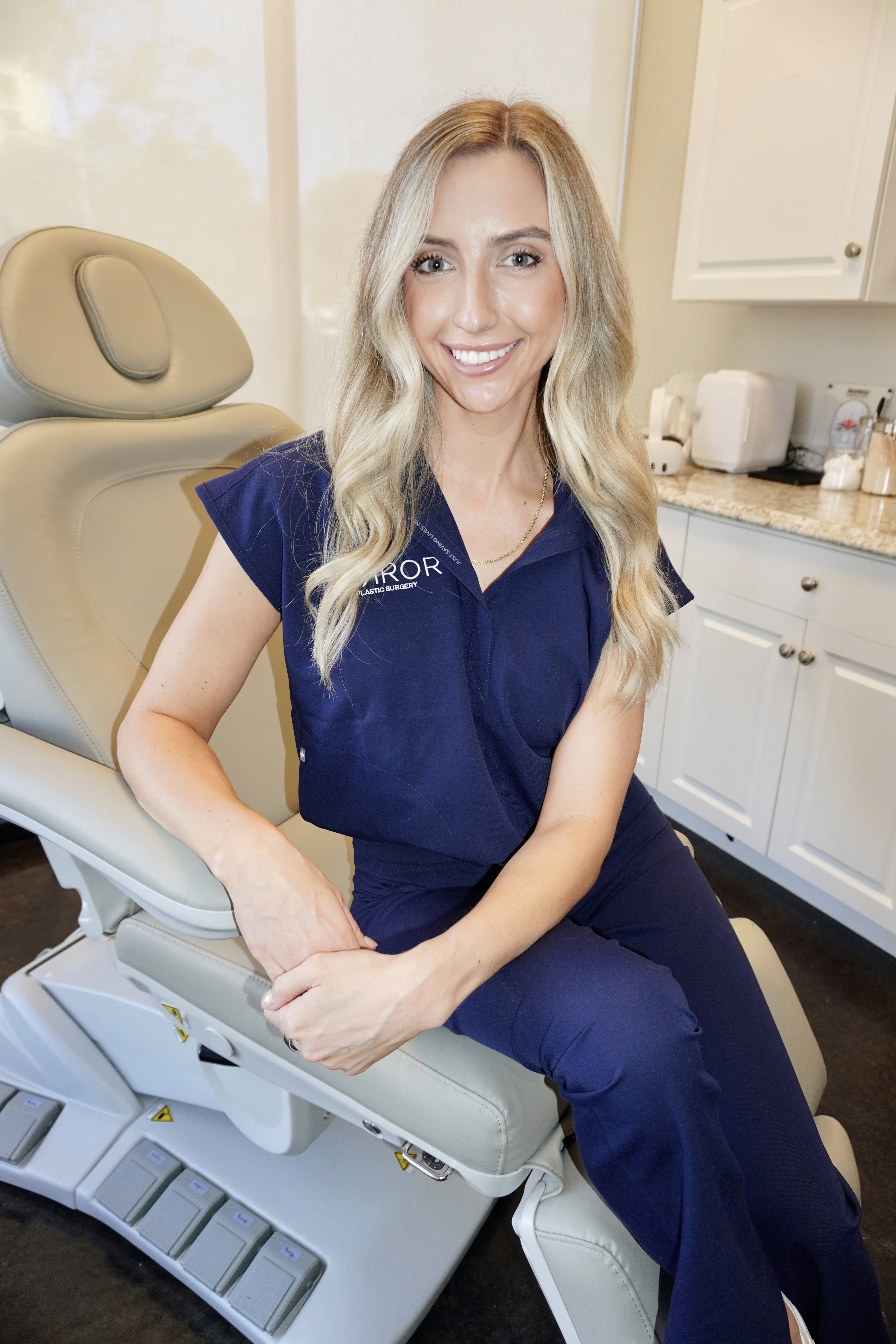
Peptide therapies at Mirror Plastic Surgery are led by Ellie Pranckevicius, FNP-BC, a board-certified Family Nurse Practitioner with both aesthetic and critical-care experience. Her background includes esthetician training at a high-end Boston medical spa, a Bachelor’s in Health Science from Boston University, and both a Bachelor’s and Master’s in Nursing from the University of South Florida. Four years in the Neuroscience ICU at Tampa General Hospital gave Ellie a strong foundation in physiology, metabolic health, and complex patient management, which she now applies to peptide protocol design. She evaluates hair loss through scalp physiology and the broader hormonal and inflammatory picture revealed by lab panels. Ellie prioritizes education and explains the mechanism behind every recommendation, and she will advise against a protocol when it is not yet warranted.
Schedule a consultation with Ellie to receive a lab-guided assessment of your hair loss and a personalized peptide protocol built around your unique physiology, with an education-first approach so you understand every step.
GHK-Cu for Hair Growth: Mechanisms and Human Data
GHK-Cu (copper tripeptide-1) is the most clinically studied peptide for hair applications. Its mechanisms include extending the anagen growth phase, enlarging follicle size, stimulating dermal papilla proliferation, increasing IGF-1 secretion, and reducing TGF-beta2, a known inhibitor of follicle activity. A 2023 Bioactive Materials paper describes an ionic-liquid microemulsion that improves topical GHK-Cu delivery approximately threefold in mice but does not report mechanisms involving VEGF or Wnt/β-catenin.
While these mechanisms are well characterized in vitro, human evidence remains limited. Some small studies have evaluated GHK-Cu and reported increases in hair density with good tolerability.1 However, as of July 2026, at least one published human RCT has tested standalone GHK-Cu for eyebrow hypotrichosis. These findings still require large multicenter confirmation before guideline bodies can formally recommend GHK-Cu for scalp hair loss.
BPC-157 and Hair Loss: Current Role
BPC-157 (Body Protective Compound 157) appears in some hair-loss stacks because of its systemic anti-inflammatory and tissue-remodeling properties, particularly VEGF-mediated angiogenesis. A 2025 systematic review of BPC-157 in orthopaedic medicine covered 36 studies, none of which examined hair follicles or hair growth outcomes. BPC-157 has over 100 published animal studies but zero published Phase III human clinical trials for any indication, including hair loss, and has been a specific focus of FDA warning letters regarding unapproved peptide products. At Mirror Plastic Surgery, BPC-157 supports systemic inflammation and tissue repair, not primary hair growth, and enters a protocol only when lab results and patient history justify it.
Copper Peptides on the Scalp: Tolerability and Formulation
Topical GHK-Cu has a favorable tolerability profile for most patients. Topical copper peptides are generally well tolerated on the scalp at recommended concentrations, with occasional contact irritation or mild erythema reported. However, tolerability depends heavily on formulation quality. Copper peptide stability degrades meaningfully at pH below roughly 4 and in the presence of ascorbic acid, and most retail products do not disclose pH. GHK-Cu requires careful attention to pH and storage to maintain stability. Products from unregulated suppliers often miss these parameters, so pharmaceutical-grade compounding becomes essential for predictable outcomes.
Best Peptides for Hair Growth and Thickness: Ranked Evidence
This section focuses on peptides specifically for hair applications and ranks them by human evidence for hair density or thickness outcomes. The table below highlights that GHK-Cu is the only peptide with controlled human hair data, while others remain theoretical or indirect, which clarifies how they should be positioned in a real-world protocol.
| Peptide | Evidence Confidence | Best Supported Use Case | Additive with Minoxidil? |
|---|---|---|---|
| GHK-Cu (topical 1–2%) | Moderate, positive effects on follicle size and density in small controlled cosmetic studies | Early-stage androgenetic alopecia, adjunct to minoxidil | Yes, potential additive density gains in limited studies1 |
| PTD-DBM | Low, animal models plus one small human pilot | Wnt/beta-catenin pathway activation, investigational | Unknown, no combination trial data |
| BPC-157 | Very low, no hair-specific trial data | Systemic inflammation, tissue repair, not hair-primary | No data |
| Sermorelin / Ipamorelin | Very low, no hair-specific trials | GH stimulation for systemic wellness, not hair-primary | No data |
Peptides for Hair Growth: Side Effects
Side effect profiles differ between topical and injectable peptide routes.
Topical GHK-Cu side effects include:
- Localized scalp irritation or redness at the application site
- Contact dermatitis in individuals with sensitive skin or known peptide sensitivities
- Transient scalp itching or tingling
Injectable GHK-Cu carries additional risks:
- Localized blue-green skin pigmentation from the copper chromophore
- Persistent redness, inflammatory papules, and increased sensitivity (“copper uglies”) from MMP overexpression due to copper overload with chronic overuse
- No long-term safety data for repeated subcutaneous injection over years
People with Wilson’s disease should consult a healthcare provider before using copper peptides. Pregnant individuals should seek specialist medical advice before use, because safety has not been established. Contamination and dosing inaccuracies are the primary risks when peptides are sourced from unregulated suppliers.
Minoxidil vs Peptides: How They Work Together
Minoxidil remains the best-supported topical treatment for androgenetic alopecia because it has decades of randomized trial data and FDA approval. Given this established evidence base, GHK-Cu functions as a non-hormonal complement rather than a replacement, especially for patients who cannot tolerate minoxidil’s scalp irritation or finasteride’s hormonal effects. Realistic timelines for any peptide intervention span at least 3 to 6 months due to the hair cycle, with reduced shedding often appearing before visible regrowth.1
Risks of Unsupervised Peptides
Contamination and dosing inaccuracies are the primary risks when peptides are sourced from unregulated suppliers or prepared without sterile technique in DIY settings. Self-injection of research peptides also introduces sterility concerns, inconsistent gray-market product quality, and potential adverse effects.
Mirror Plastic Surgery addresses these risks through a structured protocol that controls contamination, dosing accuracy, and patient safety at every step:
- Peptides are sourced from reputable compounding providers with rigorous batch testing for purity and accurate dosage, which removes much of the contamination risk seen with gray-market products.
- Ellie conducts comprehensive lab panels, including thyroid, liver, kidney, and hormone markers, before starting any protocol so contraindications are identified before the first dose.
- Patients receive detailed reconstitution and self-administration instructions, often with video demonstrations, which reduces dosing errors and sterility breaches.
- Patients have 24/7 direct text access to Ellie throughout the protocol for questions, side effect monitoring, and refill requests, which provides ongoing clinical oversight that online purchasing cannot match.
Schedule a consultation with Ellie to discuss a batch-tested, lab-guided peptide protocol with full concierge support instead of relying on an unverified online order.
When to Combine Peptides with Minoxidil, PRP, or Surgery
Peptide selection depends on your baseline treatment, how well you tolerate standard therapies, and whether hair loss occurs alone or alongside broader inflammatory issues. The table below maps common patient scenarios to peptide strategies so you can see when GHK-Cu acts as a primary topical option and when systemic peptides such as BPC-157 play a supporting role.
| Patient Scenario | Recommended Approach | Peptide Role | Evidence Basis |
|---|---|---|---|
| Early androgenetic alopecia, tolerates minoxidil | Minoxidil plus topical GHK-Cu | Adjunctive, potential additive density gains | Potential additive hair density increase in small studies |
| Minoxidil intolerance (scalp irritation) | Topical GHK-Cu monotherapy | Primary non-hormonal topical option | Small studies suggest improvements in hair count with good tolerability1 |
| Finasteride side effect concern | Minoxidil plus GHK-Cu (non-hormonal stack) | Non-hormonal complement, lab monitoring required | Multi-mechanism adjunctive positioning supported in literature |
| Post-hair transplant recovery | GHK-Cu plus BPC-157 (Glow Stack) | Anti-inflammatory and tissue remodeling support | Theoretical, clinical judgment required, no RCT in this context |
| Systemic inflammation contributing to hair loss | BPC-157 or TB-500 plus topical GHK-Cu | Systemic inflammation reduction with topical adjunct | Indirect, lab panel required to confirm inflammatory markers |
Book an appointment with Ellie at Mirror Plastic Surgery in St. Petersburg, Florida, to receive a comprehensive lab-guided evaluation and a personalized peptide protocol aligned with your hair restoration goals.
Disclaimer: This article is for informational purposes only and does not constitute medical advice. Results vary significantly between individuals. No peptide discussed in this article is FDA-approved for the treatment of hair loss or androgenetic alopecia. Peptide therapies are not FDA-regulated. Consult a qualified healthcare provider before beginning any peptide protocol.
Frequently Asked Questions
Are peptides like GHK-Cu safe to use for hair loss without a doctor?
Topical GHK-Cu shows a generally favorable tolerability profile in cosmetic research, with side effects usually limited to mild scalp irritation or transient itching. Safety still depends on formulation quality, concentration, and the absence of contraindications such as Wilson’s disease. Purchasing peptides from unregulated online sources introduces significant risk because products may be contaminated, mislabeled, or formulated at incorrect pH levels that degrade the active compound before it reaches the scalp. Without a lab panel, a provider cannot screen for contraindications or identify underlying causes of hair loss, such as thyroid dysfunction or hormonal imbalance, that require different treatment. Medical supervision provides the structure that keeps peptide therapy both safer and more targeted.
How long does it take to see results from GHK-Cu for hair growth?
Hair follicles follow a biological cycle that does not respond instantly to treatment. In clinical studies, measurable changes in hair count or shaft diameter with GHK-Cu have appeared at around 16 weeks, with more complete assessments at 6 months.1 Reduced shedding usually appears first and often precedes visible regrowth. Patients who combine GHK-Cu with minoxidil may see additive improvements within this same window.1 Consistent application, high-quality formulation, and a protocol tailored to the specific hair loss pattern all influence the timeline. Mirror Plastic Surgery includes follow-up assessments to track response and adjust the approach when needed.
Can peptides replace minoxidil or finasteride for hair loss?
Current evidence supports peptides as adjuncts to proven treatments rather than full replacements. Minoxidil and finasteride have decades of randomized trial data and FDA approval, and no peptide has completed a Phase III trial with hair density as a primary endpoint. For patients who cannot tolerate minoxidil-related scalp irritation or who have concerns about finasteride’s hormonal side effects, topical GHK-Cu offers a clinically plausible non-hormonal alternative with comparable short-term hair count data in small controlled studies. The choice to use peptides as a complement or substitute depends on lab results, medical history, and treatment goals, and Ellie makes this determination collaboratively with each patient during consultation.
What makes Mirror Plastic Surgery’s peptide protocols different from buying online?
Mirror Plastic Surgery provides clinical infrastructure that online purchasing lacks. The practice sources peptides only from reputable compounding providers that perform rigorous batch testing for purity, potency, and accurate dosage, a standard that gray-market retailers do not meet. Before any protocol begins, Ellie reviews comprehensive lab panels to identify root causes of hair loss and screen for contraindications, then builds a custom protocol based on those findings instead of a generic stack. Throughout treatment, patients have 24/7 direct text access to Ellie for questions, side effect monitoring, and adjustments. This level of personalized oversight separates medically supervised peptide therapy from self-directed online use, where there is no quality assurance, dosing guidance, or clinical accountability.
Does Mirror Plastic Surgery offer peptide protocols for hair loss remotely, or only in person?
Mirror Plastic Surgery offers both in-person consultations at its St. Petersburg, Florida, location and remote service delivery across the United States, including Hawaii and Alaska. The full process, from initial consultation and lab review to protocol design, prescription, and shipping, can occur via telemedicine. Ellie provides the same concierge-level care remotely as she does in person, including detailed administration instructions, video demonstrations for self-injection protocols when appropriate, and ongoing direct communication. Patients outside the Tampa Bay area can access Mirror’s lab-guided, batch-tested peptide protocols for hair loss without traveling to Florida.
1 Results may vary from person to person. Editorial content, before and after images, and patient testimonials do not constitute a guarantee of specific results.
Peptide therapy is intended for wellness and optimization purposes and is not prescribed to diagnose, treat, cure, or prevent disease unless specifically stated. Many peptides are not FDA-approved and may be used off-label. Some have limited long-term safety data, with a potential for unknown risks, complications, or desensitization with prolonged use.