
Written by: Ellie Pranckevicius, FNP-BC, Aesthetic Nurse Practitioner & Aesthetic Injector | Facial Restoration & Regenerative Injectable Specialist, Mirror Plastic Surgery | Last updated: July 13, 2026
Key Takeaways
- Patient-centered peptide care starts with a licensed practitioner’s full evaluation, lab analysis, and clear goal-setting before any protocol begins.
- Concierge, physician-led models provide closer supervision, pharmacy-grade sourcing, and ongoing monitoring compared with high-volume med-spa approaches.
- Mirror Plastic Surgery’s protocols are led by board-certified FNP Ellie Pranckevicius with physician oversight from Dr. Akash Chandawarkar, aligning care with independent medical judgment standards.
- Custom peptide stacks at Mirror address inflammation, autoimmune conditions, weight management, recovery, and anti-aging with options such as BPC-157, TB-500, GHK-Cu, and GLP-3R compounds.
- Patients can schedule a personalized consultation at Mirror Plastic Surgery for lab-guided peptide therapy tailored to specific health goals.
How Med-Spa and Concierge Peptide Therapy Models Differ
Structural differences between high-volume medical-spa peptide services and concierge physician-led models affect every stage of care, from the first visit through long-term follow-up. The table below compares four key dimensions using criteria drawn from published clinical guidance and regulatory standards.
| Dimension | High-Volume Med-Spa Model | Concierge / Physician-Led Model | Why It Matters |
|---|---|---|---|
| Practitioner Supervision | Variable, may involve delegation to unlicensed or minimally supervised staff | Board-certified NP with physician oversight; state law requires clinical decisions to rest on independent medical judgment | Risks arise from the wrong patient, wrong dose, wrong source, or wrong combination |
| Sourcing Standards | Inconsistent, some clinics source from gray-market or unverified suppliers; research-grade peptides can have purity levels as low as 70% | Licensed U.S. compounding pharmacies meeting USP <797> sterile compounding standards with batch testing and Certificates of Analysis | Gray-market sources have shown contamination with heavy metals, bacterial endotoxins, and incorrect sequences or concentrations |
| Personalization | Menu-based or generic stacks; generic menu-based approaches omit structured dosing, monitoring, and follow-up | Custom stacks built from a 30–60 minute consultation, comprehensive lab panels, and individual health goals | Effective dosing requires accounting for body size, baseline labs, concurrent medications, and individual health goals |
| Ongoing Monitoring | Often limited to the initial visit, with no structured follow-up lab review or dose titration | Direct 24/7 practitioner access via text, scheduled telemedicine, repeat bloodwork, and iterative dose adjustment; monthly physician review with dose titration based on response | Subjective improvements often precede measurable lab changes by 2–6 weeks, so ongoing monitoring helps prevent premature discontinuation |
Ellie’s Clinical Background and How It Shapes Care
Peptide therapy at Mirror Plastic Surgery is led by Ellie Pranckevicius, FNP-BC, a board-certified Family Nurse Practitioner with esthetician training, four years in the Neuroscience ICU at Tampa General Hospital, and graduate nursing education at the University of South Florida. Her ICU experience managing complex physiological cases gives her a detailed understanding of metabolic health, inflammatory pathways, and the body’s capacity for recovery, and this knowledge directly informs peptide protocol design.
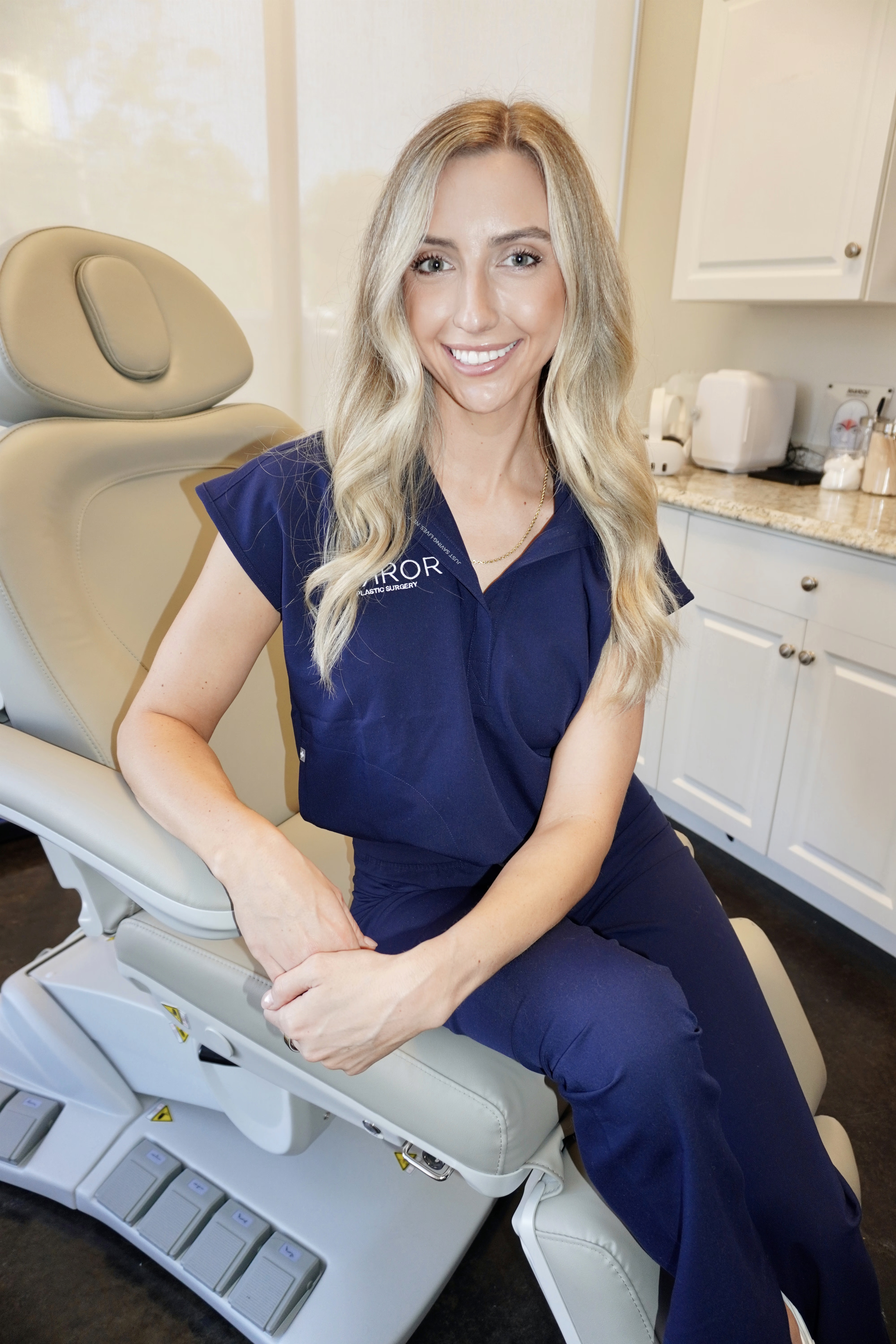
This clinical foundation, combined with her esthetician training, creates a dual perspective that is uncommon in the peptide space. She approaches each patient the way a dentist approaches oral health: professional treatments produce results, and lasting outcomes depend on education and consistent maintenance. This philosophy carries through to her recommendations, so she is known for telling patients when a service is not yet necessary and for prioritizing long-term outcomes over short-term revenue.
When clinical complexity warrants it, Ellie’s work is supported by Dr. Akash Chandawarkar, MD, a Harvard-educated physician, Johns Hopkins-trained plastic surgeon, fellowship-trained aesthetic surgeon at Manhattan Eye Ear & Throat Hospital (MEETH)/Lenox Hill Hospital, and medical innovation trainee at Stanford University. Peptide use constitutes the practice of medicine, and clinical decisions must be based on independent medical judgment, a standard the Mirror team is structured to meet.
Safe Sourcing and Pharmacy-Grade Peptide Preparation
The most significant safety variable in peptide therapy is not the peptide molecule itself but where it comes from and how it is prepared. Peptide injections are conditionally safe when sourced from FDA-compliant U.S.-based registered compounding pharmacies, administered with proper technique, and matched to appropriate patients.
Mirror Plastic Surgery sources exclusively from licensed U.S. compounding pharmacies that meet the standards outlined in the comparison above, with batch-tested Certificates of Analysis for every compound. Under Section 503A of the FD&C Act, bulk active pharmaceutical ingredients used in peptide compounding must be manufactured at an FDA-registered drug establishment and accompanied by a Certificate of Analysis.
By contrast, peptides sold as “research chemicals” and labeled “not for human consumption” carry significant risks of contamination, inaccurate dosing, unpredictable side effects, and long-term harm to vital organs. Patients who have previously sourced peptides online without supervision are strongly encouraged to transition to a medically supervised model before continuing any protocol.
Custom Peptide Stacks for Specific Clinical Goals
Peptide therapy at Mirror Plastic Surgery extends far beyond weight loss and supports several clinical goals. The following peptides are used across a range of applications, described in plain language.
- BPC-157 (Body Protective Compound 157): A gastric pentadecapeptide that accelerates healing of tendons, ligaments, muscles, and the GI tract by promoting angiogenesis and upregulating growth factors including VEGF and EGF. It is used for systemic inflammation, gut repair, and post-surgical recovery. A 2025 systematic review in orthopedic sports medicine concluded that BPC-157 promotes healing by boosting growth factors and reducing inflammation.1
- TB-500 (Thymosin Beta-4): A soft-tissue repair peptide that modulates inflammatory cytokines to calm chronic responses in arthritis and post-surgical swelling, fostering a balanced healing environment that minimizes scar tissue and oxidative stress.
- GHK-Cu (Copper Peptide): An anti-aging peptide that can reduce inflammatory markers in tissue, lowering levels of TNF-alpha, IL-6, and other pro-inflammatory cytokines while influencing genes involved in tissue repair. It also supports collagen and elastin production, skin health, and hair and nail rejuvenation.
- GLP-3R Compounding: A newer-generation metabolic peptide similar in mechanism to GLP-1 receptor agonists, reported to carry fewer gastrointestinal side effects and reduced risk of muscle wasting, with broader indications including insulin resistance and cardiovascular risk factors. Combining GLP-1 receptor agonists with growth hormone-releasing peptides helps preserve lean muscle mass during weight loss, as up to 30% of weight lost on GLP-1 monotherapy alone may come from lean mass including muscle and bone.
- NAD (Nicotinamide Adenine Dinucleotide): A coenzyme that targets cellular mitochondria to support energy production and counter age-related cellular decline.
- KPV: A tripeptide of alpha-MSH that enters cells via a transporter upregulated in inflamed tissues and inhibits NF-kB and MAPK cascades to prevent production of pro-inflammatory cytokines at the transcriptional level. It is often indicated for gut inflammation, IBD, and leaky gut.
- Sermorelin / Ipamorelin (Growth Hormone Releasing Peptides): Secretagogues that stimulate the pituitary to release natural growth hormone, supporting muscle retention, sleep quality, and body composition. Growth hormone secretagogue peptides are contraindicated for individuals with active cancer or a personal or family history of cancer due to their potential to promote tumor growth.
- Selank: A nootropic peptide that acts on brain pathways similar to benzodiazepines for anxiety and depression management, without the dependency or withdrawal profile associated with pharmaceutical benzodiazepines.
- PT-141 (Bremelanotide): PT-141 (bremelanotide), sold as Vyleesi, is the FDA-approved peptide for acquired, generalized hypoactive sexual desire disorder in premenopausal women. It is also used for libido enhancement in men.
- Kisspeptin: A fertility-related neuropeptide that has shown promise in IVF trials for improving positive outcomes by regulating reproductive hormone signaling.
Understanding what each peptide does is only part of the picture, and patients also need realistic expectations about timing. Efficacy timelines vary by peptide and individual. Peptide therapy efficacy timelines show initial pain relief and inflammation reduction within 1–2 weeks, maximal effects at 4–6 weeks, and full tissue remodeling over 3–6 months.1 Results are not identical across patients, because genetics, lifestyle, baseline inflammation, and protocol adherence all influence outcomes.
Mirror’s signature “Glow Stack” combines GHK-Cu, BPC-157, and TB-500 to address systemic inflammation, melasma, and collagen and elastin decline at the same time. This type of multi-peptide protocol illustrates the level of customization that does not emerge from a generic menu-based consultation.
Cost, Insurance, and What to Expect Over Time
Standard health insurance plans do not cover most peptide therapies, because compounded peptides are usually not FDA-approved drugs. Each patient receives a personalized quote during the consultation that reflects the specific protocol, lab requirements, and monitoring cadence appropriate to their situation.
Realistic timelines depend on the clinical goal and the peptide stack. As noted in the peptide descriptions above, timelines vary by clinical goal, so energy and recovery changes may appear in 2–4 weeks, while metabolic and longevity benefits often require 4–12 weeks depending on the protocol.1 Patients should not expect identical results to others, and protocols are adjusted iteratively based on lab response and symptom tracking rather than fixed schedules.
Maintenance protocols are often necessary to sustain benefits. Stopping peptide therapy without a transition plan usually leads to a gradual return toward baseline, similar to discontinuing any structured health regimen.
Florida Concierge Care and Nationwide Telemedicine Access
Mirror Plastic Surgery is located at 780 4th Ave S, St. Petersburg, FL 33701, and serves the Tampa Bay area with in-person consultations. The full clinical workflow, including consultation, lab review, protocol design, administration education, and ongoing monitoring, is also available remotely across all 50 states via telemedicine.
Telehealth prescribing of medical peptides requires establishing a valid patient relationship, meeting the applicable standard of care, and ensuring the provider is licensed in the patient’s state. Ellie holds the credentials and licensure framework to support remote patients compliantly, with peptides shipped directly from licensed compounding pharmacies.
Patients receive detailed reconstitution and self-administration instructions, often supported by video demonstrations, and have direct text access to Ellie for questions, side-effect management, and refill requests throughout their protocol.
When Physician-Led Peptide Care Is the Better Fit
Physician-led or NP-led concierge care is the appropriate model when any of the following apply.
- Chronic inflammatory or autoimmune conditions such as rheumatoid arthritis, psoriasis, or IBD require immune-modulating peptides that interact with existing medications or diagnoses.
- Weight management goals involve metabolic peptides where baseline labs such as HbA1c, fasting insulin, thyroid, and lipid panel are necessary to rule out contraindications.
- Post-surgical recovery protocols need coordination with the operating surgeon’s plan to avoid interference with healing.
- Prior peptide use from online sources produced no response or adverse effects, suggesting quality or dosing issues.
- Anxiety, depression, or psychiatric medications are part of the current regimen, and patients with anxiety, mood disorders, or psychiatric medications should not use Semax without close physician coordination due to potential contraindications.
- The patient has a history of cancer, active malignancy, pregnancy, or significant cardiovascular, hepatic, or renal disease, all of which require specialist evaluation before any peptide protocol.
A responsible peptide therapy consultation must include goal setting, medical history review, medication and supplement review, discussion of baseline labs, potential side effects, dosing considerations, follow-up monitoring plans, and realistic expectations. High-volume settings that compress this process into a brief intake form cannot meet this standard.
Current Regulatory Landscape and 2026 Peptide Policy Shifts
The regulatory environment for compounded peptides changed significantly in mid-2026. In June 2026, FDA reviewers recommended against including seven peptides, including BPC-157, KPV, and TB-500, on the 503A Bulks List due to significant safety risks.
These recommendations are not a “green light for self-prescribing” or for treating peptides as supplements, and careful management is required depending on PCAC review conclusions. Final FDA rulemaking on peptide compounding under 503A is likely more than a year away, with possible interim enforcement discretion around the July 2026 and early 2027 PCAC meetings.
Separately, as of February 21, 2025, the FDA determined the national shortage of semaglutide injection products has been resolved, ending enforcement discretion periods for compounding essentially identical copies. Patients currently using compounded semaglutide or tirzepatide should discuss their options with a licensed provider.
The evolving regulatory picture reinforces the need to source peptides from a licensed, compliant compounding pharmacy under active clinical supervision. This approach allows patients to access peptides legally and as safely as possible during a period of policy change.
Common Questions About Peptide Therapy
Several misconceptions circulate widely about peptide therapy and deserve direct clarification. These misconceptions cluster around what peptides can do, how long results last, and how to source them safely.
- Peptides are not exclusively for weight loss. Applications span inflammation, autoimmune modulation, post-surgical recovery, cognitive support, sexual wellness, fertility, and anti-aging at the cellular level.
- Results are not permanent. Benefits diminish when protocols are discontinued, similar to stopping any structured health or fitness regimen, so maintenance protocols are typically required.1
- Results are not identical across patients. Peptides lack a one-size-fits-all dose, and the factors outlined in the model comparison above, including body size, baseline labs, concurrent medications, and individual health goals, all influence appropriate dosing.
- Regulatory recommendation against bulks list inclusion does not mean FDA approval. These peptides remain unapproved drugs, and the change affects compounding eligibility pathways rather than safety or efficacy certification.
- Online “research-grade” peptides are not equivalent to pharmaceutical-grade compounded peptides. Research-grade peptides sold online without prescription lack the quality controls required for pharmaceutical-grade products, including the purity standards discussed earlier.
Frequently Asked Questions
Are peptides FDA-approved, and is it legal to use them?
The FDA regulates specific peptide substances individually rather than the category as a whole. A small number of peptides, including insulin, GLP-1 receptor agonists such as semaglutide, and PT-141 (bremelanotide), sold as Vyleesi, the FDA-approved peptide for acquired, generalized hypoactive sexual desire disorder in premenopausal women, carry full FDA approval for defined indications. Many others used in clinical wellness settings are compounded under Section 503A or 503B of the Federal Food, Drug, and Cosmetic Act, which permits individualized preparation by licensed pharmacies under specific conditions. In June 2026, FDA reviewers recommended against including seven peptides, including BPC-157, KPV, and TB-500, on the 503A Bulks List due to significant safety risks, and the Pharmacy Compounding Advisory Committee is scheduled to evaluate them for formal bulks-list inclusion in July 2026 and early 2027. Using compounded peptides is legal when they are prescribed by a licensed provider, prepared by a compliant compounding pharmacy, and sourced with a valid Certificate of Analysis. Purchasing peptides labeled “for research use only” from online retailers and self-administering them is not sanctioned by the FDA and carries significant safety and legal risks.
What lab work is needed before starting peptide therapy?
The specific labs required depend on the peptide and clinical goal. For metabolic and weight-management protocols, a comprehensive metabolic panel, lipid panel, HbA1c, fasting insulin, thyroid panel, and body composition assessment are standard starting points. Growth hormone-releasing peptides additionally require IGF-1, free testosterone, and pituitary function markers. Inflammation-focused protocols benefit from CRP, cytokine panels, and liver and kidney function tests. At Mirror Plastic Surgery, Ellie reviews any existing lab results during the initial consultation and orders additional panels when indicated. Lab review is not optional, because without baseline data, dosing decisions become guesswork that risks incorrect dosing, drug interactions, and missed contraindications.
How is Mirror Plastic Surgery’s approach different from a typical medical spa?
The main difference is the depth and continuity of clinical oversight. A typical high-volume medical spa may offer a menu of peptide options with a brief intake process, limited lab review, and minimal follow-up. Mirror Plastic Surgery’s model begins with a 30–60 minute consultation with Ellie Pranckevicius, FNP-BC, covering full medical history, current medications, and health goals. Lab panels are reviewed or ordered before any protocol is designed, and custom stacks are built from that data rather than selected from a fixed menu.
Patients have direct 24/7 text access to Ellie throughout their protocol, with scheduled telemedicine follow-ups and iterative dose adjustments based on lab response and symptom tracking. The practice deliberately limits its patient volume to preserve this level of individual attention, following the same philosophy that governs its surgical practice, where only one to two procedures are performed per day.
Will I need to take peptides indefinitely?
Duration depends on the peptide and the clinical goal. Some recovery-focused protocols, such as those using BPC-157 and TB-500 for acute injury or post-surgical healing, are short and finite and typically run 4–8 weeks. Metabolic, longevity, and anti-aging protocols tend to be iterative, with ongoing monitoring and periodic cycling rather than continuous open-ended use. Angiogenesis peptides such as BPC-157 and TB-500 require structured on and off cycling, because prolonged continuous use may overstimulate vascularization. Ellie designs each protocol with a defined structure and reviews continuation decisions based on lab data and patient response rather than defaulting to indefinite use.
Can peptide therapy be combined with surgical procedures or other treatments?
Peptide therapy can be combined with surgical procedures and other treatments, and this integration is one of Mirror Plastic Surgery’s clinical advantages. Post-surgical peptide protocols using BPC-157, TB-500, and GHK-Cu can reduce inflammation, promote tissue healing, and minimize scar formation after joint replacements, soft tissue repairs, or aesthetic procedures. Because Ellie works within the same practice as Dr. Akash Chandawarkar, peptide protocols can be coordinated directly with surgical planning and recovery timelines.
Peptide therapy is also integrated with lifestyle factors such as sleep, nutrition, exercise, and stress management, because outcomes are consistently better when peptides function within a coordinated health plan rather than as isolated interventions.
Informed, individualized decision-making forms the foundation of safe and effective peptide therapy. The regulatory landscape is evolving, the clinical evidence base is growing, and the risks of unsupervised or generic approaches are well documented. Patients who invest in a thorough evaluation, lab-guided protocol design, and ongoing practitioner oversight are better positioned to achieve meaningful, sustainable outcomes within a compliant clinical framework.
Book an appointment with Ellie to begin a comprehensive evaluation and explore whether a personalized peptide protocol aligns with your health goals.
1 Results may vary from person to person. Editorial content, before and after images, and patient testimonials do not constitute a guarantee of specific results.
Peptide therapy is intended for wellness and optimization purposes and is not prescribed to diagnose, treat, cure, or prevent disease unless specifically stated. Many peptides are not FDA-approved and may be used off-label. Some have limited long-term safety data, with a potential for unknown risks, complications, or desensitization with prolonged use.