
Written by: Ellie Pranckevicius, FNP-BC, Aesthetic Nurse Practitioner & Aesthetic Injector | Facial Restoration & Regenerative Injectable Specialist, Mirror Plastic Surgery
Key Takeaways
- Structured diet, exercise, and weight-loss plans can shift LDL, HDL, and triglycerides within 30 days without medication.1
- Soluble fiber, plant sterols, and saturated-fat reduction deliver the fastest measurable LDL improvements.1
- 150 minutes of weekly aerobic exercise plus resistance training modestly raises HDL and lowers triglycerides.1
- Losing 5–10% of body weight produces clinically significant triglyceride and total-cholesterol reductions.1
- When lifestyle changes plateau, schedule a consultation at Mirror Plastic Surgery to explore medically supervised peptide protocols.
How Diet, Exercise, Weight Loss, and Peptides Shift Your Numbers
Diet, movement, and weight loss each move different parts of your lipid panel. Mediterranean-style eating drops triglycerides quickly and nudges HDL up. Aerobic exercise mainly raises HDL and has limited LDL impact. Weight loss improves all three markers, especially triglycerides. GLP-class peptides, when prescribed and monitored, can influence several lipid fractions at once while also supporting weight and glycemic control. Every figure cited below comes from peer-reviewed research linked inline.
Mediterranean-style diet produces the fastest triglyceride drops (−10% to −20%) and modest HDL gains (+3% to +6%), with LDL reductions that vary by individual genetics.1 Aerobic exercise at 120–150 minutes per week raises HDL by roughly 2–3 mg/dL and modestly lowers triglycerides, but often has minimal impact on LDL.1 Weight loss of 5–10% improves LDL, HDL, and triglycerides, with triglyceride reductions frequently exceeding 20%.1 GLP-class peptides under medical supervision produce agent- and dose-specific effects across LDL, HDL, and triglycerides, and the magnitude depends on the specific compound and protocol.1
Soluble Fiber, Plant Sterols, and Saturated-Fat Limits
Dietary change offers the fastest lever most adults can pull. Two core strategies drive LDL reduction: increasing soluble fiber and reducing saturated fat intake.
Soluble fiber targets: Higher soluble fiber intake lowers LDL cholesterol, and many people see changes within several weeks.1 High-yield sources include:
- Oats and oat bran
- Barley
- Beans and lentils
- Apples and citrus fruit
- Flaxseed
Daily intake of 1.5 to 2.4 grams of plant sterols and stanols lowers LDL by 7 to 10%1, with effects typically measurable within weeks. Consuming approximately 2 grams of plant sterols per day can reduce LDL by 8% to 10%1.
Saturated fat limits: A Mediterranean-style diet that emphasizes vegetables, whole grains, fish, olive oil, and nuts while limiting red meat and processed foods can reduce cholesterol1. Replacing refined starches and added sugars with protein and unsaturated fats provides additional triglyceride benefit. Overweight adults in a controlled trial who made this substitution experienced reductions in triglycerides1.
Maximal response to a plasma cholesterol-lowering diet is often achieved within two weeks1. Combining fiber, plant sterols, and saturated-fat reduction creates additive effects that a single change rarely matches.
Exercise Benchmarks for HDL and Triglyceride Changes
Exercise volume and intensity shape how much your lipid panel shifts. The following benchmarks reflect outcomes documented in clinical studies.
Weekly minute targets and outcomes:
- Aerobic exercise at 120–150 minutes per week produces modest lipid changes: HDL-C increases of roughly 2–3 mg/dL and average LDL-C reductions of about −5 mg/dL, although the LDL effect is often non-significant in individual trials.1
- Moderate-intensity aerobic exercise around 150 minutes per week consistently shows these modest HDL gains with limited LDL impact.
- Higher volumes of aerobic exercise combined with resistance training can further improve LDL and HDL.
For triglycerides, meta-analyses show that longer exercise programs reduce levels over time. Circuit-style resistance training adds a meaningful contribution, and participants often see triglyceride reductions when they combine it with aerobic work.
Brisk walking and jogging produce 5–8% LDL reductions in clinical studies1. These activities offer accessible starting points for adults who are not yet exercising regularly. Initial cholesterol improvements from consistent exercise can appear within several weeks.1
Weight-Loss Thresholds That Move Lipid Numbers
Body-weight reduction is one of the most reliable levers for triglyceride and total-cholesterol improvement. Individuals who lose body weight through diet and exercise see reductions in LDL, total cholesterol, and triglycerides1.
Losing 5 to 10% of body weight produces significant reductions in triglycerides and total cholesterol, with improvements visible within a couple of months1. For a 200-pound adult, that range translates to 10 to 20 pounds. Many adults can reach that target within a structured 30-day program when they pair dietary changes with consistent exercise.
Combining multiple lifestyle interventions produces larger triglyceride reductions. No single intervention typically achieves that magnitude alone.
Why Lifestyle Plateaus Happen and Where Peptides Fit
Lifestyle interventions have a biological ceiling. Lifestyle changes can lower LDL-C, yet many adults still need additional support to reach sustainable LDL-C goal ranges.1
Several factors explain why motivated adults plateau:
- Genetic non-response to Mediterranean diet lipid effects involves polymorphisms in APOE, PCSK9, PNPLA3, CETP, and the LPA gene, along with familial or polygenic hypercholesterolemia and insulin resistance.
- Lipoprotein(a) is largely heritable and often less responsive to lifestyle interventions.
- Real-world registry data show that many high- and very-high-risk patients fail to reach LDL-C thresholds with single-agent approaches.
When lifestyle work has been sustained for 8 to 12 weeks and numbers remain outside target range, the 2026 ACC/AHA guideline writing committee chair Roger Blumenthal, MD, noted that clinicians should consider adding lipid-lowering medication earlier than in the past. Medically supervised peptide protocols offer one adjunctive pathway for adults who are not candidates for, or who prefer to explore options before, conventional pharmacotherapy. These protocols always require provider guidance and ongoing lab monitoring.
Peptide Stacks at Mirror Plastic Surgery with Lipid-Relevant Evidence
Mirror Plastic Surgery offers several peptide protocols that may support cardiometabolic health as adjuncts to lifestyle work. These are not FDA-approved lipid-lowering therapies and are presented strictly as medically supervised options.
GLP-3R compounding: GLP-3R is a newer-generation GLP-class compound. The broader GLP-1 receptor agonist class has the most robust human cardiovascular data of any peptide category. A 2026 systematic review and meta-analysis of randomized cardiovascular outcome trials found that GLP-1 receptor agonists significantly reduced major adverse cardiovascular events. A 2026 network meta-analysis of randomized controlled trials reported agent- and dose-specific effects on cardiometabolic outcomes, including lipids. GLP-3R formulations are reported to carry a reduced gastrointestinal side-effect burden and lower muscle-wasting risk compared with older GLP-1 agents, although long-term comparative data are still emerging.
BPC-157 (Body Protective Compound 157): BPC-157 is used primarily for systemic inflammation and for muscle, tendon, ligament, and joint repair. BPC-157 is not approved for cardiovascular use in any jurisdiction, and its long-term cardiovascular safety profile has not been established in human trials. At Mirror Plastic Surgery, BPC-157 appears in the Glow Stack (with GHK-CU and TB500) for inflammation management and is not positioned as a direct lipid-lowering agent. Lower systemic inflammation can support improved cardiometabolic markers over time.
The Glow Stack (GHK-CU, BPC-157, TB500): This stack targets systemic inflammation, collagen and elastin production, and soft-tissue repair. Its indirect relevance to lipid health lies in inflammation reduction. GLP-1 receptor agonists and dual-agonist peptides improve inflammatory markers including CRP, in addition to their primary effects on weight and glycemic control. These findings illustrate how anti-inflammatory peptide pathways can produce downstream metabolic benefits.
All peptide protocols at Mirror Plastic Surgery begin only after a comprehensive lab review and continue with scheduled follow-up panels.
Pre- and Post-Lab Checklist with 30-Day Tracker
Tracking the right markers before and after any intervention, lifestyle or peptide, allows you to measure real progress. Use this checklist as both a quick reference and a practical 30-day tracker template.
Baseline labs (before starting any protocol):
- Fasting lipid panel: LDL-C, HDL-C, non-HDL-C, triglycerides, total cholesterol
- ApoB (apolipoprotein B)
- Lp(a) — the 2026 ACC/AHA guideline recommends measuring Lp(a) at least once to identify higher ASCVD risk
- HbA1c and fasting glucose
- Complete metabolic panel (CMP): liver and kidney function
- Thyroid panel (TSH, free T4)
- Inflammatory markers: hsCRP, ESR
- Complete blood count (CBC)
30-Day Tracker Template (print or save):
- Week 1 establishes your baseline. Complete labs, record your starting weight, and begin logging soluble fiber intake (target 5–10 g/day) while building toward 150 minutes per week of aerobic exercise.
- Week 2 keeps your exercise log going and adds saturated fat tracking. Aim for less than 7% of total calories from saturated fat, and note changes in energy and GI tolerance.
- Week 3 layers resistance training twice per week onto your aerobic base. Track plant sterol and stanol intake using the 1.5–2 g/day target discussed earlier, and log sleep hours because poor sleep raises triglycerides.
- Week 4 closes the loop. Repeat your fasting lipid panel and weight, compare percentage changes from baseline, and schedule a provider review to interpret results and plan next steps.
Follow-up labs (at 4 and 12 weeks):
- Fasting lipid panel (same markers as baseline)
- ApoB — the 2026 ACC/AHA guideline recommends follow-up lipid panels to assess response to therapy
- HbA1c and fasting glucose (if on GLP-class peptides)
- CMP, CBC, and inflammatory markers
- IGF-1 (if on growth hormone secretagogues such as sermorelin/ipamorelin)
Safety and Sourcing for Peptide Protocols
Peptide safety depends on the specific compound, the quality of the source, and the monitoring protocol in place.
Quality assurance: Responsible peptide prescribing requires baseline laboratory testing including CMP with liver and kidney function, CBC, lipid panel, HbA1c and fasting glucose, thyroid panel, and inflammatory markers before initiating therapy. Mirror Plastic Surgery sources peptides only from suppliers with documented batch testing for purity and accurate dosage.
Monitoring frequency:
- Ongoing laboratory monitoring typically repeats every 3–6 months, and GLP-1 patients specifically need amylase, lipase, and calcitonin checks every 6–12 months.
- Growth hormone peptide users need IGF-1 rechecks at 3 and 6 months after starting.
Contraindications and cautions:
- Patients with a personal or family history of medullary thyroid carcinoma or MEN2 syndrome should not use GLP-1 receptor agonists because of the FDA boxed warning for thyroid C-cell tumor risk observed in rodent studies.
- Anyone with known heart disease, arrhythmia, or significant risk factors needs provider clearance before starting any peptide.
- Stacking multiple compounds that each raise heart rate or blood pressure can create a cumulative cardiovascular load that no single component would generate alone.
- Peptides should never replace evidence-based cardiac medications, and any cardiovascular symptoms require immediate medical attention.
Meet Ellie Pranckevicius, FNP-BC
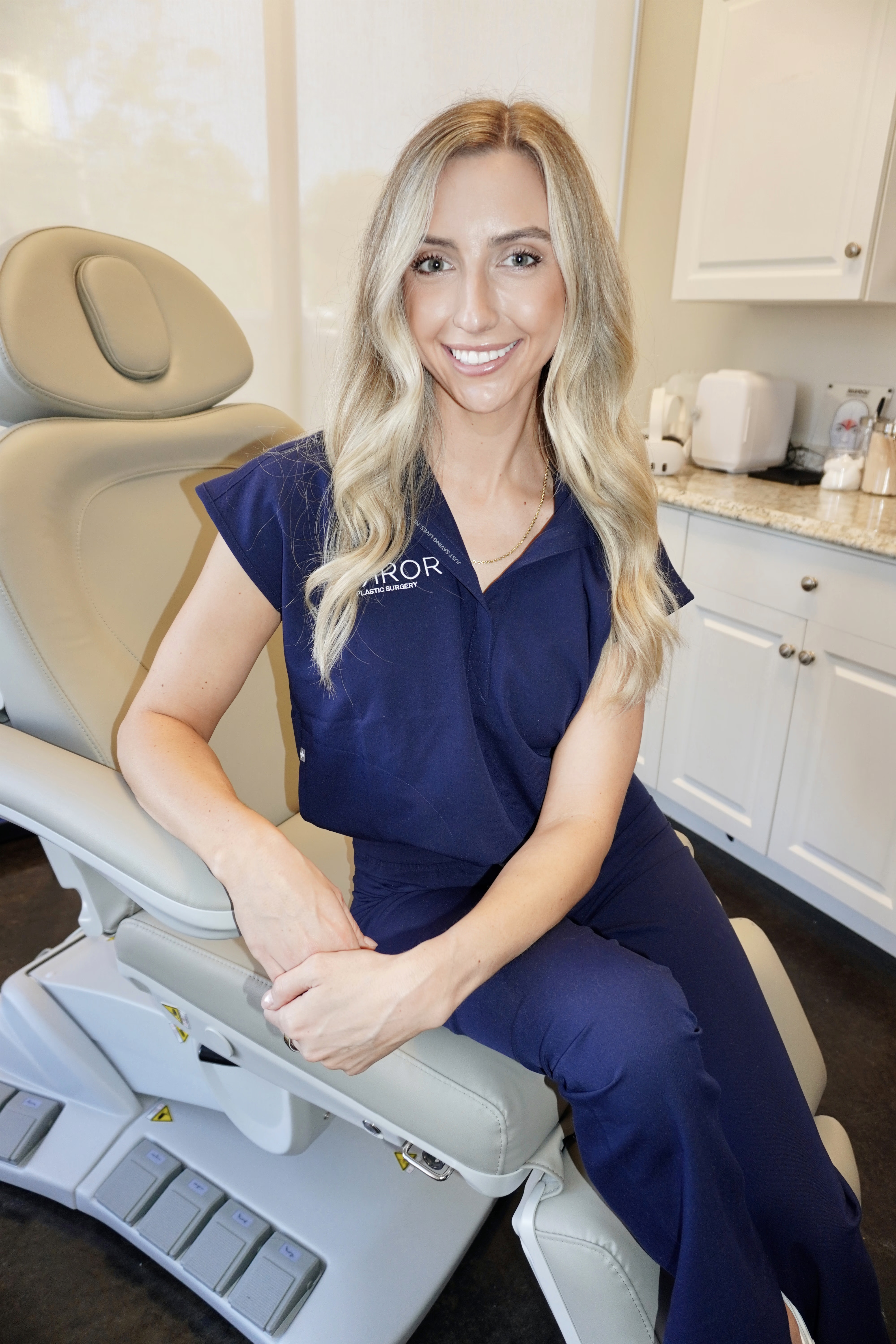
Ellie Pranckevicius, FNP-BC, serves as the lead practitioner for peptide therapies and non-surgical aesthetics at Mirror Plastic Surgery. She holds a Bachelor’s in Health Science from Boston University, completed an aesthetics licensure program, and earned both her Bachelor’s and Master’s in Nursing from the University of South Florida. Her clinical foundation includes four years in the Neuroscience ICU at Tampa General Hospital, where she developed deep expertise in physiology, metabolic health, and complex patient management. Ellie’s combination of esthetician training and advanced nursing credentials allows her to address both the aesthetic goals clients want and the clinical science required to reach them safely. Every peptide protocol she designs rests on comprehensive lab analysis, clear education, and ongoing concierge support.
Frequently Asked Questions
Are the peptides offered at Mirror Plastic Surgery FDA-approved for lowering cholesterol?
Most compounded peptides, including BPC-157, GHK-CU, TB500, and GLP-3R formulations, are not FDA-regulated as lipid-lowering therapies. Providers use them under medical supervision as adjuncts to lifestyle optimization, not as replacements for guideline-directed care. The primary risk associated with peptides often comes from obtaining them from unverified sources without quality testing or medical oversight. Mirror Plastic Surgery sources exclusively from suppliers with documented batch testing and provides comprehensive lab-guided supervision before, during, and after every protocol.
What happens to my lipid numbers if I stop the peptide protocol?
Benefits from peptide protocols usually persist only while you continue the regimen, similar to most health interventions. If a GLP-class peptide has been supporting weight management and downstream lipid improvement, stopping it without maintaining the underlying lifestyle changes will likely allow triglycerides and LDL to drift back toward baseline. Ellie designs maintenance protocols with this in mind, and the goal always involves building durable lifestyle habits alongside any peptide support so that your foundation remains even if the protocol is eventually tapered.
Will everyone see the same lipid improvements from peptides?
No. Results vary based on genetics, baseline lipid levels, diet, exercise habits, body composition, and the specific peptide protocol used. Factors such as APOE genotype, familial hypercholesterolemia, and insulin resistance all influence how much any intervention, lifestyle or peptide, moves the numbers. Mirror Plastic Surgery addresses this variability through comprehensive lab review and medical history evaluation before recommending any protocol. A personalized stack based on your physiology consistently outperforms a generic one-size-fits-all approach.
How does Ellie personalize a peptide protocol for lipid health specifically?
The process starts with a 30-to-60-minute consultation that reviews your full medical history, current medications, and health goals. If recent labs are not available, Ellie orders a comprehensive panel covering lipids, ApoB, Lp(a), thyroid, liver and kidney function, HbA1c, and inflammatory markers. She then designs a custom peptide stack and sets clear follow-up lab checkpoints at 4 and 12 weeks to measure response. Clients have direct access to Ellie via text for ongoing questions, dose adjustments, and refill support throughout the protocol.
Can peptides replace statin therapy or other prescribed lipid-lowering medications?
No. Peptide protocols at Mirror Plastic Surgery function as adjuncts to lifestyle optimization and do not replace guideline-directed pharmacotherapy. The 2026 ACC/AHA Guideline on the Management of Dyslipidemia states that statin therapy remains the foundation of lipid-lowering pharmacotherapy for high-risk patients, with non-statin agents added when targets are not met. Clients who already take prescribed lipid medications should continue those under their cardiologist’s or primary care provider’s guidance. Ellie coordinates with existing care teams and will not recommend discontinuing any prescribed medication.
Conclusion
Structured diet, exercise, and weight-loss interventions can produce meaningful lipid improvements within 8 to 12 weeks. Genetic ceilings, metabolic individuality, and cumulative cardiovascular risk mean that lifestyle alone still falls short for many adults.
The 2026 ACC/AHA guideline and multiple international consensus bodies now endorse earlier adjunctive intervention when lifestyle work plateaus. Medically supervised peptide protocols, built on comprehensive lab analysis and ongoing monitoring, offer a logical next step for adults who have done the work and still need more support.
Individualized decision-making with a qualified provider now represents the standard of care. Every number on your lipid panel tells a different story based on your genetics, risk profile, and history, and the right protocol reflects that full context.
Start your personalized, lab-guided lipid improvement plan today.
1 Results may vary from person to person. Editorial content, before and after images, and patient testimonials do not constitute a guarantee of specific results.
Peptide therapy is intended for wellness and optimization purposes and is not prescribed to diagnose, treat, cure, or prevent disease unless specifically stated. Many peptides are not FDA-approved and may be used off-label. Some have limited long-term safety data, with a potential for unknown risks, complications, or desensitization with prolonged use.