
Written by: Ellie Pranckevicius, FNP-BC, Aesthetic Nurse Practitioner & Aesthetic Injector | Facial Restoration & Regenerative Injectable Specialist, Mirror Plastic Surgery | Last updated: July 13, 2026
Key Takeaways for Peptide Therapy at Mirror Plastic Surgery
- Medically supervised peptide therapy at Mirror Plastic Surgery uses short-chain amino acids selected through lab results and health history to support goals such as inflammation control and tissue repair.
- Clinician-led care in a regulated wellness clinic provides safety, efficacy, and accountability that unregulated online peptide sources cannot match.
- Protocols begin with a 30–60 minute consultation, comprehensive labs, and custom peptide stacks designed for individual needs such as weight management or post-surgical recovery.
- Evidence-based sourcing with documented batch testing and Certificates of Analysis ensures quality and regulatory transparency for every peptide offered.
- Schedule your personalized peptide evaluation today at Mirror Plastic Surgery to start a lab-driven, concierge protocol tailored to your health goals.
Ellie Pranckevicius: Critical-Care Expertise Behind Your Peptide Plan
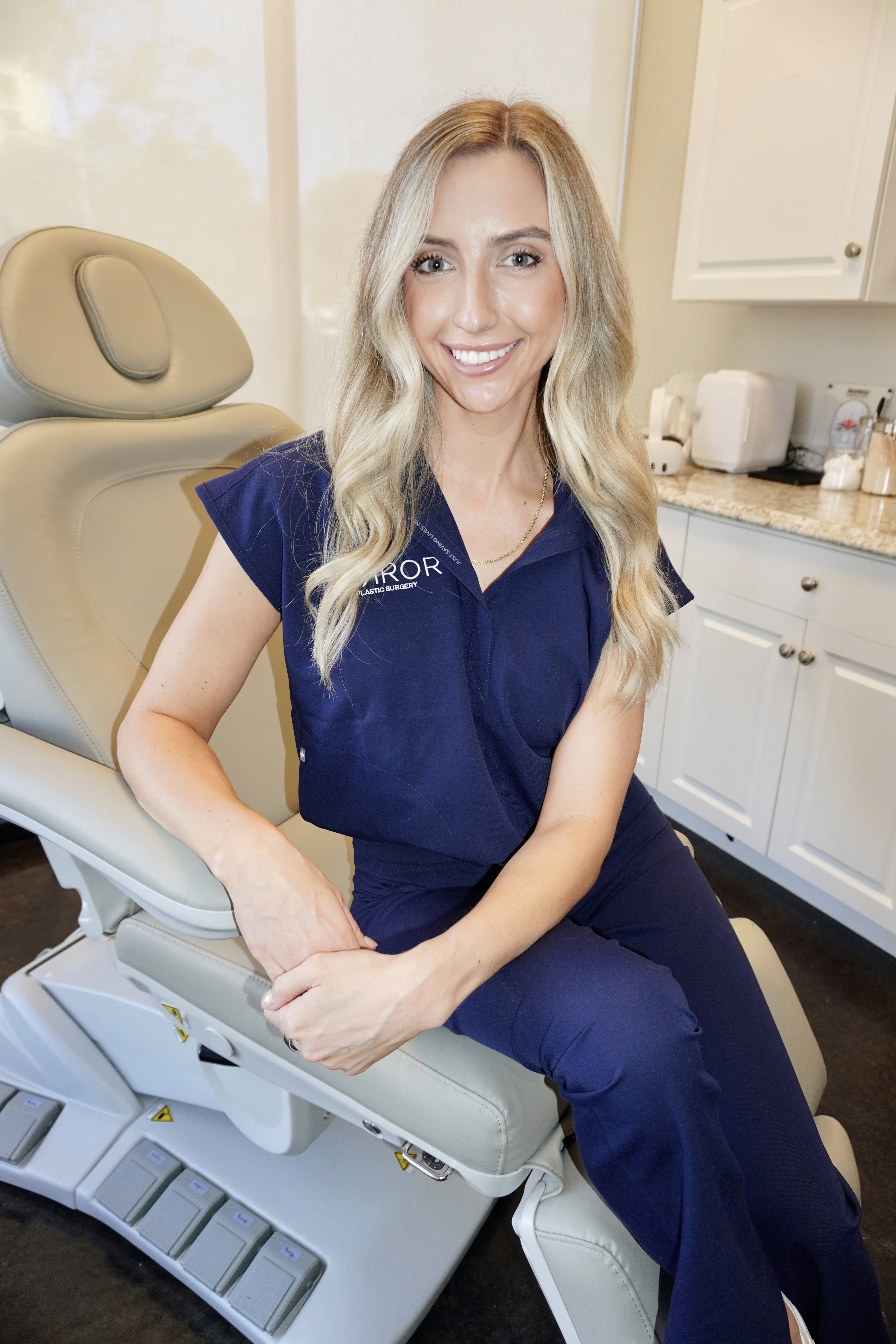
Ellie Pranckevicius, FNP-BC, leads all peptide therapy and non-surgical aesthetics at Mirror Plastic Surgery. Her clinical foundation includes four years in the Neuroscience ICU at Tampa General Hospital, where she managed complex patients requiring advanced physiological and metabolic assessment. She holds a Bachelor’s in Health Science from Boston University, completed an aesthetics licensure program, and earned both her Bachelor’s and Master’s in Nursing from the University of South Florida.
This combination of critical-care nursing, esthetician training, and advanced practice credentials allows Ellie to evaluate peptide candidates with the same rigor applied to high-acuity hospital patients. Her approach prioritizes education. She explains the physiology behind every recommendation in accessible terms. She also advises clients when a treatment is not yet necessary, placing long-term outcomes above short-term revenue.
Core Peptide Concepts and Regulatory Language Explained
Peptides are short chains of amino acids, the structural units of proteins. They function as signaling molecules that instruct cells to perform specific biological tasks such as collagen synthesis, inflammation modulation, or hormone secretion. A single-agent protocol uses one peptide targeting a defined pathway. A therapeutic stack combines two or more peptides with complementary mechanisms. Combination peptide protocols can support improved healing and tissue regeneration compared to single-peptide therapy.1
Regulatory classification affects how peptides can be prescribed and monitored. The FDA regulates peptides as drugs or biologics. Approved peptides undergo testing for safety and efficacy, while unapproved peptides remain investigational. FDA-approved examples include insulin and GLP-1 receptor agonists such as semaglutide and tirzepatide. Many peptides used in wellness settings, including BPC-157, TB-500, GHK-Cu, and KPV, are not FDA-approved for general clinical use and are currently classified as compounded or research-grade compounds. A May 2026 Hone survey of 2,491 U.S. adults found that half of people taking research-grade peptides mistakenly believe the compounds they are using are FDA-approved, which highlights the need for clinician-led education before starting any protocol.
Step-by-Step: How Peptide Therapy Works at Mirror
At Mirror Plastic Surgery, the peptide therapy process starts with a 30–60 minute consultation with Ellie that covers full medical history, current medications, and specific health goals. For weight management, inflammatory conditions, or hormonal concerns, lab panels such as thyroid, liver, kidney, diabetes markers, and hormone profiles are reviewed or ordered if not already available. Custom peptide stacks and administration protocols are then designed around those individual findings.
Patients receive detailed reconstitution and self-administration instructions, often supported by video demonstrations. Ellie remains available via direct text message for ongoing questions, refill requests, and protocol adjustments. Therapeutic peptide treatment cycles generally span four to eight weeks, with improvements often beginning within one to two weeks, maximal effects at four to six weeks, and full tissue remodeling continuing over three to six months.1 The entire process, from consultation through prescription and shipping, is available in person at the St. Petersburg office or remotely across Florida and the rest of the United States.
Evidence-Based Peptides and How Mirror Selects Them
Mirror Plastic Surgery sources all peptides from reputable providers with documented batch testing that covers identity verification, potency, sterility, endotoxin levels, and purity. A legitimate Certificate of Analysis must include identity confirmation by mass spectrometry, purity by HPLC at 98% or higher, endotoxin testing via LAL assay, and sterility testing per USP General Chapter 71. The table below compares the primary peptides most commonly prescribed at Mirror Plastic Surgery, showing how their evidence base, regulatory status, and clinical applications differ so you can see which agents have stronger human data and which remain earlier in the research pipeline.
| Peptide | Primary Applications | Evidence Status | Sourcing Note |
|---|---|---|---|
| GHK-Cu | Collagen and elastin synthesis, extracellular matrix remodeling, inflammatory marker reduction up to 60%1, wound healing, hair and nail health, melasma | Stronger human skin biology and wound-healing data than BPC-157 or TB-500, influences over 4,000 human genes | Sourced from batch-tested providers, not FDA-approved for systemic use |
| BPC-157 | Systemic inflammation, muscle, tendon, ligament, and joint repair, GI protection | 35 animal studies and one human chart review as of a 2025 systematic review, no completed controlled human efficacy trials, under FDA advisory committee review July 2026 | Currently classified Category 2 by FDA, compounding status under active review, batch-tested sourcing required |
| TB-500 | Soft tissue inflammation, wound repair, chronic tendinopathies, post-surgical recovery | No completed Phase I safety trial results have been reported for the TB-500 7-amino-acid fragment, primarily preclinical data | Under FDA advisory review July 2026, batch-tested sourcing required |
| GLP-3R Compounding | Weight management, insulin resistance, cardiovascular risk factors | Next-generation GLP-class compound, FDA-approved GLP-1 agents show average body weight reductions of 13.7% (semaglutide) to 20.2% (tirzepatide) in a head-to-head trial1, GLP-3R-specific human data emerging | Compounded formulation, sourced from licensed providers with batch testing |
| NAD+ | Mitochondrial energy production, cellular anti-aging | Mechanistic support from mitochondrial biology research, human longevity trial data limited | Sourced from batch-tested providers |
| KPV | Gut microbiome inflammation, inflammatory bowel disease risk reduction | Strong anti-inflammatory effects in gut cell and animal studies, no published human clinical trials, under FDA advisory review July 2026 | Batch-tested sourcing required, compounding status under review |
| Sermorelin / Ipamorelin | Natural growth hormone stimulation, muscle retention, fitness support | Sermorelin included on FDA 503A Bulks List (Category 1), permitting compounding under physician supervision | Sermorelin available through licensed compounding pharmacies with prescription |
| Kisspeptin | Fertility support, promising data in IVF outcomes | Clinical trial data in reproductive medicine contexts, not FDA-approved for fertility indication | Sourced from batch-tested providers under clinician oversight |
| PT-141 (Bremelanotide) | Sexual arousal, libido enhancement | FDA-approved as Vyleesi for hypoactive sexual desire disorder in premenopausal women, off-label use for other indications | Available through licensed compounding or FDA-approved formulation |
| Selank | Anxiety and depression support, nootropic, acts on similar pathways as benzodiazepines without dependency | Preclinical and limited clinical data, not FDA-approved in the United States | Sourced from batch-tested providers under clinician oversight |
Post-Surgical Peptide Support with Dr. Chandawarkar’s Team
Peptide therapy integrates directly with the surgical care offered by Mirror Plastic Surgery’s founder, Dr. Akash Chandawarkar, a Harvard-educated, Johns Hopkins-trained plastic surgeon with fellowship training at Manhattan Eye Ear & Throat Hospital. Post-surgical peptide recovery protocols in Tampa and St. Petersburg focus on reducing acute inflammation, minimizing scar tissue formation, and accelerating tissue remodeling during the critical healing window following procedures.
GHK-Cu accelerates wound healing across surgical wounds, chronic ulcers, and traumatic injuries, as noted in the peptide comparison above, while TB-500 supports organized collagen deposition and reduces myofibroblast activity to help limit scar tissue formation.1 These mechanisms complement surgical outcomes by supporting the body’s own repair processes rather than overriding them. Ellie coordinates post-surgical peptide protocols directly with the surgical team so timing, dosing, and monitoring align with each patient’s recovery trajectory.
Key Safety Factors for Individual Peptide Candidacy
Several factors determine whether peptide therapy is appropriate and how it should be structured for a given individual.
- Safety and screening: Peptide therapy is not appropriate for people who are pregnant or breastfeeding, those with certain cancers or cancer history, or individuals with specific cardiac, endocrine, or autoimmune conditions. Baseline labs identify contraindications before any protocol begins.
- Sourcing quality: A January 2026 quality analysis found that approximately 3 in 10 research-grade peptide products fail basic quality checks due to mislabeling, substandard purity, or incorrect dosing. Mirror sources exclusively from providers with documented batch testing and Certificates of Analysis.
- Supervision requirements: Peptide therapy safety depends on four interconnected safeguards. First, the specific peptide must match your condition and health history. Second, a prescribing physician screens for contraindications that could make a peptide unsafe for you. Third, sourcing from a licensed U.S. 503A or 503B pharmacy confirms that the compound matches its label and purity claims. Finally, baseline labs and ongoing dose management allow Ellie to track your response and adjust the protocol as your biomarkers change.
- Expected timelines: Initial responses may appear within one to two weeks. Maximal effects typically occur at four to six weeks, with full tissue remodeling continuing over three to six months.1
- Maintenance: Many conditions require ongoing maintenance protocols after initial treatment cycles. Periodic treatment breaks help prevent receptor adaptation.
- Outcome variability: Genetics, diet, lifestyle, and the specific protocol all influence individual results. A personalized lab-driven approach reduces variability but cannot remove it entirely.
Risks, Limitations, and Online Sourcing Concerns
Peptide therapy carries real risks that require transparent discussion before starting any protocol. Risks include injection site irritation, headaches, nausea, fatigue, hormonal imbalances, water retention, changes in blood sugar levels, contamination from unregulated products, organ strain, infections, and unknown long-term effects. Growth hormone secretagogues such as Sermorelin and Ipamorelin can cause water retention, joint discomfort, carpal tunnel symptoms, and increased insulin resistance, which makes lab monitoring of IGF-1 and metabolic markers necessary.
The dangers of unregulated online sources differ from and often exceed the risks of supervised clinical use. Gray market vials labeled “research use only” may be mislabeled, contaminated, under-dosed, or contain entirely different compounds, bypassing every safeguard a prescription product passes through. As Anthony C. Tam, MD, of Henry Ford Health states, “It’s important to know exactly where your peptides come from and how they’re manufactured.” For competitive athletes, BPC-157 is prohibited at all times under WADA’s S0 classification while TB-500 is prohibited at all times under WADA’s S2 classification, which makes their use sanctionable regardless of therapeutic intent.
Common Misconceptions About Peptides in Tampa Bay
Several persistent misconceptions shape how Tampa Bay residents approach peptide therapy.
- Peptides are only for weight loss. GLP-1 medications dominate media coverage, but the peptide landscape also includes inflammation management, post-surgical recovery, neurological support via nootropic peptides like Selank, sexual wellness, fertility, and cellular anti-aging through NAD+ and GHK-Cu. Weight management represents one application among many.
- Results are permanent without maintenance. Peptide effects diminish when protocols are discontinued, similar to any health regimen. Inflammation that was managed by a peptide protocol will return to its prior state without ongoing maintenance. Ellie builds maintenance planning into every protocol from the outset.
- All peptide sources are equivalent. As the Hone survey revealed, many patients conflate “research grade” labels with FDA approval. The critical distinction for peptide safety is not “research grade” versus “medical grade” labels, which reflect only regulatory classification, but whether the peptide is prescribed by a licensed clinician, sourced from a regulated pharmacy, and monitored as part of a care plan. Online retailers operating in the gray market are not equivalent to clinician-supervised, batch-tested sourcing.
- More peptides produce better results. Stacking without clinical rationale introduces interaction risks and complicates attribution of outcomes. Ellie designs stacks based on lab findings and specific goals, not trend-driven combinations.
Frequently Asked Questions About Peptide Care at Mirror
Are the peptides offered at Mirror Plastic Surgery FDA-approved?
Some peptides offered at Mirror Plastic Surgery are FDA-approved and others are not. FDA-approved peptides such as PT-141 (Bremelanotide) and GLP-1 receptor agonists have cleared clinical trials and carry established safety profiles. Others, including GHK-Cu, BPC-157, TB-500, KPV, and Selank, are not FDA-approved for general clinical use and are classified as compounded or research-grade compounds. Sermorelin holds Category 1 status on the FDA’s 503A Bulks List, which permits compounding under physician supervision. Mirror Plastic Surgery provides full transparency on the regulatory status of every peptide before starting any protocol, and Ellie reviews this information with each patient during consultation.
What are the risks of using peptides without medical supervision?
Unsupervised use of peptides purchased online carries risks that differ categorically from supervised clinical use. Without baseline labs, there is no way to identify contraindications such as elevated IGF-1, liver dysfunction, or active autoimmune flares that certain peptides could worsen. Without batch-tested sourcing, there is no assurance of what is actually in the vial, and products may be mislabeled, contaminated, under-dosed, or contain entirely different compounds. Without a prescribing clinician, there is no protocol adjustment if side effects emerge or if the initial response is inadequate. Mirror Plastic Surgery’s concierge model addresses all three gaps, as Ellie reviews labs, sources from verified providers, and remains directly accessible via text throughout the treatment period.
How long does it take to see results, and will they last?
Initial responses generally follow the timeline outlined earlier, with first improvements often appearing within one to two weeks and peak effects around four to six weeks. Structural applications such as tendon or wound repair may require the full three to six month remodeling window. Results do not last indefinitely. When a peptide protocol is discontinued, the physiological support it provided fades over time.1 Ellie builds maintenance planning into every protocol from the initial consultation, including guidance on treatment cycles, periodic breaks to prevent receptor adaptation, and criteria for reassessment.
Will peptide therapy work the same way for everyone?
Peptide therapy does not work identically for every person. Outcomes vary based on genetics, baseline health status, diet, lifestyle, the specific peptide or stack used, and adherence to the protocol. A strong response in one individual may translate to a modest or negligible response in another.1 This variability explains why Mirror Plastic Surgery’s approach begins with comprehensive lab analysis rather than a standardized protocol. Ellie uses each patient’s individual biomarkers to design a protocol aligned with their specific physiology and goals, and she adjusts that protocol based on how the patient responds over time.
Can peptide therapy complement a surgical procedure I am planning at Mirror Plastic Surgery?
Peptide therapy can complement planned or recent surgical procedures at Mirror Plastic Surgery, and this coordination represents a distinctive advantage of receiving both surgical and non-surgical care within the same practice. Post-surgical peptide protocols can be timed to the procedure and coordinated directly between Ellie and Dr. Akash Chandawarkar’s surgical team. Peptides such as GHK-Cu and TB-500 support the body’s natural healing processes by reducing inflammation, promoting organized collagen deposition, and minimizing scar tissue formation during the post-operative window. Ellie evaluates each patient’s surgical plan, recovery timeline, and health history to determine whether a peptide protocol is appropriate and, if so, which agents and timing are most suitable.
Medically supervised peptide therapy in Tampa and St. Petersburg functions as a clinician-directed, lab-personalized, and source-verified model of care that requires the same rigor applied to any pharmaceutical treatment. Mirror Plastic Surgery’s concierge approach, anchored by Ellie Pranckevicius’s critical-care background and commitment to transparent, education-first patient relationships, provides Tampa Bay adults with a standard of peptide care that online retailers and high-volume clinics cannot replicate. Patients across Florida, including those accessing care remotely, can start from the same point: an honest, individualized conversation about what the evidence supports and what their labs reveal.
1 Results may vary from person to person. Editorial content, before and after images, and patient testimonials do not constitute a guarantee of specific results.
Peptide therapy is intended for wellness and optimization purposes and is not prescribed to diagnose, treat, cure, or prevent disease unless specifically stated. Many peptides are not FDA-approved and may be used off-label. Some have limited long-term safety data, with a potential for unknown risks, complications, or desensitization with prolonged use.