

Written by: Ellie Pranckevicius, FNP-BC, Aesthetic Nurse Practitioner & Aesthetic Injector | Facial Restoration & Regenerative Injectable Specialist, Mirror Plastic Surgery | Last updated: July 16, 2026
Key Takeaways
- Evidence-based peptide therapy requires licensed oversight, baseline labs, FDA-registered compounding pharmacies, and structured follow-up monitoring for safety and results.
- Comprehensive baseline testing, including CMP, CBC, lipid panel, thyroid markers, and hsCRP, plus protocol-specific labs like IGF-1 or lipase, is essential before starting any peptide regimen.
- Personalization at Mirror Plastic Surgery follows a clear clinical workflow: consultation, lab review, custom dosing, verified sourcing, and ongoing concierge follow-up.
- Common peptides such as BPC-157, NAD+, GLP-3R, and PT-141 each target specific health goals, and human evidence and regulatory status must be reviewed with a qualified provider.
- Patients seeking supervised peptide therapy in Tampa Bay can schedule a consultation with Ellie Pranckevicius, FNP-BC at Mirror Plastic Surgery to begin a personalized, evidence-based evaluation.
Evidence-Based Peptide Therapy in Tampa: Lab Panels That Signal a Safe Clinic
Baseline labs form the foundation of any safe peptide protocol. A provider who skips this step is not prioritizing patient safety. A universal baseline panel for any peptide protocol includes a comprehensive metabolic panel (CMP), complete blood count (CBC), lipid panel, fasting glucose and insulin to calculate HOMA-IR, HbA1c, thyroid panel (TSH, Free T3, Free T4), and high-sensitivity CRP. Additional markers are ordered based on the peptide class under consideration.
Protocol-specific additions to the baseline panel include the following:
- Growth hormone secretagogues (Sermorelin, Ipamorelin): IGF-1 (age-adjusted target approximately 116–231 ng/mL at baseline). Sustained IGF-1 above 250–280 ng/mL is considered supraphysiological and associated with risks including accelerated tumor growth and insulin resistance.
- GLP-1 and GLP-3R agonists: Lipase and amylase to screen for pancreatitis risk, plus body composition measurements.
- Tissue repair peptides (BPC-157, TB-500): High-sensitivity CRP and ESR as inflammatory baselines.
- Sexual health peptides (PT-141): Full testosterone panel (total testosterone, free testosterone, SHBG, estradiol, LH, FSH) every 3–6 months, with blood pressure checked at each visit.
- GHK-Cu (injectable): Baseline and annual serum copper and ceruloplasmin monitoring; Wilson’s disease is an absolute contraindication.
Monitoring follows a structured timeline that keeps therapy grounded in data. Protocol-specific markers are evaluated at 4–8 weeks after initiation, a full panel is repeated at 6 months, and comprehensive labs continue every 6–12 months thereafter. For GH-axis peptides, IGF-1 is tracked at baseline, 6–8 weeks, and every 3–6 months, and dosing is reduced if levels remain above the age-adjusted upper limit.
Schedule a lab review consultation with Ellie to determine which baseline panel your goals require.
Supervised Peptide Clinic in Tampa Bay: How Mirror Personalizes Protocols
Once baseline labs define your metabolic and hormonal profile, that data guides a personalized protocol. Personalization in a supervised peptide program is a clinical workflow, not a marketing slogan. At Mirror Plastic Surgery, the process follows a defined sequence that separates it from high-volume or unsupervised alternatives.
The clinical workflow consists of the following steps:
- Comprehensive consultation (30–60 minutes): Ellie reviews full medical history, current medications, contraindications, and health goals before any protocol is discussed. This intake shapes which labs are clinically necessary.
- Lab review or ordering: Based on the consultation, existing lab results are reviewed. If results are unavailable or incomplete, the appropriate baseline panel is ordered before prescribing begins so decisions rest on objective data.
- Custom stack creation: Once labs confirm metabolic and hormonal baselines, peptide combinations and dosing are selected based on individual lab findings, health history, and specific goals, rather than a one-size-fits-all template.
- Sourcing from batch-tested suppliers: Peptides are sourced from compounding pharmacies that provide certificates of analysis documenting identity, purity, and potency. A legitimate COA includes lot number traceability, purity ≥98% confirmed via HPLC, identity confirmation via mass spectrometry, a heavy metals panel per USP <232>, and endotoxin testing per USP <85>.
- Administration instructions: Patients receive detailed reconstitution and self-injection guidance, often supported by video demonstrations for clarity at home.
- Ongoing concierge follow-up: Ellie remains available via text or scheduled telemedicine for questions, dose adjustments, and refill requests throughout the protocol.
A responsible peptide therapy plan includes a structured intake, baseline labs, a defined goal with a specific timeframe, lifestyle support matched to the peptide, regular follow-up for dose adjustments, and an explicit exit or maintenance strategy. Mirror Plastic Surgery’s concierge model, which limits the practice to focused, individualized care, is designed to meet each of these criteria.
BPC-157, NAD+, GLP-3R, and Other Peptides Available at Mirror
Mirror Plastic Surgery offers a curated set of peptides, each with a specific physiologic target and evidence profile. Responsible providers explain both potential benefits and current evidence limits before starting therapy.
- BPC-157 (Body Protective Compound 157): Targets systemic inflammation and supports muscle, tendon, ligament, and joint repair.1 A 2025 systematic review identified only one human clinical study, a retrospective case series of 12 patients with chronic knee pain, alongside 35 preclinical animal studies. Human evidence remains limited, so medical supervision and clear informed consent are essential. Regulatory status is evolving; see the FAQ section for current compounding details.
- TB-500 (Thymosin Beta-4): Targets soft tissue inflammation and wound repair. No established clinical monitoring standard exists due to limited human trial data. Providers typically monitor CMP every 3 months and hsCRP every 3–6 months.
- GHK-Cu (Copper Peptide): Primarily targets collagen and elastin production, skin health, hair and nail rejuvenation, and melasma. Topical GHK-Cu was moved to the FDA’s Category 1 list in a May 2026 update, allowing licensed compounding pharmacies to prepare it, while injectable GHK-Cu remains off-limits.
- GLP-3R Compounding: A newer-generation incretin-based peptide similar in mechanism to GLP-1 agonists. It targets insulin resistance, weight management, and cardiovascular risk factors, with reported reductions in gastrointestinal side effects compared to earlier GLP-1 formulations.1
- NAD+ (Nicotinamide Adenine Dinucleotide): Targets mitochondrial energy production and cellular anti-aging pathways.1 NAD+ remains in Category 1 and is legally compoundable when sourced from licensed pharmacies under a valid prescription.
- KPV: Targets gut microbiome inflammation, with potential applications in inflammatory bowel conditions. KPV is scheduled for FDA Pharmacy Compounding Advisory Committee review on July 23–24, 2026, for wound healing and inflammatory conditions.
- Sermorelin / Ipamorelin (GHRPs): Stimulate natural growth hormone production to support muscle retention and fitness goals. Sermorelin remains in Category 1, while ipamorelin received a negative PCAC vote in late 2024, and its compounding status remains under review.
- Selank: A nootropic peptide that targets anxiety and depression through GABAergic pathways, without the dependency profile associated with benzodiazepines.
- PT-141 (Bremelanotide): Targets sexual arousal and libido through melanocortin receptor pathways. PT-141 requires seated blood-pressure measurement at baseline and 2–4 hours after early doses due to documented transient blood pressure increases.
- Kisspeptin: A fertility peptide that shows promise in IVF trials for improving positive outcomes through hypothalamic-pituitary-gonadal axis modulation.
How to Choose Safe Peptide Therapy in Tampa: Supervised vs Online Sources
Understanding which peptides exist is only half of the decision. Patients also need to know how to access them safely. The table below compares supervised clinical peptide therapy with unsupervised sources across four key evaluation criteria, using data from regulatory and clinical references.
Risks, Limitations, and Misconceptions About Peptide Therapy
Regulatory status: Most peptides used in wellness settings are not FDA-approved drugs. Compounded medications, including peptides, are not evaluated or approved by the FDA for safety, efficacy, or quality. They are supplied through compounding pharmacies under a separate but regulated framework. The FDA’s Category 2 classification, which restricted substances including BPC-157 and TB-500 in 2023, is under active review. A September 2024 legal settlement required the FDA to submit Category 2 peptides for review by the Pharmacy Compounding Advisory Committee, and as of early 2026, regulatory discussions continue on potential reclassification.
Potential side effects: Reported side effects of newer injectable peptides include skin irritation at the injection site, fatigue, headaches, and gastrointestinal issues, while long-term or frequent dosing consequences remain largely unknown due to limited evidence. Screening for pre-existing conditions, including cancer history, pregnancy, autoimmune conditions, and kidney or liver dysfunction, is required before starting any protocol.
Product quality consequences: A 2024 analysis found that semaglutide content in tested samples exceeded labeled amounts by 28.56%–38.69%, highlighting significant quality control issues in compounded peptide products. Research-grade peptides sold online carry the highest risk because they frequently show problems with purity, identity, potency, sterility, endotoxins, or heavy metal contamination.
Common misconceptions corrected:
- “Peptides are only for weight loss.” Peptides can address systemic inflammation, autoimmune conditions, post-surgical recovery, collagen production, anxiety, energy, sexual wellness, and fertility.
- “Results are permanent after stopping.” Benefits usually fade when peptide therapy stops, similar to stopping any health regimen.1 Maintenance protocols are often needed to sustain outcomes.
- “All clinics follow the same standards.” Unregulated sources or low-quality providers may use research-grade peptides instead of pharmaceutical-grade products from licensed compounding pharmacies, lack medical oversight, and provide no baseline labs or ongoing monitoring.
Meet Ellie Pranckevicius: Your Peptide Protocol Partner
Ellie Pranckevicius, FNP-BC, leads peptide therapies and non-surgical aesthetics at Mirror Plastic Surgery. She holds a Bachelor’s in Health Science from Boston University on the premedical track, completed an aesthetics licensure program, and earned both her Bachelor’s and Master’s in Nursing from the University of South Florida. Before becoming a nurse practitioner, Ellie spent four years in the Neuroscience ICU at Tampa General Hospital, managing complex patients and gaining a deep understanding of physiology, metabolic health, and recovery capacity.
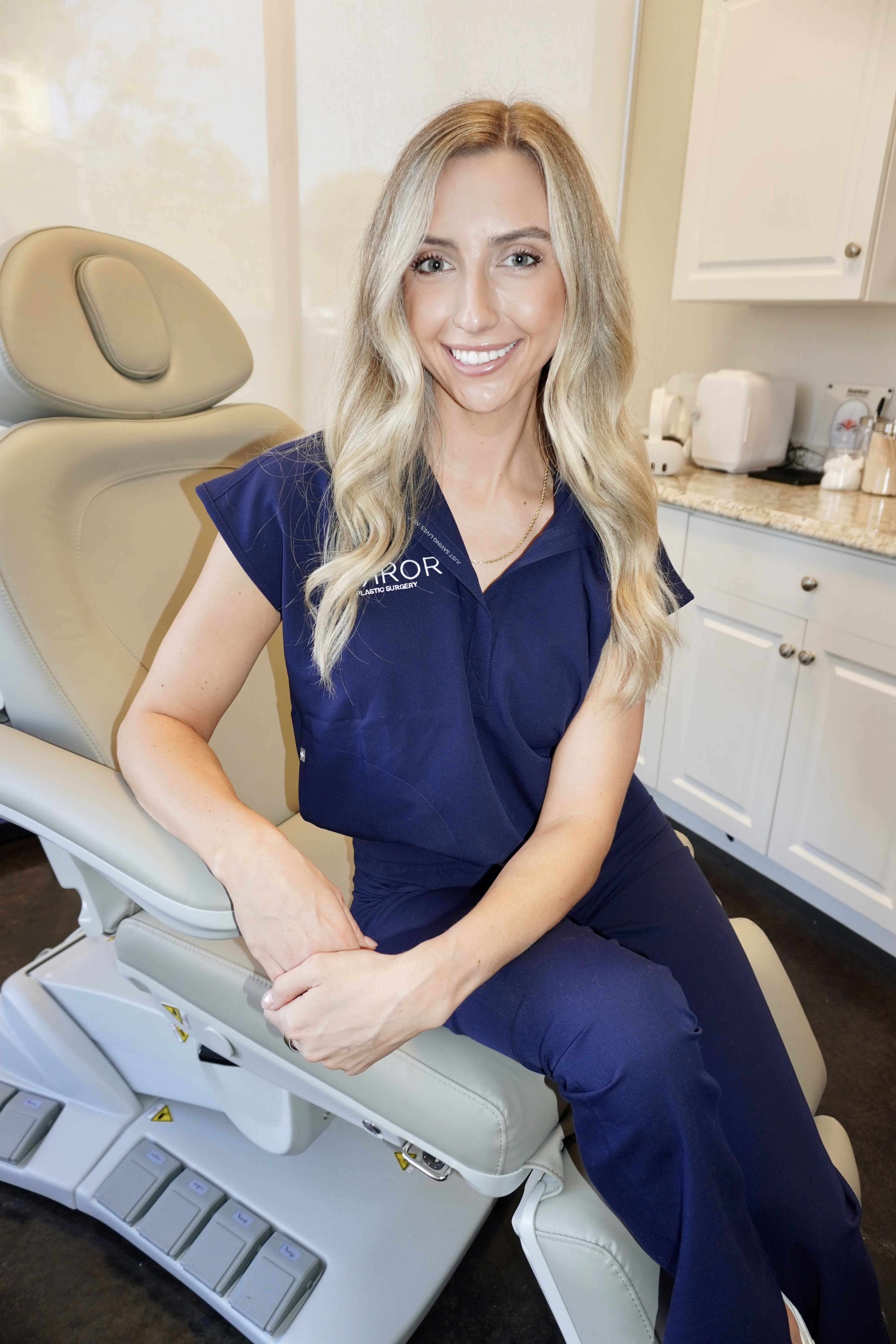
Ellie began her career at a high-end medical spa in Boston and developed expertise in skin physiology, aesthetic assessment, and client care. This dual background, combining esthetician training with advanced clinical nursing, shapes her approach to peptide therapy. She understands the aesthetic goals patients want and the clinical science required to reach them safely.
Her care model centers on education and transparency. Ellie explains the physiology behind each recommendation so patients understand what they are taking and why. She often advises patients to delay or skip services that are not yet necessary, prioritizing long-term outcomes over short-term revenue. When surgical intervention is appropriate, Ellie collaborates with Dr. Akash Chandawarkar, MD, a Harvard-educated physician and Johns Hopkins-trained plastic surgeon who founded Mirror Plastic Surgery.
Start your personalized peptide protocol under clinical supervision and book with Ellie today.
Frequently Asked Questions
What is the current regulatory status of peptides used in wellness settings?
Most peptides used in wellness and integrative medicine settings are not FDA-approved drugs for those indications. They are supplied through compounding pharmacies operating under Sections 503A or 503B of the Federal Food, Drug, and Cosmetic Act. In 2023, the FDA placed 19 peptides into Category 2 of its bulk substances list, citing limited human safety data, immunogenicity risks, and impurity concerns. In February 2026, HHS Secretary Robert F. Kennedy Jr. announced that approximately 14 of those peptides would be reclassified to Category 1, but as of July 2026, formal rulemaking has not been published in the Federal Register. The FDA Pharmacy Compounding Advisory Committee is scheduled to review seven peptides, including BPC-157 and KPV, at its July 23–24, 2026 meeting. Topical GHK-Cu was formally moved to Category 1 in May 2026. NAD+ and Sermorelin remain in Category 1 and are legally compoundable under a valid prescription. Patients should ask any provider to confirm the current compounding status of each peptide in their protocol and to provide documentation of the pharmacy’s FDA registration.
Which lab markers are monitored during peptide therapy?
Every peptide protocol begins with a universal baseline panel that covers metabolic function, blood counts, lipids, glucose regulation, thyroid health, and inflammation markers, as detailed in the lab testing section above. Protocol-specific additions include IGF-1 for growth hormone secretagogues such as Sermorelin and Ipamorelin, lipase, amylase, and body composition measurements for GLP-1 and GLP-3R agonists, hsCRP and ESR for tissue repair peptides such as BPC-157 and TB-500, and a full hormone panel (total testosterone, free testosterone, SHBG, estradiol, LH, FSH) for sexual health peptides such as PT-141. Follow-up labs are typically scheduled at 4–8 weeks after initiation, with a full panel repeated at 6 months and comprehensive monitoring continuing every 6–12 months. At Mirror Plastic Surgery, Ellie reviews or orders the appropriate panel before any protocol begins and adjusts dosing based on biomarker data at each follow-up.
How do newer-generation peptides such as GLP-3R differ from earlier options?
GLP-3R is a newer-generation incretin-based peptide that targets similar metabolic pathways as GLP-1 receptor agonists, including insulin resistance, weight management, and cardiovascular risk factors. It is formulated to reduce the gastrointestinal side effects commonly associated with earlier GLP-1 agents. Older GLP-1 formulations are associated with nausea, vomiting, and in some cases muscle wasting. Newer formulations like GLP-3R are reported to have a more favorable side-effect profile and broader indications. As with all compounded peptides, GLP-3R is not FDA-approved as a commercial drug for these indications and is supplied through compounding pharmacies under a valid prescription. Baseline labs including HbA1c, fasting glucose, fasting insulin, lipid panel, lipase, and amylase are required before initiating any GLP-class protocol, with ongoing monitoring at 3-month intervals during active treatment.
What happens if peptide therapy is stopped?
When peptide therapy is discontinued, the physiologic effects it was supporting usually diminish over time. If a peptide was modulating systemic inflammation, inflammatory markers tend to return toward their pre-treatment baseline once the peptide is no longer active. For growth hormone secretagogues, IGF-1 levels decline toward baseline after stopping.1 For GLP-class peptides, metabolic benefits, including weight management and insulin sensitivity improvements, are typically not maintained without continued use or a structured transition plan.1 This pattern reflects how signaling-based interventions work across medicine. Ellie builds explicit exit and maintenance strategies into every protocol at Mirror Plastic Surgery so patients know what to expect at each phase and can make informed decisions about long-term care.
Conclusion: Choosing a Qualified Peptide Clinic in Tampa Bay
Identifying a qualified integrative evidence-based wellness clinic for peptide therapy in Tampa Bay starts with clear, verifiable criteria. Patients should look for a licensed prescriber with publicly verifiable credentials, mandatory baseline laboratory testing before any protocol begins, sourcing from FDA-registered compounding pharmacies with batch-level certificates of analysis, and a structured follow-up schedule that adjusts dosing based on biomarker data. Key red flags for unregulated providers include absence of clinical supervision, no baseline labs, generic claims about anti-aging or fat burning without mechanistic detail, products sourced overseas without certificates of analysis, and prescribers who do not request medical history.
Mirror Plastic Surgery meets each of these standards through Ellie Pranckevicius’s concierge-level clinical workflow, the practice’s commitment to batch-tested sourcing, and the institutional foundation established by Dr. Akash Chandawarkar, MD, a Harvard-educated physician and Johns Hopkins-trained plastic surgeon who founded Mirror Plastic Surgery. The practice serves patients in St. Petersburg and Tampa Bay in person and remotely across the United States.
Disclaimer: Peptide therapies discussed in this article are not FDA-approved drugs for the wellness indications described. They are compounded under Sections 503A or 503B of the Federal Food, Drug, and Cosmetic Act and have not undergone the full New Drug Application process for safety and efficacy. Regulatory status is subject to change, and patients should confirm the current compounding eligibility of any specific peptide with their provider at the time of consultation. Individual results vary based on genetics, health history, lifestyle, and protocol adherence. Nothing in this article constitutes medical advice or a guarantee of outcomes.
1 Results may vary from person to person. Editorial content, before and after images, and patient testimonials do not constitute a guarantee of specific results.
Peptide therapy is intended for wellness and optimization purposes and is not prescribed to diagnose, treat, cure, or prevent disease unless specifically stated. Many peptides are not FDA-approved and may be used off-label. Some have limited long-term safety data, with a potential for unknown risks, complications, or desensitization with prolonged use.



