
Written by: Ellie Pranckevicius, FNP-BC, Aesthetic Nurse Practitioner & Aesthetic Injector | Facial Restoration & Regenerative Injectable Specialist, Mirror Plastic Surgery | Last updated: August 22, 2026
Key Takeaways for GLP-3R Muscle Preservation
- Three evidence-based interventions, including higher daily protein intake, consistent resistance training, and medically supervised adjunct peptides, can reduce lean-mass loss during GLP-3R treatment.1
- Phase 2 DXA substudies show that without intervention, roughly one-quarter of total weight lost on retatrutide comes from lean tissue, and structured protocols can substantially lower this fraction.1
- Protein targets should use ideal body weight, be spread across 3–4 meals daily, and include high-quality whey, casein, or plant-based powders when appetite suppression limits whole-food intake.
- Progressive resistance training performed 3–5 days per week, combined with DEXA monitoring every 3–4 months, offers a reliable strategy for preserving muscle while on GLP-3R therapy.
- Schedule your personalized GLP-3R protocol consultation to receive a muscle-preservation plan tailored to your body weight, training history, and lab results.
How GLP-3R Affects Muscle and Fat
Retatrutide (GLP-3R) produces substantial total-body weight loss, and lean mass is not fully spared. The Phase 2 DXA substudy published by Coskun et al. in The Lancet Diabetes & Endocrinology (2025) reported body composition changes at 36 weeks. At the 12 mg dose, most weight loss came from fat mass over 36 weeks.1
Android (visceral) fat reduction at the 12 mg dose reached -31.4% at 36 weeks, which was proportionally greater than total-body fat reduction.1 This pattern reflects a metabolically favorable shift.
Compared with other incretin therapies, retatrutide’s lean-mass loss fraction appears similar to alternatives. Semaglutide trials report lean mass comprising up to 35–40% of total weight lost in STEP-1.1 A February 2026 paper in Nature International Journal of Obesity using an MC4R knockout mouse model examined lean-mass fraction across semaglutide, tirzepatide, and retatrutide.
The practical implication is clear. GLP-3R does not selectively protect muscle, and without deliberate intervention the Phase 2 data translate to a practical reality: expect meaningful lean-mass loss unless you implement the interventions outlined below.1
Calculating Your Protein Target on Retatrutide
Protein intake is the most modifiable dietary variable for lean-mass retention during caloric restriction. The evidence-supported range is 1.6–2.2 g per kilogram of ideal body weight daily. Some monitoring frameworks recommend targeting 1.2–2.0 g/kg during active GLP-1R treatment, given the magnitude of caloric suppression these agents produce.
To make these numbers easy to use, the table below shows daily protein gram targets based on ideal body weight. Use ideal body weight, not current weight, when calculating targets during active weight loss.
| Ideal Body Weight | 1.6 g/kg (minimum) | 2.2 g/kg (upper target) |
|---|---|---|
| 60 kg (132 lb) | 96 g/day | 132 g/day |
| 70 kg (154 lb) | 112 g/day | 154 g/day |
| 80 kg (176 lb) | 128 g/day | 176 g/day |
| 90 kg (198 lb) | 144 g/day | 198 g/day |
| 100 kg (220 lb) | 160 g/day | 220 g/day |
GLP-3R suppresses appetite significantly, which makes reaching these targets through whole foods alone challenging. High-quality protein supplements, including whey isolate, casein, or plant-based blends, offer a practical way to close the gap. Distribute intake across three to four meals to keep muscle protein synthesis signaling active throughout the day.
Resistance-Training Template for GLP-3R Users
Resistance exercise plays a central role in preserving lean mass during incretin-based pharmacotherapy. Locatelli et al. (2024) discussed in Diabetes Care that structured resistance training improves body composition outcomes in this setting. The S-LITE trial (Lundgren et al., NEJM 2021) randomized 195 adults after a low-calorie diet and evaluated supervised exercise added to GLP-1 agonist treatment.
A Tinsley and Nadolsky (2025) case series reported that patients performing resistance training 3–5 days per week on GLP-1 agonists lost as little as 8.7% of total weight as lean tissue. Larger trials without structured exercise reported lean-mass loss in the 26–40% range.1
A practical three-day-per-week template for GLP-3R users includes the following sessions.
- Day 1: Lower body push. Squat pattern, leg press, Romanian deadlift. Perform 3 sets of 8–12 reps per exercise and rest 90 seconds between sets.
- Day 2: Upper body push and pull. Bench or dumbbell press, seated row, overhead press, lat pulldown. Perform 3 sets of 8–12 reps and rest 90 seconds.
- Day 3: Full-body compound. Deadlift or trap-bar deadlift, split squat, dumbbell row, farmer carry. Perform 3–4 sets of 6–10 reps and rest 2 minutes.
Progress by adding one repetition per set each week before increasing load. The University of Exeter FLEX trial (NCT07457437) uses progressive resistance sessions alongside tirzepatide and provides a benchmark for session duration and frequency in a supervised research context.
Adjunct Peptide Options Under Medical Supervision
Growth hormone secretagogues offer a mechanistically supported adjunct strategy for lean-mass preservation during GLP-3R treatment. Three compounds are most relevant in clinical practice.
Tesamorelin is a synthetic GHRH analog that amplifies endogenous GH pulsatility without replacing it, which preserves somatostatin-gated feedback. A recent meta-analysis found tesamorelin produced a lean body mass increase alongside visceral fat reduction. These trials were conducted in HIV-associated lipodystrophy, a model of GH-deficient, fat-redistributed body composition that closely parallels GLP-1-induced lean mass loss. This lean mass gain occurred without structured resistance training protocols.
CJC-1295/Ipamorelin combines a GHRH analog and a GHRP to amplify GH pulse amplitude and frequency through complementary receptor pathways. Direct human RCT data for CJC-1295/ipamorelin in GLP-1 co-administration do not yet exist, and body-composition inferences are extrapolated from individual compound mechanisms and tesamorelin RCT data. Evidence level remains mechanistically supported rather than RCT-validated for this specific combination.
Sermorelin is an earlier-generation GHRH fragment with a shorter half-life. It stimulates natural GH release and is available through compounding pharmacies. Evidence for lean-mass preservation comes from GH-axis physiology rather than direct GLP-3R co-administration trials.
No published human trial has tested any GH secretagogue in direct combination with retatrutide for lean-mass preservation. Medical supervision is required to assess candidacy, monitor IGF-1 levels, and adjust dosing appropriately.
Discuss adjunct peptide candidacy in your consultation to review your lab panel and determine whether GH secretagogues are appropriate for your protocol.
Lab Monitoring Schedule for Retatrutide Users
Retatrutide body-composition monitoring should rely on DEXA scans rather than scale weight alone, with a baseline scan and repeat scans every 3–4 months during active treatment. A portion of total weight lost on GLP-1 agonists can be lean mass, and standard bloodwork does not directly measure muscle catabolism.
Indirect laboratory signals of muscle loss or inadequate protein intake include declining albumin and total protein, which reflect overall protein status but do not distinguish muscle breakdown from other causes. Falling creatinine over time in muscular individuals without improved kidney function can suggest muscle loss, although this marker also lacks specificity. When available, 24-hour urine nitrogen provides a more direct measure by confirming whether the body is in a net catabolic state.
Recommended monitoring schedule:
- Baseline: DEXA scan, albumin, total protein, creatinine, BMP, thyroid panel, fasting insulin, HbA1c, lipid panel, hormone panel (testosterone, estradiol, DHEA-S).
- 12–16 weeks: Repeat DEXA, albumin, creatinine, total protein, fasting glucose, HbA1c.
- 24 weeks: Full repeat of baseline panel plus IGF-1 if adjunct secretagogues are in use.
Age-Specific Risks for Patients 35–55
Adults aged 35–55 face compounding lean-mass risks during GLP-3R treatment. Skeletal muscle mass declines at approximately 1% per year after age 30 under baseline conditions, a process called sarcopenia. Rapid pharmacologically induced weight loss accelerates this trajectory if protein and resistance training targets are not met.
For women approaching or within the menopause transition, estrogen decline reduces anabolic signaling in skeletal muscle and increases the proportion of weight lost as lean tissue during caloric restriction. The FLEX trial stratifies participants into pre- and peri-menopausal subgroups to explore whether the menopause transition modifies the effect of resistance exercise on lean mass during tirzepatide-induced weight loss. This design reflects the need for tailored protocols in this population.
For men in this age range, declining testosterone reduces muscle protein synthesis efficiency. Baseline hormone panels are particularly important before initiating GLP-3R treatment, because low testosterone will blunt the lean-mass response to both protein and resistance training.
Muscle Preservation Protocol Summary Table
The table below consolidates the core elements of a muscle-preservation plan into a single reference. Use it to confirm that you are meeting each target and to understand the strength of evidence supporting each recommendation.
| Domain | Target | Evidence Level | Key Reference |
|---|---|---|---|
| Daily protein intake | 1.6–2.2 g/kg ideal body weight | Consensus guideline | VitalMetrics / STEP-1 context |
| Resistance training frequency | 3–5 days/week, progressive overload | Case series + RCT extrapolation | Tinsley & Nadolsky 2025; S-LITE 2021 |
| Adjunct peptides | Tesamorelin, CJC-1295/ipamorelin, or sermorelin under supervision | Mechanistic + meta-analytic (tesamorelin) | Recent meta-analysis |
| DEXA scan schedule | Baseline, then every 3–4 months | Expert consensus | Benchmark Body DEXA guidance |
| Key labs | Albumin, creatinine trend, total protein | Indirect biomarker evidence | VitalMetrics / Phase 2 substudy context |
Get your personalized protocol table calibrated to your body weight, training history, and lab results.
Your Practitioner at Mirror Plastic Surgery
Our lead peptide and non-surgical aesthetics practitioner holds a Master’s in Nursing from the University of South Florida and spent four years in the Neuroscience ICU at Tampa General Hospital. This background provides the metabolic and physiological foundation that informs our GLP-3R protocols. She began her career in aesthetic medicine in Boston, which gives her a rare dual perspective: the clinical rigor to interpret DXA data and lab panels, and the patient-facing skill to translate findings into actionable, individualized plans.
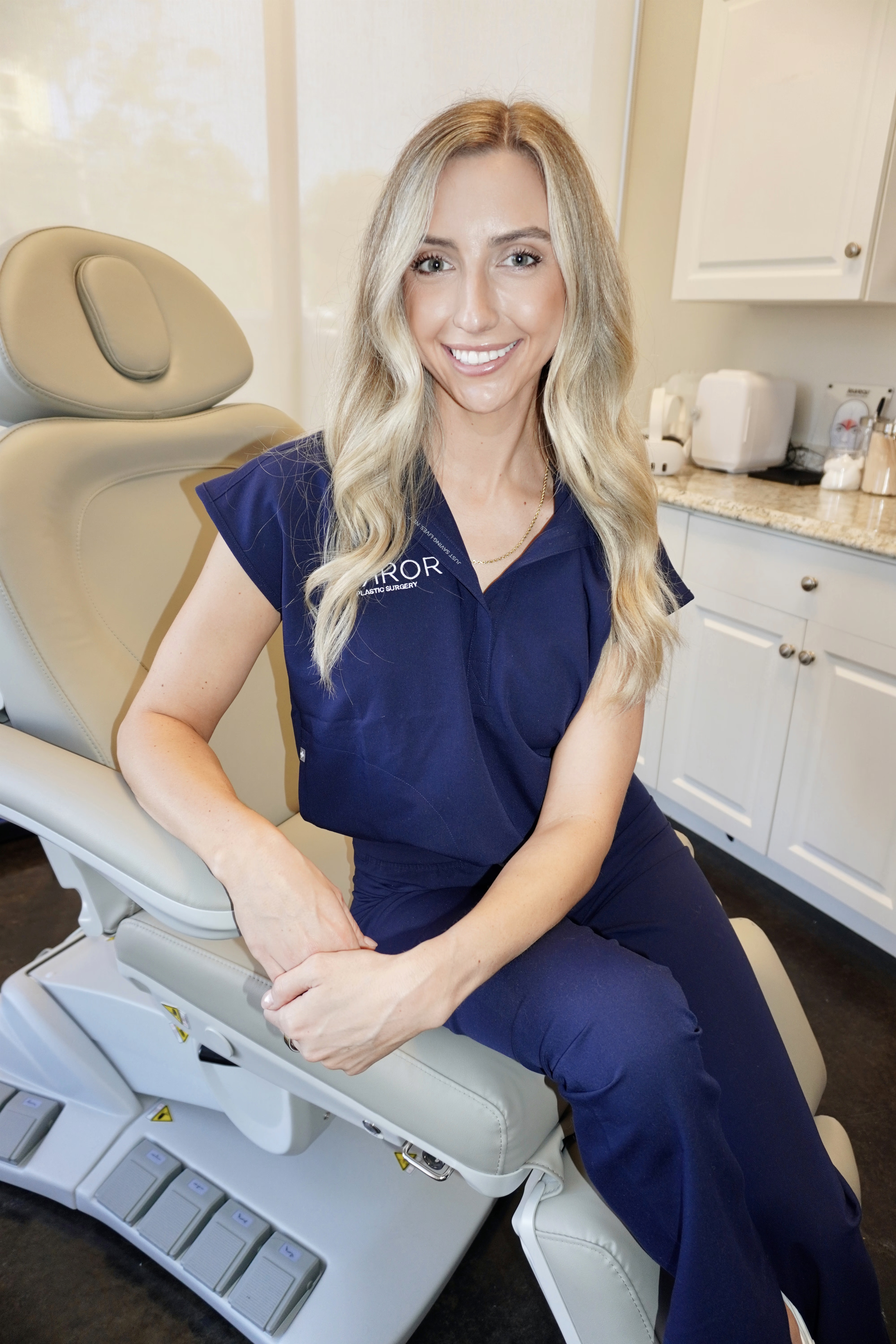
Every GLP-3R patient receives a 30–60-minute consultation, in-depth lab review, batch-tested peptide sourcing, and direct 24/7 text access throughout treatment.
Begin your medically supervised GLP-3R protocol with a comprehensive consultation and lab review.
Frequently Asked Questions
How much lean mass will I lose on retatrutide if I do nothing to prevent it?
Without deliberate intervention, clinical data from the Phase 2 DXA substudy show that roughly a quarter of total weight lost on retatrutide at the 12 mg dose comes from lean tissue. In practical terms, a person losing 24 kg total could lose several kilograms of muscle and lean mass. This pattern is not unique to retatrutide, and similar proportions appear across GLP-1 class medications. Structured protein intake and resistance training can reduce that fraction substantially, and some case series report much lower lean-mass loss in patients following consistent training protocols.1
Is 1.6 g/kg of protein enough, or should I aim higher on GLP-3R?
The 1.6 g/kg figure represents the minimum threshold supported by protein metabolism research for preserving lean mass during caloric restriction. During active GLP-3R treatment, where appetite suppression is significant and caloric intake drops substantially, the upper end of the range often proves necessary to offset anabolic resistance. The exact target depends on your current lean mass, training status, age, and lab markers including albumin, and Ellie reviews these variables individually during consultation rather than applying a single number to every patient.
Can I start adjunct peptides like tesamorelin or CJC-1295/ipamorelin at the same time as retatrutide?
Timing depends on your baseline labs, particularly IGF-1 and fasting glucose, because GH secretagogues can transiently affect insulin sensitivity. A baseline lab panel is completed before any adjunct peptide is introduced. In most cases, GLP-3R is initiated first, labs are rechecked at 12–16 weeks, and adjunct peptides are layered in once the metabolic picture is stable. No published trial has tested these combinations directly, so the protocol relies on mechanistic rationale and tesamorelin meta-analytic data rather than head-to-head retatrutide combination studies. Medical supervision is required throughout.
How often do I need DEXA scans while on retatrutide?
A baseline DEXA scan before starting treatment establishes your lean-mass and fat-mass reference point. Repeat scans every 3–4 months during active treatment are chosen because this interval is long enough to detect meaningful body-composition changes yet short enough to intervene before significant muscle is lost. Scale weight alone is insufficient, since it cannot distinguish fat loss from lean-mass loss, and patients who appear to be progressing well by weight alone may be losing disproportionate amounts of muscle. DEXA is the standard monitoring tool used in the Phase 2 retatrutide clinical trials for this reason.
Does Mirror Plastic Surgery offer GLP-3R protocols remotely, or do I need to be in Tampa Bay?
Mirror Plastic Surgery can deliver the full GLP-3R consultation, lab review, protocol design, and ongoing support remotely across the United States, including Hawaii and Alaska. The initial consultation with Ellie is conducted via telemedicine, lab panels are ordered through local draw sites, and peptides are shipped directly to you from batch-tested compounding sources. Patients in the Tampa Bay and St. Petersburg area also have the option of in-person consultations at the practice located at 780 4th Ave S, St. Petersburg, FL 33701.
Medical disclaimer: The information in this article is intended for educational purposes only and does not constitute medical advice, diagnosis, or treatment. Retatrutide and adjunct peptides discussed here are not FDA-approved for all indications described. Individual results vary. Consult a qualified, licensed healthcare provider before initiating any peptide therapy, modifying your diet, or beginning a new exercise program. Mirror Plastic Surgery’s peptide therapies are provided under the supervision of a board-certified nurse practitioner and are tailored to each patient’s individual health profile and lab results.
1 Results may vary from person to person. Editorial content, before and after images, and patient testimonials do not constitute a guarantee of specific results.
Peptide therapy is intended for wellness and optimization purposes and is not prescribed to diagnose, treat, cure, or prevent disease unless specifically stated. Many peptides are not FDA-approved and may be used off-label. Some have limited long-term safety data, with a potential for unknown risks, complications, or desensitization with prolonged use.