
Written by: Ellie Pranckevicius, FNP-BC, Aesthetic Nurse Practitioner & Aesthetic Injector | Facial Restoration & Regenerative Injectable Specialist, Mirror Plastic Surgery
Key Takeaways
- Buying peptides online exposes Florida residents to serious risks including contamination, incorrect dosing, and active federal enforcement.
- Three legally compliant pathways exist in 2026: in-person concierge clinics, licensed telehealth services, and 503A compounding pharmacies under valid prescriptions.
- Baseline lab testing, licensed Florida providers, and accredited pharmacies are essential for safe peptide therapy.
- BPC-157 and TB-500 remain unavailable through legitimate channels despite regulatory changes, and any vendor claiming otherwise misrepresents the law.
- Mirror Plastic Surgery provides expert-supervised peptide therapy across Florida. Schedule your consultation today to begin a safe, personalized treatment plan.
Why Buying Peptides Online Is a Dangerous Gamble
Buying peptides from unregulated online vendors creates three major problems: poor product quality, no medical oversight, and real legal risk.
On product quality, the evidence is stark. A 2024 study in the Journal of Medical Internet Research analyzed semaglutide products purchased online without a prescription and found endotoxin contamination in every tested sample, with actual purity ranging from 7.7% to 14.37% despite labels claiming 99% purity. Independent testing services report that 15–20% of vendor-supplied certificates of analysis contain discrepancies when independently verified, and in 2–5% of cases, vials contain an entirely different peptide than labeled. Health Canada’s April 2026 public advisory documented contamination risks including solvents, heavy metals, fibers, glass, plastic, and microbial contaminants such as bacteria, fungi, and endotoxins in unauthorized online peptide products.
On medical oversight, skipping baseline labs means skipping screening for contraindications. Without a provider reviewing thyroid function, liver and kidney markers, hormone panels, and diabetes indicators, users cannot know whether a peptide fits their physiology, what dose is safe, or how it interacts with existing medications.
On legal exposure, FDA-OCI filed 2026 federal charges in the Middle District of Florida over research-use-only semaglutide sales, which shows active criminal enforcement in the state. The “research use only” label offers no shield. The FDA determines intended use from overall marketing, including dosing charts, bacteriostatic water sold with the vial, testimonials, and staff answering protocol questions, all of which establish human use regardless of the label.
For a deeper breakdown of these risks, see Mirror Plastic Surgery’s article The Risks of Buying Peptides Online & How to Stay Safe.
Florida’s Peptide Rules: What Is Legal in 2026
Florida has no peptide-specific statute, so peptide law in the state follows federal rules plus Florida pharmacy and medical-practice regulations. Legal analysis relies on the federal Food, Drug, and Cosmetic Act and the Florida Drug and Cosmetic Act under Fla. Stat. § 499.005 and § 499.0051.
At the federal level, most peptides are not FDA-approved drugs. The FDA removed twelve peptides from its Category 2 restricted list effective April 23, 2026, including BPC-157 and TB-500, but removal does not authorize compounding. A 503A pharmacy may compound from a bulk substance only if it appears on the 503A bulks list, is a component of an FDA-approved drug, or has a USP or NF monograph. Removal from Category 2 clears none of these three gates, so products like BPC-157 cannot be lawfully compounded or sold for human use.
The FDA’s Pharmacy Compounding Advisory Committee met July 23–24, 2026, to review BPC-157, TB-500, and five other peptides. The PCAC’s recommendation is non-binding. Even if the committee votes to add these peptides, formal notice-and-comment rulemaking must occur before any regulatory change takes effect, a process that typically takes 6–18 months.
Florida pharmacy regulations require sterile compounding pharmacies to hold a Special Sterile Compounding Permit under Rule 64B16-28.100(8), F.A.C. They must also comply with USP Chapter 797 standards for sterile compounding. A valid prescription from a Florida-licensed provider is mandatory for legal peptide therapy.
Use this checklist before starting any peptide protocol:
- Check practitioner licenses via the Florida Department of Health’s online license verification portal, which displays license status, expiration dates, and disciplinary history.
- Confirm the pharmacy holds a Florida pharmacy permit plus a Special Sterile Compounding Permit for sterile products.
- Look for PCAB (Pharmacy Compounding Accreditation Board) accreditation as a voluntary quality signal.
- For out-of-state pharmacies shipping sterile compounded products into Florida, confirm they hold a nonresident sterile compounding permit under Florida Statutes Chapter 465, Section 0158.
Safe Pathway #1: In-Person Concierge Clinics in Tampa Bay
In-person concierge care offers the highest level of safety for peptide therapy. Patients receive a comprehensive physical assessment, baseline lab testing, personalized protocol design, and ongoing monitoring by a named, accountable provider.
Mirror Plastic Surgery, located at 780 4th Ave S in St. Petersburg, FL, follows this standard of care for the Tampa Bay area. Peptide therapy at Mirror is led by Ellie Pranckevicius, FNP-BC, a board-certified Family Nurse Practitioner with four years of Neuroscience ICU experience at Tampa General Hospital. That critical-care background gives Ellie a deep understanding of physiology, metabolic health, and recovery that many wellness providers lack.
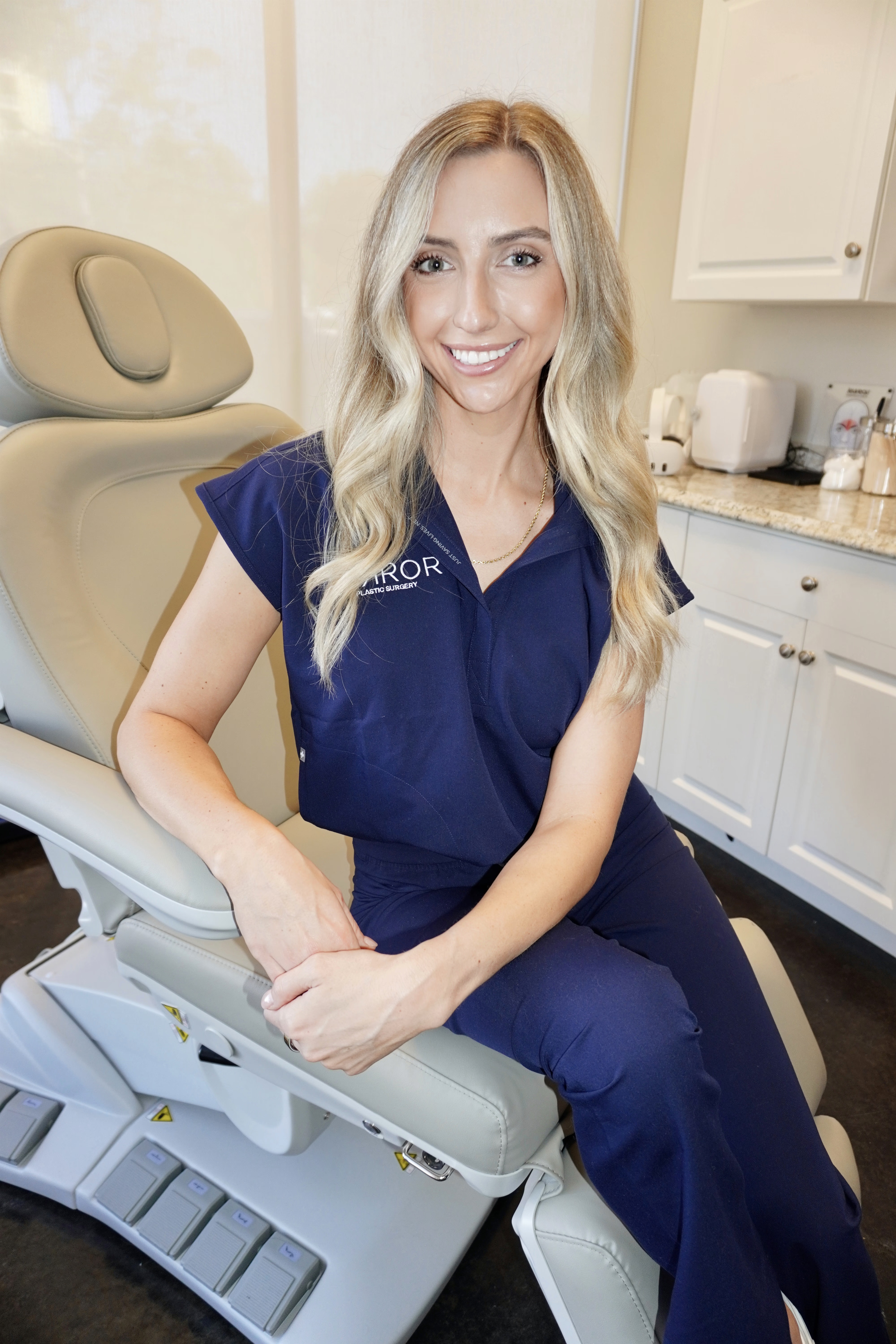
Ellie begins with a 30–60 minute consultation that reviews the patient’s full medical history, current medications, and health goals. For weight management or inflammatory conditions, she reviews in-depth lab panels, including thyroid, liver, kidney, diabetes markers, and hormone panels, before designing any protocol. If labs are not available, she orders them. Mirror sources peptides only from reputable providers with rigorous batch testing. Patients receive detailed reconstitution and self-administration training, often with video demonstrations, and have 24/7 direct text access to Ellie between appointments.
Ellie’s educational approach keeps patients informed and comfortable. She explains the physiology behind each recommendation in clear language and tells patients when a peptide or service is unnecessary, prioritizing long-term outcomes over short-term revenue. When a surgical complement is appropriate, Dr. Akash Chandawarkar, a Harvard-educated, Johns Hopkins-trained plastic surgeon with fellowship training at Manhattan Eye Ear & Throat Hospital, provides advanced surgical expertise.
Patients at Mirror Plastic Surgery receive:
- Personalized peptide stacks and custom protocols based on lab results and health goals
- Quality-assured peptides sourced from batch-tested, reputable providers
- Reconstitution and self-administration training with video support
- Ongoing dose adjustments based on response and follow-up labs
- Direct 24/7 provider communication via text
- Remote service delivery available across all of Florida and the United States
Book an appointment with Ellie to start safe peptide therapy under concierge-level supervision.
Safe Pathway #2: Licensed Telehealth Peptide Care
Licensed telehealth services give Florida residents a compliant option when in-person visits are not practical. Florida’s telehealth statute, Section 456.47, allows a telehealth provider to perform a patient evaluation via telehealth, and if that evaluation is sufficient to diagnose and treat the patient, no separate in-person physical examination is required. The standard of care for telehealth matches in-person care.
The Ryan Haight Act’s in-person evaluation requirement applies only to DEA-scheduled controlled substances. Most peptides, including Sermorelin and GLP-1 medications such as semaglutide and tirzepatide, are not subject to that requirement.
Use these criteria when you evaluate a telehealth peptide provider:
- The provider holds an active Florida medical license, verifiable at flhealthsource.gov
- Baseline lab work is required before prescribing
- Prescriptions go to a licensed compounding pharmacy, never an overseas supplier
- Ongoing follow-up and dose monitoring are built into the care model
- The platform uses HIPAA-compliant technology with end-to-end encryption
Mirror Plastic Surgery offers remote consultations across all of Florida and the United States, extending its concierge model statewide without sacrificing personalized oversight. For more guidance on evaluating any provider, see Mirror’s article How to Choose a Safe Peptide Therapy Clinic Near You.
Safe Pathway #3: Working With 503A Compounding Pharmacies
503A compounding pharmacies prepare patient-specific medications after receiving a valid prescription from a licensed provider. They operate under Florida Board of Pharmacy oversight and must comply with USP Chapter 797 sterile compounding standards. PCAB accreditation signals that a pharmacy has completed additional third-party quality review.
Some peptides may be compounded by licensed 503A pharmacies in Florida when they meet specific criteria, such as being a component of an FDA-approved drug or having a USP or NF monograph. The regulatory status of many peptides remains a gray zone, so patients should confirm with their provider and pharmacy that a specific peptide can be lawfully compounded. Examples sometimes discussed include Sermorelin, Ipamorelin, PT-141 (Bremelanotide), GHK-Cu, NAD+, KPV, and Selank, but their legal pathways vary and depend on individual circumstances.
BPC-157 and TB-500 remain unavailable through legitimate compounding pharmacies for human use under current regulations. Removal from Category 2 did not authorize compounding. These peptides did not move onto the 503A bulks list, and the PCAC’s July 2026 review produced no final rule change. Any compounding pharmacy claiming these peptides are “now legal” immediately after the PCAC meeting misrepresents the regulatory process. Readers interested in sourcing verification can review Mirror’s article How to Verify Peptide Source and Purity for Biohacking 2026.
Mirror Plastic Surgery follows these standards, sourcing only from reputable, batch-tested providers and prescribing strictly within current Florida and federal law.
| Pathway | Level of Supervision | Best For |
|---|---|---|
| In-Person Concierge Clinic | Highest, with physical assessment, baseline labs, a named provider, ongoing monitoring, and 24/7 direct access | Patients seeking comprehensive evaluation, complex protocols, or surgical complement; Tampa Bay area residents |
| Licensed Telehealth Service | High, with synchronous video evaluation, lab review, a licensed Florida prescriber, and pharmacy oversight. Standard of care equals in-person under Florida Statute 456.47. | Patients outside Tampa Bay or with scheduling constraints who still require medically supervised care |
| 503A Compounding Pharmacy | Moderate, with quality-assured compounding under USP 797 and Florida Board of Pharmacy oversight. Requires a valid prescription from a licensed provider. | Dispensing arm of a supervised protocol; not a standalone pathway without a prescribing provider |
Over-the-Counter Options Before Prescription Peptides
Some readers do not yet qualify for prescription peptides, prefer to avoid injections, or want to support a supervised protocol. Several over-the-counter options offer documented benefits with a lower regulatory and safety burden.
- Creatine monohydrate supports muscle strength, power output, and recovery and is available without a prescription.
- Hydrolyzed collagen peptides have evidence for joint comfort and skin hydration. They differ from injectable GHK-Cu but remain accessible and low risk.
- Essential amino acids (L-glutamine, L-arginine) support tissue repair and immune function and can serve as adjuncts to supervised protocols.
These options avoid the contamination, dosing, and legal risks seen with gray-market injectable peptides, but their effects are more modest.1 They do not replace medically supervised peptide therapy when clear clinical indications exist.
How to Choose a Safe Peptide Provider in Florida
A structured checklist makes it easier to compare peptide providers in Florida and avoid unsafe options.
Ask every prospective provider:
- Are you a licensed medical professional in Florida, and can I verify your license at flhealthsource.gov?
- Do you require baseline lab testing before prescribing?
- Where do you source your peptides, and can you provide batch testing documentation?
- What is your follow-up and monitoring process after the initial prescription?
- Can I reach you directly between appointments?
Watch for these red flags, which suggest an unsafe or non-compliant provider or vendor:
- Providers who skip labs or medical history review before prescribing
- Clinics selling peptides without a consultation or documented patient-provider relationship
- Pharmacies without Florida licensure or a Special Sterile Compounding Permit for sterile products
- Pricing far below legitimate compounding pharmacy rates
- Vendors accepting cryptocurrency-only payments with no verifiable physical address
- Vendors claiming BPC-157 or TB-500 are “now legal to compound” following the July 2026 PCAC meeting
Mirror Plastic Surgery meets every criterion on this checklist. Book an appointment with Ellie to experience verified credentials, quality-assured sourcing, and genuine concierge care.
Common Misconceptions About Peptide Therapy
Myth: “All peptides are illegal.” Many peptides are legally prescribed by licensed Florida providers and compounded by accredited pharmacies. Legality depends on the specific peptide, the prescribing relationship, and the dispensing source. Some peptides, such as Sermorelin, Ipamorelin, NAD+, GHK-Cu, KPV, PT-141, and Selank, may have a legal pathway through licensed 503A compounding pharmacies under a valid prescription, but this should be verified case by case.
Myth: “Buying online is just as safe if the website looks professional.” The FDA’s March 2026 warning letter to Lovega LLC dba Pink Pony Peptides in Wellington, FL, a polished e-commerce operation, shows that professional appearance does not equal safety or legal compliance.
Myth: “Peptides are only for bodybuilders.” Peptide therapy can address systemic inflammation, autoimmune conditions, weight management, skin aging, gut health, anxiety, energy, sexual wellness, and post-surgical recovery. The patient population at Mirror Plastic Surgery reflects this range.
Myth: “You can get the same results without a doctor.” Personalized dosing, appropriate peptide selection, and medical monitoring matter for both safety and results. Without baseline labs, a provider cannot identify contraindications, choose the right peptide stack, or adjust protocols based on response.
Frequently Asked Questions
Where is the safest place to get peptides in Florida?
The safest source for peptide therapy in Florida is a licensed medical provider who performs a thorough clinical evaluation, orders baseline labs, and prescribes through an accredited compounding pharmacy. There is no safe online source for purchasing injectable peptides without a prescription. In-person concierge clinics like Mirror Plastic Surgery in St. Petersburg offer the highest level of supervision. Licensed telehealth services provide a compliant alternative for patients across the state. In both cases, you need a valid prescription from a Florida-licensed provider and dispensing through a pharmacy that holds the appropriate Florida permits.
Are BPC-157 and TB-500 legal in Florida in 2026?
BPC-157 and TB-500 remain unavailable through legitimate compounding pharmacies in 2026. The FDA removed these peptides from its Category 2 restricted list in April 2026, but that change did not authorize compounding. A 503A pharmacy may compound from a bulk substance only if it appears on the approved 503A bulks list, is a component of an FDA-approved drug, or has a USP or NF monograph. BPC-157 and TB-500 meet none of these criteria. The FDA’s Pharmacy Compounding Advisory Committee reviewed these peptides in July 2026 but produced no final rule change. Any vendor or clinic claiming these peptides are now legal to compound misstates the regulatory process.
What peptides are FDA-approved?
Very few peptides have full FDA drug approval. Semaglutide (Ozempic, Wegovy) is FDA-approved for type 2 diabetes and chronic weight management. Tirzepatide (Mounjaro, Zepbound) is FDA-approved for type 2 diabetes and weight loss. Tesamorelin (Egrifta) is approved for HIV-associated lipodystrophy. Liraglutide (Saxenda, Victoza) is approved for weight management and type 2 diabetes. Most wellness peptides, including Sermorelin, GHK-Cu, NAD+, and KPV, are not FDA-approved drugs but can sometimes be prescribed off-label through licensed compounding pharmacies under a valid prescription. “Legal through a compounding pharmacy” and “FDA-approved” describe different regulatory categories.
What should I expect from a legitimate peptide therapy consultation in Florida?
A legitimate consultation includes a comprehensive review of your medical history, current medications, and health goals. For most protocols, baseline lab work covering thyroid function, liver and kidney markers, hormone panels, and metabolic indicators is ordered before any peptide is prescribed. The provider explains the physiology behind each recommendation, reviews the legal and regulatory status of the peptides under consideration, and outlines a follow-up and monitoring plan. At Mirror Plastic Surgery, consultations with Ellie Pranckevicius can run up to 60 minutes and include in-depth lab analysis, a custom peptide stack tailored to your profile, reconstitution and self-administration training, and 24/7 direct text access to Ellie throughout your protocol.
Will I lose results if I stop peptide therapy?
Most patients see effects diminish after stopping peptide therapy, similar to stopping any health regimen.1 If a peptide protocol managed inflammation or another condition, symptoms often return to their prior state once the peptide is no longer active.1 Many patients need a maintenance protocol to sustain benefits.1 The timeline and degree of change vary by peptide, indication, and individual physiology, which makes ongoing provider supervision and periodic reassessment important for long-term plans.1
Conclusion: A Safer Path to Peptide Therapy in Florida
Buying peptides online from unregulated vendors in Florida carries documented risks of contamination, incorrect dosing, and active federal enforcement. These risks outweigh any convenience or cost savings. Safe, effective peptide therapy in 2026 relies on three compliant pathways: in-person concierge clinics, licensed telehealth services, and 503A compounding pharmacies operating under a valid prescription. Professional supervision, quality-assured sourcing, and personalized protocols form the foundation of safe peptide care.
Mirror Plastic Surgery offers advanced peptide therapies for inflammation, autoimmune conditions, weight management, and anti-aging concerns. Book an appointment with Ellie to explore how tailored peptide protocols can support your goals.
Peptide therapies are not FDA-approved for all uses. Results vary. Always seek professional medical supervision. This article is for educational purposes and does not replace medical advice.
1 Results may vary from person to person. Editorial content, before and after images, and patient testimonials do not constitute a guarantee of specific results.
Peptide therapy is intended for wellness and optimization purposes and is not prescribed to diagnose, treat, cure, or prevent disease unless specifically stated. Many peptides are not FDA-approved and may be used off-label. Some have limited long-term safety data, with a potential for unknown risks, complications, or desensitization with prolonged use.